Summary
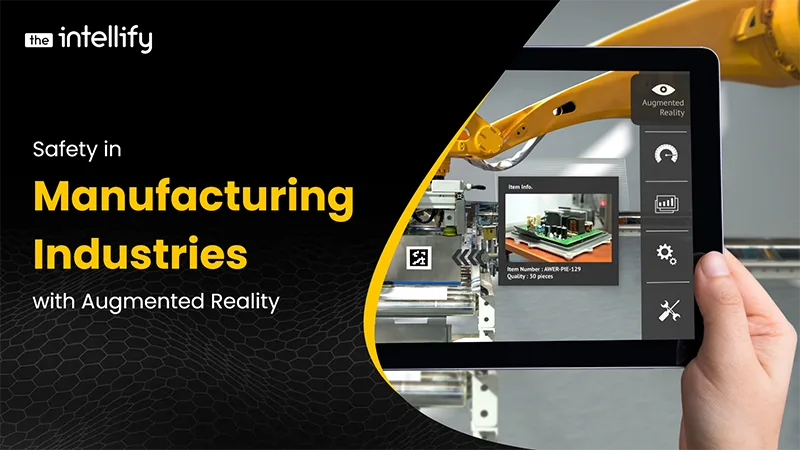
This blog explores the role of Augmented Reality (AR) in enhancing safety measures within industrial settings. It highlights how AR can provide real-time data, identify potential hazards, and offer proactive solutions to prevent accidents. By integrating AR into safety protocols, companies can improve worker protection, ensure compliance, and stay ahead of emerging safety trends.
Introduction
Ensuring safety within industrial environments is a top priority for companies in sectors such as manufacturing, construction, and heavy production. With complex operations and the risk of accidents, industries must adopt effective measures to safeguard their workers. Augmented Reality (AR) is an innovative technology that can significantly improve safety protocols, providing real-time guidance and data to enhance operational efficiency. In this blog, we’ll explore how AR can transform safety measures in industrial settings and reduce risks.
The Role of Augmented Reality in Industrial Safety
Real-Time Data for Safety Equipment Performance
Augmented Reality can be used to display real-time data on the performance of critical safety equipment. Whether it’s personal protective gear or emergency shutdown systems, AR apps can provide visual indicators to ensure equipment is functioning correctly. This is especially important in industries where the failure of safety equipment can lead to serious accidents. With an augmented reality app development, companies can design custom solutions that display this vital data seamlessly in a worker’s field of view.
Proactive Hazard Detection and Prevention
One of the biggest advantages of AR in industrial safety is its ability to identify and address potential hazards before they escalate. Through AR, workers can visualize hidden risks in their environment, such as mechanical failures, gas leaks, or electrical faults, which might not be easily detectable through conventional means. By using augmented reality trends, industries can stay ahead of safety issues, preventing accidents and ensuring a safer work environment.
Highlighting Danger Zones and Alerts
Starting from example, workers can receive visual alerts in their AR headsets or devices when they are approaching unsafe areas. This immediate feedback ensures that employees take the necessary precautions before entering high-risk zones. By integrating such real-time hazard alerts into your safety protocols, you can significantly reduce the chances of accidents.
Enhancing Safety Protocols with Digital Workflows
AR can also improve how safety protocols are communicated and followed. Digital workflows can be integrated into the AR system, ensuring workers are always aware of the necessary safety steps for each task. For instance, workers can follow step-by-step visual instructions for safely operating machinery or handling hazardous materials. This ensures better compliance with safety regulations and reduces the likelihood of human error.
Key Benefits of Augmented Reality for Safety
Improved Real-Time Monitoring
AR can continuously monitor the performance of safety equipment and environmental factors, such as air quality or temperature, in real-time. This constant data stream ensures that workers and managers stay informed about potential risks before they escalate.
Faster Response to Emergencies
In an emergency, AR systems can display immediate hazard warnings or guide workers to safety, reducing response times and preventing injuries. The ability to react quickly in critical situations can make a significant difference in industrial environments.
Enhanced Training and Guidance
AR is a powerful tool for safety training. New workers can visualize safety measures in a controlled, virtual environment, practicing hazardous scenarios without the risk. Additionally, AR-based safety training can be updated as new protocols are introduced, ensuring that workers are always up-to-date.
Cost Savings
By preventing accidents and reducing downtime, AR in industrial safety can save businesses significant amounts of money. Companies can reduce financial losses associated with workplace injuries, insurance costs, and equipment repairs by using AR to detect hazards early.
Conclusion
Augmented Reality is a transformative tool for improving safety in industrial settings. By providing real-time data, identifying potential hazards, and offering immediate alerts, AR helps companies reduce accidents and enhance worker protection. The technology also supports the development of customized solutions through augmented reality app development, tailored to the unique needs of each industrial unit. Embracing augmented reality trends ensures that your business stays at the forefront of safety innovation.
Feel free to contact us today for more information on how we can develop a personalized AR solution for your business.



Written By, Jalaj Shah
The COO and Co-Founder of The Intellify. Jalaj enjoys experimenting with new strategies. His posts are fantastic for businesses seeking innovative development ideas. Discover practical insights from his engaging content.


AI in AR & VR: Redefining Intelligent Immersive Experiences
Summary: AI is making AR and VR smarter, turning static experiences into adaptive, personalized environments. From training and healthcare to retail and gaming, intelligent immersive systems are improving engagement, learning, and decision-making. This blog explores how AI is shaping the future of immersive technology across industries. In a world where technology is changing faster than […]
How AR Virtual Try-On Improves Online Shopping Experience
Summary: AR virtual try-on is reshaping online shopping by letting customers preview products on themselves or in their real environment before purchasing. This guide breaks down how virtual try-on works, the technology behind it, and where it’s used across e-commerce. It also explores business and customer benefits, development steps, key challenges, and how virtual try-on […]
Museum 2.0 Solutions: How AR & VR Are Transforming Museum Experiences
Summary: Museum 2.0 solutions are reshaping museum experiences through augmented reality (AR) and virtual reality (VR). Museums are using immersive technology to engage visitors, improve storytelling, and extend access beyond physical spaces. The blog covers how AR and VR support learning, enhance visitor interaction, and address modern challenges, along with practical use cases and considerations […]
AI in AR & VR: Redefining Intelligent Immersive Experiences
Summary: AI is making AR and VR smarter, turning static experiences into adaptive, personalized environments. From training and healthcare to retail and gaming, intelligent immersive systems are improving engagement, learning, and decision-making. This blog explores how AI is shaping the future of immersive technology across industries. In a world where technology is changing faster than […]
How AR Virtual Try-On Improves Online Shopping Experience
Summary: AR virtual try-on is reshaping online shopping by letting customers preview products on themselves or in their real environment before purchasing. This guide breaks down how virtual try-on works, the technology behind it, and where it’s used across e-commerce. It also explores business and customer benefits, development steps, key challenges, and how virtual try-on […]
Museum 2.0 Solutions: How AR & VR Are Transforming Museum Experiences
Summary: Museum 2.0 solutions are reshaping museum experiences through augmented reality (AR) and virtual reality (VR). Museums are using immersive technology to engage visitors, improve storytelling, and extend access beyond physical spaces. The blog covers how AR and VR support learning, enhance visitor interaction, and address modern challenges, along with practical use cases and considerations […]
0
+0
+0
+0
+Committed Delivery Leads To Client Satisfaction
Client Testimonials that keep our expert's spirits highly motivated to deliver extraordinary solutions.

Christopher Seny
My experience working with The Intellify, has been a great experience. The team has a wealth of expertise in the tech space. Working with the intellify was a growing experience for me, I learned a lot. The team keeps great communication & responds fast to new ideas & suggestions. The team also provides great suggestions & solutions as well. I couldn’t imagine working with anybody else on this project & it has been a blessing working with, The Intellify.

Izandi Serdyn
The Intellify delivered a platform from scratch, involving the client at every stage. The team was communicative, responsive, and punctual throughout the engagement. Virtual meetings and emails ensured seamless project management. Customers can expect a team that can work fast.

Kya Johnson
The app serves as an effective introduction for users to the product and its characters. Responsive and faithful to initial requirements, The Intellify’s team exceeded initial expectations. Internal stakeholders were particularly pleased with their communication.

Stefan Wyk
Working with The Intellify to develop our website was an outstanding experience. Their team displayed exceptional professionalism, creativity, and technical expertise throughout the entire process. The final product exceeded our expectations, delivering a sleek, user-friendly, and highly functional website. We highly recommend The Intellify to anyone in need of top-tier web development services.

Steve Thorpe
The Intellify’s work has been met with high praise from internal and external stakeholders. The team is efficient, diligent, and reliable in their service. They go above and beyond in terms of communication and project management. The Intellify is a responsive vendor that gets the job done.

Tal Dotan
I’ve been working with The Intellify for the last 3 years. During this period of time we’ve planned and executed projects in both small and large scale. Working with The Intellify was and still is the best decision I’ve made when rising up Divo, I strongly recommend to work with them in any type of project.


 +1-302-803-4983