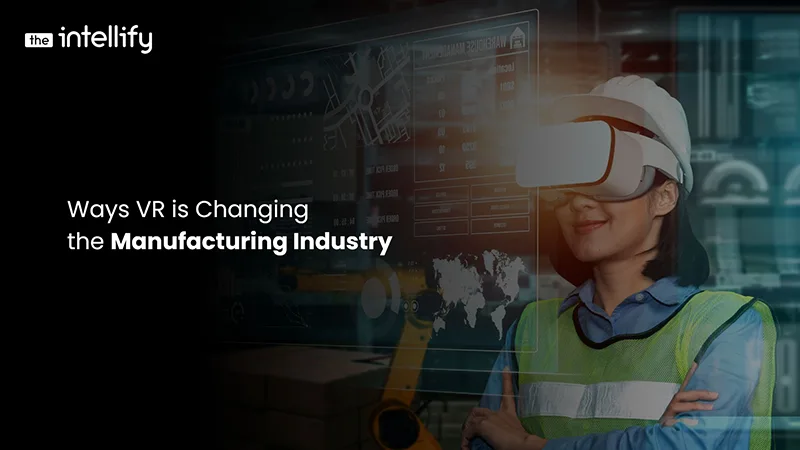
Virtual Reality (VR) technology is revolutionizing the way businesses operate. VR can be used for various purposes, from training and design to collaborations. The Intellify has played its share of developing some extraordinary Virtual Reality App Development solutions for different businesses, helping them generate a curious and engaging channel to connect with their customers and users with their products and services.
In this blog post, we will explore 5 advantages of VR in business sectors that can improve efficiency and productivity.
1. Enhanced Training and Education
VR can provide a safe and cost-effective way to train employees. For example, VR can simulate dangerous situations, such as handling hazardous materials, without putting employees in danger. VR can also be used to teach employees how to use new equipment or software in a virtual environment, which can be more efficient than traditional classroom training.
The Intellify has developed a few good training and simulation solutions for easy and immersive training modules. Let us know in the comment section if you want us to share the experience captured.
2. Improved Product Design and Prototyping
VR can save time and money by allowing designers to quickly make changes and test different scenarios without the need for physical prototypes. Additionally, with a good number of experiences, The Intellify also believes that VR can provide a more realistic and immersive experience than traditional 2D design tools, which can help designers better understand how their designs will look and function in the real world.
3. Better Collaboration and Communication
VR can facilitate collaboration and communication among team members and clients who are located in different geographic locations. By using VR, team members can work together in a virtual environment and collaborate on projects as if they were in the same room. This can lead to better communication, increased productivity, and reduced travel costs.
4. Increased Sales and Marketing Effectiveness
VR can be used to create virtual product demos or showcase virtual environments that potential customers can explore. This can help businesses better communicate the value of their products and services and increase sales effectiveness.
5. Improved Customer Experience
VR can be used to create virtual showrooms or provide virtual tours of products or services. This can help businesses differentiate themselves from competitors and provide a more engaging and memorable experience for customers.
In conclusion, VR technology offers many advantages for businesses, including enhanced training and education, improved product design and prototyping, better collaboration and communication, increased sales and marketing effectiveness, and improved customer experience.

By incorporating VR into your operations, businesses can improve efficiency and productivity and gain a competitive advantage in your industries. And which simultaneously leads to a win-win situation for both of us.
Let us know your thoughts in the comment section, or Contact Us today.



Written By, Jalaj Shah
The COO and Co-Founder of The Intellify. Jalaj enjoys experimenting with new strategies. His posts are fantastic for businesses seeking innovative development ideas. Discover practical insights from his engaging content.
Ready to Build Your Own Web App?
Get a Quote Now

AR-Driven Virtual Customer Support: Use Cases, Benefits & Business Value
Summary: This blog explains how AR-driven virtual customer support helps businesses solve customer issues using visual, real-time guidance instead of long calls or text instructions. It covers how AR support works, where it’s used, and the business value it delivers across industries. The article also explores key benefits, implementation challenges, and what the future of […]
Augmented Reality Storytelling: Turning Brand Stories into Immersive Experiences
Summary: This blog explores how Augmented Reality Storytelling helps brands create deeper engagement through immersive, interactive experiences. It explains what AR storytelling is, how it works, real-world brand examples, key benefits, and common use cases across industries. The article also covers essential features of an AR storytelling app, how to choose the right AR app […]
Virtual Property Tours: How VR Is Transforming Real Estate Experiences
Summary: Virtual Property Tours are changing how real estate businesses present and sell properties. This blog explains how Virtual Property Tours using VR help buyers explore spaces remotely, understand layouts better, and make confident decisions. It covers real-world use cases, key benefits, and how businesses can build effective VR property tour apps to improve engagement, […]
AR-Driven Virtual Customer Support: Use Cases, Benefits & Business Value
Summary: This blog explains how AR-driven virtual customer support helps businesses solve customer issues using visual, real-time guidance instead of long calls or text instructions. It covers how AR support works, where it’s used, and the business value it delivers across industries. The article also explores key benefits, implementation challenges, and what the future of […]
Augmented Reality Storytelling: Turning Brand Stories into Immersive Experiences
Summary: This blog explores how Augmented Reality Storytelling helps brands create deeper engagement through immersive, interactive experiences. It explains what AR storytelling is, how it works, real-world brand examples, key benefits, and common use cases across industries. The article also covers essential features of an AR storytelling app, how to choose the right AR app […]
Virtual Property Tours: How VR Is Transforming Real Estate Experiences
Summary: Virtual Property Tours are changing how real estate businesses present and sell properties. This blog explains how Virtual Property Tours using VR help buyers explore spaces remotely, understand layouts better, and make confident decisions. It covers real-world use cases, key benefits, and how businesses can build effective VR property tour apps to improve engagement, […]
0
+0
+0
+0
+Committed Delivery Leads To Client Satisfaction
Client Testimonials that keep our expert's spirits highly motivated to deliver extraordinary solutions.

Christopher Seny
My experience working with The Intellify, has been a great experience. The team has a wealth of expertise in the tech space. Working with the intellify was a growing experience for me, I learned a lot. The team keeps great communication & responds fast to new ideas & suggestions. The team also provides great suggestions & solutions as well. I couldn’t imagine working with anybody else on this project & it has been a blessing working with, The Intellify.

Izandi Serdyn
The Intellify delivered a platform from scratch, involving the client at every stage. The team was communicative, responsive, and punctual throughout the engagement. Virtual meetings and emails ensured seamless project management. Customers can expect a team that can work fast.

Kya Johnson
The app serves as an effective introduction for users to the product and its characters. Responsive and faithful to initial requirements, The Intellify’s team exceeded initial expectations. Internal stakeholders were particularly pleased with their communication.

Stefan Wyk
Working with The Intellify to develop our website was an outstanding experience. Their team displayed exceptional professionalism, creativity, and technical expertise throughout the entire process. The final product exceeded our expectations, delivering a sleek, user-friendly, and highly functional website. We highly recommend The Intellify to anyone in need of top-tier web development services.

Steve Thorpe
The Intellify’s work has been met with high praise from internal and external stakeholders. The team is efficient, diligent, and reliable in their service. They go above and beyond in terms of communication and project management. The Intellify is a responsive vendor that gets the job done.

Tal Dotan
I’ve been working with The Intellify for the last 3 years. During this period of time we’ve planned and executed projects in both small and large scale. Working with The Intellify was and still is the best decision I’ve made when rising up Divo, I strongly recommend to work with them in any type of project.


 +1-302-803-4983