AR/VR for Tourism: The Future of Travel and Cultural Experiences

By Darshak Doshi
January 2, 2026

Summary:
This blog explores how AR/VR for tourism is shaping the future of travel and cultural experiences worldwide. It explains how augmented and virtual reality help travelers preview destinations, explore cultural sites, and engage with history in immersive ways. The blog covers key use cases, benefits for tourism businesses, app development opportunities, and the growing role of AR/VR in making travel more interactive, accessible, and memorable for both Indian and global audiences.
In our fast-paced world, tourism has evolved beyond just physical travel; it’s now about crafting rich, immersive experiences that genuinely connect travelers to cultures and destinations. Technologies like Augmented Reality (AR) and Virtual Reality (VR) are fundamentally changing how we explore, learn, and interact with the tourism landscape. In this blog, we’ll delve into AR/VR for tourism, examining its benefits, key use cases, how it enhances cultural experiences, and tips for businesses looking to embrace this transformative technology.
What Is AR/VR for Tourism?
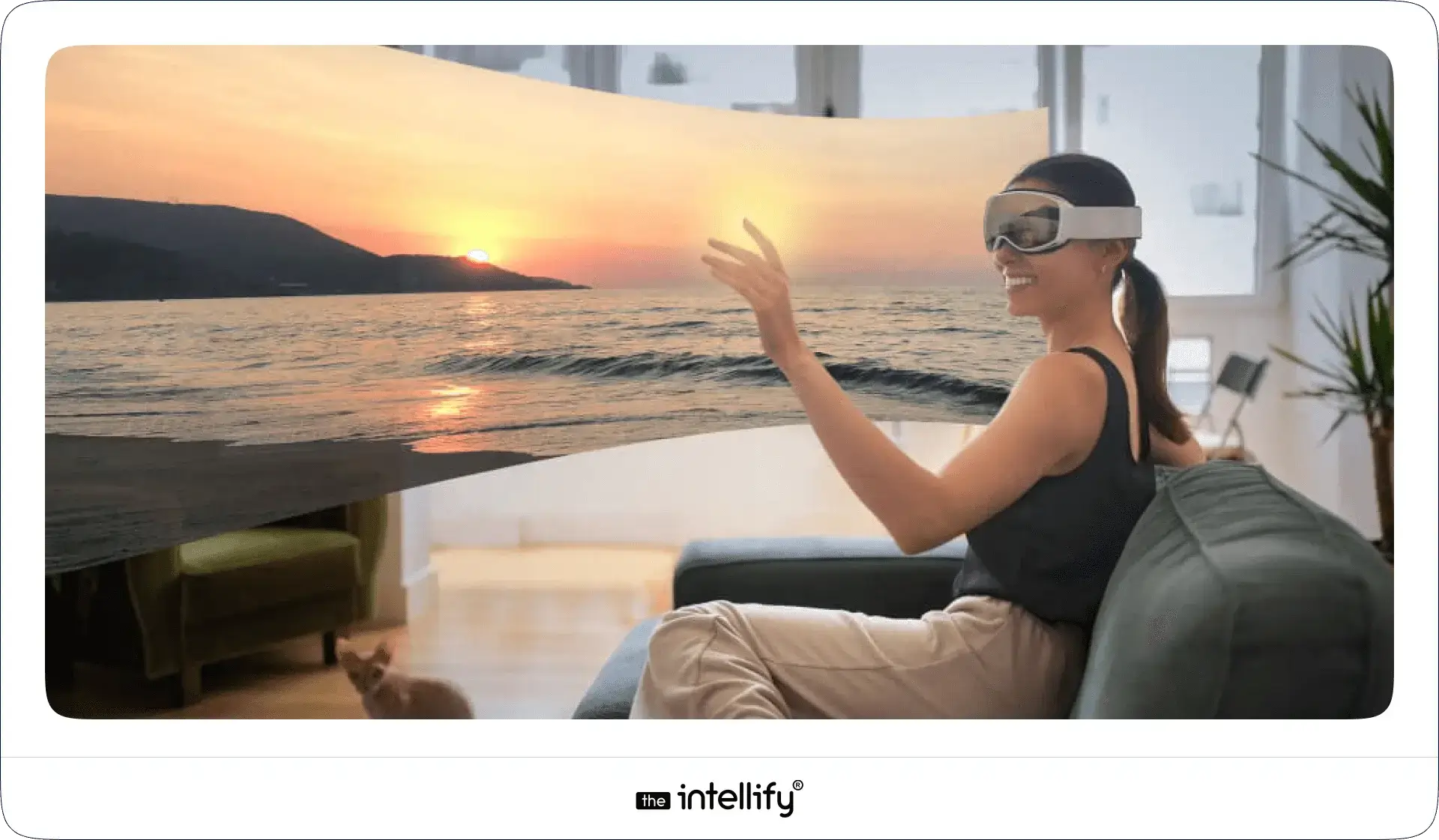
To fully appreciate AR and VR’s roles in tourism, we need to understand their differences.
Difference between AR and VR
- Augmented Reality (AR) enriches the physical world by layering digital information on top of it, using devices like smartphones or AR glasses.
- Virtual Reality (VR) immerses users in a completely digital setting, typically requiring headsets that block out the physical world.
How AR for tourism works on mobile devices
AR for tourism shines on mobile devices, allowing users to point their smartphones at landmarks or artworks and instantly receive information, visual enhancements, or even interactive content right on their screens.
How VR in tourism creates fully immersive experiences
With VR, you can explore destinations from the comfort of your home. Whether it’s wandering through ancient ruins or taking a virtual stroll through a museum, VR apps offer stunning, immersive experiences that can make you feel as if you’re truly there.
Real-world examples
Around the globe, tourism boards and cultural institutions are tapping into AR and VR. For example, many museums now provide virtual tours that let users explore exhibitions from anywhere. Some historical sites even offer AR apps that enrich the historical context as visitors roam through the location.
Why AR/VR Is Becoming Essential for the Tourism Industry
The digital age has dramatically transformed how people approach travel.
- Changing travel behavior: Today’s travelers tend to research their destinations extensively online before making plans. AR/VR gives them a chance to experience a locale virtually before they commit.
- Impact of technology on trip planning: Nowadays, travelers expect more interactive and engaging ways to plan their adventures, and AR/VR caters perfectly to these expectations.
- Accessibility: For those who can’t travel due to physical limitations, AR/VR technology offers access to rich cultural experiences that they might otherwise miss.
- Post-Pandemic Growth: The COVID-19 pandemic accelerated the digital tourism trend. With travel restrictions in place, many turned to virtual experiences, paving the way for AR/VR innovations.
Key Use Cases of AR/VR in Tourism & Cultural Exploration
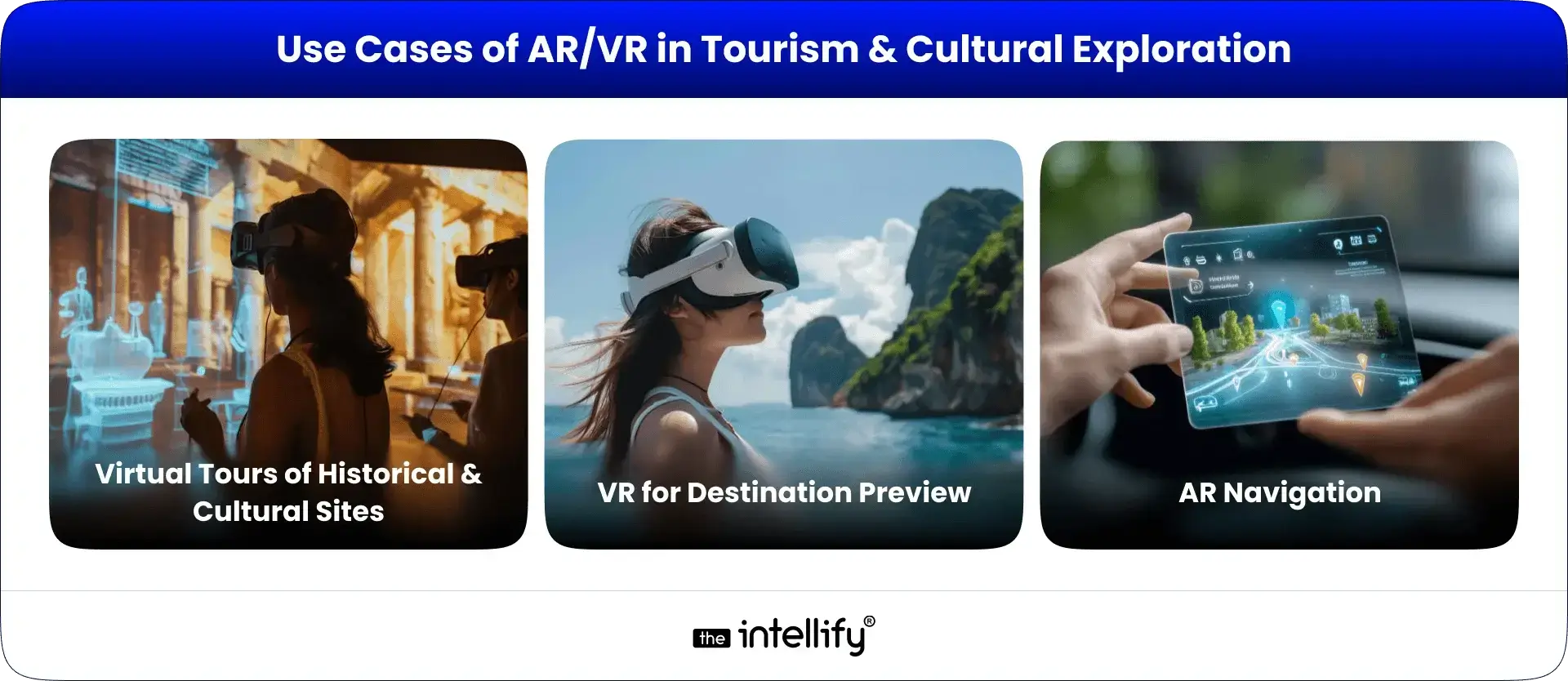
Understanding how AR/VR is currently used in tourism helps illuminate its transformative potential.
Virtual Tours of Historical & Cultural Sites
- VR Tours: Many iconic landmarks now feature VR tours that guide users through attractions while providing historical narratives and stunning visuals.
- Cultural Storytelling: These experiences allow users to engage deeply with rich narratives, immersing them in the significance of the sites.
AR-Powered On-Site Tourist Experiences
- AR guides at monuments: AR applications can elevate a visitor’s experience by offering interactive guides and visual overlays that share the stories behind ancient structures.
- Historical Overlays: Imagine aiming your phone at a historical site and witnessing how it looked centuries ago, thanks to digital recreations.
Virtual Museums & Cultural Archives
Cultural Preservation: Many institutions are digitally preserving their cultural artifacts via VR, broadening access while ensuring history remains intact.
VR for Destination Preview & Travel Planning
“Try before you travel”: With VR previews, travelers can visualize their trips, helping them confidently decide on their next destination.
AR Navigation & Smart City Tourism
Interactive Maps: AR navigation apps guide users to attractions, eateries, and hidden gems, making their exploration of a new city seamless.
How AR/VR Improves Cultural Storytelling
AR/VR has the power to revolutionize storytelling by bringing history to life.
- Turning history into experiences: Through immersive visuals, AR/VR transforms static information into dynamic narratives that truly engage modern audiences.
- Language-independent exploration: Visual cues can convey stories effectively, regardless of language, making cultural experiences accessible to everyone.
- Emotional engagement: Instead of merely presenting facts, AR/VR fosters emotional connections, making history more memorable.
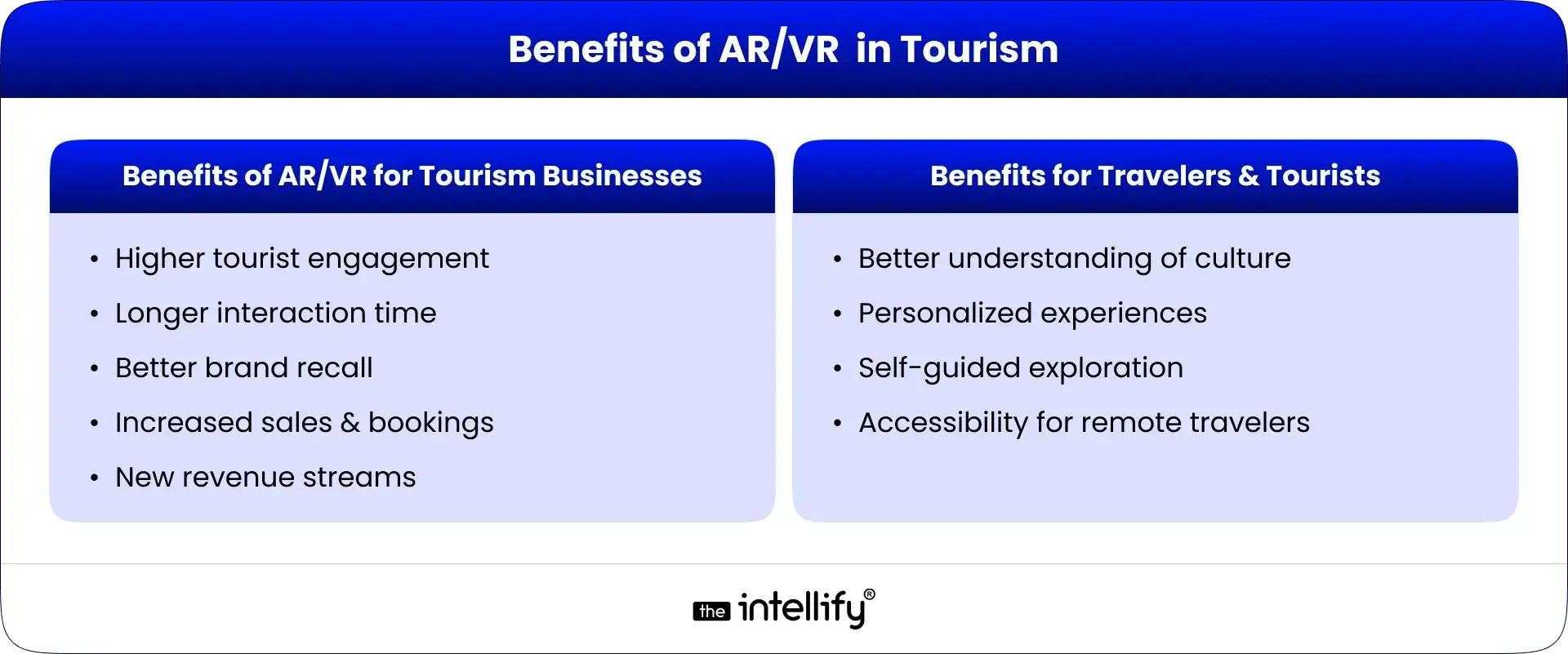
Benefits of AR/VR for Tourism Businesses
Adopting AR/VR brings a host of advantages for tourism companies.
- Higher tourist engagement: Interactive experiences keep tourists engaged longer, boosting overall satisfaction.
- Longer interaction time: Immersive experiences often lead to extended interactions, enhancing brand exposure.
- Better brand recall: Unique experiences are easier to remember, strengthening brand association.
- Increased sales & bookings: The novelty of AR/VR often entices users to purchase tickets or services they might not have considered otherwise.
- New revenue streams: Offering virtual tickets for experiences or digital guides can open up new financial avenues.
Benefits for Travelers & Tourists
Travelers also stand to gain significantly from AR/VR.
- Better understanding of culture: With in-depth insights into local customs and history, travelers enrich their journeys.
- Personalized experiences: As travelers engage more, they can receive tailored recommendations based on their interests.
- Self-guided exploration: AR apps empower visitors to explore at their own pace, putting them in control.
- Accessibility for remote travelers: Those unable to travel due to health or financial constraints can still enjoy virtual experiences.
Real-World Examples of AR/VR in Tourism
Both India and international markets are using technology to enhance tourism.
- Indian monuments using AR/VR: Iconic sites like the Taj Mahal are exploring AR features to showcase their storied histories.
- International museums: Institutions like the British Museum and the Louvre are offering VR tours, allowing global audiences to experience their fantastic exhibits.
- Tourism boards using VR for promotion: Destinations worldwide are crafting promotional VR content that captivatingly showcases their attractions.
Types of AR/VR Tourism Apps You Can Build
There’s a variety of applications businesses can develop to harness AR/VR’s potential in tourism.
- Virtual tour apps: Ideal for historical sites and museums.
- AR travel guide apps: Enhance on-site experiences with additional content.
- Cultural storytelling apps: Make narratives come alive through immersive journeys.
- VR museum platforms: Provide fully immersive virtual museum visits.
- Metaverse-based tourism experiences: Engage users with an entirely new level of interaction.
How to Build an AR/VR Tourism App (Step-by-Step Overview)
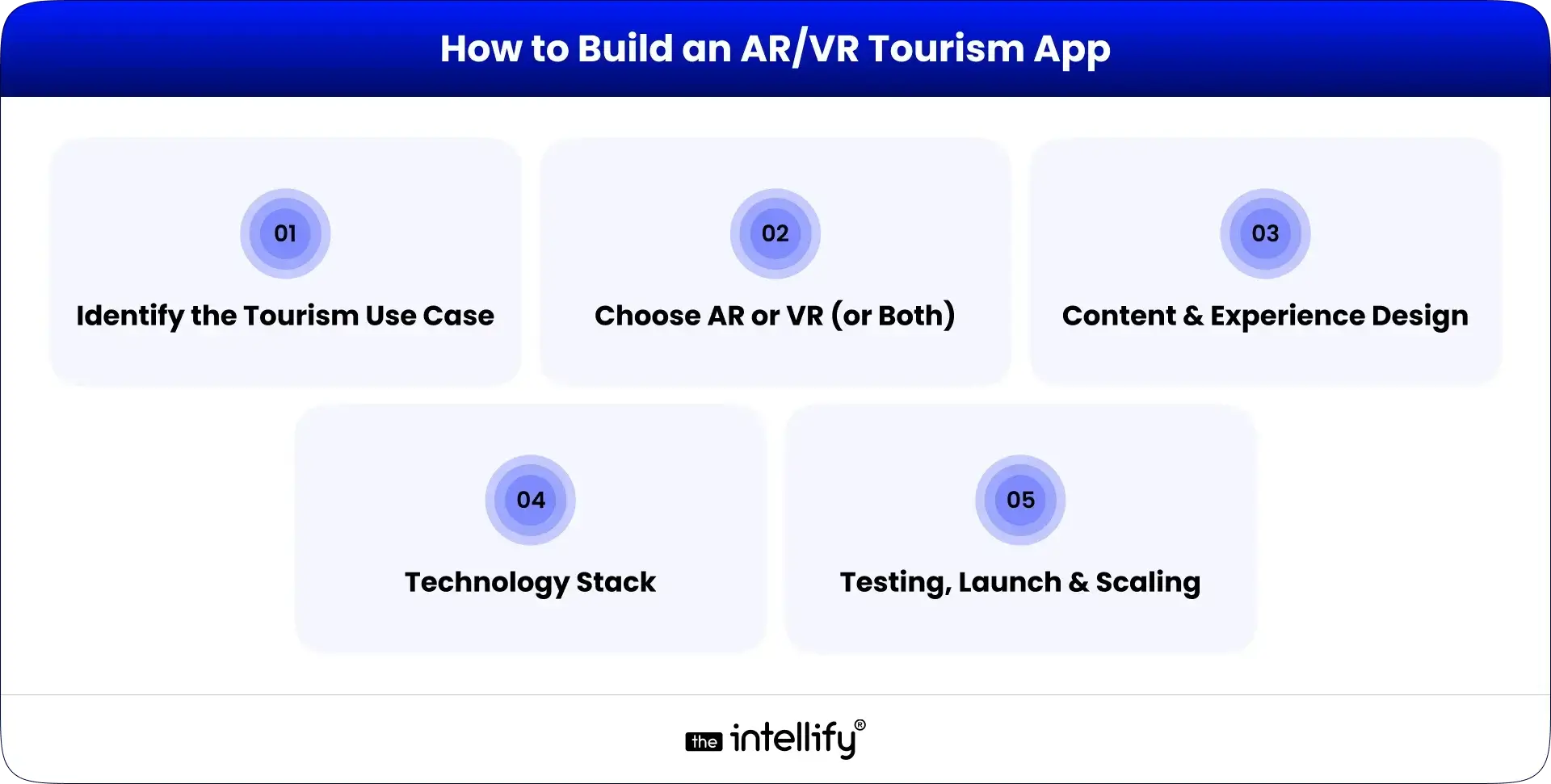
Creating an AR/VR tourism app might seem complex, but here’s a straightforward approach.
1. Identify the Tourism Use Case
Pinpoint whether your focus is on cultural, heritage, or city-based experiences.
2. Choose AR or VR (or Both)
Decide whether AR, VR, or a combination serves your users’ needs best.
3. Content & Experience Design
Craft compelling narratives while ensuring visual accuracy to enhance the user journey.
4. Technology Stack
Consider the necessary technology, such as mobile AR capabilities and VR headsets.
5. Testing, Launch & Scaling
Conduct thorough performance testing, gather user feedback, and stay open to continuous improvements.
Cost of Developing an AR/VR Tourism App
Understanding costs is essential for planning.
- Basic AR tourism app cost: Developing a simple AR app typically starts at a budget-friendly range of $10,000 – $30,000.
- VR virtual tour app cost: More complex VR experiences can range from $50,000 – $150,000, depending on the desired features and quality.
- Factors affecting development cost: The complexity of the content, technology stack, and features significantly impact costs.
- India vs global development perspective: Development costs in India are generally lower than in Western countries, providing cost-effective solutions.
Challenges in AR/VR Tourism Projects (And How to Solve Them)
Despite its promise, AR/VR projects can encounter hurdles.
- Content accuracy: It’s vital to ensure that historical data and visualizations are accurately represented through thorough research.
- Hardware limitations: Be mindful of the technology requirements that users may need; inclusivity should be a priority.
- User adoption: Offering clear onboarding processes can ease interaction with new technology.
- Maintenance & updates: Regular content updates and tech improvements are essential for long-term success.
Future of AR/VR in Tourism & Cultural Exploration
The future of AR/VR in tourism looks promising:
- Digital heritage preservation: As tech advances, preserving and sharing cultural heritage digitally will become easier.
- AI + AR/VR tourism: Merging AI with AR/VR can enhance personalization and adapt experiences to match user preferences.
- Metaverse tourism experiences: The rise of the metaverse will redefine how we interact with travel and experiences.
- What tourism brands should prepare for: Brands need to stay current with tech trends and prepare to weave AR/VR into their strategies.
Why Choose a Professional AR/VR App Development Partner
As exciting as AR/VR is, developing an app requires expertise.
- Importance of experience: Partnering with AR/VR app development company can ensures quality and innovation.
- Cultural accuracy & UX design: Professionals can help create culturally sensitive and user-friendly applications.
- Long-term scalability: Quality developers design apps with future growth and adaptability in mind.
- Global deployment readiness: Skilled partners facilitate worldwide access and compliance with various standards.
Conclusion: AR/VR Is Not Replacing Travel, It’s Enhancing It
The message is clear: AR/VR is reshaping tourism by creating more engaging, personalized, and informative experiences. The benefits are profound for businesses, travelers, and cultural institutions alike. While technology can’t replicate the magic of physical travel, it does enrich our understanding and connection to the world around us. Now is the time for tourism brands, governments, and museums to seize this digital evolution. Reach out to The Intellify today to find out how we can help you harness AR and VR, unlocking a world of new possibilities in tourism.
Frequently Asked Questions (FAQs)
1. How does AR/VR for tourism help travelers explore cultural sites before visiting?
AR/VR allows users to preview destinations and experiences virtually, aiding in informed travel decisions.
2. What is the difference between AR for tourism and VR for tourism experiences?
AR adds digital overlays to the real world through smartphones, while VR immerses users in a completely digital environment.
3. Can AR/VR tourism apps increase tourist engagement at historical and cultural destinations?
Yes, interactive experiences capture interest and encourage exploration, enhancing engagement.
4. Is AR/VR in tourism suitable for museums, heritage sites, and tourism boards?
Absolutely! These technologies greatly enrich visitor experiences, showcase collections, and promote destinations.
5. How much does it cost to build an AR/VR tourism or cultural exploration app?
Costs vary but typically range from $10,000 to $150,000 based on complexity and features.
6. Can AR/VR tourism apps work for both Indian and international travelers?
Yes, AR/VR applications can cater to a global audience by offering universal experiences and localized content.
7. Which company can help build a custom AR/VR tourism app for cultural exploration?
The Intellify specializes in developing tailored AR/VR solutions for tourism, with a focus on cultural accuracy and immersive design. Engage your audience, enhance understanding, and deepen connections with AR/VR in tourism. The journey has just begun!


Written By, Darshak Doshi
With over a decade of experience, Darshak is a technopreneur specializing in cloud-based applications and product development in healthcare, insurance, and manufacturing. He excels in AWS Cloud, backend development, and immersive technologies like AR/VR to drive innovation and efficiency. Darshak has also explored AI/ML in insurance and healthcare, pushing the boundaries of technology to solve complex problems. His user-focused, results-driven approach ensures he builds scalable cloud solutions, cutting-edge AR/VR experiences, and AI-driven insights that meet today’s demands while anticipating future needs.

Augmented Reality in Retail: How It Improves the Shopping Experience
Summary: Shopping today is becoming more interactive and experience-driven, with technologies like augmented reality in retail helping customers make better decisions. By enabling virtual try-ons and real-world product visualization, AR reduces uncertainty and improves confidence before purchase. This blog explores how AR enhances customer experience, connects online and in-store journeys, and helps businesses achieve higher […]
Virtual Reality in E-commerce: The Future of Immersive Online Shopping
Summary: Virtual reality is making online shopping more engaging by helping customers explore products in a more real and interactive way. Instead of guessing from images, people can see details, try items virtually, and feel more confident before buying. This reduces confusion and returns while improving overall satisfaction. As technology grows, more businesses are using […]
Virtual Reality in Education: Applications, Benefits & Future of Learning
Summary: Virtual reality in education is changing how students learn by making lessons more interactive and practical. Instead of only reading or listening, learners can explore concepts through immersive experiences. This blog explains how VR is used across subjects, its key benefits, real-world applications, challenges, and future trends. It also covers how institutions can adopt […]
Augmented Reality in Retail: How It Improves the Shopping Experience
Summary: Shopping today is becoming more interactive and experience-driven, with technologies like augmented reality in retail helping customers make better decisions. By enabling virtual try-ons and real-world product visualization, AR reduces uncertainty and improves confidence before purchase. This blog explores how AR enhances customer experience, connects online and in-store journeys, and helps businesses achieve higher […]
Virtual Reality in E-commerce: The Future of Immersive Online Shopping
Summary: Virtual reality is making online shopping more engaging by helping customers explore products in a more real and interactive way. Instead of guessing from images, people can see details, try items virtually, and feel more confident before buying. This reduces confusion and returns while improving overall satisfaction. As technology grows, more businesses are using […]
Virtual Reality in Education: Applications, Benefits & Future of Learning
Summary: Virtual reality in education is changing how students learn by making lessons more interactive and practical. Instead of only reading or listening, learners can explore concepts through immersive experiences. This blog explains how VR is used across subjects, its key benefits, real-world applications, challenges, and future trends. It also covers how institutions can adopt […]
0
+0
+0
+0
+Committed Delivery Leads To Client Satisfaction
Client Testimonials that keep our expert's spirits highly motivated to deliver extraordinary solutions.

Christopher Seny
My experience working with The Intellify, has been a great experience. The team has a wealth of expertise in the tech space. Working with the intellify was a growing experience for me, I learned a lot. The team keeps great communication & responds fast to new ideas & suggestions. The team also provides great suggestions & solutions as well. I couldn’t imagine working with anybody else on this project & it has been a blessing working with, The Intellify.

Izandi Serdyn
The Intellify delivered a platform from scratch, involving the client at every stage. The team was communicative, responsive, and punctual throughout the engagement. Virtual meetings and emails ensured seamless project management. Customers can expect a team that can work fast.

Kya Johnson
The app serves as an effective introduction for users to the product and its characters. Responsive and faithful to initial requirements, The Intellify’s team exceeded initial expectations. Internal stakeholders were particularly pleased with their communication.

Stefan Wyk
Working with The Intellify to develop our website was an outstanding experience. Their team displayed exceptional professionalism, creativity, and technical expertise throughout the entire process. The final product exceeded our expectations, delivering a sleek, user-friendly, and highly functional website. We highly recommend The Intellify to anyone in need of top-tier web development services.

Steve Thorpe
The Intellify’s work has been met with high praise from internal and external stakeholders. The team is efficient, diligent, and reliable in their service. They go above and beyond in terms of communication and project management. The Intellify is a responsive vendor that gets the job done.

Tal Dotan
I’ve been working with The Intellify for the last 3 years. During this period of time we’ve planned and executed projects in both small and large scale. Working with The Intellify was and still is the best decision I’ve made when rising up Divo, I strongly recommend to work with them in any type of project.


 +1-302-803-4983