Summary:
This blog covers everything you need to know about fuel delivery app development, including how on-demand fuel delivery works, key features, costs, and legal considerations in the USA. It explains how businesses can build, launch, and scale a fuel delivery app while ensuring safety, compliance, and smooth operations. Whether you’re planning a new fuel delivery business or modernizing an existing one, this guide offers practical insights to help you make confident, informed decisions.
In recent years, the fuel delivery industry has experienced a remarkable rise in demand, reshaping how consumers access fuel. As technology evolves and the desire for convenience grows, fuel delivery app development has emerged as an exciting business opportunity in the USA. In this guide, we’ll unpack what on-demand fuel delivery is all about, explore its business potential, explain how these apps operate, and lay out the key features needed for success in this field. By the time you finish reading, you’ll have a clear roadmap for launching your own fuel delivery service.
Why On-Demand Fuel Delivery Is Gaining Traction in the USA
Today’s consumers value convenience like never before. With hectic schedules, many are looking for ways to save both time and effort. On-demand fuel delivery presents a straightforward solution, enabling users to refuel their vehicles without having to make a stop at the gas station. This service not only helps customers free up valuable time but also enhances their overall experience. The appeal of fuel delivery reaches a wide audience, from busy professionals to families, creating ample opportunities for new businesses.
What Is On-Demand Fuel Delivery?
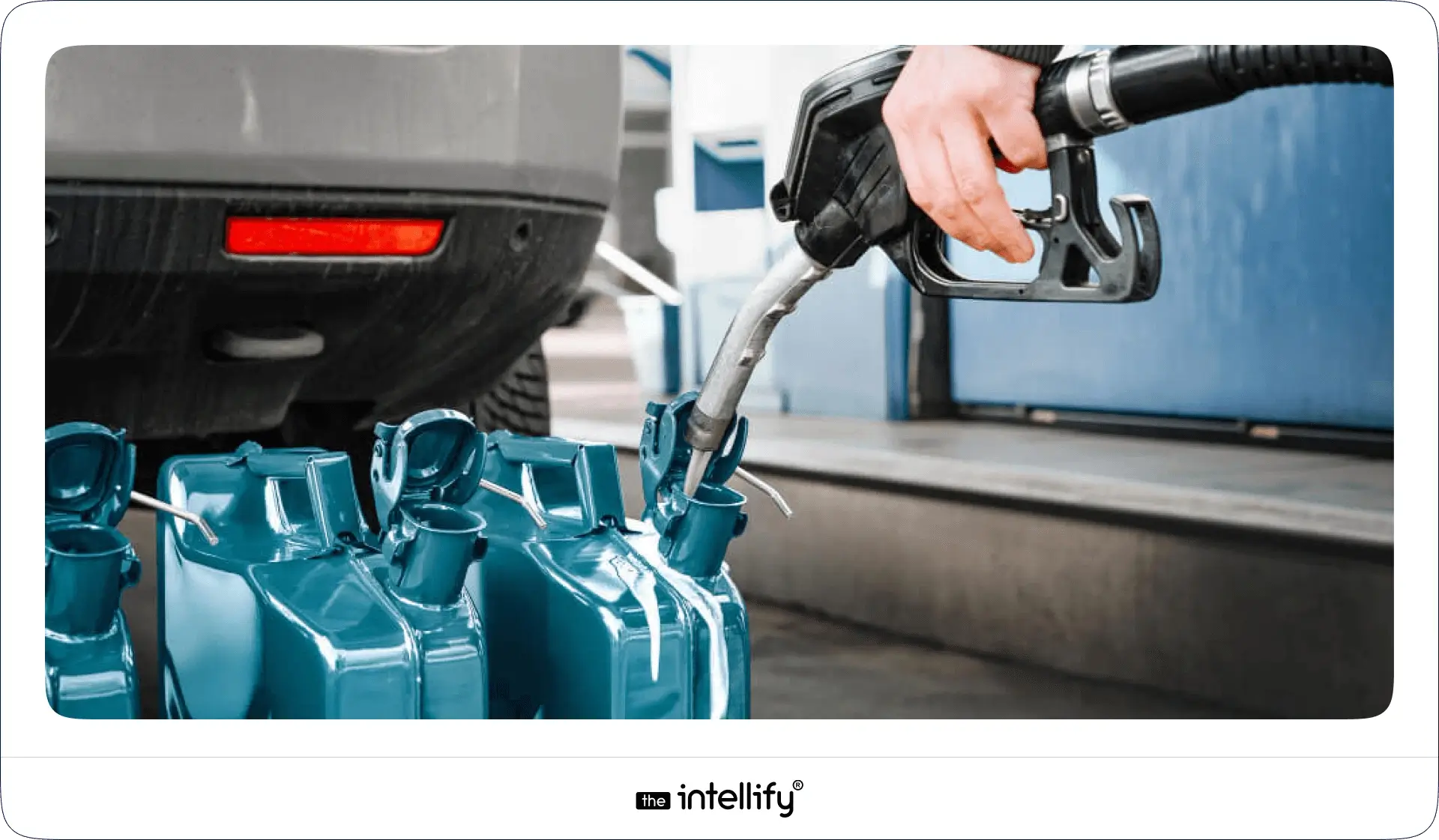
At its core, on-demand fuel delivery is all about bringing fuel directly to customers’ vehicles, whether they’re at home, at work, or somewhere in between. With a mobile app, users can easily request fuel delivery, choose the type and amount of fuel they need, and make secure payments all from their smartphones. This system removes the hassle of visiting a fuel station, making refueling a breeze.
Why Fuel Delivery Is a Strong Business Opportunity in the USA
The fuel delivery market is primed for growth, especially in bustling urban areas. With more and more vehicles hitting the road, the demand for inventive solutions in fuel access is growing. Here are a few compelling reasons to consider starting a fuel delivery business:
1. High Demand: As people increasingly rely on personal vehicles, the need for fuel remains consistent.
2. Consumer Convenience: Many users prefer the ease of having fuel brought directly to them.
3. Tech Integration: Advances in technology streamline app development and integration.
4. Diverse Customer Base: You can cater to various segments, from busy urbanites to fleets that need regular refueling.
How a Fuel Delivery App Works: Step-by-Step Flow
Let’s break down how an on-demand fuel delivery app operates:
1. User Registration: Customers create an account for app access.
2. Fuel Request: Users launch the app and specify the fuel type and quantity they need.
3. Location Tracking: The app uses GPS to pinpoint the customer’s vehicle.
4. Payment Processing: Secure payment options make transactions hassle-free.
5. Fuel Delivery: A nearby driver is assigned to deliver the fuel right to the customer’s location.
6. Confirmation and Receipt: After delivery, customers get confirmation along with a digital receipt.
Key Features of an On-Demand Fuel Delivery App
Customer App Features
1. Simple Registration & Login: Easy setup for both new and returning users.
2. Real-Time Location Tracking: Customers can track when their fuel is arriving.
3. Fuel Type & Quantity Selection: Options for various fuel types (like gasoline or diesel) along with quantity adjustments.
4. Scheduled or Instant Delivery: Flexibility to choose when fuel will be delivered.
5. Secure Payment Options: Multiple payment methods ensure peace of mind.
6. Order History & Invoices: Users can easily access past orders and invoices for reference.
Driver App Features
1. Order Notifications: Drivers receive alerts for new delivery requests.
2. Route Navigation: Integrated navigation tools help plan efficient routes.
3. Delivery Confirmation: Drivers confirm delivery through the app.
4. Fuel Quantity Logging: Ensures accurate records of fuel delivered.
Admin Panel Features
1. Order & Fleet Management: Administrators oversee all deliveries and fleet details.
2. Driver Assignment: A system for assigning orders to available drivers.
3. Pricing & Zone Control: Admins can set and adjust prices based on geographical zones.
4. Analytics & Reports: Insights into performance metrics and trends.
5. Compliance & Safety Logs: Keep records to meet legal requirements.
How to Start Your Own On-Demand Fuel Delivery Business

1. Market Research & Demand Validation: Look into your target city to gauge potential demand.
2. Business model selection: Decide between B2C, fleet-focused, or hybrid models.
3. Legal registrations & fuel delivery permits: Register your business and acquire necessary licenses.
4. Fleet setup & safety planning: Assemble a reliable fleet and implement safety protocols.
5. Building the fuel delivery app: Start with a Minimum Viable Product (MVP) to focus on core features.
6. Pilot launch & customer onboarding: Introduce your service to a select audience for initial feedback.
7. Scaling operations across cities: Once established, gradually expand your service based on demand.
Compliance, Safety & Legal Requirements in the USA
Getting a fuel delivery business up and running means understanding the legal landscape. Key considerations include:
- Permits and Licenses: Make sure you obtain the necessary fuel delivery permits.
- Safety Regulations: Comply with local and state safety regulations for fuel transport.
- Insurance: It’s important to secure insurance for your fleet to cover potential liabilities.
Cost of Fuel Delivery App Development in the USA
Estimating costs can vary widely depending on several factors:
- MVP fuel delivery app: Approximately $20,000 – $50,000.
- Full-scale fuel delivery platform: Around $50,000 – $150,000.
- Enterprise-level solution: $150,000 and above.
Factors That Affect Development Cost
1. Number of apps: Development costs depend on whether you’re creating apps for customers, drivers, and the admin panel.
2. Feature complexity: More intricate features require more development time and resources.
3. Compliance requirements: Meeting legal standards can add to your budget.
4. Integrations: Third-party integrations may influence costs.
5. Ongoing maintenance: Don’t overlook the need for continued support and updates.
Challenges in On-Demand Fuel Delivery & How to Solve Them
While the fuel delivery market holds promise, it does come with its set of challenges, including:
1. Regulatory compliance: Keep an eye on changing fuel regulations to sidestep legal issues.
2. Logistics Management: Effectively manage deliveries to meet customer expectations.
3. Market Competition: Stand out from the crowd by offering exceptional service and unique features.
How to Build a Fuel Delivery App: Step-by-Step Process
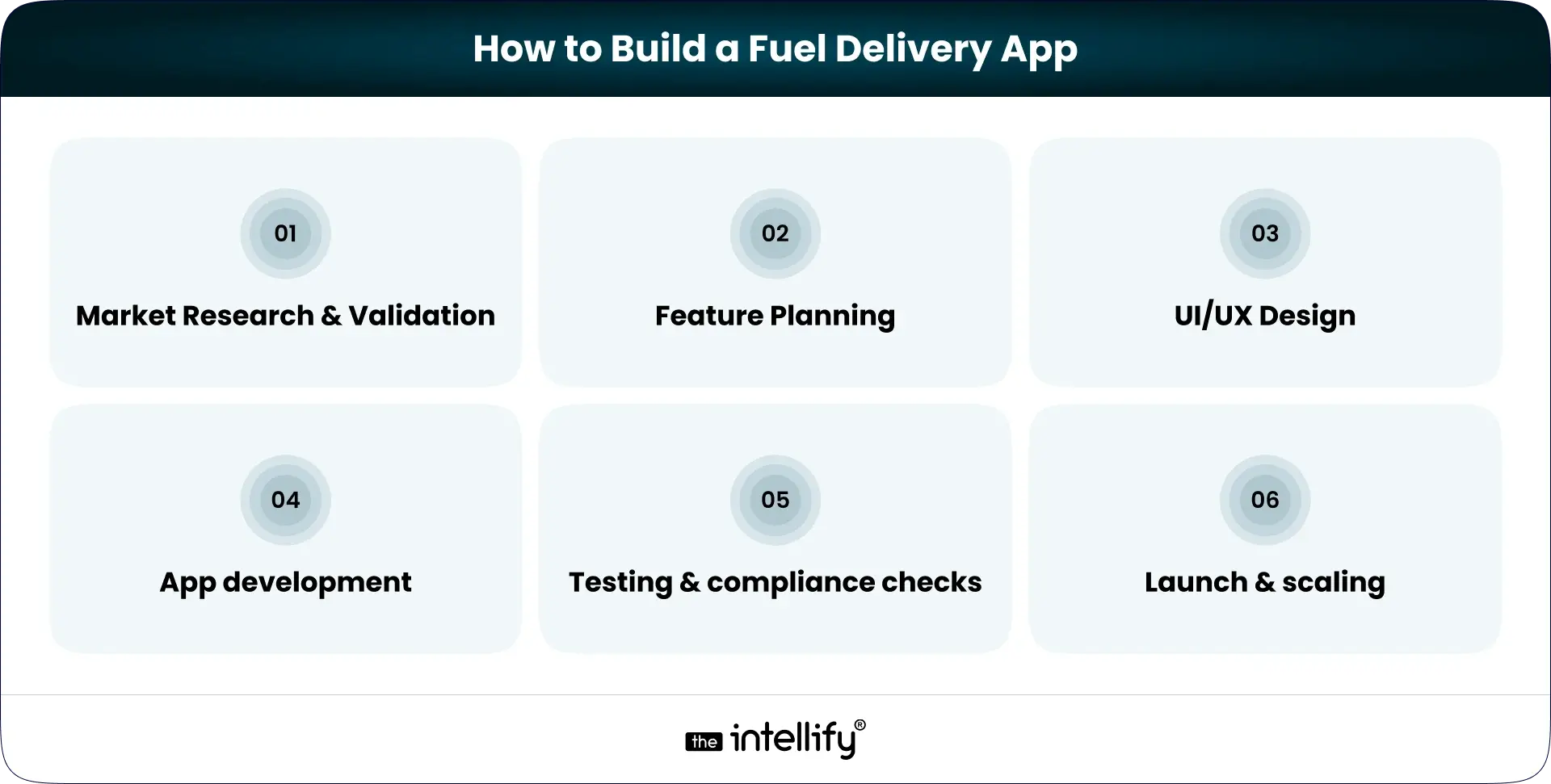
1. Market research & validation: Understand your target customers’ needs.
2. Feature planning: Identify crucial features that align with market demand.
3. UI/UX design: Design user-friendly interfaces for all users.
4. App development: Build the app based on your chosen tech stack.
5. Testing & compliance checks: Validate functionality while adhering to legal standards.
6. Launch & scaling: Release the app and expand based on the initial feedback.
Future of Fuel Delivery Apps in the USA
The future for fuel delivery apps looks promising, with exciting innovations ahead:
- AI-driven routing: Improve delivery efficiency through artificial intelligence.
- Predictive demand planning: Anticipate what customers need and adjust your supply accordingly.
- Fleet analytics: Use data to optimize routes and reduce delivery times.
- Subscription-based fueling: Offer users customizable fueling plans.
- Sustainability & optimization: Aim for eco-friendly practices that lower carbon footprints.

Final Thought
The increasing demand for fuel delivery app development signifies a significant opportunity within the USA. With careful planning, the right technology, and a solid execution strategy, you can launch a successful on-demand fuel delivery business that meets customer needs and taps into this thriving market.
Ready to take the plunge into your fuel delivery mobile app development journey? Let’s chat about your vision and how we can help you bring it to life!
Frequently Asked Questions (FAQs)
1. What is a fuel delivery app and how does it work?
A fuel delivery app connects users with fuel delivery services, enabling them to request and receive fuel directly at their location.
2. What does on-demand fuel delivery mean?
On-demand fuel delivery delivers fuel straight to customers, allowing them to skip the gas station entirely.
3. Is on-demand fuel delivery legal in the USA?
Yes, but legal requirements and permits can differ by state, so it’s crucial to align with local regulations.
4. How much does fuel delivery app development cost in the USA?
Costs can range from $20,000 for a simple MVP to over $150,000 for a more comprehensive solution, influenced by features and complexity.
5. What features are essential in a fuel delivery app?
Key features include customer and driver apps, real-time tracking, secure payment options, and an admin panel for management.
6. How can I start my own on-demand fuel delivery business?
Start with market research, select a business model, obtain legal permissions, and develop your app before launching.
7. What permits and licenses are required to run a fuel delivery business in the USA?
Requirements vary by location, including fuel delivery permits and business licenses, so be sure to research local regulations.



Written By, Jalaj Shah
The COO and Co-Founder of The Intellify. Jalaj enjoys experimenting with new strategies. His posts are fantastic for businesses seeking innovative development ideas. Discover practical insights from his engaging content.

Mobile Banking App Development: Features, Security, Compliance & Cost
Summary: Mobile banking app development is becoming essential as more users prefer to manage their finances on mobile. This blog gives a clear view of what it takes to build a banking app, from planning the right approach to understanding how everything comes together. It walks through the overall process, important decisions, and what businesses […]

Augmented Reality Storytelling: Turning Brand Stories into Immersive Experiences
Summary: This blog explores how Augmented Reality Storytelling helps brands create deeper engagement through immersive, interactive experiences. It explains what AR storytelling is, how it works, real-world brand examples, key benefits, and common use cases across industries. The article also covers essential features of an AR storytelling app, how to choose the right AR app […]
How to Build an Instant Delivery App Like Blinkit & Zepto: Step-by-Step Guide
Summary: This blog explains how instant delivery apps like Blinkit and Zepto work, why the quick-commerce model is growing, and how you can build your own platform step by step. It covers features, technology, business models, costs, timelines, and common challenges. You’ll also learn what’s required for real-time delivery, dark-store operations, and logistics planning. If […]
Mobile Banking App Development: Features, Security, Compliance & Cost
Summary: Mobile banking app development is becoming essential as more users prefer to manage their finances on mobile. This blog gives a clear view of what it takes to build a banking app, from planning the right approach to understanding how everything comes together. It walks through the overall process, important decisions, and what businesses […]
Augmented Reality Storytelling: Turning Brand Stories into Immersive Experiences
Summary: This blog explores how Augmented Reality Storytelling helps brands create deeper engagement through immersive, interactive experiences. It explains what AR storytelling is, how it works, real-world brand examples, key benefits, and common use cases across industries. The article also covers essential features of an AR storytelling app, how to choose the right AR app […]
How to Build an Instant Delivery App Like Blinkit & Zepto: Step-by-Step Guide
Summary: This blog explains how instant delivery apps like Blinkit and Zepto work, why the quick-commerce model is growing, and how you can build your own platform step by step. It covers features, technology, business models, costs, timelines, and common challenges. You’ll also learn what’s required for real-time delivery, dark-store operations, and logistics planning. If […]
0
+0
+0
+0
+Committed Delivery Leads To Client Satisfaction
Client Testimonials that keep our expert's spirits highly motivated to deliver extraordinary solutions.

Christopher Seny
My experience working with The Intellify, has been a great experience. The team has a wealth of expertise in the tech space. Working with the intellify was a growing experience for me, I learned a lot. The team keeps great communication & responds fast to new ideas & suggestions. The team also provides great suggestions & solutions as well. I couldn’t imagine working with anybody else on this project & it has been a blessing working with, The Intellify.

Izandi Serdyn
The Intellify delivered a platform from scratch, involving the client at every stage. The team was communicative, responsive, and punctual throughout the engagement. Virtual meetings and emails ensured seamless project management. Customers can expect a team that can work fast.

Kya Johnson
The app serves as an effective introduction for users to the product and its characters. Responsive and faithful to initial requirements, The Intellify’s team exceeded initial expectations. Internal stakeholders were particularly pleased with their communication.

Stefan Wyk
Working with The Intellify to develop our website was an outstanding experience. Their team displayed exceptional professionalism, creativity, and technical expertise throughout the entire process. The final product exceeded our expectations, delivering a sleek, user-friendly, and highly functional website. We highly recommend The Intellify to anyone in need of top-tier web development services.

Steve Thorpe
The Intellify’s work has been met with high praise from internal and external stakeholders. The team is efficient, diligent, and reliable in their service. They go above and beyond in terms of communication and project management. The Intellify is a responsive vendor that gets the job done.

Tal Dotan
I’ve been working with The Intellify for the last 3 years. During this period of time we’ve planned and executed projects in both small and large scale. Working with The Intellify was and still is the best decision I’ve made when rising up Divo, I strongly recommend to work with them in any type of project.


 +1-302-803-4983