Digital Transformation in Healthcare: Strategy for Membership Platforms

By Jalaj Shah
March 12, 2026
Summary:
Digital transformation is helping healthcare organizations build modern membership platforms that improve patient experience and operational efficiency. This blog explains how technologies like telehealth, AI, secure patient portals, and subscription billing systems support the growth of membership-based healthcare models. It also explores key platform components, implementation strategies, industry challenges, and future trends. With the right digital approach, healthcare providers can create scalable platforms that deliver continuous care and strengthen long-term patient relationships.
Why Membership-Based Healthcare Is Rapidly Evolving
The healthcare landscape is experiencing significant changes. We’re seeing a leap from traditional care models to subscription and membership platforms, fundamentally reshaping how services are delivered and consumed. With patients increasingly demanding convenience, transparency, and digital access, healthcare providers are under pressure to boost operational efficiency and retain their clientele. As we gear up for 2026, this year stands as a pivotal moment for modernizing healthcare platforms, making it essential for decision-makers to craft effective strategies.
In this guide, we’ll delve into what digital transformation means for healthcare membership platforms and how you can navigate this shifting landscape to enhance patient outcomes and drive business performance.
What Digital Transformation in Healthcare Means for Membership Platforms
Digital transformation in healthcare goes beyond simple digitization; it’s about creating connected experiences that weave together clinical, administrative, and customer functions. This integration paves the way for smoother patient journeys, allowing for preventive, continuous, and personalized care models.
Aligning technology with your business goals and focusing on member value is crucial. When organizations do this, they’re better equipped to meet the needs of their subscribers and foster a more engaged and loyal patient base.
Key Drivers Accelerating Digital Transformation in Healthcare
Several key factors are pushing this transformation in healthcare:
- Demand for Virtual Care: More patients prefer remote access to healthcare services, prompting platforms to expand their telehealth options.
- Value-Based Care models: As these models gain popularity, healthcare organizations must adopt data-driven approaches to improve care quality and patient outcomes.
- Competitive pressure: Providers face growing competition from digital first health solutions that cater to modern patient needs more effectively.
- Regulatory Requirements: Compliance mandates are driving the need for robust systems focusing on data management and security.
- Workforce Shortages: The rising demand for healthcare services often surpasses available resources, making automation critical.
Core Components of a Modern Healthcare Membership Platform
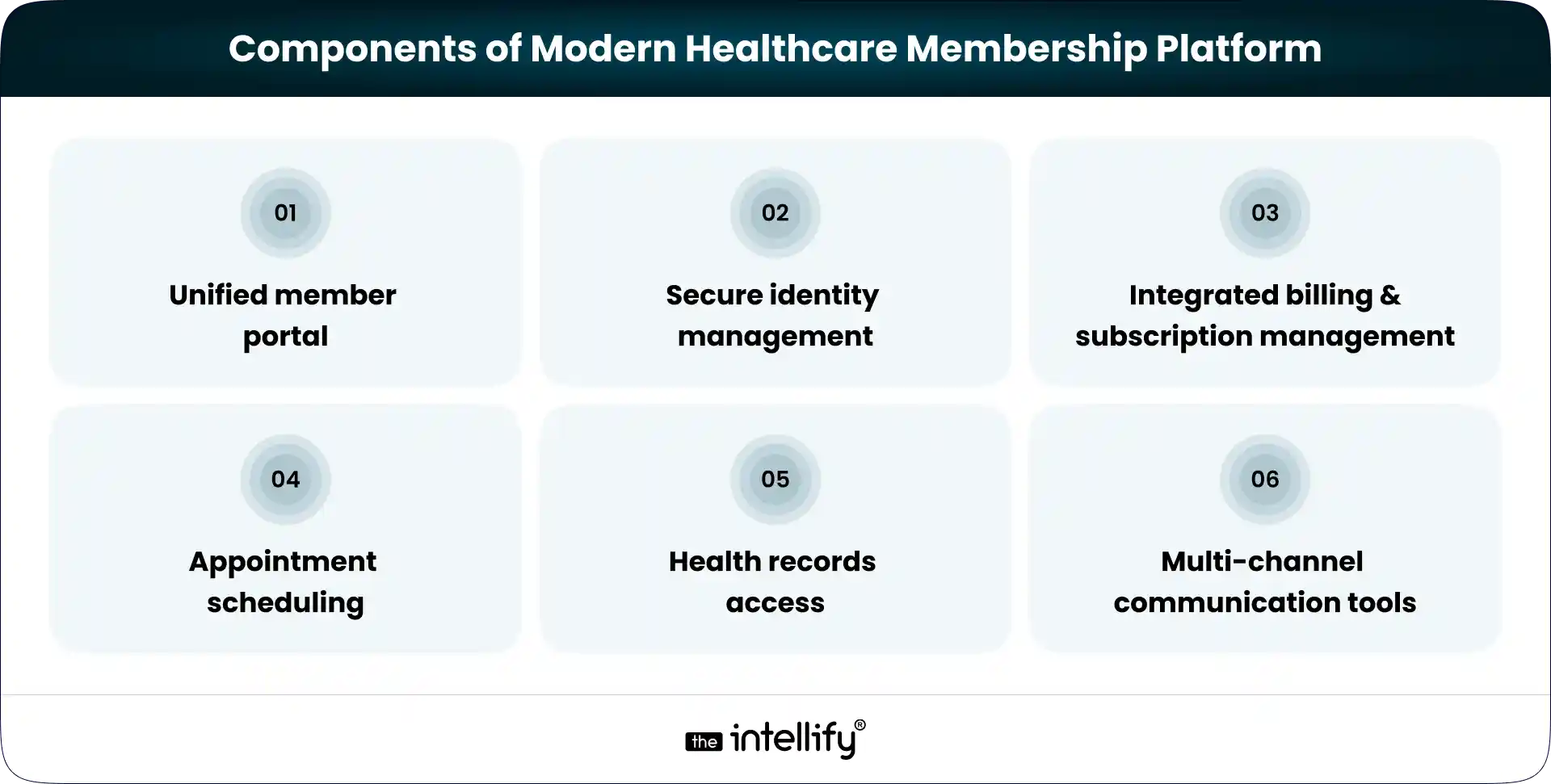
A contemporary healthcare membership platform should feature several essential components:
1. Unified member portal:- A central hub for services, plans, and communication can significantly enhance the user experience.
2. Secure identity management:- Safeguarding member information through secure access protocols is absolutely essential.
3. Integrated billing and subscription management:- Streamlined payment processes boost operational efficiency.
4. Appointment scheduling:- It should be easy for users to select telehealth services or in-person visits.
5. Health records access:- Allowing members to view and manage their health records fosters a sense of ownership.
6. Multi-channel communication tools:- Incorporating chat, messaging, and notifications keeps members engaged and informed.
Building a Practical Digital Transformation Strategy for Healthcare Organizations
To thrive in this transition, organizations should follow these key steps:
- Assess current platform maturity: Identify any technology or workflow gaps that might be holding the organization back.
- Define clear objectives: Understand what success looks like for you, improved patient satisfaction, or heightened engagement levels.
- Prioritize improvements: Focus on high-impact changes that can deliver quick wins.
- Secure leadership buy-in: Getting alignment across departments promotes unified efforts during this transition.
- Plan budget and timelines: Having realistic financial and operational plans helps pave the way for smoother implementation.
Digital Healthcare Solutions That Deliver Real Member Value
The best digital healthcare solutions genuinely add value for members, including:
- Mobile-first access: Make sure services are available on mobile devices, allowing patients to engage with healthcare wherever they are.
- AI-supported tools: Such tools can assist in triaging symptoms and streamlining care.
- Wellness tracking integration: Real-time health monitoring empowers patients to take charge of their wellness.
- Simplified payment processes: Minimize the friction often encountered during claims processes.
Step-by-Step Implementation Plan
To implement a digital transformation strategy effectively, consider these phases:
Phase 1: Discovery: Engage stakeholders to gather requirements and align on clear objectives.
Phase 2: Technology selection: Select technologies that will work in harmony to support your goals.
Phase 3: Pilot programs: Begin with controlled rollouts to test systems and processes.
Phase 4: Staff training: Equip your team with the skills they’ll need for a successful transition.
Phase 5: Full deployment: Launch the platform in full and concentrate on ongoing optimization.
Navigating change management throughout this journey is vital.
Use Cases of Digital Transformation for Healthcare Membership Models
1. Concierge care:- Subscription based models that provide comprehensive care.
2. Corporate wellness programs:- Employee health initiatives that offer preventive care while lowering healthcare costs.
3. Chronic disease management:- Memberships dedicated to managing long-term health conditions.
4. Integrated care networks:- Bundled services that enhance complementary care options.
5. Community based initiatives:- Programs focusing on public health and wellness.
Measuring Success: KPIs That Actually Matter
To understand whether digital transformation is truly working, healthcare organizations need to track a few meaningful performance indicators rather than just surface level metrics. Some of the most useful KPIs include:
Member acquisition and retention: how effectively the platform attracts new members and keeps existing ones engaged over time.
Engagement and platform usage: how frequently members use features like appointments, messaging, or health records.
Operational efficiency: improvements in workflows, response times, and overall service delivery.
Reduction in administrative workload: the extent to which automation reduces manual tasks for staff.
Patient satisfaction and experience: feedback, ratings, and overall member experience with the platform.
Subscription revenue growth: whether membership programs are generating stable and increasing recurring revenue.
Future Trends Shaping Healthcare Membership Platforms in 2026 & Beyond
Healthcare membership platforms will keep evolving as patient expectations, technology, and care delivery models change. A few trends are already shaping what the next phase may look like.
Expansion of hybrid care models
Many providers are blending virtual consultations with in person visits. This hybrid approach gives patients flexibility while still allowing clinics to handle physical care when it’s needed.
Greater use of predictive analytics and AI
Healthcare platforms are starting to rely more on AI and predictive analytics to identify potential health risks early and support better clinical decisions.
Interoperability across healthcare ecosystems
Platforms will increasingly need to connect with labs, pharmacies, insurers, and other systems so patient information can move smoothly across the care journey.
Personalized preventive care programs
Membership models are gradually shifting toward prevention. Using patient data, providers can design wellness programs tailored to individual health needs.
Integration with wearables and home devices
Wearables and remote monitoring tools are becoming part of everyday healthcare. These devices help providers track health signals continuously and respond earlier.
Shift toward outcome-focused services
Rather than focusing only on the number of visits, healthcare organizations are paying more attention to long-term health outcomes and patient experience.

Conclusion:
Digital transformation in healthcare is essential for organizations aiming to stand out in a competitive landscape. By implementing effective membership platforms, healthcare providers can enhance patient care and improve operational efficiency. As expectations continue to evolve, many organizations are also working with experienced digital teams like The Intellify to modernize systems in a way that supports both clinical and operational needs without disrupting existing services.
The strategic steps you take now will build a robust foundation for a patient centered future in healthcare. Over time, this approach helps build trust, improve outcomes, and ensure healthcare delivery remains sustainable in an increasingly digital world.
Frequently Asked Questions (FAQs)
1) Why are subscription and membership models becoming popular in healthcare?
Many patients want predictable costs, faster access to care, and ongoing support instead of one-time visits. Membership models offer scheduled checkups, preventive care, virtual consultations, and wellness services under a single plan, which feels more convenient and reassuring.
2) What are the first steps to start digital transformation for a healthcare membership platform?
Most organizations begin by evaluating their current systems, identifying gaps in patient experience, and defining clear goals. Instead of replacing everything at once, successful teams prioritize high-impact improvements like online scheduling, secure communication, and digital payments.
3) How can digital tools improve member retention in healthcare programs?
Digital tools make services easier to use and more responsive. Features like reminders, personalized health tips, quick support chat, and smooth renewals help members stay engaged. When people feel supported between visits, they are far more likely to continue their subscription.
4) Is digital transformation necessary for existing healthcare membership programs, or only for new ones?
Digital transformation benefits both. Established programs can modernize outdated systems, improve member experience, and reduce operational costs, while new programs can launch with scalable digital foundations from the start.
5) How can providers ensure patient data stays secure during transformation?
Security must be built into every stage, from system design to daily operations. This includes encryption, strict access controls, compliance with regulations, regular audits, and staff training. Trust is critical in healthcare, so privacy protection cannot be an afterthought.
6) What common mistakes should organizations avoid when modernizing their platforms?
A frequent mistake is focusing only on technology while ignoring user experience. Another is trying to implement too many changes at once. Successful transformations balance innovation with simplicity and involve both staff and patients in the process.


Written By, Jalaj Shah
The COO and Co-Founder of The Intellify. Jalaj enjoys experimenting with new strategies. His posts are fantastic for businesses seeking innovative development ideas. Discover practical insights from his engaging content.

How to Automate Patient Onboarding in a Direct Primary Care Practice
Summary: Patient onboarding automation helps Direct Primary Care (DPC) practices simplify registration, digital intake forms, membership agreements, payment setup, and patient communication. This blog explains how to automate key onboarding workflows, integrate existing healthcare systems, protect patient information, and measure operational improvements. It also covers implementation best practices to help DPC practices reduce administrative work […]
How to Integrate AI Into an Existing DPC Platform Without Rebuilding It
Summary: This blog explains how to integrate AI into an existing Direct Primary Care (DPC) platform without rebuilding the entire system. It covers AI use cases, API integrations, implementation steps, HIPAA compliance, security considerations, common challenges, and costs. DPC practices can use these insights to modernize existing software, streamline administrative workflows, and improve operational efficiency. […]

How to Scale a Direct Primary Care Practice With Technology
Summary: This guide explains how technology can help Direct Primary Care practices scale without increasing administrative workload at the same pace. It covers DPC software, membership management, scheduling, billing, patient communication, automation, AI, and healthcare platform modernization, while outlining practical ways practices can build a more connected and scalable technology infrastructure. Running a Direct […]
How to Automate Patient Onboarding in a Direct Primary Care Practice
Summary: Patient onboarding automation helps Direct Primary Care (DPC) practices simplify registration, digital intake forms, membership agreements, payment setup, and patient communication. This blog explains how to automate key onboarding workflows, integrate existing healthcare systems, protect patient information, and measure operational improvements. It also covers implementation best practices to help DPC practices reduce administrative work […]
How to Integrate AI Into an Existing DPC Platform Without Rebuilding It
Summary: This blog explains how to integrate AI into an existing Direct Primary Care (DPC) platform without rebuilding the entire system. It covers AI use cases, API integrations, implementation steps, HIPAA compliance, security considerations, common challenges, and costs. DPC practices can use these insights to modernize existing software, streamline administrative workflows, and improve operational efficiency. […]
How to Scale a Direct Primary Care Practice With Technology
Summary: This guide explains how technology can help Direct Primary Care practices scale without increasing administrative workload at the same pace. It covers DPC software, membership management, scheduling, billing, patient communication, automation, AI, and healthcare platform modernization, while outlining practical ways practices can build a more connected and scalable technology infrastructure. Running a Direct […]
0
+0
+0
+0
+Committed Delivery Leads To Client Satisfaction
Client Testimonials that keep our expert's spirits highly motivated to deliver extraordinary solutions.

Christopher Seny
My experience working with The Intellify, has been a great experience. The team has a wealth of expertise in the tech space. Working with the intellify was a growing experience for me, I learned a lot. The team keeps great communication & responds fast to new ideas & suggestions. The team also provides great suggestions & solutions as well. I couldn’t imagine working with anybody else on this project & it has been a blessing working with, The Intellify.

Izandi Serdyn
The Intellify delivered a platform from scratch, involving the client at every stage. The team was communicative, responsive, and punctual throughout the engagement. Virtual meetings and emails ensured seamless project management. Customers can expect a team that can work fast.

Kya Johnson
The app serves as an effective introduction for users to the product and its characters. Responsive and faithful to initial requirements, The Intellify’s team exceeded initial expectations. Internal stakeholders were particularly pleased with their communication.

Stefan Wyk
Working with The Intellify to develop our website was an outstanding experience. Their team displayed exceptional professionalism, creativity, and technical expertise throughout the entire process. The final product exceeded our expectations, delivering a sleek, user-friendly, and highly functional website. We highly recommend The Intellify to anyone in need of top-tier web development services.

Steve Thorpe
The Intellify’s work has been met with high praise from internal and external stakeholders. The team is efficient, diligent, and reliable in their service. They go above and beyond in terms of communication and project management. The Intellify is a responsive vendor that gets the job done.

Tal Dotan
I’ve been working with The Intellify for the last 3 years. During this period of time we’ve planned and executed projects in both small and large scale. Working with The Intellify was and still is the best decision I’ve made when rising up Divo, I strongly recommend to work with them in any type of project.


 +1-302-803-4983