Augmented Reality Storytelling: Turning Brand Stories into Immersive Experiences

By Shravan Rajpurohit
January 15, 2026
Summary:
This blog explores how Augmented Reality Storytelling helps brands create deeper engagement through immersive, interactive experiences. It explains what AR storytelling is, how it works, real-world brand examples, key benefits, and common use cases across industries. The article also covers essential features of an AR storytelling app, how to choose the right AR app development company, and what the future holds for AR-enhanced storytelling in brand communication.
Storytelling used to be simple. A picture. A headline. Maybe a video if the budget allowed. People watched, nodded, and scrolled on. These days, though, attention is hard to earn and even harder to keep. Most users decide in seconds whether something is worth their time.
That’s where Augmented Reality Storytelling quietly steps in. Not loud. Not flashy. Just… more real. It doesn’t shout at people. It invites them in. And when done right, it feels less like marketing and more like an experience someone remembers later while waiting for coffee, or telling a friend, or thinking, “That was actually kind of cool.”
What Is Augmented Reality Storytelling?
At its core, Augmented Reality Storytelling is simple. It blends a story with digital elements like 3D visuals, animations, and sounds layered onto the real world through a phone, tablet, or wearable device. The story doesn’t live on a flat screen anymore. It exists around the user.
Unlike traditional storytelling, AR Storytelling lets people interact. They don’t just watch. They move, tap, and explore. Sometimes they even shape how the story unfolds.
Think of it as reading a book where the characters step off the page and stand right in front of you. Slightly surreal. Very engaging.
Why Brands Are Investing in AR Storytelling
Most brands aren’t struggling with ideas. They’re struggling with attention. People skip ads. They ignore banners. They mute videos. And honestly, you can’t blame them. We’ve all done it.
Augmented Reality Storytelling works because it changes the dynamic. Instead of asking for attention, it earns it. Here’s why brands are leaning in:
- People spend more time with interactive content
- Experiences are remembered longer than messages
- Users feel involved, not sold to
There’s also emotion involved. Curiosity. A small spark of surprise. Sometimes even joy. Those feelings matter more than click-through rates ever will.
How AR-Enhanced Storytelling Works (Step-by-Step)
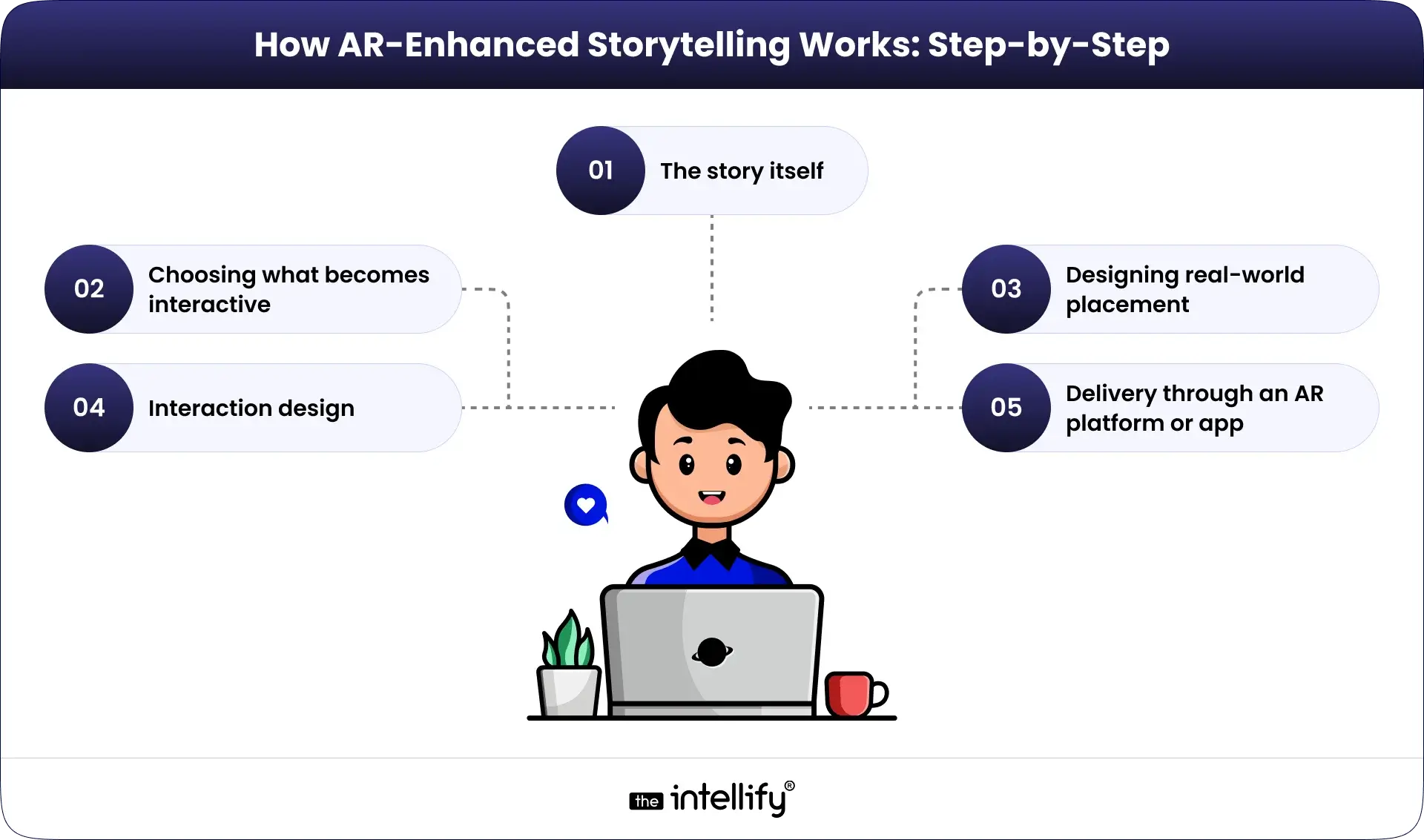
AR-enhanced storytelling doesn’t begin with code or 3D models. It starts much earlier, often with a simple question: what do we want people to feel?
Step 1: The story itself.
This is the part many brands rush. A good AR experience doesn’t exist just to look impressive. It needs a clear narrative, something with a beginning, a middle, and a reason to care. It could be a product journey, a brand origin, or even a small moment that reflects a value.
Step 2: Choosing what becomes interactive.
Not everything needs to move. Some elements stay subtle. A floating object here. A character appears there. The best AR storytelling feels intentional, not crowded.
Step 3: Designing real-world placement.
This is where AR becomes different from video. Objects must feel like they belong in the user’s space. A table. A wall. A street corner. If placement feels off, users notice instantly.
Step 4: Interaction design.
Taps, swipes, movement, distance. These actions guide the story forward. Nothing should feel confusing. If users hesitate, the story breaks.
Step 5: Delivery through an AR platform or app.
Often this happens through a dedicated AR Storytelling App, built to handle performance, visuals, and analytics without friction.
When all steps align, the tech disappears, and the story stays.
Real-World Examples of AR Storytelling by Brands
AR storytelling shows up in everyday places now, even if people don’t label it as such.
- Retail: Customers scan packaging and unlock stories about how a product was made, who designed it, or how it fits into real life. It feels personal. Almost quiet.
- Entertainment: AR lets fans step inside scenes, explore characters, or unlock short narratives tied to shows or films. Not trailers, extensions of the story.
- Education and museums: AR overlays bring history back into physical spaces. Old photographs turn into moving scenes. Voices return. People linger longer than planned.
- Tourism: Cities use AR to recreate lost buildings or events right where they once stood. Standing there, phone raised, people pause. You can almost see it in their faces.
These experiences work because they don’t feel like campaigns. They feel discovered.
AR Storytelling Case Study: RainbowMe by The Intellify
To see how AR storytelling works in real life, take a look at RainbowMe, an AR storytelling application developed by The Intellify. The app brings stories to life by letting users see and interact with characters in their own space. Instead of passively reading or watching, users explore the story through simple AR interactions. The focus stayed on smooth performance, child-friendly design, and clear storytelling. This project shows how AR storytelling apps can create meaningful engagement when the story comes first.
👉 View the full case study here:
Benefits of Augmented Reality Storytelling for Brands
This isn’t about trends. It’s about results that feel human. Some clear benefits brands notice:
- Longer attention spans: When people interact, they slow down. AR experiences naturally extend time spent with a brand.
- Stronger emotional memory: Stories layered into real space trigger emotion differently. Users remember the feeling, not just the message.
- Higher brand trust: Interactive storytelling feels transparent. Brands aren’t talking at people, they’re inviting them in.
- Organic sharing: People share AR experiences because they’re unexpected. Not because they’re told to.
- Better insight: Behind the scenes, brands learn how users move, pause, interact, or drop off valuable data without intrusive tactics.
It’s not perfect every time. Some experiences flop. But when it works, it works quietly and deeply.
Use Cases of AR Storytelling Across Industries
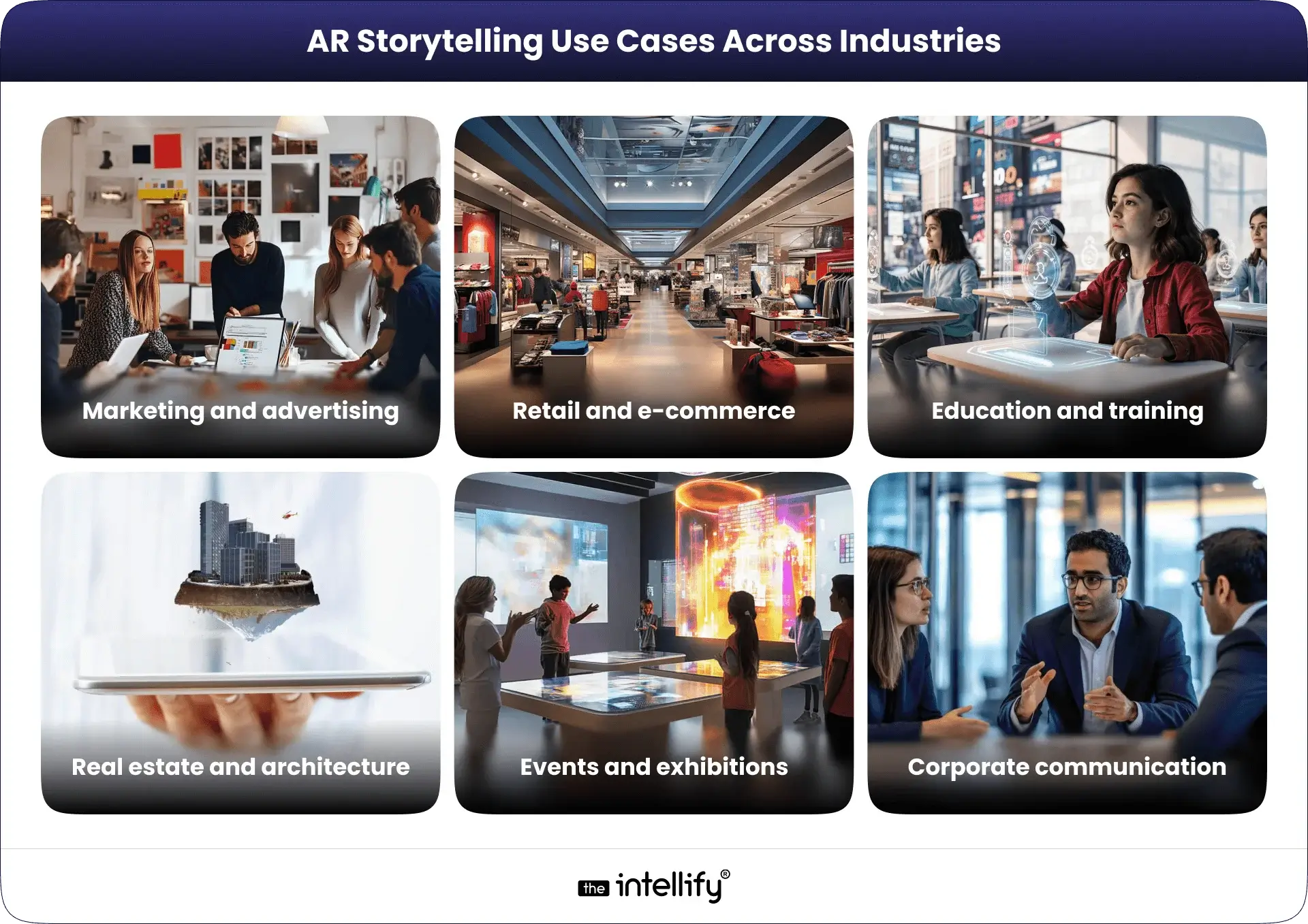
1) Marketing and advertising: Campaigns become experiences people choose to engage with, not skip.
2) Retail and eCommerce: Products come with context. Stories replace static descriptions.
3) Education and training: Lessons feel lived-in. Learning sticks longer when people explore instead of memorize.
4) Real estate and architecture: Spaces tell their own stories before they exist physically.
5) Events and exhibitions: Booths stop being booths. They become narrative environments.
6) Corporate communication: Onboarding, values, and culture feel human instead of procedural.
Different industries. Same outcome: deeper connection.
Key Features of a Successful AR Storytelling App
A good AR Storytelling App doesn’t feel complicated. If it does, something went wrong. Strong apps usually include:
1) Ease of use: If someone needs instructions, the experience has already lost momentum.
2) Smooth performance: Lag breaks immersion instantly. Stability matters more than effects.
3) Thoughtful interaction design: Every tap or movement should feel purposeful, not gimmicky.
4) Cross-device compatibility: Users shouldn’t worry about what phone they’re holding.
5) Scalable architecture: Stories evolve. The app should grow with them.
6) Analytics without intrusion: Understanding engagement without disrupting the experience is key.
People notice when an app stutters or feels clunky. And they leave fast. Performance matters more than fancy tricks.
How to Choose the Right AR Storytelling App Development Partner
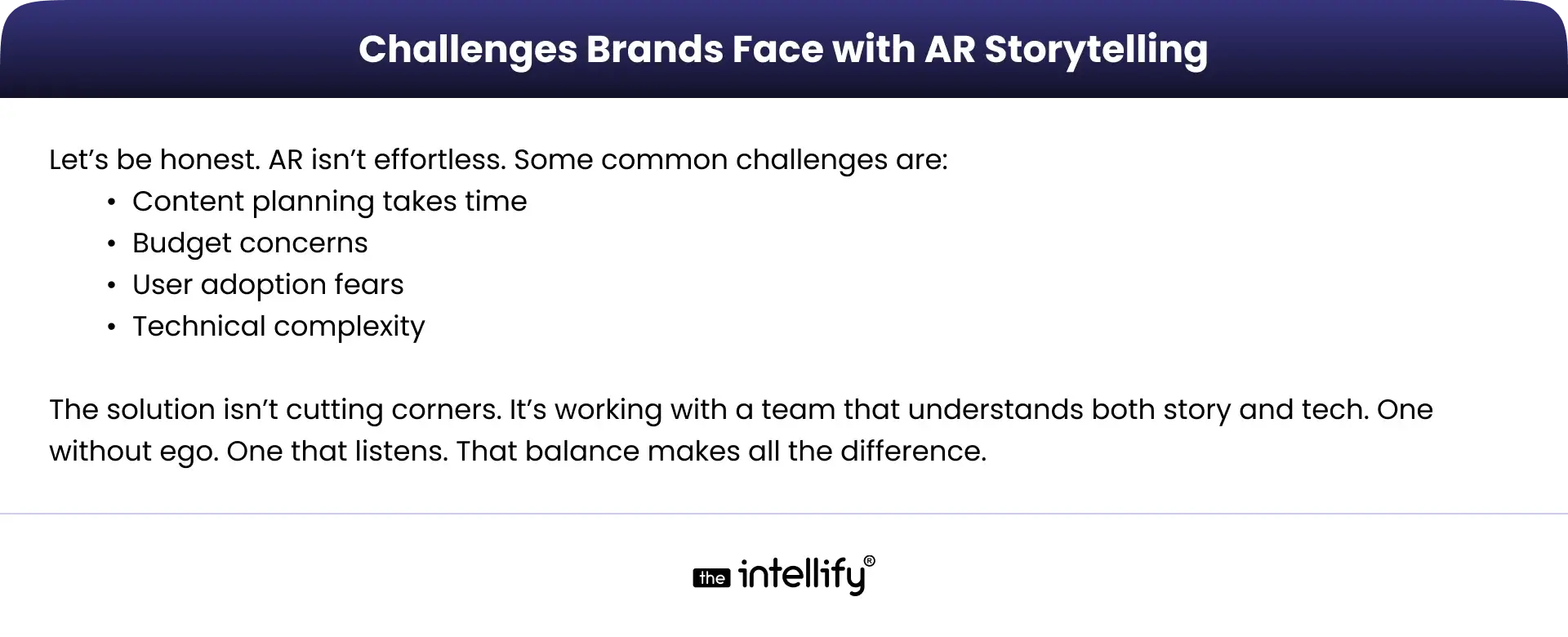
This decision shapes everything. Choosing an AR development partner isn’t just a technical decision. It’s a creative one. And honestly, this is where many AR storytelling projects either come together or quietly fall apart.
A good partner won’t start by talking about tools or frameworks. They’ll start by asking why you want to tell this story in the first place. A reliable partner should:
- Understand storytelling, not just code
- Have real AR project experience
- Build custom solutions, not templates
- Offer post-launch support
- Think about scale from day one
If they jump straight into features without asking about your story, pause. That’s usually a red flag.
Future of Augmented Reality Storytelling
The future of AR storytelling isn’t about louder visuals or bigger effects. It’s moving in the opposite direction toward subtle, everyday experiences that blend naturally into real life.
We’re seeing:
- AI-driven story personalization
- Growth of WebAR experiences
- AR Blending with AI and Spatial Computing
- From Campaigns to Long-Term Experiences
- Faster adoption in everyday marketing
It won’t replace traditional storytelling. It will sit beside it. Like another tool. A powerful one.
Conclusion: Why AR Storytelling Is the Future of Brand Engagement
People don’t remember slogans. They remember how something made them feel. Augmented Reality Storytelling works because it turns stories into moments users can explore, not just watch. When a story exists in the real world, even briefly, it feels more personal and easier to remember.
This isn’t about using AR for the sake of it. It’s about giving people space to engage on their own terms. Brands that focus on meaning, not spectacle, tend to get it right. As immersive tech becomes more common, thoughtful storytelling will matter more than novelty. The brands that start building those experiences now will be the ones people remember later.
Frequently Asked Questions (FAQs)
1. What is Augmented Reality Storytelling, and how is it different from normal ads?
Augmented Reality Storytelling places a brand’s story into the real world using interactive digital elements. Unlike normal ads, users don’t just watch, they explore, move, and engage at their own pace. This makes the experience feel less promotional and more personal, which helps people remember the message longer.
2. What practical benefits can brands expect from AR storytelling?
Brands usually see longer engagement time, better brand recall, and stronger emotional connection. Because users interact with the story instead of scrolling past it, AR storytelling often leads to higher trust and more meaningful interest compared to traditional digital content.
3. Do I need a native app to run AR storytelling, or can I use WebAR?
Both options work. WebAR is faster to launch and doesn’t require downloads, making it ideal for quick campaigns. A native AR storytelling app offers deeper interaction, better performance, and long-term use. The right choice depends on your goals, audience, and how often you plan to use AR.
4. How long and how much does it take to build an AR storytelling app?
Timelines depend on complexity. A basic AR experience can take a few weeks, while a full AR storytelling app may take several months. Cost varies based on design depth, 3D content, and features. Clear planning early on helps control both time and budget.
5. Which industries benefit most from AR storytelling?
Retail, e-commerce, education, entertainment, real estate, tourism, and events benefit the most. Any industry where seeing, exploring, or understanding something in a real-world context improves decision-making can gain value from AR storytelling.
6. How do I pick the right AR storytelling app development partner?
Look for a partner who understands storytelling, not just AR technology. They should have real project experience, a clear development process, and post-launch support. Teams like The Intellify focus on story-first AR development, helping brands build scalable, meaningful AR storytelling experiences from concept to launch.
7. What does The Intellify specifically help with on AR storytelling projects?
The Intellify helps brands design the story, build AR experiences (WebAR or app-based), create optimized 3D content, and track engagement after launch. Their approach combines practical AR development with clear storytelling, ensuring the experience feels natural and delivers real business value.


Written By, Shravan Rajpurohit
Shravan Rajpurohit is the Co-Founder & CEO of The Intellify, a leading Custom Software Development company that empowers startups, product development teams, and Fortune 500 companies. With over 10 years of experience in marketing, sales, and customer success, Shravan has been driving digital innovation since 2018, leading a team of 50+ creative professionals. His mission is to bridge the gap between business ideas and reality through advanced tech solutions, aiming to make The Intellify a global leader. He focuses on delivering excellence, solving real-world problems, and pushing the limits of digital transformation.


Mobile Banking App Development: Features, Security, Compliance & Cost
Summary: Mobile banking app development is becoming essential as more users prefer to manage their finances on mobile. This blog gives a clear view of what it takes to build a banking app, from planning the right approach to understanding how everything comes together. It walks through the overall process, important decisions, and what businesses […]
Virtual Reality in Education: Applications, Benefits & Future of Learning
Summary: Virtual reality in education is changing how students learn by making lessons more interactive and practical. Instead of only reading or listening, learners can explore concepts through immersive experiences. This blog explains how VR is used across subjects, its key benefits, real-world applications, challenges, and future trends. It also covers how institutions can adopt […]
Indoor Navigation with AR: The Future of Smart Wayfinding Systems
Summary: AR-powered indoor navigation is helping businesses deliver smarter and more seamless wayfinding experiences. By guiding users with real-time visual directions, it eliminates confusion in complex environments like hospitals, malls, airports, and campuses. These solutions not only improve visitor satisfaction but also enhance operational efficiency and accessibility. As demand for smarter buildings grows, indoor navigation […]
Virtual Reality in Education: Applications, Benefits & Future of Learning
Summary: Virtual reality in education is changing how students learn by making lessons more interactive and practical. Instead of only reading or listening, learners can explore concepts through immersive experiences. This blog explains how VR is used across subjects, its key benefits, real-world applications, challenges, and future trends. It also covers how institutions can adopt […]
Indoor Navigation with AR: The Future of Smart Wayfinding Systems
Summary: AR-powered indoor navigation is helping businesses deliver smarter and more seamless wayfinding experiences. By guiding users with real-time visual directions, it eliminates confusion in complex environments like hospitals, malls, airports, and campuses. These solutions not only improve visitor satisfaction but also enhance operational efficiency and accessibility. As demand for smarter buildings grows, indoor navigation […]
How Augmented Reality in Education is Transforming Learning Apps for Kids
Summary: Augmented Reality in education is transforming how children learn by making lessons more interactive, visual, and engaging. Instead of relying only on text or videos, AR allows kids to explore 3D models, animations, and real-world simulations, improving understanding and retention. This blog covers how AR learning apps work, their key features, real-world applications, benefits, […]
0
+0
+0
+0
+Committed Delivery Leads To Client Satisfaction
Client Testimonials that keep our expert's spirits highly motivated to deliver extraordinary solutions.

Christopher Seny
My experience working with The Intellify, has been a great experience. The team has a wealth of expertise in the tech space. Working with the intellify was a growing experience for me, I learned a lot. The team keeps great communication & responds fast to new ideas & suggestions. The team also provides great suggestions & solutions as well. I couldn’t imagine working with anybody else on this project & it has been a blessing working with, The Intellify.

Izandi Serdyn
The Intellify delivered a platform from scratch, involving the client at every stage. The team was communicative, responsive, and punctual throughout the engagement. Virtual meetings and emails ensured seamless project management. Customers can expect a team that can work fast.

Kya Johnson
The app serves as an effective introduction for users to the product and its characters. Responsive and faithful to initial requirements, The Intellify’s team exceeded initial expectations. Internal stakeholders were particularly pleased with their communication.

Stefan Wyk
Working with The Intellify to develop our website was an outstanding experience. Their team displayed exceptional professionalism, creativity, and technical expertise throughout the entire process. The final product exceeded our expectations, delivering a sleek, user-friendly, and highly functional website. We highly recommend The Intellify to anyone in need of top-tier web development services.

Steve Thorpe
The Intellify’s work has been met with high praise from internal and external stakeholders. The team is efficient, diligent, and reliable in their service. They go above and beyond in terms of communication and project management. The Intellify is a responsive vendor that gets the job done.

Tal Dotan
I’ve been working with The Intellify for the last 3 years. During this period of time we’ve planned and executed projects in both small and large scale. Working with The Intellify was and still is the best decision I’ve made when rising up Divo, I strongly recommend to work with them in any type of project.


 +1-302-803-4983