Healthcare Membership Management System: Key Features & Architecture

By Shravan Rajpurohit
April 1, 2026
Summary:
A healthcare membership management system helps providers handle patient subscriptions, billing, and communication in one place. This blog covers how these systems work, their key features, and why they are important for clinics, hospitals, and wellness providers. It also highlights how they improve efficiency, reduce manual work, and help deliver better patient care while ensuring consistent and predictable revenue.
The healthcare landscape is evolving, shifting towards membership-based models that foster patient engagement and streamline service delivery. At the heart of this transformation is the Healthcare Membership Management system, providing the essential tools clinics and hospitals need to thrive in this new environment. In this blog, we’ll dive into what a healthcare membership management system is, its core features, how it operates, and why it’s so crucial for both providers and patients today.
The Shift Toward Membership-Based Healthcare
In recent years, subscription and membership models have gained popularity in the healthcare sector. These approaches, such as direct primary care (DPC), concierge medicine, and wellness plans, bring many benefits over traditional healthcare methods.
Why subscription and membership models are growing in healthcare.
Patient Centric Care:- These models prioritise patient engagement, allowing for tailored services and support.
Financial Predictability:- Providers enjoy predictable revenue streams as patients pay monthly or annual fees.
Less Administrative Overhead:- Automating member management cuts down on paperwork and boosts efficiency.
Challenges of managing members manually
Yet, many healthcare providers still struggle with manual member management, which often results in errors, inconsistencies, and ultimately, decreased patient satisfaction. As these models expand, there’s a growing need for specialized software instead of clinging to outdated systems.
What Is a Healthcare Membership Management System?
A healthcare membership management system simplifies the process of managing patient memberships, enabling healthcare providers to deliver personalized care more effectively.
How it differs from a general healthcare management system
While general systems track appointments and patient history, membership management systems concentrate on managing memberships, billing, and customized healthcare plans.
Who uses it?
- Clinics
- Hospitals
- Speciality Providers
- Wellness Brands
Types of membership models it supports
These systems can accommodate a variety of membership models, including single-tier plans, multi-tier plans, and bundled services.
Why Healthcare Providers Need a Membership System Today
The rising demand for a healthcare membership management system stems from several key factors:
Administrative overload without automation
Managing memberships manually takes time and often leads to errors. Staff end up handling billing, renewals, and patient communication separately. A membership system brings all of this into one place, reducing repetitive work and helping teams focus more on patient care instead of paperwork.
Revenue predictability and recurring billing needs
Traditional healthcare income can vary from month to month. Membership models bring stability through recurring payments. A proper system ensures billing runs on time, reducing missed payments and helping providers plan their finances with more confidence.
Improving patient experience and retention
Patients expect simple and smooth services. When booking, billing, and communication are easy, they are more likely to stay. A membership system helps create a consistent experience, which builds trust and improves long-term relationships.
Managing growth without increasing staff
As the number of members grows, manual processes become difficult to handle. A system allows providers to scale operations without needing to hire more staff, keeping costs under control while maintaining service quality.
How a Healthcare Membership Management System Works
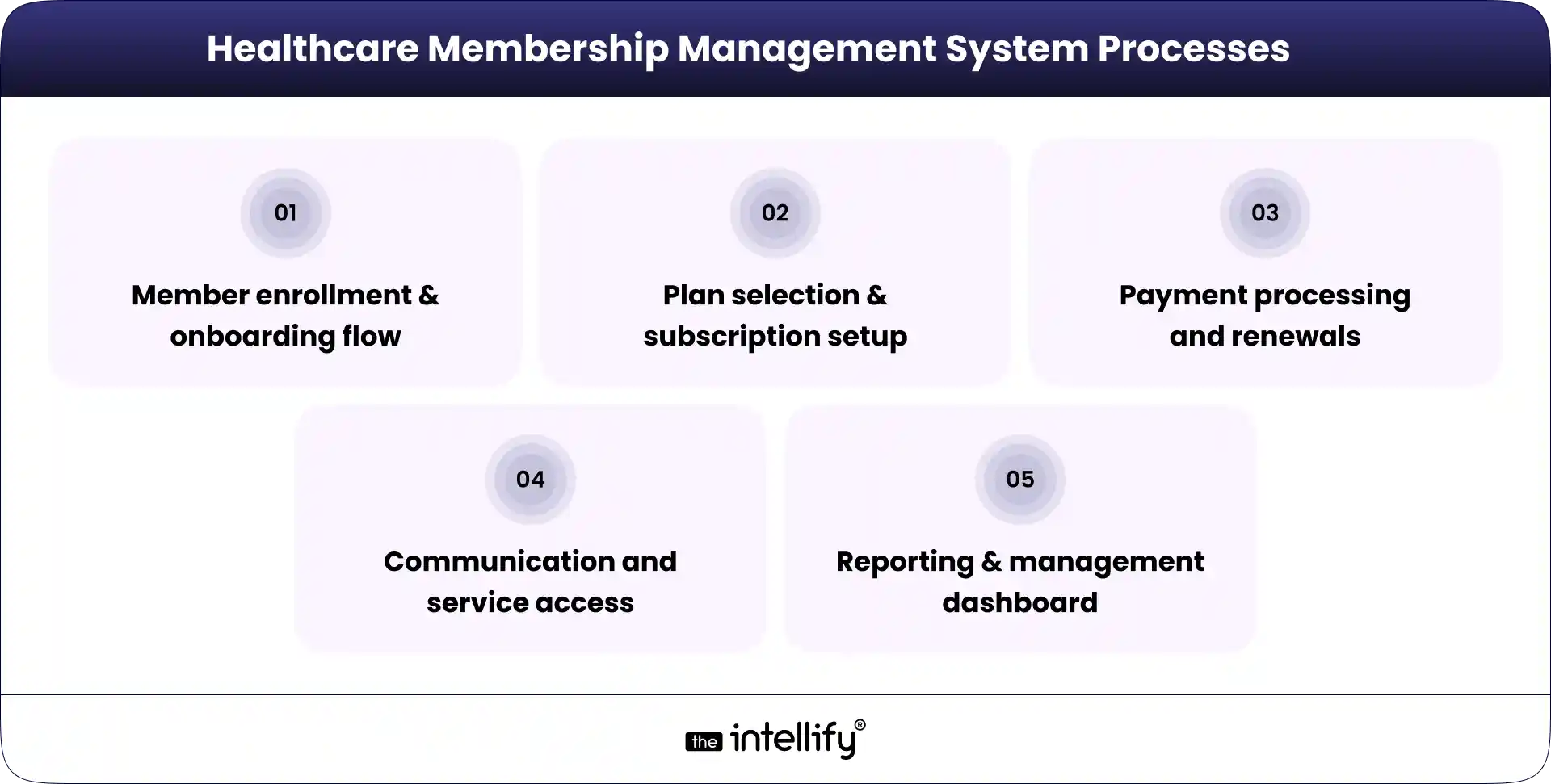
A healthcare membership management system streamlines various processes, making life easier for both providers and patients.
Member enrollment and onboarding flow
Patients can sign up online by filling in basic details and selecting a plan. The process is simple and does not require staff involvement at every step, which saves time and reduces delays.
Plan selection and subscription setup
Patients choose plans based on their needs. The system clearly shows available options, pricing, and services, making it easier for them to decide and subscribe without confusion.
Payment processing and renewals
Payments are handled automatically. The system processes transactions, sends reminders, and manages renewals. This ensures that billing runs smoothly without manual tracking.
Communication and service access
Patients receive updates through email or SMS. They can access services, get reminders, and stay informed without needing to call or visit the clinic every time.
Reporting and management dashboard
Providers can view all data in one place. Dashboards show member activity, revenue, and trends, helping in better decision-making without going through multiple reports.
Core Features That Power an Effective Healthcare Membership Platform
- Member Enrollment & Profile Management:- Streamlining member registration while keeping detailed profiles ensures quick access to patient histories and preferences.
- Subscription & Billing Automation:- Automated billing minimizes administrative burdens while ensuring timely payments, which in turn improves cash flow.
- Plan Creation and Tier Management:- Providers can effortlessly create and manage various membership plans, tweaking them as needed to fit patient requirements.
- Appointment and Service Tracking:- An integrated calendar helps track appointments and services, sending reminders to reduce no-shows.
- Communication Tools (email, SMS, reminders):- Effective communication tools keep members in the know and engaged, enhancing their overall experience.
- Analytics and Reporting:- Detailed analytics provide insights into trends, patient behaviors, and financial metrics, aiding strategic planning.

System Architecture: What Happens Behind the Scenes
A healthcare membership platform development operates through several components:
1. Frontend (patient and admin interfaces):- User-friendly interfaces make it easy for both patients and administrative staff to navigate the system.
2. Backend logic and workflows:- Robust backend processes handle data management, billing, and member communication seamlessly.
3. Database for member records:- A secure database keeps sensitive patient information safe while allowing easy access for authorized personnel.
4. Payment gateway integration:- Secure payment processing is critical, ensuring that financial transactions are managed safely.
5. Security and compliance layers:- Special measures help ensure compliance with healthcare regulations while protecting sensitive patient data.
6. Scalability considerations:- A well-designed system can grow with your practice, facilitating additional features or accommodating increased user loads as necessary.
A U.S.-based Direct Primary Care platform improved patient access and care coordination by implementing a secure digital solution across its services. The system streamlined operations for providers while keeping sensitive health data protected under strict privacy standards. This shows how modern AI-enabled technology can enhance healthcare delivery without compromising compliance. View the complete case study for more details: https://theintellify.com/work/healthcare2u/
Integration with Existing Healthcare Systems
Integrating a membership management system with other vital healthcare software ensures smooth operations:
Electronic Health Records (EHR)
Integration with EHR systems ensures patient data stays connected. Providers can access medical history along with membership details without switching systems.
Practice management software
Linking with practice management tools helps manage appointments, staff schedules, and operations in a more organized way.
Payment systems
Connecting with payment gateways ensures secure and smooth transactions. It also supports different payment methods for patient convenience.
Telehealth platforms
Integration with telehealth allows providers to offer remote consultations as part of membership plans, improving access to care.
CRM or patient engagement tools
CRM systems help track communication and patient interactions, making it easier to maintain relationships and improve engagement.
Benefits for Providers and Healthcare Businesses
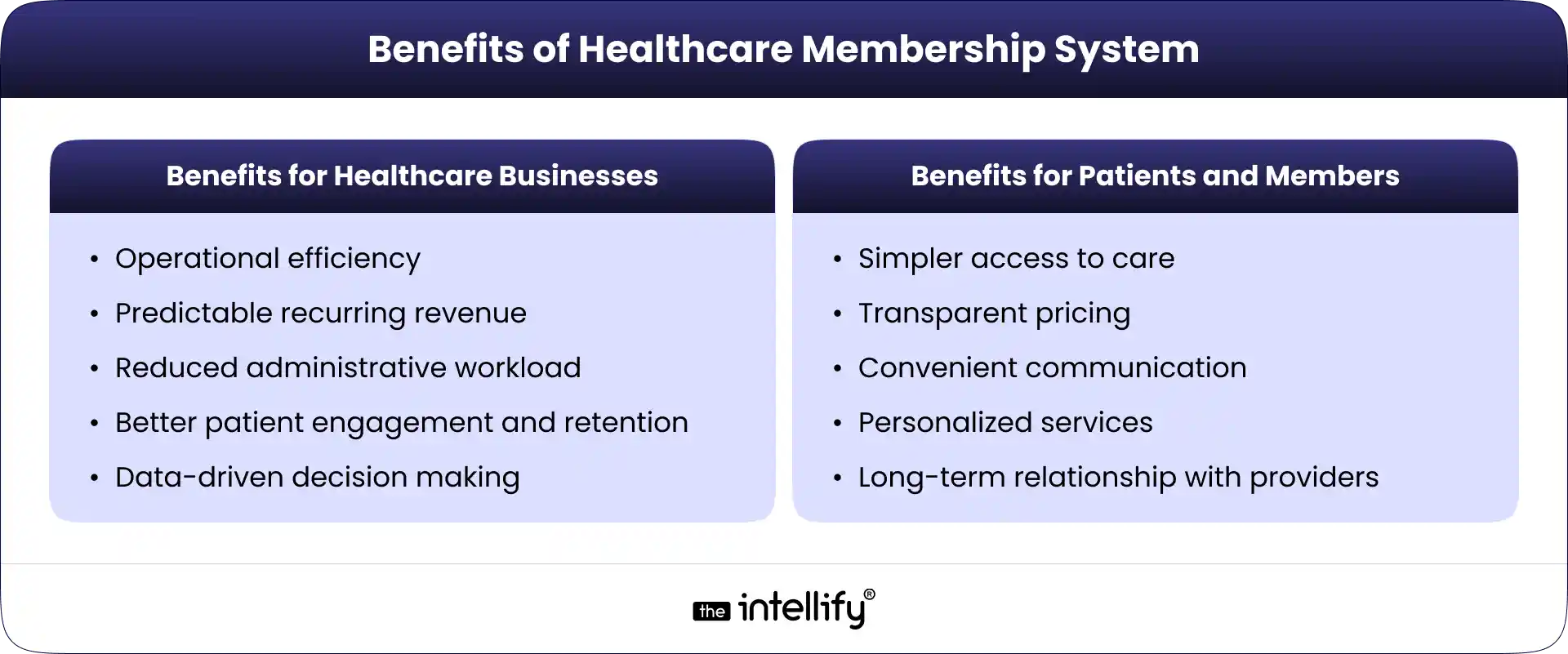
- Operational efficiency:- Automation reduces manual tasks and speeds up daily operations. Staff can handle more work in less time without feeling overloaded.
- Predictable recurring revenue:- Membership payments bring steady income. This helps providers plan expenses and investments without uncertainty.
- Reduced administrative workload:- Billing, renewals, and communication are handled automatically. This reduces the need for manual follow-ups and paperwork.
- Better patient engagement and retention:- Consistent communication and smooth service improve patient satisfaction. Happy patients are more likely to stay and continue their memberships.
- Data-driven decision making:- Access to reports and analytics helps providers understand trends and make better decisions based on real data.
Benefits for Patients and Members
- Simpler access to care:-Patients can easily sign up, book services, and stay connected with their providers without complicated steps.
- Transparent pricing:- Membership plans clearly show costs, so patients know what they are paying for. This builds trust and avoids unexpected charges.
- Convenient communication:- Patients receive reminders and updates without needing to follow up. This makes the overall experience smoother.
- Personalized services:- Plans can be designed based on individual needs, allowing patients to receive care that suits them better.
- Long-term relationship with providers:- Membership models encourage regular interaction, helping build a stronger and more consistent relationship with healthcare providers.
Key Considerations When Choosing a Healthcare Membership Solution
When picking a healthcare membership solutions, keep these factors in mind:
Ease of use for staff and patients:- The system should be simple to use. Both staff and patients should be able to navigate it without confusion or long training.
Customization of plans:- Providers should be able to create and adjust plans based on their services and patient needs.
Compliance and data security:- The system must follow healthcare regulations and protect patient data through secure access and storage.
Integration capability:- It should connect easily with existing tools like EHR, billing systems, and telehealth platforms.
Scalability for future growth:- The system should handle growth without needing major changes as the number of patients increases.
Support and implementation:- Reliable support is important for setup and ongoing use. Providers should have access to help when needed.
Common Use Cases Across Healthcare Segments
- Direct Primary Care practices:- DPC providers use membership systems to manage subscriptions and offer ongoing care without complex billing.
- Specialty clinics:- Clinics can manage different services and patient needs through flexible membership plans.
- Preventive care and wellness programs:- Memberships support regular check-ups and wellness services, encouraging better health management.
- Corporate health memberships:- Companies can offer healthcare plans to employees, making it easier to manage group memberships.
- Telehealth subscription services:- Telehealth providers can offer remote care through subscription models, ensuring continuous patient support.
Steps to Build or Implement a Healthcare Membership Management System
1. Define your membership model and pricing:- Start by deciding the type of plans you want to offer and how you will price them.
2. Choose between custom build or SaaS solution:- Decide whether you need a ready-made solution or a custom system based on your requirements and budget.
3. Design workflows and user experience:- Plan how patients and staff will use the system to ensure it is simple and efficient.
4. Integrate with existing systems:- Connect the system with current tools to avoid disruptions and ensure smooth operations.
5. Test, launch, and optimize continuously:- Test the system before launch and keep improving it based on feedback and changing needs.
What Affects the Cost of a Healthcare Membership System?
- Features and customization level:- More features and customization usually increase the cost, especially if the system is built from scratch.
- Integration complexity:- Connecting with multiple systems can add to the overall cost depending on how complex the setup is.
- Compliance and security requirements:- Meeting healthcare standards and ensuring data protection can also impact the cost of development and maintenance.
Future Trends in Membership-Based Healthcare Technology
Growth of subscription healthcare models
More providers are adopting membership models as they offer stable revenue and better patient relationships.
AI-driven personalization
AI is helping tailor services based on patient data, making care more relevant and effective.
Remote care and digital health integration
Telehealth and digital tools are becoming a key part of membership plans, improving access to care.
Outcome-based memberships
There is a shift toward focusing on results rather than just services, improving overall care quality.
Expansion beyond primary care
Membership models are expanding into specialized and advanced healthcare services.

Final Thought
A healthcare membership management system helps providers manage memberships, billing, and patient relationships in a simple and structured way. It reduces manual work, improves patient experience, and creates stable revenue. As more healthcare providers move toward membership-based care, having the right system in place becomes important for smooth operations and long-term growth.
Frequently Asked Questions
1. What makes a healthcare membership management system different from regular healthcare software?
A regular healthcare system mainly handles patient records and operations. A healthcare membership management system focuses on managing subscriptions, recurring billing, and member relationships. It’s built for practices that offer ongoing care through plans, not one-time visits.
2. How does a healthcare membership system handle recurring billing without errors?
It automates the entire billing cycle, plan selection, payment processing, renewals, and reminders. This reduces manual mistakes and ensures payments are collected on time without staff needing to track everything manually.
3. Can small clinics or DPC practices benefit from a membership management system?
Yes, especially small clinics. It helps them manage members efficiently, create predictable monthly revenue, and offer better patient experience without needing a large admin team.
4. What kind of integrations are important in a healthcare membership system?
Common integrations include EHR systems, payment gateways, telehealth platforms, and CRM tools. These connections help create a smooth workflow without switching between multiple tools.
5. Is a healthcare membership management system secure for handling patient data?
Yes, most systems are designed with strong security measures and follow healthcare compliance standards. Data is encrypted, and access is controlled to protect sensitive patient information.
6. How long does it take to implement a healthcare membership management system?
It depends on whether you choose a ready-made solution or a custom build. SaaS platforms can be set up quickly, while custom systems may take longer based on complexity and integrations.


Written By, Shravan Rajpurohit
Shravan Rajpurohit is the Co-Founder & CEO of The Intellify, a leading Custom Software Development company that empowers startups, product development teams, and Fortune 500 companies. With over 10 years of experience in marketing, sales, and customer success, Shravan has been driving digital innovation since 2018, leading a team of 50+ creative professionals. His mission is to bridge the gap between business ideas and reality through advanced tech solutions, aiming to make The Intellify a global leader. He focuses on delivering excellence, solving real-world problems, and pushing the limits of digital transformation.


Virtual Reality in Education: Applications, Benefits & Future of Learning
Summary: Virtual reality in education is changing how students learn by making lessons more interactive and practical. Instead of only reading or listening, learners can explore concepts through immersive experiences. This blog explains how VR is used across subjects, its key benefits, real-world applications, challenges, and future trends. It also covers how institutions can adopt […]
Healthcare Membership Platform Development: Guide for Startups & DPC Providers
Summary: Healthcare membership platform development is transforming how providers deliver continuous, subscription-based care. This guide explains how membership models help organizations improve patient engagement, generate predictable revenue, and streamline operations. It covers essential features, development strategies, integration needs, and the role of automation and AI in modern healthcare systems. Whether you’re a startup or a […]

AI in Healthcare Administration: Streamlining Hospital Operations
Summary The growing complexity of healthcare administration is driving the need for smarter, more efficient solutions. Automation technologies are helping streamline key processes such as scheduling, billing, and data management, reducing manual workload and improving accuracy. This enables faster operations, better coordination, and enhanced patient experiences. As adoption increases, healthcare organizations are moving toward more […]
Virtual Reality in Education: Applications, Benefits & Future of Learning
Summary: Virtual reality in education is changing how students learn by making lessons more interactive and practical. Instead of only reading or listening, learners can explore concepts through immersive experiences. This blog explains how VR is used across subjects, its key benefits, real-world applications, challenges, and future trends. It also covers how institutions can adopt […]

AI Workflow Automation Explained: Benefits, Use Cases, and ROI for Businesses
Summary: AI workflow automation helps businesses achieve faster ROI by optimizing repetitive and time-consuming processes. It improves efficiency, reduces costs, and enhances decision-making by leveraging data and intelligent systems. From customer service to internal operations, organizations can streamline workflows and scale effectively. By starting with high-impact use cases and tracking performance metrics, businesses can unlock […]
Healthcare Membership Platform Development: Guide for Startups & DPC Providers
Summary: Healthcare membership platform development is transforming how providers deliver continuous, subscription-based care. This guide explains how membership models help organizations improve patient engagement, generate predictable revenue, and streamline operations. It covers essential features, development strategies, integration needs, and the role of automation and AI in modern healthcare systems. Whether you’re a startup or a […]
0
+0
+0
+0
+Committed Delivery Leads To Client Satisfaction
Client Testimonials that keep our expert's spirits highly motivated to deliver extraordinary solutions.

Christopher Seny
My experience working with The Intellify, has been a great experience. The team has a wealth of expertise in the tech space. Working with the intellify was a growing experience for me, I learned a lot. The team keeps great communication & responds fast to new ideas & suggestions. The team also provides great suggestions & solutions as well. I couldn’t imagine working with anybody else on this project & it has been a blessing working with, The Intellify.

Izandi Serdyn
The Intellify delivered a platform from scratch, involving the client at every stage. The team was communicative, responsive, and punctual throughout the engagement. Virtual meetings and emails ensured seamless project management. Customers can expect a team that can work fast.

Kya Johnson
The app serves as an effective introduction for users to the product and its characters. Responsive and faithful to initial requirements, The Intellify’s team exceeded initial expectations. Internal stakeholders were particularly pleased with their communication.

Stefan Wyk
Working with The Intellify to develop our website was an outstanding experience. Their team displayed exceptional professionalism, creativity, and technical expertise throughout the entire process. The final product exceeded our expectations, delivering a sleek, user-friendly, and highly functional website. We highly recommend The Intellify to anyone in need of top-tier web development services.

Steve Thorpe
The Intellify’s work has been met with high praise from internal and external stakeholders. The team is efficient, diligent, and reliable in their service. They go above and beyond in terms of communication and project management. The Intellify is a responsive vendor that gets the job done.

Tal Dotan
I’ve been working with The Intellify for the last 3 years. During this period of time we’ve planned and executed projects in both small and large scale. Working with The Intellify was and still is the best decision I’ve made when rising up Divo, I strongly recommend to work with them in any type of project.


 +1-302-803-4983