How to Build an Instant Delivery App Like Blinkit & Zepto: Step-by-Step Guide

By Darshak Doshi
December 29, 2025
Summary:
This blog explains how instant delivery apps like Blinkit and Zepto work, why the quick-commerce model is growing, and how you can build your own platform step by step. It covers features, technology, business models, costs, timelines, and common challenges. You’ll also learn what’s required for real-time delivery, dark-store operations, and logistics planning. If you’re looking to launch an instant delivery app, this guide gives you a clear starting point.
Instant delivery. The idea used to sound kind of impossible, right? Yet here we are, casually ordering groceries and snacks, and somehow they show up at our door in like ten minutes. Apps like Blinkit and Zepto made that experience feel normal, almost boring at times (“Oh look, tomatoes arrived again in 8 minutes…”).
But why did they become this popular? Convenience, of course. Also, we’re all busier, living in tighter urban spaces, and we don’t plan our grocery shopping as our parents did. The weekly grocery list is basically gone. It’s too slow. We want things now-ish. Actually, now.
For startups and businesses, this shift has opened a real opportunity. If you’re thinking about building your own instant delivery app, you’re not too late. Not even close. This market is still early in most cities, and people are getting really comfortable with ordering tiny things quickly.
In this guide, I’ll walk you through what instant delivery apps really are, what features they need, how they work behind the scenes, and how you can build one without falling into avoidable “uh-oh” traps.
Let’s go step by step (and maybe grab a coffee real quick… ironic, I know).
What is an Instant Delivery App? (Quick Commerce Explained)
Meaning of Quick Commerce
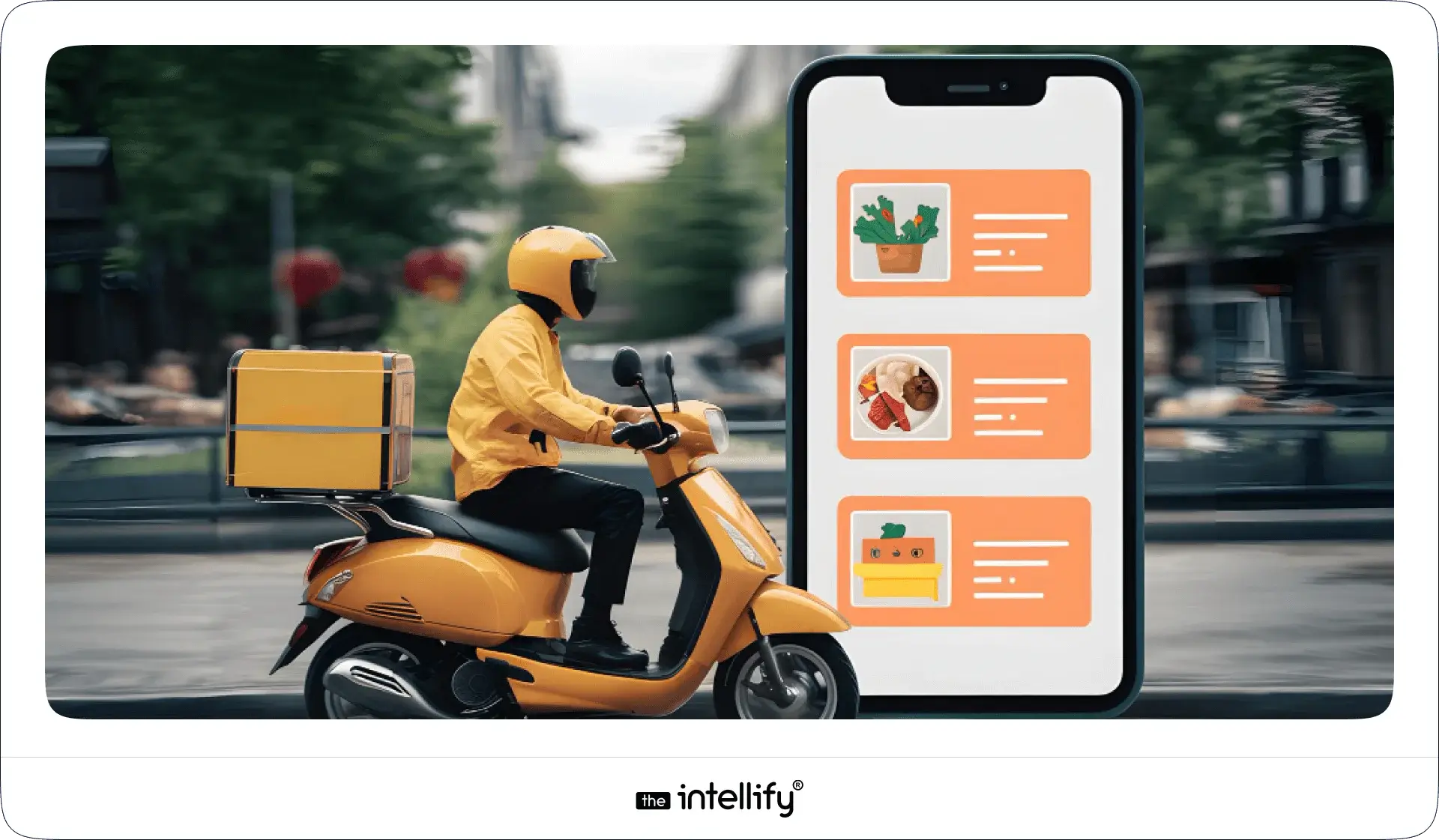
Quick commerce basically means delivering everyday essentials like groceries, snacks, and household items really fast. Usually in under 10 to 20 minutes. Some call it q-commerce, some just instant delivery. Either way, the point is speed.
It’s built for the “I forgot to buy milk” moment rather than your monthly grocery cart.
How Blinkit & Zepto Work
Both brands, like Blinkit & Zepto, operate with local mini-warehouses called dark stores. They stock essential items close to neighborhoods. So instead of shipping from large warehouses miles away, they deliver from small stocked spots near you.
Dark stores + delivery fleet + real-time inventory = fast delivery.
That’s basically the magic formula.
Why Quick Commerce Demand Is Growing
Urban life is fast. People don’t want to schedule things. They want flexibility. Plus tiny confession, many of us procrastinate buying groceries. We remember toothpaste only when it’s almost over.
The demand isn’t just convenience; it’s also emotional comfort. Quick problem solved = nice dopamine hit.
Key Industries Using Instant Delivery Today
Not just groceries:
- snacks
- medical supplies
- beauty basics
- household items
- baby products
Think “I need this right now” instead of “weekly shopping.”
Core Features You Need in an Instant Delivery App
Customer App Features
- Smart search
- easy navigation
- One-tap checkout
- Live product availability
- order history
- Real-time delivery tracking
Customers shouldn’t think too much inside your app. The fewer steps, the better. These features help them move from search to checkout quickly, which matters a lot when they just need something “right now.”
Delivery Partner App (Rider App)
- Order assignment
- Navigation
- route optimization
- Pickup/Drop status updates
Riders need simple screens that help them pick, navigate, and deliver without confusion. A smooth rider app improves delivery speed and keeps operations steady during busy hours.
Store / Inventory Management
- Dark-store management
- Out-of-stock alerts
- Real-time sync
If the app shows items that aren’t actually available… people will uninstall faster than you can say “oops.” Real-time accuracy helps reduce cancellations.
Admin Panel
- Analytics
- Store location
- Orders
- Payments
- Analytics & reports
- Delivery management
This is the real “control room.” It helps track performance, manage orders, and adjust operations whenever demand changes.
Technology Capabilities
- GPS tracking
- Live inventory
- Secure payments
- Scalable backend
These parts keep everything running in the background. They support fast routing, safe payments, and smooth scaling during peak demand.
Business & Revenue Model of Instant Delivery Apps
How Blinkit & Zepto Make Money
Mostly by selling everyday products at small margins but high frequency. People use them a lot, not once a month.
Main Revenue Channels
- Delivery fee
- Commissions
- High-frequency repeat purchases
- Subscription models
- Featured listings for brands
Brands actually pay to boost visibility, sort of like supermarket shelf placement.
Product Categories You Can Start With
Start narrow. Groceries are popular, but essentials like snacks and dairy move fast and help you learn quickly. Expand later. Baby steps.
Step-by-Step Process to Build Your Instant Delivery App
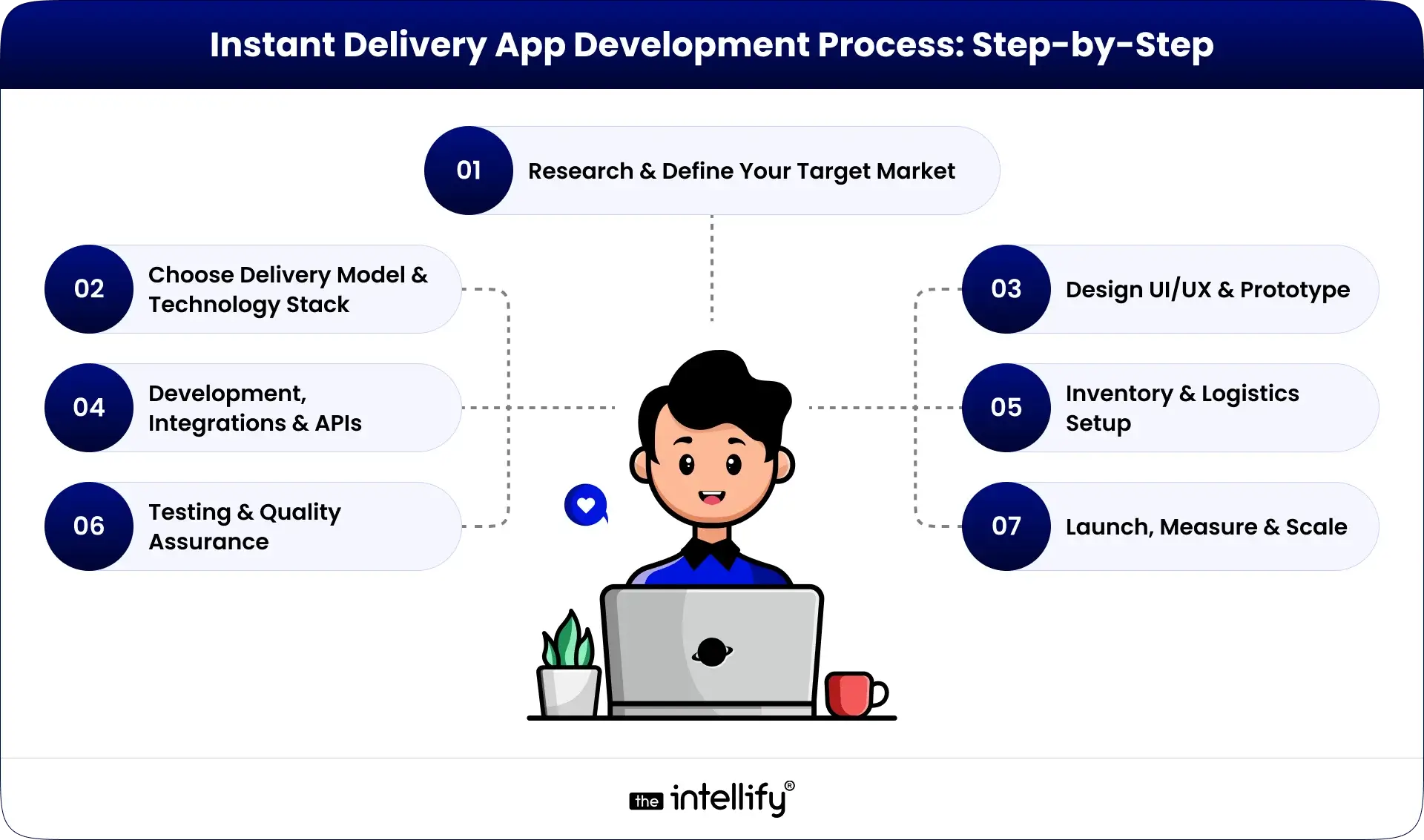
Step 1 – Research & Define Your Target Market
Check local demand. Identify busy zones, working population, and neighborhoods with younger customers (they tend to order more late-night stuff).
Step 2 – Choose Your Delivery Model & scope
- Full dark-store model
- Partner store model
- Hybrid models
Each has financial implications. Owning dark stores offers control but costs more. Partner model is easier to start. Hybrid gives flexibility. In most cases, businesses test the partner model first, then slowly move toward dark stores once demand is steady.
Step 3 – Choose Technology Stack & Architecture
- Mobile apps (Android/iOS)
- Backend
- Admin
- Database
- Payment gateways
Fast development is good, but scalability matters more long-term. Your architecture should handle peak traffic, rapid inventory updates, and routing decisions without slowing down.
Step 4 – Design UI/UX & Prototype
- Easy navigation
- Fast browsing
- Clean and minimal
Keep checkout super short. Sometimes one tap is all people want. The goal is fewer screens, fewer clicks, and zero confusion during ordering.
Step 5 – Development, Integrations & APIs
This includes payment gateways, GPS, third-party delivery partners (if any), and real-time databases. Integrations should be tested to ensure payments are smooth and tracking remains accurate.
Step 6 – Inventory & Logistics Setup
- Store locations
- Delivery radius
- Courier network
Real logistics planning saves more money than fancy UI ever will. Knowing exactly which items move fastest helps reduce stockouts and delays.
Step 7 – Testing & Quality Assurance
Stress test delivery flow. Load test. Test real-time stock changes. It’s weirdly fun to break your own system (only so you can fix it). Also test rider routes and how quickly orders reach them.
Step 8 – Launch, Measure & Scale
Launch small. Gather feedback. Expand slowly. Patience wins here. Measure delivery time, repeat orders, and stock accuracy before scaling to more locations.
Essential Technologies Required to Build the App
- Mobile App Development: Android, iOS, cross-platform, whatever suits timeline & budget.
- Real-Time Inventory Engine: Avoid selling invisible items. Trust dies instantly.
- Route Optimization Engine: Delivery times depend heavily on smart routing.
- Geo-location & GPS: Live courier tracking feels reassuring to customers.
- Payment & Security: Secure payments = peace of mind.
- Push Notifications & Alerts: Helpful reminders, not spammy ones.
How Much Does It Cost to Build an Instant Delivery App?
Estimated Development Cost Range
A realistic development cost for building a working instant delivery app system ranges from $30,000 to $150,000, depending on how large you want to go.
- A basic MVP: $30,000 – $60,000
- A full product with real-time routing, analytics, and scalable backend: $80,000 – $150,000+
The largest costs usually come from backend development, logistics logic, and integration with real-time systems. Even payment systems add complexity because everything has to be secure and fast.
Major Challenges You Must Be Ready For
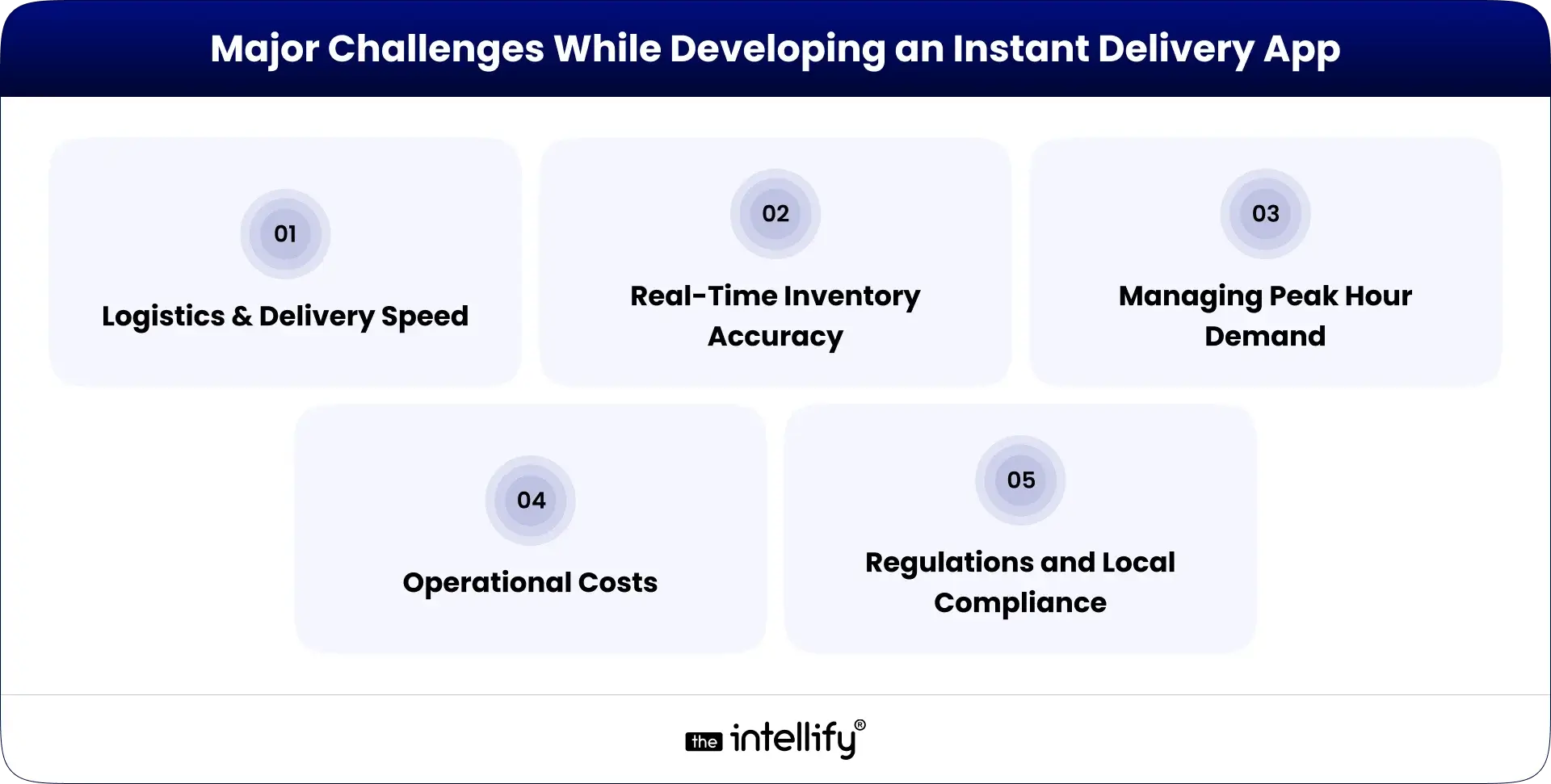
Logistics & Delivery Speed
10 minutes sounds easy until traffic hits. Smart routing and nearby dark stores are the only way to stay close to promised delivery times.
Real-Time Inventory Accuracy
One mistake here = unhappy users. Instant delivery depends on live stock updates, so your inventory must refresh constantly.
Managing Peak Hour Demand
Friday evenings are crazy. Orders spike, and without enough riders or stock, delays become unavoidable.
Operational Costs
Warehousing + riders = money. You need a cost plan that keeps fast delivery profitable, not expensive.
Regulations and Local Compliance
Local rules vary. Delivery hours, storage rules, and labor policies change by city, so expansion needs research first.
How Much Time is Required to Build an Instant Delivery App?
On average, building an MVP with core instant delivery features takes about 12 to 16 weeks. This means a working app with basic functionality, real-time inventory visibility, and delivery assignment systems. Enough to test the market.
A fully customizable instant delivery platform might take 6 to 9 months, especially if you’re planning advanced routing systems, dashboards, and scalable backend architecture for multiple cities.
Why NOW Is the Best Time to Build a Q-Commerce App?
Customer habits have shifted completely. People are comfortable ordering tiny things such as one lemon, a single chocolate bar, or a pack of tissue paper, and nobody feels weird about it anymore. This comfort is still expanding into more cities.
Right now, there are still many areas where instant delivery doesn’t exist or only exists with long delays. If you enter early in such regions, you become the default choice. And once customers form a habit with a brand, they don’t switch easily.
So yes, sooner is better than later. Consumer expectations have already changed, and businesses are now catching up.
How The Intellify can help you launch a blinkit/zepto-style instant delivery app?
The Intellify helps businesses build instant delivery apps with real-time inventory systems, scalable backend development, simple UX, and logistics planning. If you’re serious about building an app that actually works (not just looks good), we help you design, develop, and launch step by step.
Our team supports you through the entire process from defining scope to building dark-store workflows. And yeah, we also help with future updates because technology doesn’t sit still.

Conclusion
Instant delivery is changing how we shop. It started with small snacks, milk, and toothpaste, but now customers expect fast access to everyday essentials. It’s a habit already forming.
There’s a real business opportunity here, especially in cities still underserved. If this is something you’re considering (or still thinking about)… honestly, now’s a good time. The early players built awareness, and now the market is wide open.
Frequently Asked Questions (FAQ)
1. What is a quick-commerce or instant delivery app, and how is it different from a regular e-commerce store?
Instant delivery apps are designed for “right now” needs, while regular e-commerce usually handles planned shopping. Instead of shipping from a big warehouse somewhere far, quick-commerce uses nearby dark stores and faster delivery routes to bring essentials in minutes. The Intellify helps build the app and the logic that keeps things running fast.
2. How much does it cost to build an instant delivery app like Blinkit or Zepto?
There isn’t a single universal price because it depends on features, platforms, and how advanced your logistics needs to be. An MVP is cheaper, and a full version costs more no surprise there. The Intellify usually checks your scope first and then gives a realistic estimate instead of random numbers.
3. How long does it take to build and launch an instant delivery app?
A basic app takes a few months. A larger, more complex version takes longer (obviously). Most founders start small, launch early, and then improve based on real usage. The Intellify helps plan this in stages so you can go live without waiting forever.
4. Can I build a Blinkit-style app without dark stores in the beginning?
Yes, totally. Many businesses start with partner stores and third-party riders before investing in dark stores. It feels safer and less expensive in the early phase. Later, when the demand increases, you can move into owning dark stores. The Intellify helps map what’s best for your budget and location.
5. What features should an instant delivery app include?
Must-have stuff usually includes fast search, real-time inventory, simple checkout, GPS tracking, and an easy rider workflow. Behind everything, there’s also routing, payments, and delivery logic quietly doing the heavy lifting. The Intellify builds both sides, not just the “pretty screens.”
6. Which product categories work best when starting an instant delivery app?
Essentials like groceries, snacks, bread, milk, and basic daily items usually work best at launch. They’re repeat purchases. Once people trust your service, you can add more categories. The Intellify can help you figure out which items make sense for your city.
7. How can The Intellify help me build an instant delivery app like Blinkit or Zepto?
We help with everything from planning, UX, development, inventory syncing to routing, rider apps, and launch. More importantly, we also think about operations and performance (the parts most teams forget about). Basically, you don’t just get an app; you get a working delivery system.


Written By, Darshak Doshi
With over a decade of experience, Darshak is a technopreneur specializing in cloud-based applications and product development in healthcare, insurance, and manufacturing. He excels in AWS Cloud, backend development, and immersive technologies like AR/VR to drive innovation and efficiency. Darshak has also explored AI/ML in insurance and healthcare, pushing the boundaries of technology to solve complex problems. His user-focused, results-driven approach ensures he builds scalable cloud solutions, cutting-edge AR/VR experiences, and AI-driven insights that meet today’s demands while anticipating future needs.

Mobile Banking App Development: Features, Security, Compliance & Cost
Summary: Mobile banking app development is becoming essential as more users prefer to manage their finances on mobile. This blog gives a clear view of what it takes to build a banking app, from planning the right approach to understanding how everything comes together. It walks through the overall process, important decisions, and what businesses […]
Augmented Reality Storytelling: Turning Brand Stories into Immersive Experiences
Summary: This blog explores how Augmented Reality Storytelling helps brands create deeper engagement through immersive, interactive experiences. It explains what AR storytelling is, how it works, real-world brand examples, key benefits, and common use cases across industries. The article also covers essential features of an AR storytelling app, how to choose the right AR app […]
Fuel Delivery App Development: A Complete USA Guide
Summary: This blog covers everything you need to know about fuel delivery app development, including how on-demand fuel delivery works, key features, costs, and legal considerations in the USA. It explains how businesses can build, launch, and scale a fuel delivery app while ensuring safety, compliance, and smooth operations. Whether you’re planning a new fuel […]
Mobile Banking App Development: Features, Security, Compliance & Cost
Summary: Mobile banking app development is becoming essential as more users prefer to manage their finances on mobile. This blog gives a clear view of what it takes to build a banking app, from planning the right approach to understanding how everything comes together. It walks through the overall process, important decisions, and what businesses […]
Augmented Reality Storytelling: Turning Brand Stories into Immersive Experiences
Summary: This blog explores how Augmented Reality Storytelling helps brands create deeper engagement through immersive, interactive experiences. It explains what AR storytelling is, how it works, real-world brand examples, key benefits, and common use cases across industries. The article also covers essential features of an AR storytelling app, how to choose the right AR app […]
Fuel Delivery App Development: A Complete USA Guide
Summary: This blog covers everything you need to know about fuel delivery app development, including how on-demand fuel delivery works, key features, costs, and legal considerations in the USA. It explains how businesses can build, launch, and scale a fuel delivery app while ensuring safety, compliance, and smooth operations. Whether you’re planning a new fuel […]
0
+0
+0
+0
+Committed Delivery Leads To Client Satisfaction
Client Testimonials that keep our expert's spirits highly motivated to deliver extraordinary solutions.

Christopher Seny
My experience working with The Intellify, has been a great experience. The team has a wealth of expertise in the tech space. Working with the intellify was a growing experience for me, I learned a lot. The team keeps great communication & responds fast to new ideas & suggestions. The team also provides great suggestions & solutions as well. I couldn’t imagine working with anybody else on this project & it has been a blessing working with, The Intellify.

Izandi Serdyn
The Intellify delivered a platform from scratch, involving the client at every stage. The team was communicative, responsive, and punctual throughout the engagement. Virtual meetings and emails ensured seamless project management. Customers can expect a team that can work fast.

Kya Johnson
The app serves as an effective introduction for users to the product and its characters. Responsive and faithful to initial requirements, The Intellify’s team exceeded initial expectations. Internal stakeholders were particularly pleased with their communication.

Stefan Wyk
Working with The Intellify to develop our website was an outstanding experience. Their team displayed exceptional professionalism, creativity, and technical expertise throughout the entire process. The final product exceeded our expectations, delivering a sleek, user-friendly, and highly functional website. We highly recommend The Intellify to anyone in need of top-tier web development services.

Steve Thorpe
The Intellify’s work has been met with high praise from internal and external stakeholders. The team is efficient, diligent, and reliable in their service. They go above and beyond in terms of communication and project management. The Intellify is a responsive vendor that gets the job done.

Tal Dotan
I’ve been working with The Intellify for the last 3 years. During this period of time we’ve planned and executed projects in both small and large scale. Working with The Intellify was and still is the best decision I’ve made when rising up Divo, I strongly recommend to work with them in any type of project.


 +1-302-803-4983