Museum 2.0 Solutions: How AR & VR Are Transforming Museum Experiences

By Darshak Doshi
February 6, 2026
Summary:
Museum 2.0 solutions are reshaping museum experiences through augmented reality (AR) and virtual reality (VR). Museums are using immersive technology to engage visitors, improve storytelling, and extend access beyond physical spaces. The blog covers how AR and VR support learning, enhance visitor interaction, and address modern challenges, along with practical use cases and considerations for museums planning digital transformation across the USA and global markets.
Walk into a museum today, and you’ll still smell that familiar mix of polished floors, old paper, and quiet history. That part hasn’t changed. What has changed is what visitors expect once they step inside. People don’t just want to look anymore. They want to touch, explore, listen, and feel. And honestly? If a museum can’t offer that, attention drifts fast.
This is where Museum 2.0 solutions come in. Not as a flashy upgrade. Not as a tech flex. But as a practical way to keep museums relevant, engaging, and alive in a world ruled by screens.
Let’s talk about how AR, VR, and a bit of smart AI behind the scenes are quietly reshaping museum experiences across the U.S. and beyond.
What Are Museum 2.0 Solutions?
Museum 2.0 is not about replacing physical museums with digital ones. It’s about expanding what a museum can do. Traditional museums were built around objects. Museum 2.0 is built around people.
At its core, Museum 2.0 solutions blend physical spaces with digital tools to:
- Tell better stories
- Make exhibits interactive
- Reach audiences beyond the building
- Learn from visitor behavior
This doesn’t mean replacing artifacts with screens. It means using technology to add context, not noise. AR, VR, and AI are simply tools. The goal is simple: make the museum feel less like a silent hall and more like a conversation.
Why Museums Need to Evolve Now
Museums aren’t struggling because people stopped caring about culture or history. They’re struggling because the way people consume information has changed.
Visitors today:
- Expect personalization
- Prefer interaction over observation
- Compare museum experiences to digital entertainment
- Want value for time and money
I’ve seen visitors skim past exhibits that took years to curate, only to stop for something interactive nearby. Not because the artifact wasn’t important, but because the story wasn’t reaching them.
There’s also pressure from another direction: funding bodies increasingly want proof. Proof of engagement. Proof of reach. Proof that museums are serving diverse, global audiences. Museum 2.0 solutions help answer those questions. Not with promises, but with data, feedback, and measurable impact.
How Augmented Reality (AR) Enhances Museum Experiences
AR works because it respects the physical space. It doesn’t ask visitors to leave the exhibit behind. It simply adds another layer. Imagine pointing your phone at an ancient sculpture and seeing:
- How it looked when it was first created
- The missing pieces restored digitally
- A short story narrated in your language
No glass case. No long placards. Just context, right when you want it.
Common AR Use Cases in Museums
- Interactive artifact labels
- AR-based scavenger hunts for kids
- Educational overlays for school groups
- Mobile AR guides instead of rented devices
The beauty of AR is that it’s lightweight. Most visitors already have a phone. Museums don’t need massive infrastructure changes to get started. And yes, visitors love it. Especially when it feels optional, not forced.
The Role of Virtual Reality (VR) in Museum 2.0
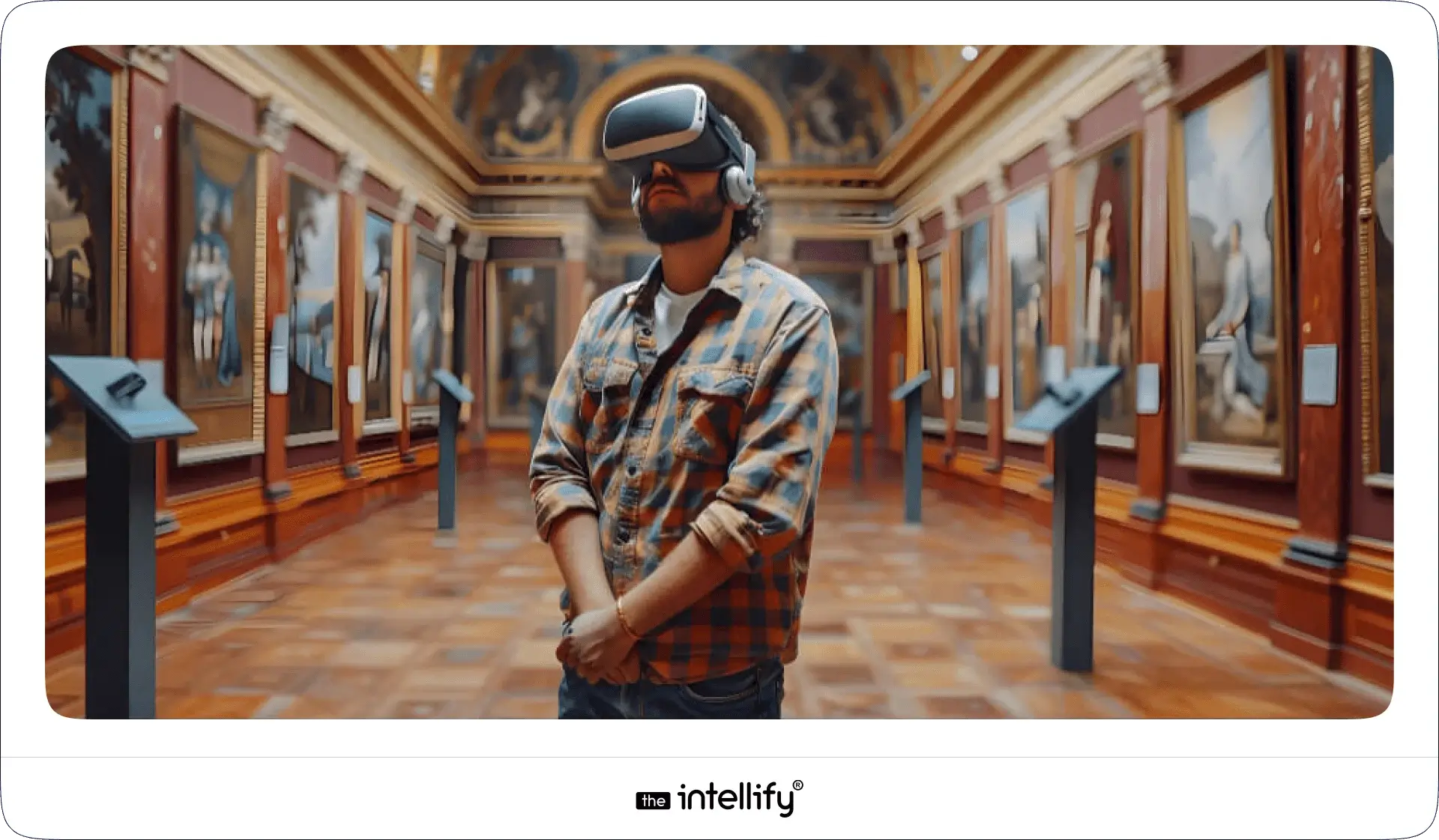
VR is different. It’s immersive, intense, and best used with care. When visitors put on a headset, they’re no longer standing in a gallery. They’re somewhere else entirely. That “somewhere else” could be a lost city, a vanished ecosystem, or a moment in history that no longer exists.
This is powerful and risky if overused.
- Where VR Makes the Most Sense
- Experiences that cannot exist physically
- Exhibits limited by space or fragility
- Remote access for schools and global visitors
- Deep storytelling moments, not quick interactions
VR shines when it’s used as a chapter, not the whole book. A few minutes in a well-designed VR experience can leave a stronger impression than an hour of passive viewing. For museums looking to expand their global footprint, VR also removes borders. A museum becomes a destination anyone can visit, regardless of distance or mobility.
Where AI Quietly Supports Museum 2.0
AI rarely gets applause in museums and that’s a good thing. When done right, visitors don’t notice it at all. AI works behind the scenes to:
- Recommend exhibits based on visitor interests
- Power chatbots for FAQs and guidance
- Analyze visitor flow and dwell time
- Support multilingual experiences
Think of AI as the museum’s silent assistant. It helps staff make better decisions without getting in the way of storytelling. And no, this doesn’t mean replacing human guides. It means letting humans focus on what they do best connection and storytelling.
Key Benefits of Museum 2.0 Solutions
The benefits aren’t abstract. They show up in small, real ways. Visitors stay longer. They ask better questions. They return with friends.
Museums gain:
- Deeper engagement, not just higher footfall
- Insights that guide future exhibits
- Stronger accessibility for diverse audiences
- New ways to extend experiences beyond walls
These outcomes matter when budgets are tight and expectations are high.

Real-World Museum 2.0 Use Cases
Across the world, museums are experimenting carefully. Examples you’ll see today:
- AR layers revealing hidden stories in plain sight
- VR rooms recreating moments that no longer exist
- AI tools helping visitors navigate complex spaces
- Digital exhibits that travel without shipping crates
The best examples don’t feel like tech demos. They feel like thoughtful extensions of the museum’s voice.
Museum 2.0 Solutions Across Different Museum Types
Museum 2.0 looks different depending on context.
Art Museums
AR adds interpretation without dominating the artwork. VR allows virtual exhibitions that travel globally.
History Museums
VR recreates lost spaces. AR adds timelines and personal stories.
Science Museums
Interactive simulations replace static displays. Learning becomes hands-on.
Children’s Museums
Play-driven AR keeps curiosity alive. Learning feels accidental in the best way.
Cultural & Heritage Sites
Digital preservation protects fragile history. Virtual access keeps stories alive.
There’s no one-size-fits-all approach. And that’s the point.
How to Choose the Right Museum 2.0 Technology Partner
Technology alone won’t save a museum. People will. The right AR/VR development partner understands that museums aren’t startups. They move carefully. Thoughtfully. Look for teams that:
- Understands cultural spaces
- Designs for real visitors, not demos
- Builds flexible, scalable solutions
- Thinks long-term, not one-off installs
If the conversation feels rushed, it’s probably wrong. Museums need collaborators, not software sellers.
What the Future Holds for Museum Experiences
The future museum will feel less rigid. Visitors will shape their own paths. Exhibits will adapt. Physical and digital experiences will blend quietly. Expect to see:
- Personalized journeys powered by AI
- Digital twins of entire collections
- Global virtual visitors alongside local ones
- Smarter, data-driven exhibit planning
And yes, there will still be quiet halls and real artifacts. Technology won’t erase that. It will protect it.

Final Thoughts: Building Museums People Want to Return To
Museum 2.0 solutions aren’t about adding more tech. They’re about removing distance between people and stories, past and present. When AR explains, VR immerses, and AI listens, museums become places people remember. Not because they were flashy, but because they felt alive.
Start small. Start honestly. One story at a time. That’s how museums evolve without losing what made them special in the first place.
Frequently Asked Questions (FAQs)
1. What are Museum 2.0 solutions?
Museum 2.0 solutions refer to modern digital approaches that help museums create more engaging and accessible experiences. They combine physical exhibits with technologies like AR and VR to improve how stories are shared and understood by visitors.
2. How does augmented reality improve museum experiences?
Augmented reality helps visitors see additional details that are not visible to the eye. By scanning exhibits with a device, visitors can explore restored visuals, background stories, or interactive elements that make exhibits easier to connect with.
3. What is the role of virtual reality in museums?
Virtual reality allows museums to place visitors inside environments that no longer exist or cannot be displayed physically. It is often used for immersive storytelling, historical recreations, and virtual museum visits for remote audiences.
4. Are AR and VR suitable for all types of museums?
Yes. Different museums use AR and VR in different ways. Art museums may add context to artwork, while history or science museums use immersive experiences to explain complex ideas more clearly.
5. Do Museum 2.0 solutions require large budgets?
No. Museums can start with simple digital experiences and scale over time. Many AR solutions work on mobile devices, allowing museums to test ideas before investing in larger immersive setups.
6. Can immersive technology help museums reach global audiences?
Yes. Virtual experiences allow museums to share exhibitions with people who cannot visit in person. This helps museums connect with international audiences, schools, and researchers across different regions.
7. How can museums get started with Museum 2.0 solutions?
Getting started usually begins with understanding visitor needs and choosing the right implementation approach. The Intellify helps museums plan and develop AR and VR solutions that align with storytelling goals and long-term digital strategies.


Written By, Darshak Doshi
With over a decade of experience, Darshak is a technopreneur specializing in cloud-based applications and product development in healthcare, insurance, and manufacturing. He excels in AWS Cloud, backend development, and immersive technologies like AR/VR to drive innovation and efficiency. Darshak has also explored AI/ML in insurance and healthcare, pushing the boundaries of technology to solve complex problems. His user-focused, results-driven approach ensures he builds scalable cloud solutions, cutting-edge AR/VR experiences, and AI-driven insights that meet today’s demands while anticipating future needs.

Enterprise VR Training: Real Use Cases, Business Benefits & Implementation Guide
Summary: Enterprise VR training allows organizations to train employees through immersive simulations instead of traditional classroom methods. This blog explores how virtual reality training is used across industries like healthcare, manufacturing, construction, and retail to improve workforce readiness. It also explains the key benefits, including better engagement, faster onboarding, improved safety, and consistent training delivery. […]

AI in AR & VR: Redefining Intelligent Immersive Experiences
Summary: AI is making AR and VR smarter, turning static experiences into adaptive, personalized environments. From training and healthcare to retail and gaming, intelligent immersive systems are improving engagement, learning, and decision-making. This blog explores how AI is shaping the future of immersive technology across industries. In a world where technology is changing faster than […]
How AR Virtual Try-On Improves Online Shopping Experience
Summary: AR virtual try-on is reshaping online shopping by letting customers preview products on themselves or in their real environment before purchasing. This guide breaks down how virtual try-on works, the technology behind it, and where it’s used across e-commerce. It also explores business and customer benefits, development steps, key challenges, and how virtual try-on […]
Enterprise VR Training: Real Use Cases, Business Benefits & Implementation Guide
Summary: Enterprise VR training allows organizations to train employees through immersive simulations instead of traditional classroom methods. This blog explores how virtual reality training is used across industries like healthcare, manufacturing, construction, and retail to improve workforce readiness. It also explains the key benefits, including better engagement, faster onboarding, improved safety, and consistent training delivery. […]
AI in AR & VR: Redefining Intelligent Immersive Experiences
Summary: AI is making AR and VR smarter, turning static experiences into adaptive, personalized environments. From training and healthcare to retail and gaming, intelligent immersive systems are improving engagement, learning, and decision-making. This blog explores how AI is shaping the future of immersive technology across industries. In a world where technology is changing faster than […]
How AR Virtual Try-On Improves Online Shopping Experience
Summary: AR virtual try-on is reshaping online shopping by letting customers preview products on themselves or in their real environment before purchasing. This guide breaks down how virtual try-on works, the technology behind it, and where it’s used across e-commerce. It also explores business and customer benefits, development steps, key challenges, and how virtual try-on […]
0
+0
+0
+0
+Committed Delivery Leads To Client Satisfaction
Client Testimonials that keep our expert's spirits highly motivated to deliver extraordinary solutions.

Christopher Seny
My experience working with The Intellify, has been a great experience. The team has a wealth of expertise in the tech space. Working with the intellify was a growing experience for me, I learned a lot. The team keeps great communication & responds fast to new ideas & suggestions. The team also provides great suggestions & solutions as well. I couldn’t imagine working with anybody else on this project & it has been a blessing working with, The Intellify.

Izandi Serdyn
The Intellify delivered a platform from scratch, involving the client at every stage. The team was communicative, responsive, and punctual throughout the engagement. Virtual meetings and emails ensured seamless project management. Customers can expect a team that can work fast.

Kya Johnson
The app serves as an effective introduction for users to the product and its characters. Responsive and faithful to initial requirements, The Intellify’s team exceeded initial expectations. Internal stakeholders were particularly pleased with their communication.

Stefan Wyk
Working with The Intellify to develop our website was an outstanding experience. Their team displayed exceptional professionalism, creativity, and technical expertise throughout the entire process. The final product exceeded our expectations, delivering a sleek, user-friendly, and highly functional website. We highly recommend The Intellify to anyone in need of top-tier web development services.

Steve Thorpe
The Intellify’s work has been met with high praise from internal and external stakeholders. The team is efficient, diligent, and reliable in their service. They go above and beyond in terms of communication and project management. The Intellify is a responsive vendor that gets the job done.

Tal Dotan
I’ve been working with The Intellify for the last 3 years. During this period of time we’ve planned and executed projects in both small and large scale. Working with The Intellify was and still is the best decision I’ve made when rising up Divo, I strongly recommend to work with them in any type of project.


 +1-302-803-4983