Summary:
This blog provides a clear overview of how to build a sports streaming app, including essential features, advanced capabilities, tech architecture, cost breakdowns, and the full development roadmap. It also covers monetization options, performance challenges, and what makes a streaming experience successful. If you’re exploring sports streaming app development, this guide helps you understand the process and what it takes to launch a smooth, user-friendly platform.
Opening Story: How Live Sports Moved From TV to Personal Screens
If you’re anything like me, you probably remember those noisy living rooms where everyone argued about who touched the TV remote first. Live matches felt like a mini festival, snacks everywhere, someone yelling at the screen, and that familiar smell of hot popcorn drifting from the kitchen.
Fast-forward to today? Most of us watch sports alone, curled up on a couch, streaming from our phones or tablets. It’s quiet, convenient, and honestly… kinda nice.
This shift didn’t happen overnight. Fans changed. Schedules changed. Even attention spans changed. And because of that, sports streaming apps from ESPN to SportSurge pretty much took over.
And here’s the twist: there’s still plenty of room for new players. If you’re thinking about creating your own sports streaming app, 2026 is actually the perfect year to jump in.
In this guide, I’ll walk you through everything you need, like features, tech stack, cost, challenges, and a roadmap that makes the whole thing feel doable instead of overwhelming. No jargon. No overhyped nonsense. Just a clear path you can follow.
The New Sports Economy: Why Streaming Apps Are Winning

Cable TV is kinda fading. Not dead, but definitely yawning.
People don’t want to wait for matches or deal with channel packs that include 75 things they never watch. Streaming feels lighter. Cheaper. More flexible. And when it comes to sports, something people actually care about, the shift has been massive.
A few things shaping the new sports economy:
- Fans want instant access, not a hunt for the right channel.
- Younger viewers prefer watching highlights on the go.
- Micro-subscriptions (you know, “Pay only for this match!”) are trending hard.
- Sports clubs and smaller leagues finally have a chance to broadcast on their own terms.
All of this creates a huge space for dedicated sports streaming apps that offer a better experience than traditional TV or random, sketchy websites.
What Makes a Sports Streaming App Truly Successful?
Before jumping into features, let’s talk about what actually makes a sports streaming app worth using. It’s not just “lots of matches” or “fancy UI.” People want something that feels smooth, reliable, and enjoyable.
Once you nail these five core pillars, everything else becomes easier:
1. Zero-Buffering Experience
Nothing ruins a match faster than the stream freezing right when a goal is about to happen. People rage-quit apps for less.
2. Smooth UI on Low Bandwidth
Users in remote or slow-network areas still expect an app that works without stuttering.
3. Reliable Streaming Infrastructure
At peak times, such as finals and playoffs, view counts spike significantly. The system should not fall apart.
4. Fan Engagement Tools
Live chat, reactions, and fun elements keep users glued to the screen. It makes the experience feel alive.
5. Smart Monetization Strategy
Apps survive on revenue. Subscriptions. Ads. Merch. Whatever works best for your audience.
Essential Features Users Expect from a Sports Streaming App
These aren’t fancy add-ons. They’re basically the “bare minimum” people look for when they download a streaming app.
A. Experience Features
- Instant start, no 10-second spinning loaders
- HD and 4K streaming
- Adaptive bitrate for unstable connections
- Dark mode
- Swipe gestures for fast navigation
B. Match Discovery Features
- Personalized feed
- Trending moments
- Smart search (teams, players, leagues)
- Reminders for matches and tournaments
C. Fan Interaction Features
- Live chat room
- Reactions, emojis
- Polls and predictions
- Community watch parties
D. Control & Convenience
- Offline downloads
- Multi-device login
- Continue watching
- Chromecast or Smart TV support
They sound simple, but these are the features that keep users coming back.
Premium & Differentiator Features (For Competitive Advantage)
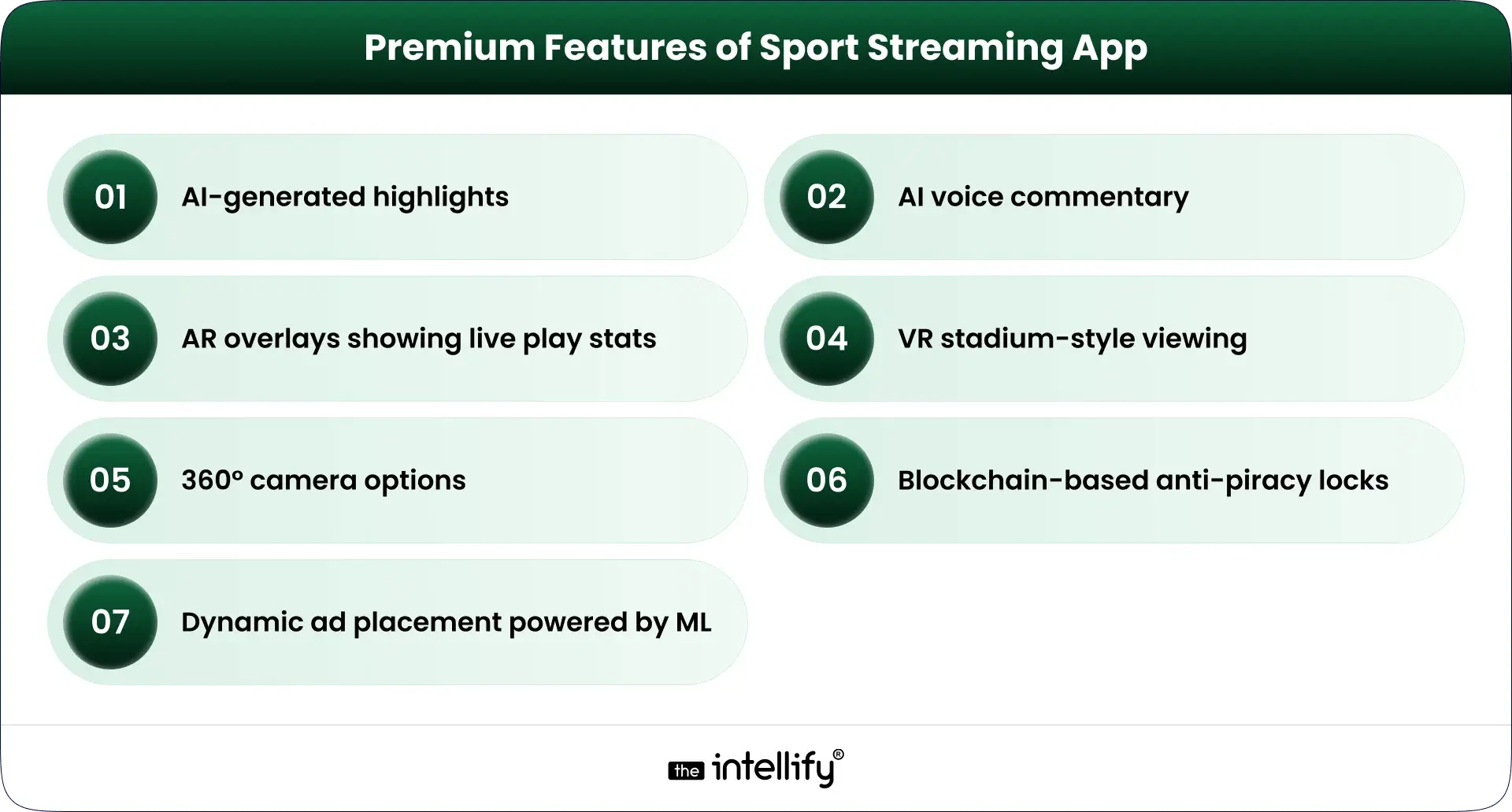
If you really want your app to stand out, here’s where the “wow” factor comes in. These aren’t mandatory, but they are very helpful.
- AI-generated highlights (automatic clip creation)
- AI voice commentary (yep, it’s a thing now)
- AR overlays showing stats during live play
- VR stadium-style viewing
- 360° camera options
- Blockchain-based anti-piracy locks
- Dynamic ad placement powered by machine learning
Apps like ESPN, DAZN, and Hotstar are already flirting with some of these. In the future, users expect innovation not just streaming.
The Technology Blueprint Behind a World-Class Streaming App
A. Stream Delivery Architecture
This is basically the “highway” your video travels on.
It includes:
- Video encoding
- Transcoding
- Packaging formats (like HLS, DASH)
- CDN (Content Delivery Network)
- Latency controls
A good CDN is the reason your stream loads instantly instead of buffering like an old YouTube video from 2010.
B. Frontend & Backend Tech Stack
- Frontend = what users see
- Backend = what runs behind the scenes
- Technologies vary, but usually include:
- React Native / Flutter for mobile
- Node.js / Python for backend
- WebRTC or HLS for streaming
Nothing fancy, just stable and scalable choices.
C. Infrastructure
You’ll need:
- Cloud hosting
- Load balancers
- Database
- Payment systems
- Security layers
Think of it like building a stadium. Fans only see the field, but a LOT happens underground.
Step-by-Step Roadmap to Build a Sports Streaming App (From Idea to Launch)
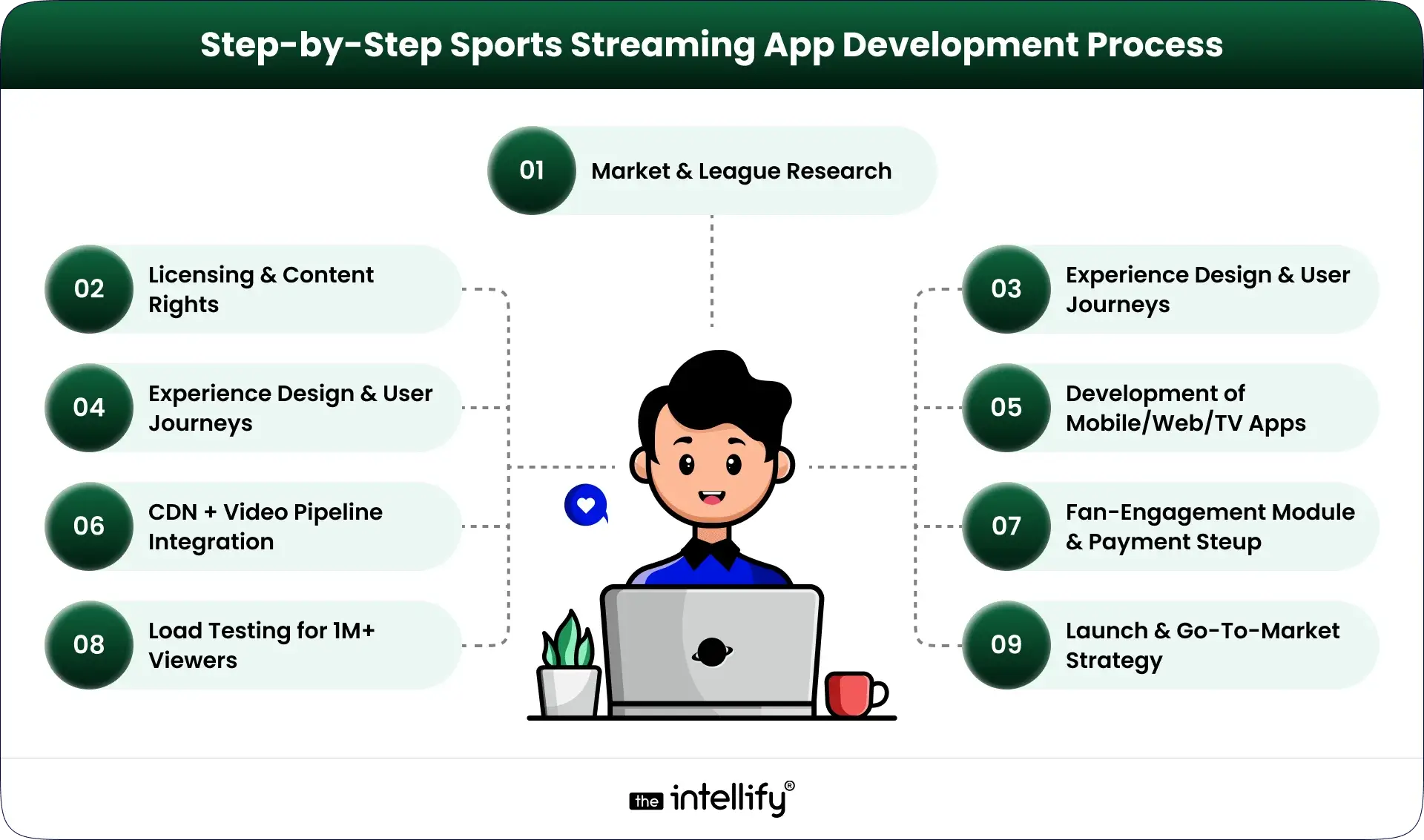
Here’s a roadmap that works for startups, broadcasters, sports clubs, and pretty much anyone.
1. Market & League Research
Understand what fans want. Is it cricket? Soccer? Niche sports?
2. Licensing & Content Rights
Skipping this step? That’s a disaster waiting to happen.
3. Experience Design & User Journeys
Plan how users move through the app. Keep it simple, clean, and friendly.
4. Streaming Architecture Setup
CDN, latency settings, multi-bitrate streaming, all the tough backend stuff.
5. Development of Mobile/Web/TV Apps
Frontend teams and backend teams work together here.
6. CDN + Video Pipeline Integration
This is where the actual “streaming” becomes real.
7. Fan-Engagement Module Development
Chats, polls, reactions, all tiny things that make the app fun.
8. Payment & Subscription Setup
Stripe, Razorpay, PayPal whatever fits.
9. Load Testing for 1M+ Viewers
Because a match final will test your app.
10. Launch & Go-To-Market Strategy
Soft launch → feedback → final release.
Done right, this process sets the foundation for a stable, enjoyable sports app.

Monetization Strategies That Actually Work for Sports Streaming
Here’s where the money comes in (quietly, not with a loud marketing pitch).
- Subscription bundles: monthly, annual, or per sport
- Match-based PPV: users pay only for specific games
- Freemium model: free basic content, paid premium matches
- In-stream ads: subtle, non-intrusive ads
- Sponsored highlights: brands love these
- Merch store integration: jerseys, team gear
- Exclusive behind-the-scenes content: interviews, locker room clips
Pick what fits your audience’s habits, not just what seems profitable.
Cost Breakdown: How Much Does It Really Cost to Build a Sports Streaming App?
What influences the cost?
- Number of features
- Complexity of streaming
- Video quality
- Platforms (iOS, Android, Web, Smart TV)
- Backend architecture
- Security requirements
- Design complexity
- Size of the development team
Estimated ranges:
- Basic MVP:
₹18-30 lakh ($25,000-$40,000) - Mid-Level App:
₹45-85 lakh ($55,000-$100,000) - High-End Enterprise App (like ESPN-level):
₹1.2-3 crore ($150,000-$350,000+)
Costs shift depending on choices, but these ranges give you a solid starting point.
Why a Professional Development Partner Matters
Could you build this with a small freelance team? Maybe.
But should you?
Sports streaming apps require:
- Scalable architecture
- Real-time performance
- Security expertise
- Testing for extreme loads
- UI/UX that doesn’t confuse people
Experienced Sports app/software development partners help you avoid costly mistakes and reduce development time. It’s not hype, it’s just how complex systems work.
Why Choose The Intellify for Sports Streaming App Development?
If you’d prefer a team that’s already built video-heavy apps, understands real-time streaming pain points, and knows how to scale systems without blowing budgets, The Intellify might be a good fit.
We’ve worked on mobile apps, real-time platforms, user-friendly dashboards, and streaming systems that don’t crash during peak moments. We also stay involved post-launch because, honestly, the real work begins after users show up.
If you ever want to chat or explore ideas, we’re around.

Final Thought
Sports streaming isn’t slowing down. Fans want more control, better access, and flexible ways to watch the games they love, whether it’s a major league final or a small local tournament.
The coming years are shaping up to be a big year for digital sports experiences. And if you’re planning to build a sports streaming app, now’s the moment to step in before the space gets too crowded.
Start with the basics. Keep the experience smooth. Focus on fans. Everything else falls into place.
Frequently Asked Questions (FAQs)
1. What exactly is a sports streaming app & how is it different from a regular video app?
A sports streaming app is built for live matches, fast updates, and low-delay video. Regular video apps don’t handle real-time events or high traffic spikes well. The Intellify helps set up the backend so the stream stays smooth during peak moments.
2. What core features should my sports streaming app always have?
You’ll need stable live streaming, HD quality, match schedules, reminders, login, and multi-device support. These basics help users find and watch games easily. The Intellify usually helps teams pick features that fit their goals and budget.
3. If I want advanced features (to stand out), which ones add real value?
AI highlights, multi-angle views, live stats, and fan chat rooms boost engagement. These features make the app feel more “alive.” The Intellify guides clients on what’s practical to add first.
4. How much does it cost to build a sports streaming app?
Costs depend on features and streaming quality. MVP apps cost less; full platforms with advanced streaming cost more. The Intellify breaks costs down clearly so teams know where their budget goes.
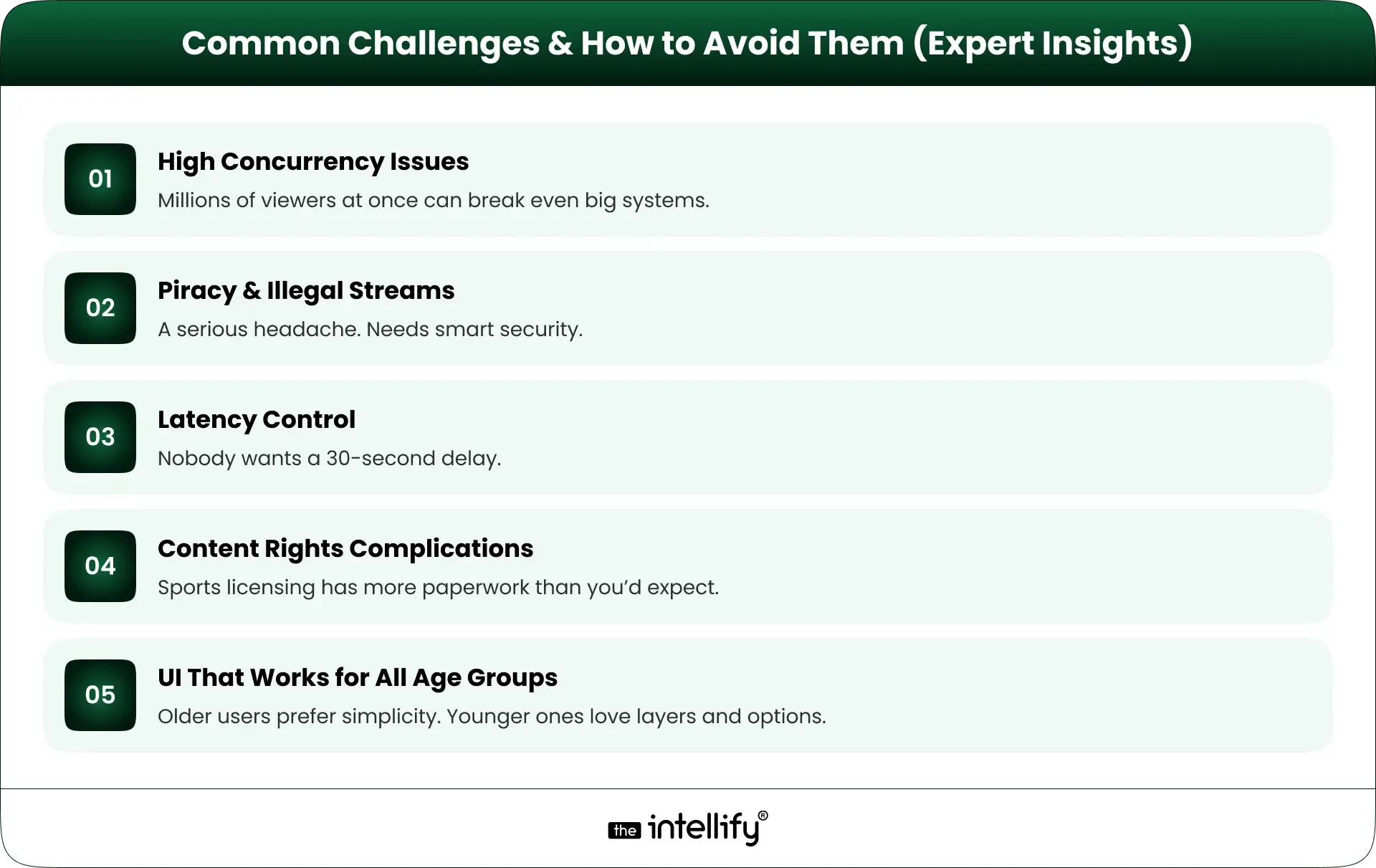
5. What are common challenges when building a live sports streaming app?
Handling huge traffic, reducing delay, and preventing piracy are the usual hurdles. Licensing can be tricky too. The Intellify helps plan for these early so the launch goes smoothly.
6. Should I start with a minimal app (MVP) or go for a full-featured version?
Starting with an MVP is safer. You test the idea, learn what users like, then scale. The Intellify often suggests this path for faster validation.
7. Can The Intellify help build my sports streaming app, even if I’m a small startup or content owner?
Yes. The Intellify builds streaming apps for startups and growing teams, focusing on smooth video, stable performance, and clean UX. You can share your idea, and we’ll help shape it into a workable plan.



Written By, Jalaj Shah
The COO and Co-Founder of The Intellify. Jalaj enjoys experimenting with new strategies. His posts are fantastic for businesses seeking innovative development ideas. Discover practical insights from his engaging content.

Mobile Banking App Development: Features, Security, Compliance & Cost
Summary: Mobile banking app development is becoming essential as more users prefer to manage their finances on mobile. This blog gives a clear view of what it takes to build a banking app, from planning the right approach to understanding how everything comes together. It walks through the overall process, important decisions, and what businesses […]
Augmented Reality Storytelling: Turning Brand Stories into Immersive Experiences
Summary: This blog explores how Augmented Reality Storytelling helps brands create deeper engagement through immersive, interactive experiences. It explains what AR storytelling is, how it works, real-world brand examples, key benefits, and common use cases across industries. The article also covers essential features of an AR storytelling app, how to choose the right AR app […]
Fuel Delivery App Development: A Complete USA Guide
Summary: This blog covers everything you need to know about fuel delivery app development, including how on-demand fuel delivery works, key features, costs, and legal considerations in the USA. It explains how businesses can build, launch, and scale a fuel delivery app while ensuring safety, compliance, and smooth operations. Whether you’re planning a new fuel […]
Mobile Banking App Development: Features, Security, Compliance & Cost
Summary: Mobile banking app development is becoming essential as more users prefer to manage their finances on mobile. This blog gives a clear view of what it takes to build a banking app, from planning the right approach to understanding how everything comes together. It walks through the overall process, important decisions, and what businesses […]
Augmented Reality Storytelling: Turning Brand Stories into Immersive Experiences
Summary: This blog explores how Augmented Reality Storytelling helps brands create deeper engagement through immersive, interactive experiences. It explains what AR storytelling is, how it works, real-world brand examples, key benefits, and common use cases across industries. The article also covers essential features of an AR storytelling app, how to choose the right AR app […]
Fuel Delivery App Development: A Complete USA Guide
Summary: This blog covers everything you need to know about fuel delivery app development, including how on-demand fuel delivery works, key features, costs, and legal considerations in the USA. It explains how businesses can build, launch, and scale a fuel delivery app while ensuring safety, compliance, and smooth operations. Whether you’re planning a new fuel […]
0
+0
+0
+0
+Committed Delivery Leads To Client Satisfaction
Client Testimonials that keep our expert's spirits highly motivated to deliver extraordinary solutions.

Christopher Seny
My experience working with The Intellify, has been a great experience. The team has a wealth of expertise in the tech space. Working with the intellify was a growing experience for me, I learned a lot. The team keeps great communication & responds fast to new ideas & suggestions. The team also provides great suggestions & solutions as well. I couldn’t imagine working with anybody else on this project & it has been a blessing working with, The Intellify.

Izandi Serdyn
The Intellify delivered a platform from scratch, involving the client at every stage. The team was communicative, responsive, and punctual throughout the engagement. Virtual meetings and emails ensured seamless project management. Customers can expect a team that can work fast.

Kya Johnson
The app serves as an effective introduction for users to the product and its characters. Responsive and faithful to initial requirements, The Intellify’s team exceeded initial expectations. Internal stakeholders were particularly pleased with their communication.

Stefan Wyk
Working with The Intellify to develop our website was an outstanding experience. Their team displayed exceptional professionalism, creativity, and technical expertise throughout the entire process. The final product exceeded our expectations, delivering a sleek, user-friendly, and highly functional website. We highly recommend The Intellify to anyone in need of top-tier web development services.

Steve Thorpe
The Intellify’s work has been met with high praise from internal and external stakeholders. The team is efficient, diligent, and reliable in their service. They go above and beyond in terms of communication and project management. The Intellify is a responsive vendor that gets the job done.

Tal Dotan
I’ve been working with The Intellify for the last 3 years. During this period of time we’ve planned and executed projects in both small and large scale. Working with The Intellify was and still is the best decision I’ve made when rising up Divo, I strongly recommend to work with them in any type of project.


 +1-302-803-4983