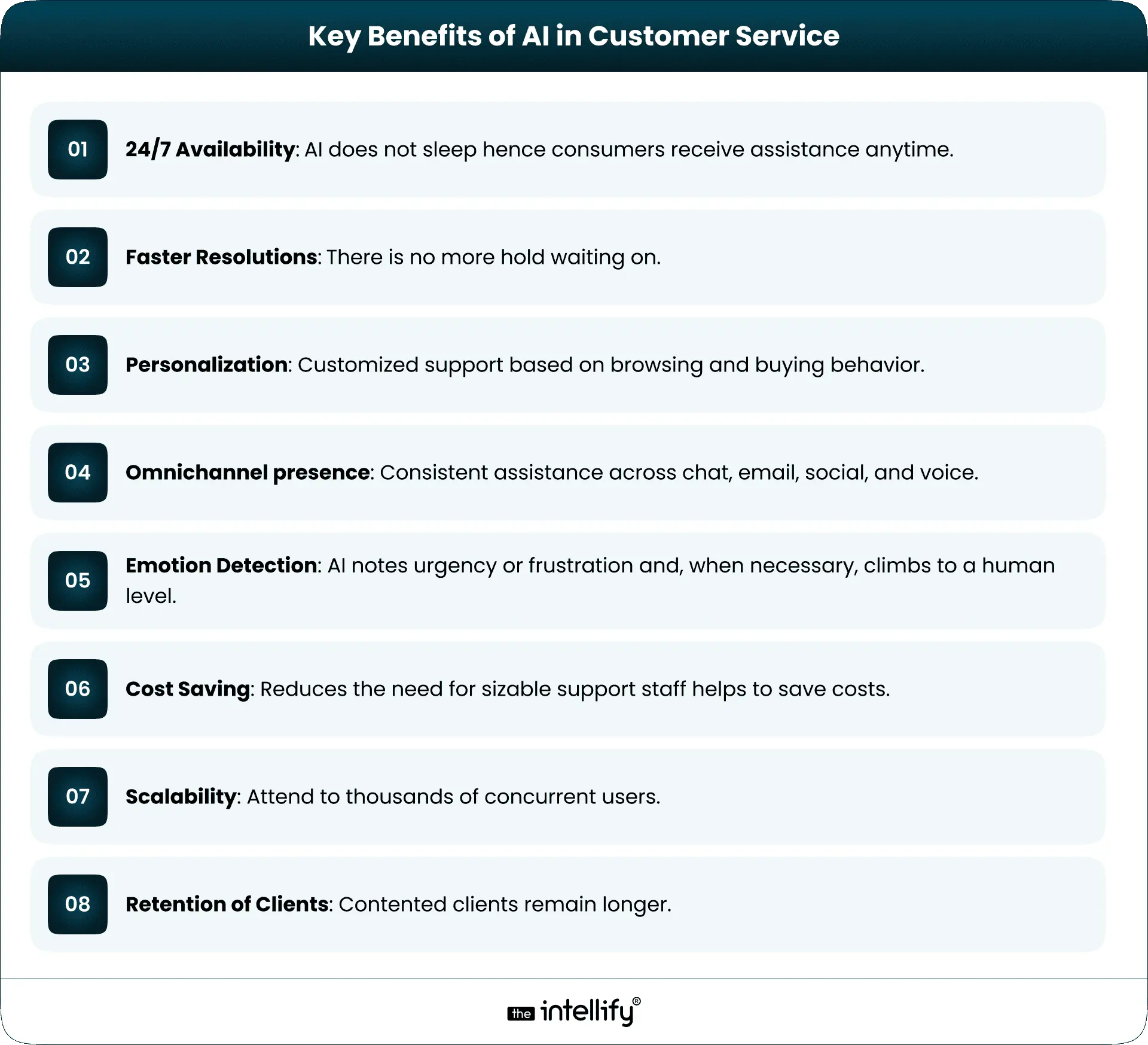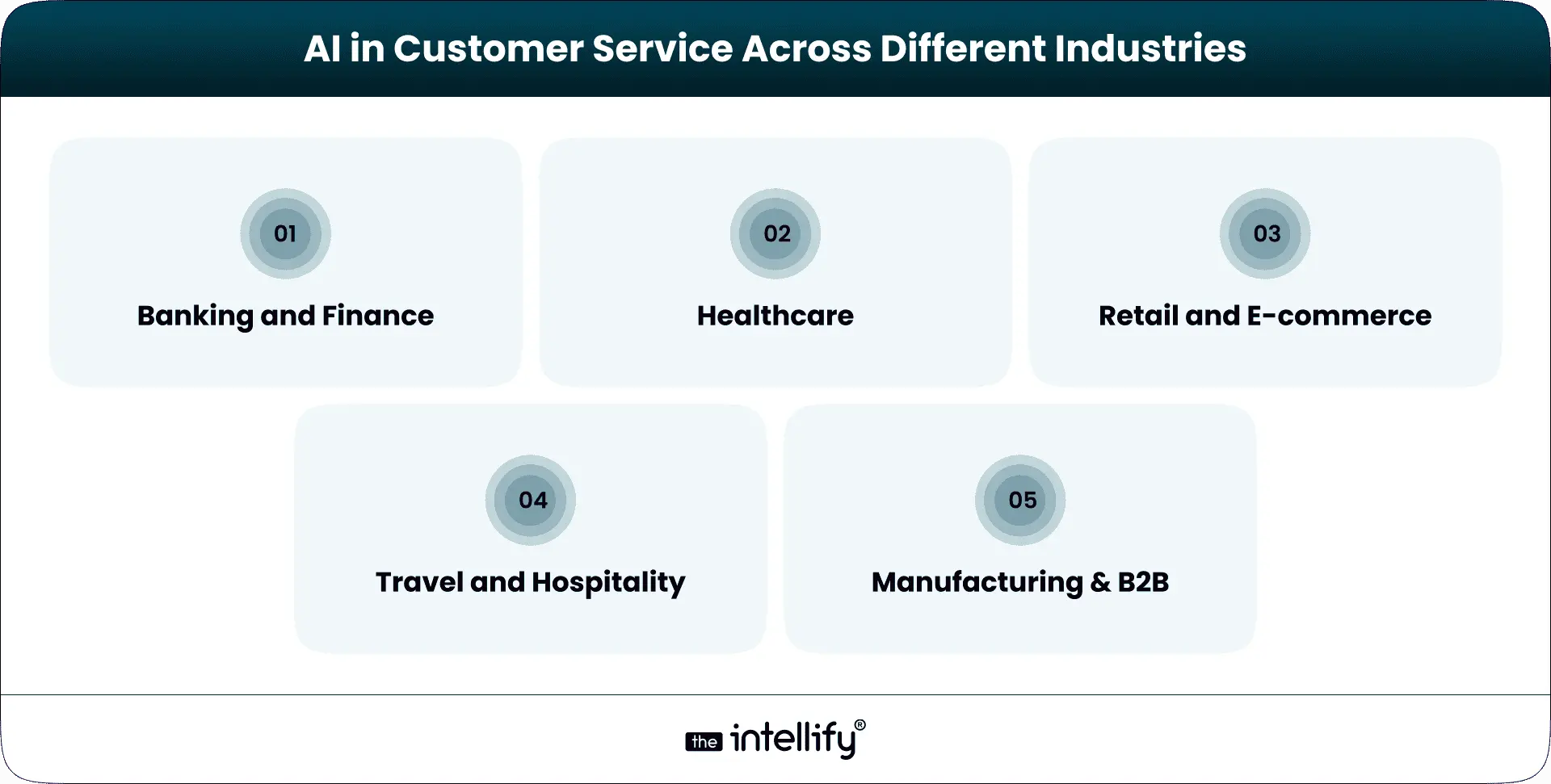
Summary:
Voice-driven AI is changing how businesses and developers think about customer interactions and automation. This blog explains what Voice AI is, how AI voice agents work, and why they’re gaining traction across industries like customer support, healthcare, banking, and e-commerce. It also covers real-world use cases, business benefits, developer opportunities, and key considerations before adoption, helping readers understand where voice AI fits and why it matters today.
A few years ago, talking to a machine still felt… awkward. You’d say something simple like, “Check my order status,” and the system would respond with, “I did not understand that.” Cue mild irritation, maybe a sigh, maybe hanging up.
Fast forward to today, and things feel different. You can speak naturally, pause mid-sentence, even change your mind and the system keeps up. That shift is the quiet rise of voice-driven AI, and it’s changing how businesses work and how developers build.
This isn’t hype. It’s practical. It’s already happening. And if you’re building products or running a business, it’s worth paying attention.
What Is Voice-Driven AI?

Voice-driven AI is technology that lets machines listen, understand, and respond using spoken language. You talk. The system listens. It figures out what you mean. Then it replies out loud.
That’s it. No complicated definition needed. At the core, it combines:
- Speech recognition (turning voice into text)
- AI understanding (figuring out intent)
- Speech generation (talking back)
When people say AI Voice or Voice AI, they usually mean this full loop working smoothly together. What’s new is how natural it feels now. You don’t have to speak like a robot anymore. You can sound like… yourself. And that changes everything.
Evolution of Voice AI: From Assistants to AI Voice Agents
Early voice tools were basic. They followed scripts. Ask the wrong way, and they’d get confused. Anyone who has yelled “representative” into a phone menu knows the feeling.
Modern AI Voice Agents are different. They:
- Handle back-and-forth conversations
- Remember context within a call
- Ask clarifying questions
- Adapt their responses based on what you say
It’s the difference between a recorded menu and a capable assistant who doesn’t panic when things go slightly off-script. This evolution is why businesses are moving away from old IVR systems and toward smarter voice experiences.
Why Voice AI Is Growing So Fast
Voice AI didn’t explode overnight. It crept in quietly, then hit a tipping point.
One big reason is habit. People got used to talking to devices such as phones, cars, and smart speakers. Saying things out loud stopped feeling awkward. It became normal, almost automatic. You ask for directions while driving. You check the weather while making coffee. No typing, no thinking.
Another reason is pressure on businesses. Customer support teams are stretched thin. Call volumes are high. Hiring and training take time. Voice AI stepped in as a practical fix, not a flashy one. It handles repetitive questions, reduces wait times, and keeps things moving.
There’s also the technology itself. Speech recognition is more accurate now. AI understands context better. Systems don’t fall apart when users hesitate, interrupt, or phrase things differently. That reliability changed how businesses view voice from “nice to try” to “worth investing in.”
Key Opportunities for Businesses Using Voice AI Solutions
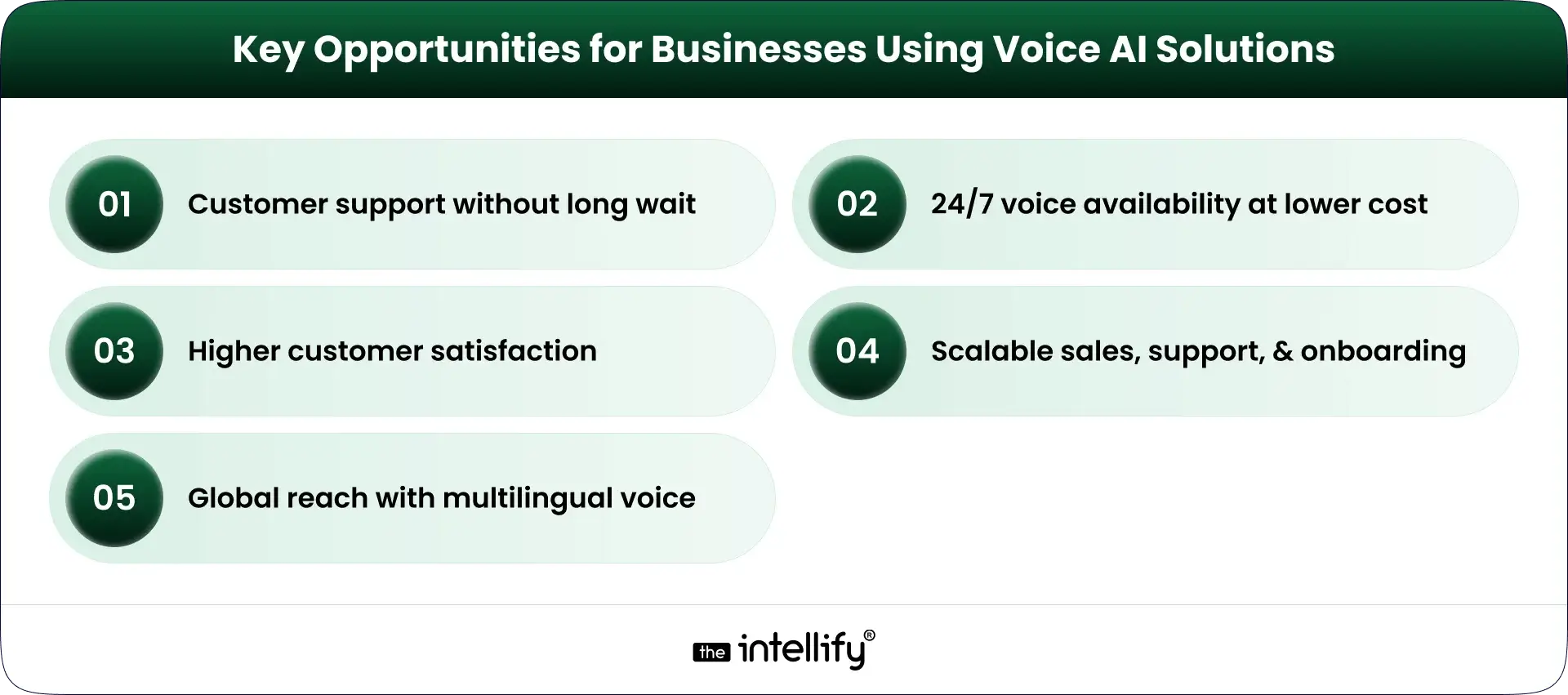
Let’s talk outcomes and business values:
Better Customer Support
Voice AI can handle routine questions without breaks, mood swings, or long wait times. Customers get help faster. Support teams focus on real problems.
Always-On Availability
People call at odd hours. Late nights. Early mornings. Voice AI doesn’t care. It’s there.
Lower Operating Costs
Once set up, AI Voice Agents handle high call volumes without scaling headcount at the same rate. That matters, especially in the US market where labor costs are high.
More Consistent Experiences
No bad days. No rushed calls. Every customer gets the same baseline level of service.
Global Reach
With multilingual voice support, businesses can serve users across regions without building separate teams everywhere.
None of this is flashy. It’s just… useful. And usefulness is what sticks.
Opportunities for Developers in the Voice AI Space
If you’re a developer, this space is wide open. Building voice systems isn’t just about code. It’s about understanding how people talk when they’re rushed, confused, or annoyed. That’s a different challenge than building forms or dashboards.
There’s strong demand for:
- Custom AI Voice Agents tailored to specific industries
- Integrations with CRMs, booking systems, and internal tools
- Voice workflows that actually match how businesses operate
- Ongoing improvement, tuning, and maintenance
Many companies don’t want generic solutions. They want voice systems that understand their customers, their data, and their processes.
That’s where AI Voice Agent Services come in. Not as off-the-shelf tools, but as carefully built systems that solve real problems. From a career and business standpoint, voice AI is less crowded than chatbots were a few years ago. There’s room to specialize. Room to experiment. Room to grow.
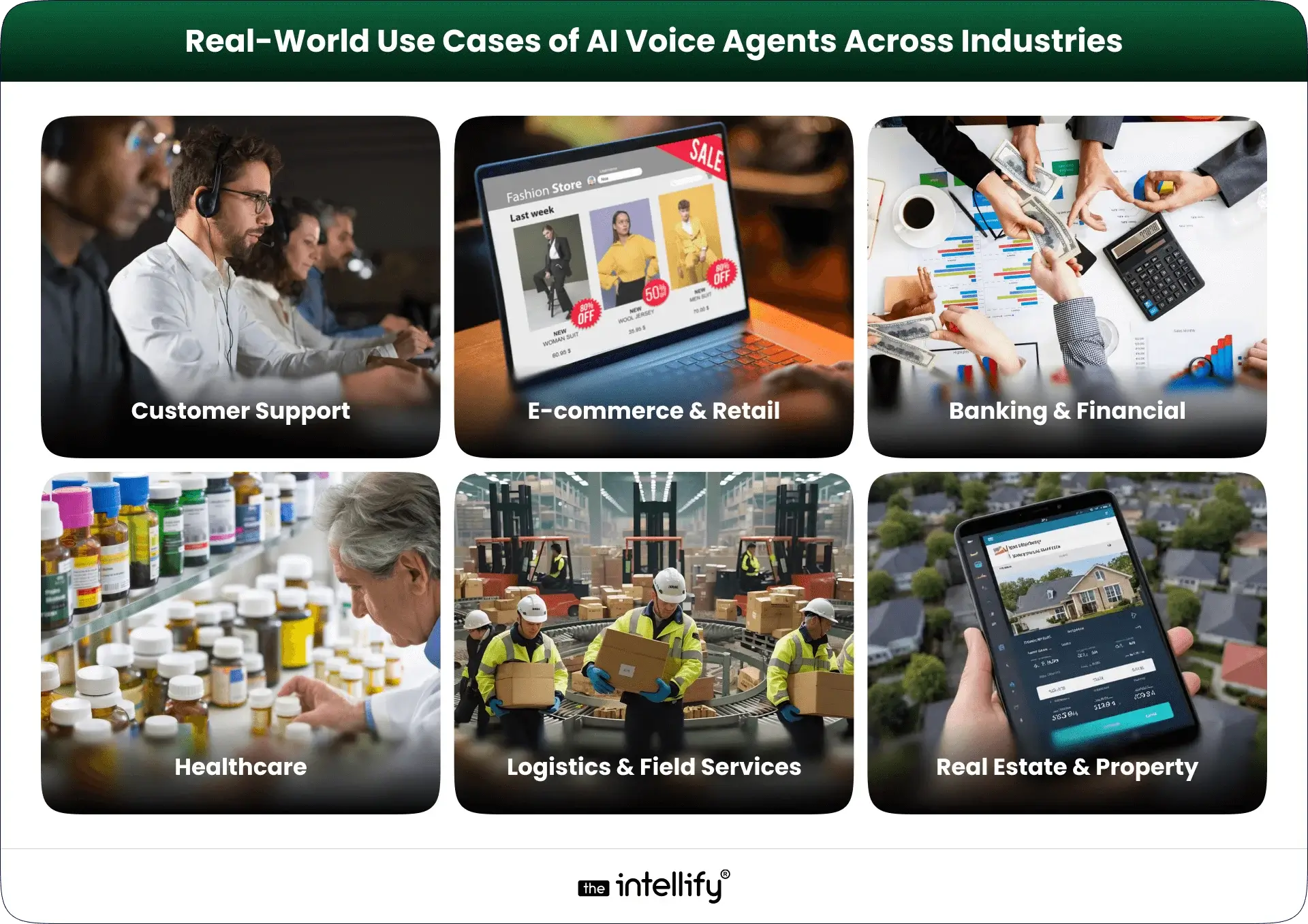
Real-World Use Cases of AI Voice Agents
This is where things get tangible.
Customer Support & Call Centers
Voice AI handles common issues like order status, password resets, and appointment changes. Humans step in when things get complex.
Healthcare
Patients schedule appointments, receive reminders, or get basic information without waiting on hold. Simple, calm, efficient.
Banking & Financial Services
Account inquiries, transaction confirmations, and basic support are handled securely through voice, with humans for sensitive cases.
E-commerce & Retail
Customers track deliveries, initiate returns, or ask product questions without digging through emails.
Logistics & Field Services
Drivers confirm deliveries. Technicians get updates. Everything moves faster.
Real Estate & Property Management
Property inquiries, viewing schedules, and maintenance requests are all handled through voice without constant back-and-forth.
AI Voice Agent Solutions vs Traditional Voice Systems
| Criterion | Build | Buy |
|---|---|---|
| Cost | Higher upfront | Lower upfront |
| Time to Market | Slower | Faster |
| Scalability | Custom, complex | Platform-led |
| Security & Compliance | Fully internal | Vendor-dependent |
| Customization | Full | Limited |
| Long-Term Flexibility | High | Restricted |
The difference isn’t subtle. Traditional systems expect users to adapt. AI voice agents adapt to users. And that shift changes how people feel during interactions, which matters more than most metrics.

How Businesses Can Get Started with Voice AI Agent Services
Getting started with voice AI works best when the focus is clear and practical. Businesses should begin small and expand gradually based on results.
Identifying the right use case
Review common customer calls and identify repetitive questions such as order status, appointment booking, or basic support. These are ideal starting points for voice AI.
Choosing between off-the-shelf vs custom Voice AI Solutions
Off-the-shelf solutions suit simple needs and faster setup, while custom voice AI solutions work better for complex workflows or industry-specific requirements.
Data, privacy & compliance basics
Voice AI systems must follow security and privacy standards. Encryption, access control, and regulatory compliance should be addressed from the start.
Importance of working with the right AI development partner
An experienced partner like The Intellify helps design reliable, secure, and business-aligned voice AI solutions that deliver real value.
Challenges & Things to Consider Before Adopting Voice AI
Voice AI isn’t magic. It has limits. Accuracy still depends on good data. Poor inputs lead to awkward conversations. Privacy matters. Especially in the US, compliance isn’t optional. Integration can get messy if systems are outdated. And yes, some users still prefer humans. That’s fine. Voice AI doesn’t replace people, it supports them. Being honest about these challenges builds trust. And trust matters more than perfect demos.
The Future of Voice-Driven AI
Voice as the primary interface for AI
Voice is becoming the most natural way people interact with AI. As screens become secondary in many situations, driving, working, and multitasking, voice offers faster, hands-free access to information and actions.
More natural, emotional, and context-aware agents
Future voice agents will better understand tone, pauses, and intent. This allows responses to feel calmer, more relevant, and less robotic, especially in sensitive or time-critical situations.
Voice + multimodal AI
Voice will increasingly work alongside text, visuals, and data. Users may speak a request, view details on a screen, and confirm actions by voice, creating smoother experiences.
Why early adopters will have a competitive edge
Businesses adopting voice AI early gain practical insights, improve faster, and deliver better customer experiences before competitors catch up.

Final Thoughts
Voice-driven AI isn’t about replacing humans. It’s about removing friction. About making everyday interactions smoother, faster, and less annoying.
For businesses, it’s a practical investment. For developers, it’s a growing field with room to specialize. And for customers? It’s one less reason to sigh when the phone rings. If you’re exploring AI Voice Agents or looking into Voice AI solutions for your business, now is a good time to start the conversation, ironically enough, by listening first.
Frequently Asked Questions (FAQs)
1. What is Voice-Driven AI, and how does it work?
Voice-driven AI enables systems to understand spoken language and respond intelligently. It converts speech into text, interprets user intent using AI, and replies with a natural voice response in real time.
2. How is Voice AI different from traditional IVR systems?
Unlike IVR, Voice AI doesn’t rely on fixed menus. It understands everyday language, manages follow-up questions, and keeps conversations flowing even when users speak casually or change topics.
3. What are AI Voice Agents used for in real businesses?
AI Voice Agents are used for customer support, appointment scheduling, order tracking, payment reminders, and lead qualification, especially in healthcare, banking, e-commerce, and real estate.
4. Are Voice AI solutions suitable for small and mid-sized businesses?
Yes. Many businesses start small by automating frequent calls. Voice AI solutions can grow gradually, making them practical and cost-effective for small and mid-sized teams.
5. How can businesses get started with AI Voice Agent services?
Businesses usually begin by identifying repetitive voice interactions, then working with providers like The Intellify to design and deploy custom AI voice agent solutions aligned with their goals.
6. Will AI Voice Agents replace human support teams?
No. AI voice agents handle routine tasks, while humans focus on complex or emotional cases. The goal is support, not replacement, and better experiences for both customers and teams.
7. Is Voice-Driven AI secure and compliant with data privacy laws?
When designed properly, voice-driven AI follows encryption, access controls, and compliance standards. Security depends on how the solution is built and managed from day one.