Grocery Delivery App Development: Cost, Features, & Tech Guide

Summary:
In this blog, we explore how to build an on-demand grocery delivery app development in 2026, from key features and tech stack to cost estimates, business models, and scaling strategies. Whether you’re a startup or established retailer, you’ll get a clear roadmap to launch and grow a grocery-delivery platform that wins in today’s competitive market


The Boom of On-Demand Grocery Delivery in 2026

The grocery delivery scene is changing fast, and we’re expecting even bigger shifts in 2026. Today, grocery delivery apps have become a crucial part of our shopping routines, offering a level of convenience and efficiency that traditional methods just can’t compete with. In this blog, we’ll explore everything about grocery delivery app development, from must-have features to development costs and upcoming trends.


What Is an On-Demand Grocery Delivery App?

On-Demand Grocery Delivery App

An on-demand grocery delivery app is a platform that lets users shop for groceries right from their smartphones, with products delivered straight to their doorsteps. It links customers, grocery stores, and delivery personnel smoothly, creating a convenient shopping experience.

Why It Matters for Businesses in 2026

With more shoppers choosing online options, having an on-demand grocery delivery app is vital for businesses that want to stay competitive. Come 2026, these apps will be even more essential, helping retailers connect with a wider audience while improving customer loyalty.

Types of Grocery Delivery Apps

1. Inventory-led model: Customers shop from a specific store that manages its inventory.
2. Marketplace model: Third-party apps that bring together various stores, offering users a larger selection.
3. Hyperlocal delivery model: Concentrates on quick deliveries from local stores.
4. Store-pickup model: Let users shop online and collect their groceries at the store.


How an On-Demand Grocery App Works

Customer App Flow

1. User Registration: Customers sign up and create an account.
2. Product Browsing: Users browse available items and add them to their carts.
3. Order Placement: After making selections, customers move to checkout.
4. Payment: Secure payment methods make transactions smooth.
5. Tracking: Users can track their orders in real time until they arrive.

Merchant/Store Flow

1. Product Listing: Merchants keep their inventory updated and list products on the app.
2. Order Reception: They get notified of orders from customers.
3. Fulfillment: Merchants prepare orders for delivery.
4. Notification: When ready, they alert the delivery partners.

Delivery Partner Flow

1. Task Assignment: Delivery partners get notifications about new orders.
2. Route Optimization: They optimize their routes to ensure quick deliveries.
3. Pickup & Delivery: Pick up the order from the merchant and deliver it to the customer.

Technology That Makes It Work

Modern grocery delivery apps tap into technologies like GPS for routing, in-app messaging for seamless communication, and payment gateways for secure transactions.


Must-Have Features for Grocery Delivery Apps
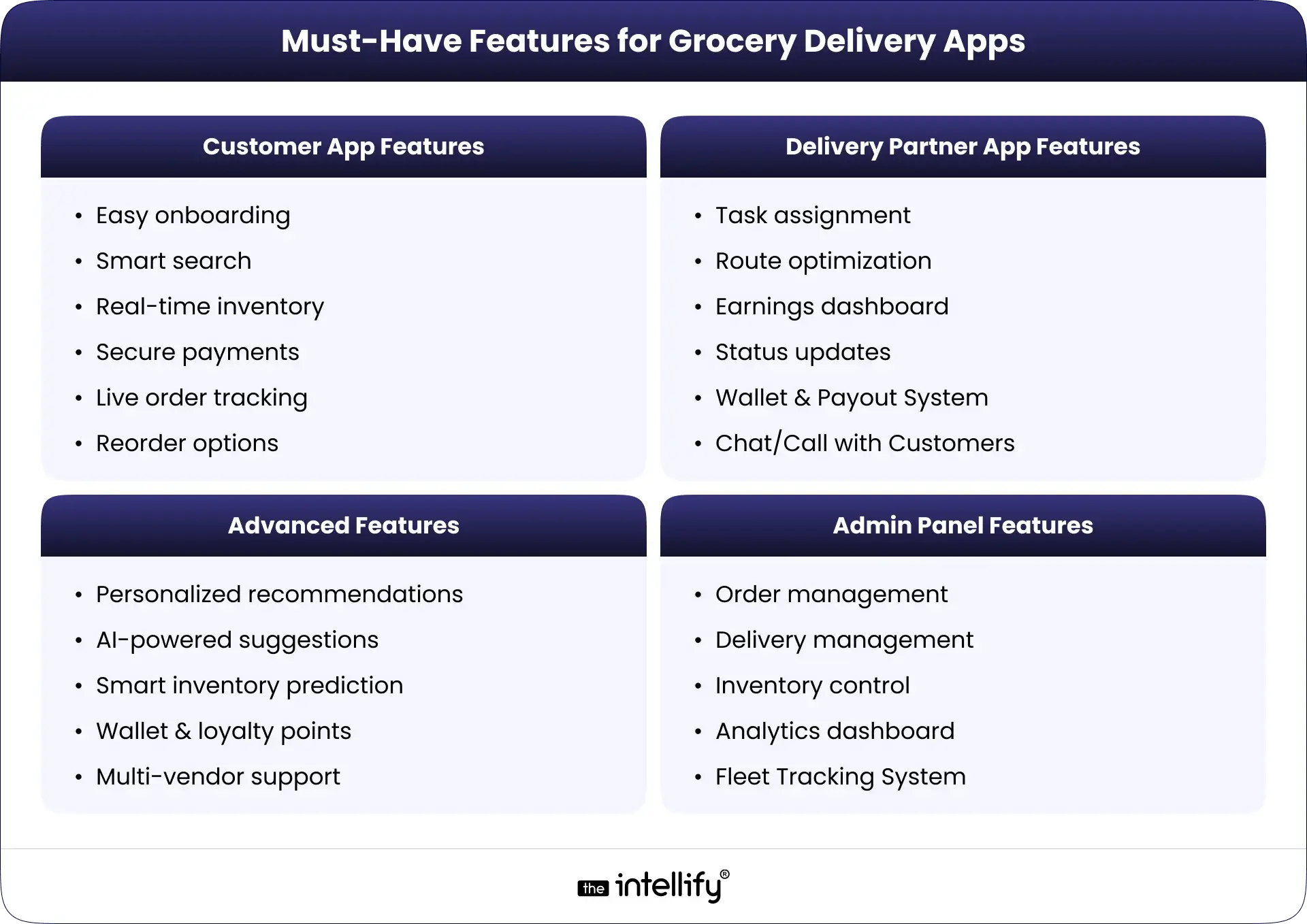
Features for Grocery Delivery Apps

Customer App Features

  • Easy onboarding: Quick account creation and login.
  • Smart search: Helps users find products rapidly.
  • Real-time inventory: Instantly displays available items.
  • Secure payments: Multiple options ensure safe transactions.
  • Live order tracking: Users can follow their delivery status in real time.
  • Reorder options: Let users easily purchase their frequently bought items.

Delivery Partner App Features

  • Task assignment: Clearly outlines delivery tasks for partners.
  • Route optimization: Suggests the best paths to cut delivery time.
  • Earnings dashboard: Keeps track of daily earnings for partners.
  • Status updates: Allows partners to keep everyone informed of their delivery progress.

Admin Panel Features

  • Order management: Tracks all incoming and outgoing orders.
  • Delivery management: Ensures effective coordination of all delivery partners.
  • Inventory control: Monitors stock levels and alerts for low inventory.
  • Analytics dashboard: Provides valuable insights into sales and customer behaviors.

Advanced Features

  • Personalized recommendations: Tailors product suggestions based on user behavior.
  • AI-powered suggestions: Leverages AI to improve shopping experiences.
  • Smart inventory prediction: Forecasts demand to keep stock levels balanced.
  • Wallet & loyalty points: Builds customer retention through rewards.
  • Multi-vendor support: Enables various stores to sell through one app.


Tech Stack for Grocery Delivery App Development

Mobile Technologies

You can use native technologies like Swift for iOS and Kotlin for Android, or go for cross-platform solutions like Flutter and React Native.

Backend Technologies

Options like Node.js, Ruby on Rails, or Django offer solid frameworks for server-side development.

Database Options

MySQL, PostgreSQL, or MongoDB are popular for managing user data efficiently.

APIs & Integrations

Integrating third-party APIs for payments, GPS tracking, and analytics can boost the app’s functionality.

Cloud Hosting & Security

Cloud services like AWS or Google Cloud ensure you have scalable and secure hosting.


Grocery Delivery App Development Process
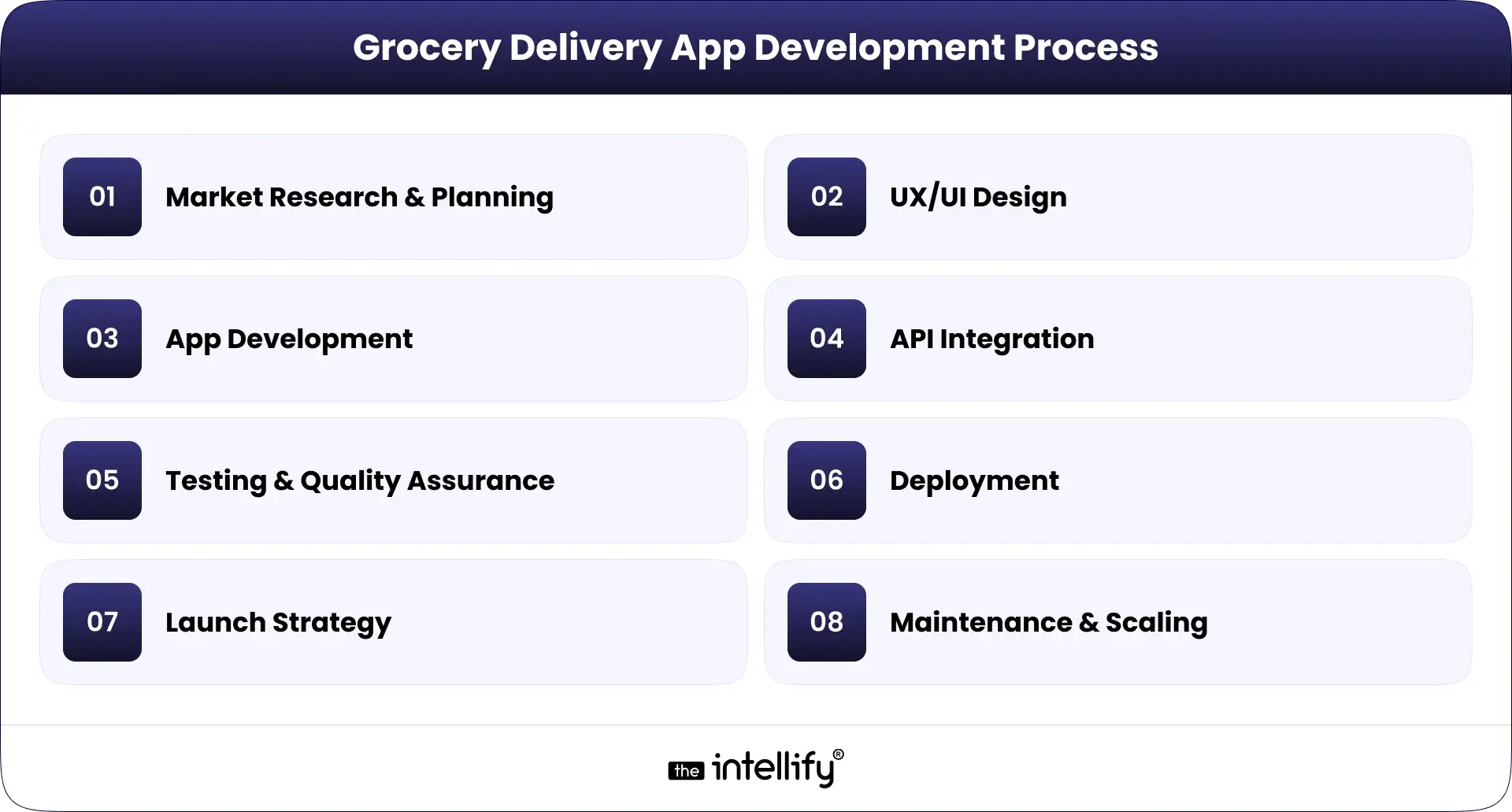
Grocery Delivery App Development Process

  • Market Research & Planning: It’s crucial to identify your target audience and market trends to guide development.
  • UX/UI Design: Designing a user-friendly interface is key to enhancing customer satisfaction and retention.
  • App Development: This phase covers the actual coding of the app, based on design and requirements.
  • API Integration: Integrating necessary APIs for payments, notifications, and mapping services is vital for app performance.
  • Testing & Quality Assurance: Thorough testing ensures that your app provides a bug-free user experience.
  • Deployment: The app gets launched on app stores for everyone to access.
  • Launch Strategy: A solid marketing strategy is essential to generate excitement around your app’s launch.
  • Maintenance & Scaling: Ongoing updates and improvements keep your app relevant and efficient.


How Much Does It Cost to Build a Grocery Delivery App?

Cost Breakdown by App Complexity

  • Basic app: $30,000 – $50,000
  • Moderate app: $50,000 – $100,000
  • Advanced App: $100,000+

Factors That Influence Cost

  • Complexity of features: More features mean more development work.
  • Location of the development team: Rates can vary depending on the region.
  • Technology stack: Some technologies may come with a higher price tag.

Extra Costs to Consider

  • Marketing expenses
  • Ongoing maintenance and updates
  • Server and Hosting fees


Revenue Models for Grocery Delivery Apps

  • Commission Model: Charge a percentage on every sale made through the app.
  • Delivery Fee: Implement a delivery fee structure to cover logistics costs.
  • Subscription Plan: Offer a monthly or yearly subscription for free deliveries or exclusive perks.
  • Surge Pricing: Adjust prices during peak demand times for better service efficiency.
  • In-App Ads & Brand Promotions: Partner with brands for promotions and ads within the app, generating additional revenue.
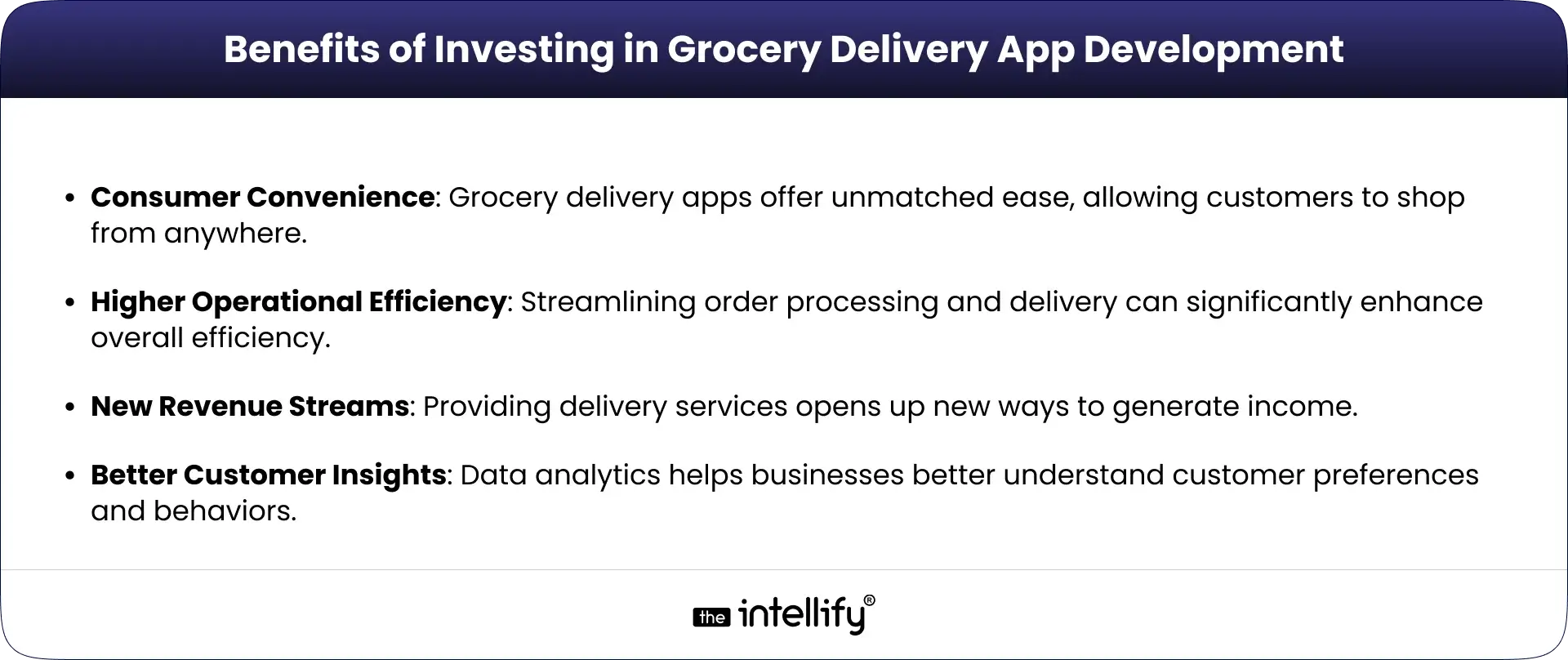
 

Grocery Delivery App Benefits


Common Challenges & How to Solve Them

1. Inventory Management
Solution: Use smart inventory tools to keep stock levels in check.

2. Delivery Speed
Solution: Leverage route optimization technology to accelerate deliveries.

3. User Retention
Solution: Develop loyalty programs to encourage repeat customers.

4. Cart Abandonment
Solution: Implement reminders and incentives to prompt completed purchases.

5. Peak-Time Order Handling
Solution: Adjust staffing and delivery resources during busy hours.


Future Trends in Grocery Delivery (2026-2030)

  • AI in Personalization: AI will enhance personalized shopping experiences based on individual user data.
  • Dark Stores & Micro-Fulfillment: Dedicated fulfillment centers will speed up processing times.
  • Drone & Automated Delivery: New technologies will enable faster delivery options.
  • Voice Ordering: Voice-activated features will streamline the ordering process.
  • Ultra-Fast Delivery (10-Minute Model): Advancements aim to make minute-by-minute delivery a reality.


Real Business Use Cases of Grocery Delivery App

Use Cases of Grocery Delivery App

Retail Chains

Big names like Walmart are integrating delivery apps for a seamless customer experience.

Local Supermarkets

Smaller stores can use delivery apps to stay competitive in the digital space.

Statups

New businesses can capitalize on emerging trends for quick market entry.

D2C Brands

Direct-to-consumer brands are increasingly adopting delivery apps to enhance services.


Why Choose The Intellify for Grocery Delivery App Development

Domain Expertise: Our team has a deep understanding of the grocery delivery sector and offers tailored solutions.

Strong Technology Skills: We utilize the latest technology to create robust, user-friendly apps.

Fast Delivery & Quality: We prioritize quality and speed, ensuring your app is ready on schedule.

Long-Term Support & Scaling: After launching, we provide ongoing support and solutions for scaling your app as your business grows.
 

Grocery delivery app development


Conclusion

Investing in grocery delivery app development in 2026 presents vast opportunities for businesses. With improved customer experiences and new revenue streams, the advantages are plentiful. As technology continues to advance, staying ahead will be crucial for success.

If you’re looking for a personalized roadmap to create your own grocery delivery app, reach out to The Intellify today!


Frequently asked questions (FAQs)

1. What does an on-demand grocery delivery app do and how does it work for users and businesses?

An on-demand grocery delivery app allows users to browse, order, and receive groceries at their convenience while connecting customers to stores and delivery partners, streamlining the shopping process.

2. How much does it cost to build an on-demand grocery delivery app in 2026?

The cost typically ranges from $30,000 to $100,000 based on the app’s complexity and features.

3. What features are essential for a successful grocery delivery app?

Key features include smart search, secure payments, live order tracking, and easy reorder options.

4. How long does it take to develop a grocery delivery application from scratch?

It’s generally a 3 to 6 months process, depending on how complex the features are.

5. Which technologies are used to build a grocery delivery app?

Common technologies include mobile frameworks like React Native, backend systems like Node.js, and databases like MongoDB.

6. How do grocery delivery apps make money and stay profitable?

Revenue can come from delivery fees, commissions on sales, subscription plans, and in-app advertisements.

7. Can I build a custom grocery delivery app like Instacart, Blinkit, or BigBasket?

Absolutely! With the right development team, you can create a tailored grocery delivery app akin to those successful platforms.

8. Why should I hire a professional grocery delivery app development company for my project?

A professional team ensures high quality, timely delivery, and expert knowledge of market trends, which is crucial for a successful product.

On-Demand App Development: Types, Benefits & Development Cost

Summary
On-demand app development is transforming how businesses deliver fast and convenient services. This blog covers what on-demand apps are, their rising popularity, types, key benefits, popular examples, features, development process, and costs. Learn how an on-demand app can boost growth and enhance customer satisfaction.

In today’s fast-paced world, convenience is everything. People want services and products delivered to their doorstep quickly, and businesses are adapting to meet this need. This is where on-demand apps come into play. From booking a ride to ordering groceries or hiring a home service professional, on-demand apps have become an integral part of our daily lives.
The on-demand economy has grown rapidly, driven by smartphone penetration, internet access, and changing consumer behavior. Businesses that adopt on-demand app development can enhance customer satisfaction, expand their reach, and stay competitive in a digital-first market.


What is an On-Demand App?

What is an On-Demand App

An on-demand app is a mobile or web application that connects users with services or products instantly. The main purpose of these apps is to offer immediate solutions to users’ needs, whether it’s transportation, food delivery, home services, or rentals.
Unlike traditional business models, on-demand apps focus on speed, convenience, and real-time availability, making them popular among both users and businesses.


Why the Demand for On-Demand Apps Is Rising?

The popularity of on-demand apps is skyrocketing. Here are the main reasons behind this growth:

1. Convenience for Users: Customers prefer apps that save them time and effort. From ordering food to booking a cab, everything is just a few taps away.

2. Mobile-First Behavior: Smartphones are now an essential part of life. Users expect seamless app experiences that allow them to access services on the go.

3. Faster Services: On-demand apps provide instant solutions, meeting users’ growing expectations for speed and efficiency.

4. Business Opportunities: Companies can increase revenue streams, improve customer loyalty, and track performance with analytics.

5. Market Growth: According to industry reports, the global on-demand app market is expected to grow exponentially over the next few years, covering multiple sectors like transportation, healthcare, logistics, and home services.


Different Types of On-Demand Apps

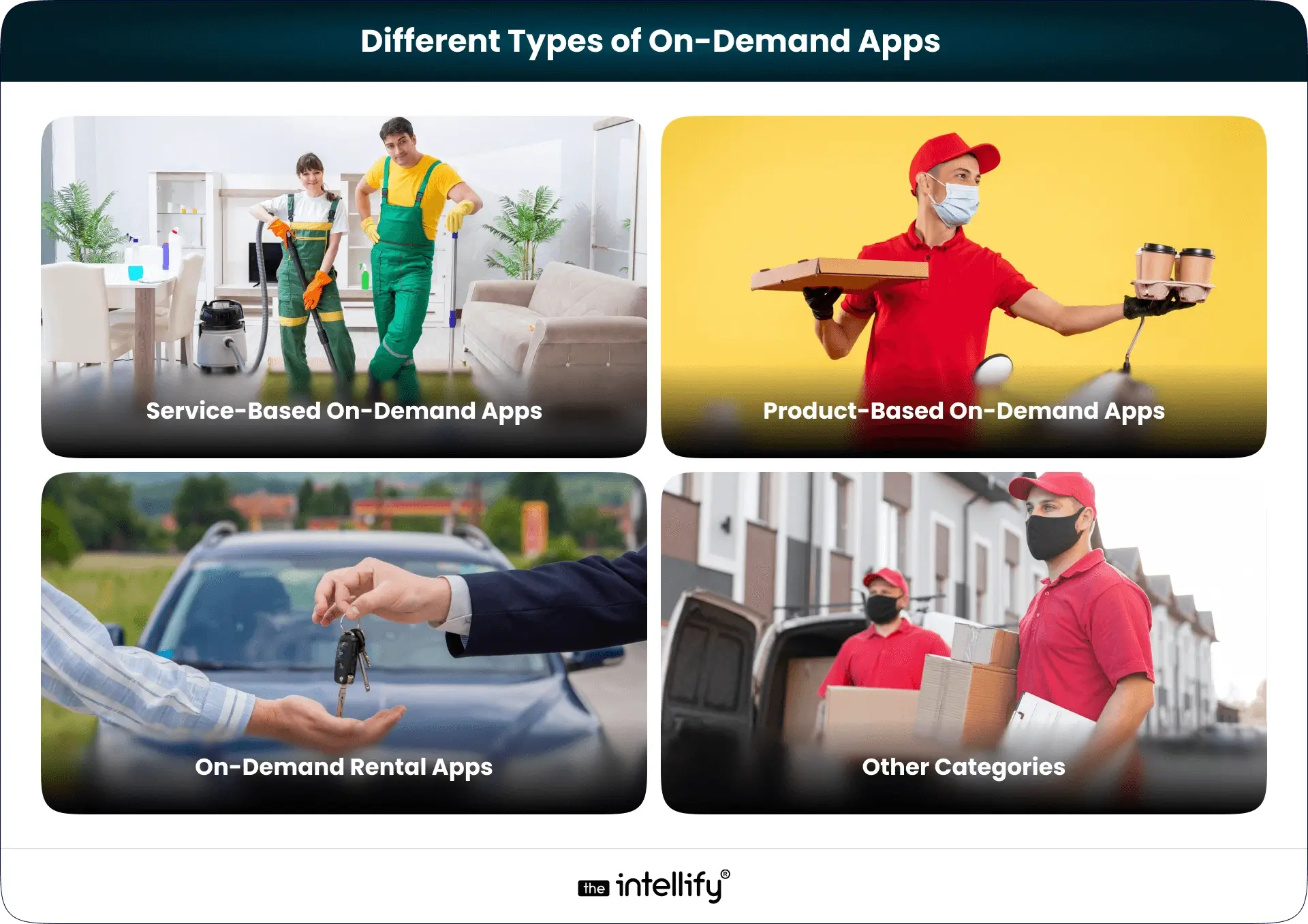
On-demand apps cater to various industries and needs. They can be categorized into the following types:

Different Types of On-Demand Apps

Service-Based On-Demand Apps

These apps connect users with professionals who provide services on-demand.

  • Transportation Services: Apps like Uber and Lyft not only allow ride booking but also offer real-time tracking, fare estimation, and safety features.
  • Home Services: Platforms like TaskRabbit and UrbanClap provide access to cleaning, plumbing, electrical work, and handyman services. They often allow customers to schedule services in advance or request immediate assistance.
  • Beauty & Wellness: Apps such as Housejoy and UrbanClap let users book spa treatments, haircuts, and wellness services at home. Advanced features like live stylist profiles, ratings, and package deals enhance user experience.
  • Healthcare Services: Apps like Practo or Doctor on Demand facilitate teleconsultations, appointment scheduling, and medicine delivery. These apps often integrate video consultation, online prescriptions, and health tracking features.

Product-Based On-Demand Apps

These apps focus on delivering physical products to customers quickly and efficiently.

  • Food Delivery: Apps like Zomato and Swiggy provide restaurant menus, live tracking, and secure payment options. Some also include subscription models for regular users.
  • Grocery Delivery: BigBasket, Instacart, and Grofers allow users to order groceries and essentials online, often within hours. Personalized recommendations and discounts enhance customer loyalty.
  • E-commerce: Apps like Amazon and Flipkart provide a variety of products ranging from electronics to fashion, offering fast delivery options, product reviews, and secure payments.

On-Demand Rental Apps

These apps allow users to rent items instead of purchasing them outright, offering flexibility and cost-efficiency.

  • Vehicle Rentals: Zoomcar and Revv allow short-term car rentals with options like hourly, daily, or weekly plans. Real-time booking, pick-up locations, and payment gateways are key features.
  • Equipment Rentals: Rentomojo and Furlenco offer furniture, appliances, and electronics on rent, often with delivery and setup included.
  • Property Rentals: Airbnb and OYO let users rent vacation homes or short-term accommodations. Features like location filters, host reviews, and secure payments enhance trust and user experience.

Other Categories

  • Education: On-demand tutoring apps provide personalized learning experiences, live classes, and instant doubt resolution.
  • Logistics & Delivery: Instant courier apps connect customers with local delivery services for fast shipping.
  • Niche Industry Apps: Apps in fitness, pet care, or specialized services like photography or event planning cater to specific customer needs.


Benefits of On-Demand App Development

Developing an on-demand app offers numerous advantages for both businesses and customers.

Business Benefits

  • Expanded Reach: Businesses can access a wider audience through mobile platforms.
  • Operational Efficiency: Streamlined workflows reduce manual effort and improve service delivery.
  • Revenue Growth: Increased orders and subscriptions enhance revenue.
  • Data Insights: Analytics help businesses understand user behavior and optimize offerings.

Customer Benefits

  • Convenience: Services and products are accessible anytime, anywhere.
  • Speed: Quick booking, delivery, and service fulfillment.
  • Transparency: Real-time tracking, ratings, and reviews ensure trust and satisfaction.


Popular On-Demand App Examples Across Industries

On-Demand App Examples Across Industries

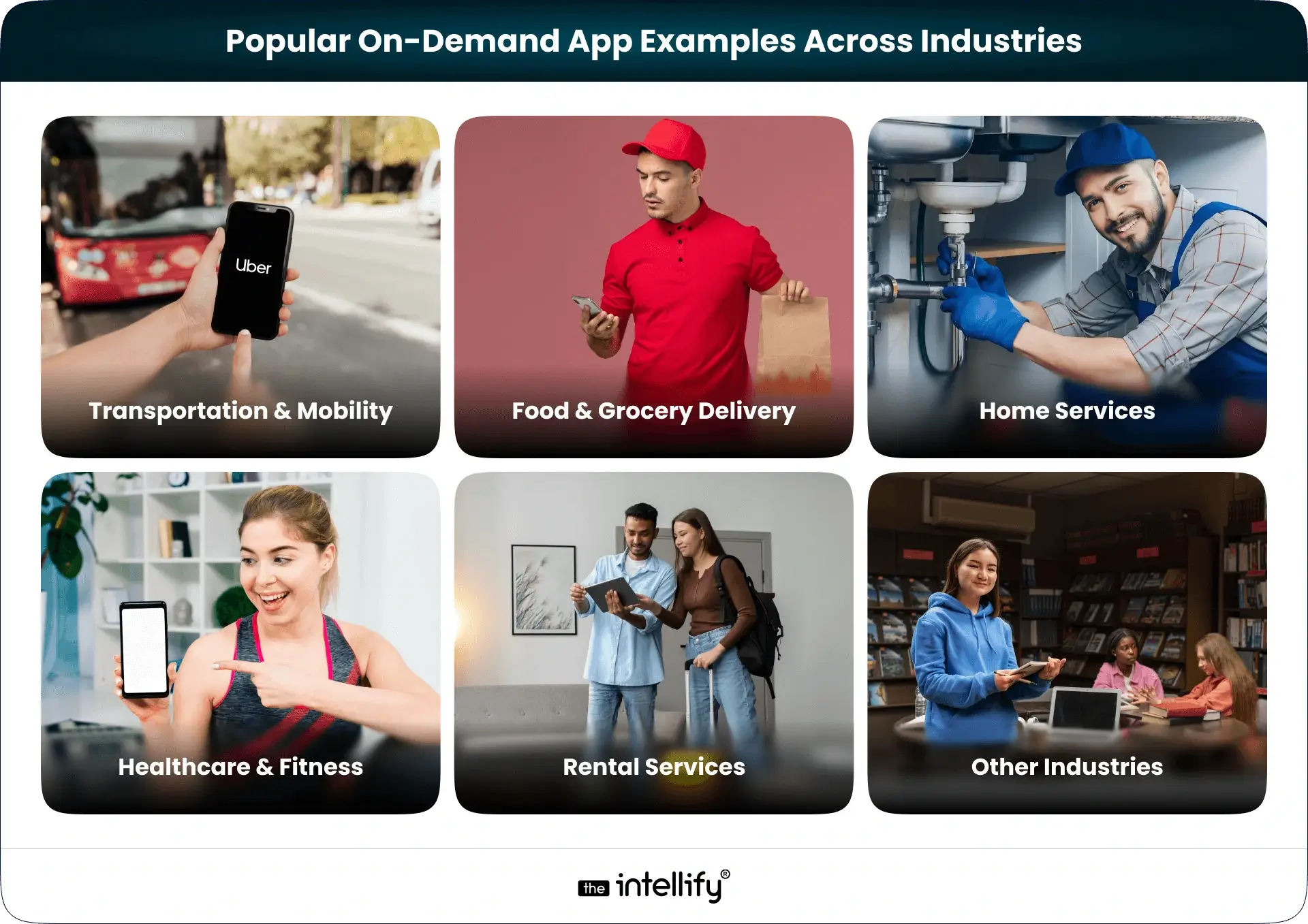
Here are some more detailed real-world examples of on-demand apps across industries:

Transportation & Mobility:

  • Uber & Lyft: On-demand ride-hailing apps offering GPS tracking, fare estimation, and driver ratings.
  • Bolt & Grab: Focus on regional markets with both car and scooter rides.

Food & Grocery Delivery:

  • Zomato & Swiggy: Offer quick meal delivery with real-time tracking and offers.
  • Instacart & BigBasket: Grocery delivery apps providing fast, scheduled deliveries with product recommendations.

Home Services:

  • TaskRabbit & UrbanClap: Connect customers with professionals for plumbing, repairs, cleaning, or installation.

Healthcare & Fitness:

  • Practo & Doctor on Demand: Telemedicine apps with appointment scheduling, prescriptions, and health tracking.
  • Cure.fit & MyFitnessPal: Fitness apps offering personalized workouts, diet plans, and on-demand coaching.

Rental Services:

  • Airbnb & OYO: Short-term property rentals with customer reviews, location filters, and secure payment.
  • Zoomcar & Rentomojo: Vehicle and equipment rental apps offering hourly, daily, or weekly rental options.

Other Industries:

  • Udemy & Byju’s: On-demand education apps with courses, live sessions, and certifications.
  • PetBacker: On-demand pet care services including grooming and sitting.

These apps have transformed their respective industries, demonstrating the potential of on-demand app development.


Key Features of On-Demand Applications

A successful on-demand app combines features that ensure seamless interaction for both customers and service providers.

For Customers

  • User Registration & Profiles: Quick sign-up with social login options.
  • Search & Filters: Users can easily find services or products by category, location, or rating.
  • Booking & Scheduling: Real-time booking with options for immediate or scheduled service.
  • Payment Options: Multiple gateways like credit/debit cards, wallets, UPI, or cash.
  • Tracking & Notifications: Real-time tracking of services, orders, or deliveries with push notifications.
  • Ratings & Reviews: Customers can rate service providers and leave feedback for quality assurance.
  • Loyalty & Rewards: Points, discounts, or referral programs to enhance retention.

For Service Providers

  • Profile & Service Management: Manage availability, pricing, and service details.
  • Order & Booking Management: Accept, reject, or schedule service requests efficiently.
  • Payment & Earnings Tracking: Monitor income, payment history, and invoices.
  • Customer Interaction: Messaging, notifications, and support features for better engagement.
  • Analytics & Reports: Insights into performance, customer feedback, and revenue trends.


Step-by-Step Process of On-Demand App Development

Process of On-Demand App Development

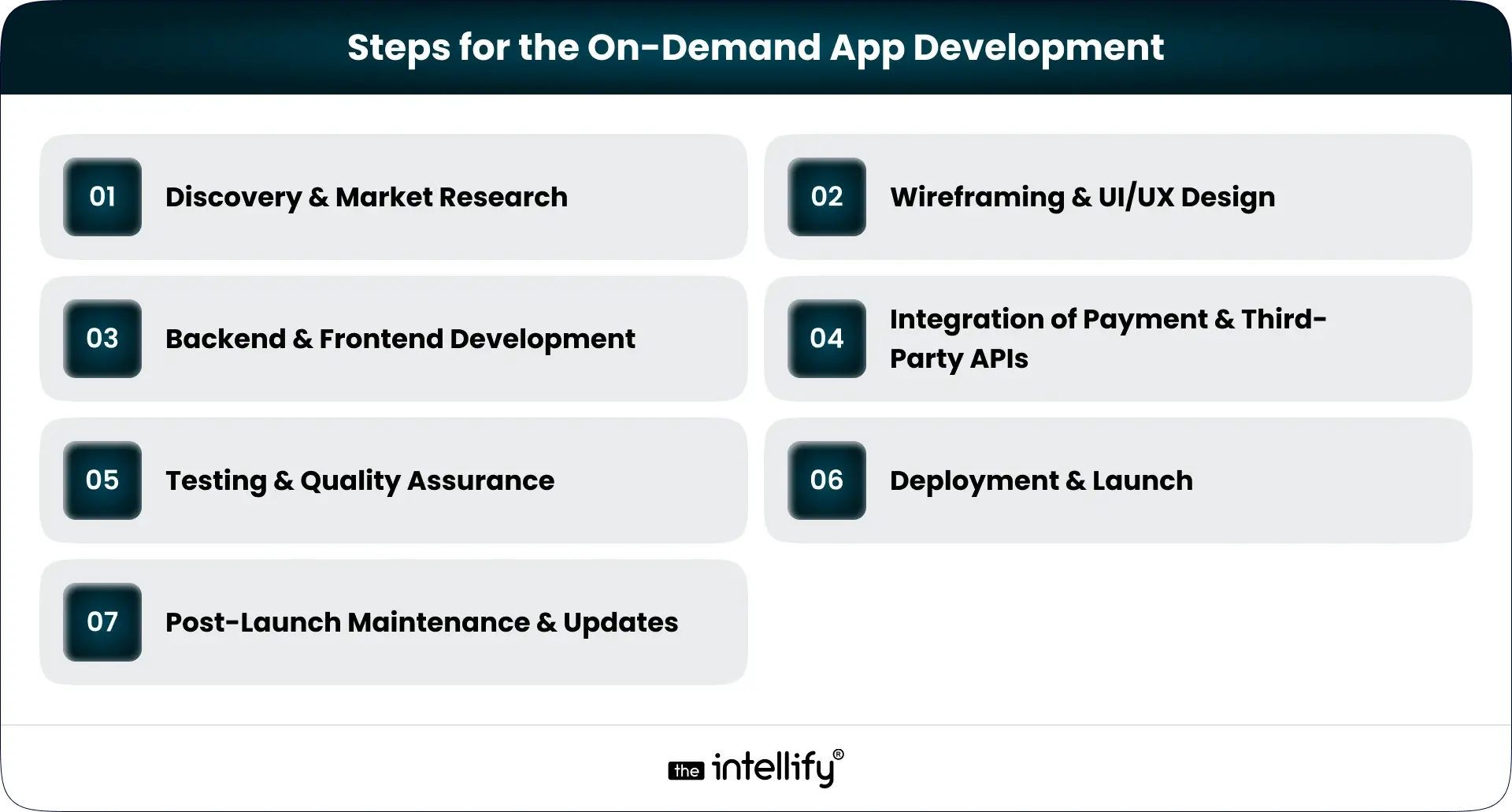
Developing an on-demand app involves several steps:

1. Discovery & Market Research:

  • Analyze competitors, target audience, and market trends.
  • Define app goals and unique value proposition.

2. Wireframing & UI/UX Design:

  • Create visual representations of the app’s structure.
  • Focus on intuitive navigation, engaging design, and responsiveness.

3. Backend & Frontend Development:

  • Develop server-side functionalities and database architecture.
  • Build the app’s user interface with responsive design for multiple devices.

4. Integration of Payment & Third-Party APIs:

  • Integrate secure payment gateways, maps, chat, or notification services.
  • Ensure smooth communication between app and server.

5. Testing & Quality Assurance:

  • Perform functional, usability, security, and performance testing.
  • Identify and fix bugs before deployment.

6. Deployment & Launch:

  • Publish the app on App Store, Google Play, or web platforms.
  • Monitor initial user engagement and reviews.

7. Post-Launch Maintenance & Updates:

  • Regular updates to add features, enhance performance, and fix issues.
  • Track analytics to optimize user experience and retention.


Cost to Build an On-Demand Application

The cost of an on-demand app varies based on complexity, platform, features, and design. Here’s a detailed breakdown:

1. App Complexity:

  • Basic App: Essential features like registration, search, booking, and payment.
  • Medium Complexity App: Adds tracking, push notifications, reviews, and analytics.
  • Advanced App: Includes AI recommendations, chatbots, real-time analytics, and multi-platform support.

2. Platform Selection: iOS, Android, or cross-platform affects cost.
3. Design & UI/UX: Custom interactive designs cost more than templates.
4. Backend Development: Robust server, database, and APIs impact budget.
5. Third-Party Integrations: Payment gateways, maps, and chat services may incur additional costs.

Approximate Costs:

  • Basic App: $10,000 – $25,000
  • Medium Complexity App: $25,000 – $50,000
  • Advanced App: $50,000+

Investing in a well-built app ensures long-term growth, ROI, and customer satisfaction.


How The Intellify Can Help You With On-Demand App Development

At The Intellify, we specialize in end-to-end on-demand mobile app development across industries. From ideation and design to development and deployment, we ensure your app is scalable, secure, and user-friendly.

Why Choose Us?

  • Expertise in multiple industries and app categories
  • Custom solutions tailored to business needs
  • Proven track record of successful app launches
 

On Demand App Development Company


Conclusion

On-demand apps have revolutionized the way we access services and products, offering convenience, speed, and efficiency. Businesses that embrace this model can expand their reach, increase revenue, and enhance customer satisfaction.
Investing in a professional on-demand app development solution like The Intellify ensures your business stays competitive in the rapidly growing digital landscape.
Start your on-demand app journey today and take your business to the next level.


Frequently Asked Questions (FAQs)

1. What is an on-demand app?

An on-demand app is a mobile or web application that allows users to instantly access services or products. It connects customers with businesses or service providers in real-time, offering convenience, speed, and seamless user experience. Examples include ride-hailing apps like Uber, food delivery apps like Zomato, and home service apps like UrbanClap.

2. Why are on-demand apps becoming so popular?

On-demand apps are gaining popularity because they save time and simplify everyday tasks. Users can request services or products instantly, track deliveries in real-time, and make secure payments through the app. For businesses, these apps provide a direct channel to reach customers, boost engagement, and grow revenue.

3. What are the different types of on-demand apps?

On-demand apps are generally classified into:

  • Service-Based Apps: Like cleaning, repairs, beauty, and healthcare services.
  • Product-Based Apps: Such as food delivery, groceries, and e-commerce.
  • Rental Apps: For vehicles, equipment, or property rentals.

Each type caters to a specific audience and helps businesses fulfill real-time customer needs efficiently.

4. What are the key benefits of developing an on-demand app?

Developing an on-demand app provides multiple advantages:

  • Enhanced Customer Experience: Quick access to products or services.
  • Business Growth: Reach more users and increase revenue streams.
  • Operational Efficiency: Streamlined processes for service providers.
  • Transparency & Tracking: Real-time updates and ratings boost trust.

5. Can you provide examples of popular on-demand apps?

Yes, several apps have become benchmarks in their industries:

  • Uber & Lyft: Ride-hailing services.
  • Zomato & Swiggy: Food delivery.
  • Airbnb: Short-term property rentals.
  • Zoomcar: Vehicle rentals.
  • UrbanClap: Home services like plumbing, cleaning, and repairs.

These apps highlight the diverse possibilities in the on-demand sector.

6. What features should an on-demand app have?

Essential features include:

  • User Profiles & Registration: For personalization.
  • Search & Filters: Find products or services easily.
  • Booking & Scheduling: Real-time and future appointments.
  • Secure Payment Options: Credit/debit cards, wallets, UPI.
  • Real-Time Tracking: Know the status of orders or services.
  • Ratings & Reviews: Ensure quality and customer trust.

These features create a seamless experience for both users and service providers.

7. How can The Intellify assist in developing my on-demand app?

The Intellify specializes in custom on-demand app development. We guide businesses through idea validation, design, development, testing, and launch. Our team ensures your app is scalable, secure, and user-friendly, helping you meet customer expectations and achieve business growth.

View
Case Study