How to Build an Immersive Virtual Museum Tour in 2026

Summary:
This blog explains how to create a virtual museum tour in 2026, covering everything from choosing the right tour format to planning layouts, capturing 360° or 3D visuals, adding interactive elements, and integrating AR/VR. It also highlights the key features that make a virtual museum experience successful, the technology stack you’ll need, estimated development costs, monetization opportunities, and real examples from leading museums. By the end, you’ll know how to build an engaging, accessible, and revenue-ready virtual tour.


The world of cultural tourism is changing, especially in how we experience museums. Virtual experiences are becoming more popular as visitors look for engaging and accessible ways to immerse themselves in art and history. In this blog, we’ll guide you through the journey of creating an immersive virtual museum tour. We’ll cover everything from the underlying technology to monetization strategies.


What Is a Virtual Museum Tour?
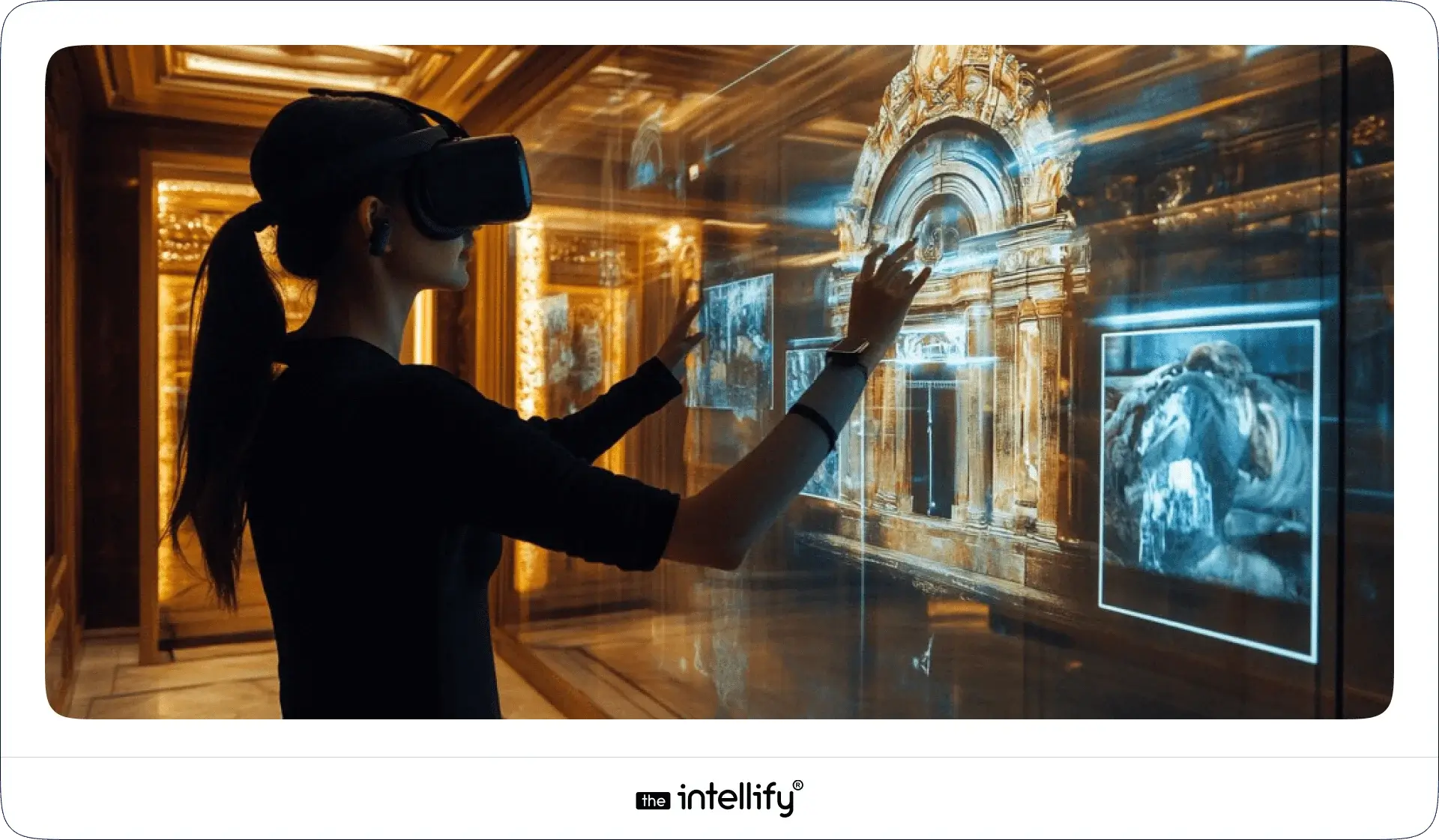
Virtual Museum Tour

A virtual museum tour is an online experience that allows visitors to explore exhibitions and collections from museums via digital platforms. It creates an engaging atmosphere where people can learn about art and culture from anywhere in the world.

How It Works

These tours typically use 360°images, 3D renderings, and features like augmented reality (AR) or virtual reality (VR. Visitors can enjoy guided audio or video narratives that enhance their experience, offering deeper insights and interactive learning.

Why Virtual Museum Tours Are Trending

In 2026, the demand for these virtual tours will soar thanks to:

  • Better internet access and technological advancements
  • A growing desire for interactive experiences
  • The need for broader educational outreach


Why Museums Need a Virtual Tour in 2026

Higher Visitor Engagement

Virtual tours captivate by offering interactive experiences that traditional exhibits simply can’t match. An engaging experience encourages visitors to return for more.

Global Reach Beyond Physical Boundaries

Unlike brick-and-mortar museums, virtual tours are accessible to anyone, anywhere in the world. This extended reach can attract international audiences and enhance brand visibility.

More Revenue Opportunities

Virtual tours can create new revenue streams through ticket sales, merchandise, and online donation opportunities that traditional museums might not fully realize.

Better Accessibility

Virtual tours can be designed for everyone, from students to seniors, and visitors with special needs, ensuring a rich cultural experience for all, no matter where they’re located.

Stronger Digital Presence & Branding

In this digital age, having a solid online presence is crucial for branding. Museums that offer a virtual experience can set themselves apart and strengthen their brand identity.


Types of Virtual Museum Tours You Can Create

Types of Virtual Museum Tours

360° Panorama Tour

This option lets users navigate through panoramic views of exhibits, offering a true-to-life feel of the museum environment.

3D Walkthrough Tour

Here, visitors can roam around a fully rendered 3D space that simulates the museum’s actual layout.

AR-Powered Museum Experience

With augmented reality features, users can interact with exhibits through their mobile devices, blending the physical and digital worlds in exciting ways.

VR Museum App / VR Headset Tour

For those with VR headsets, these tours provide a fully immersive experience, transporting users right into the museum.

Hybrid Tours (Physical + Digital)

Combining in-person visits with digital experiences can offer a more comprehensive understanding. Think of live-streaming guided tours or presenting digital artifacts.


Key Features of a Successful Virtual Museum Tour

  • Interactive Hotspots: Allow users to click on different areas for extra information, making the experience more engaging.
  • High-Resolution 3D Models & Images: Quality visuals boost the overall user experience, making the exhibits stand out.
  • Audio-Guided Storytelling: Narration can provide rich context, giving visitors a deeper understanding of the exhibits.
  • Multi-Language Support: Offering multiple languages caters to a global audience, significantly expanding your reach.
  • Zoom & Rotate for Artifacts: Letting users inspect artifacts closely enhances their appreciation of historical items.
  • VR Headset Support: Being compatible with VR headsets can elevate the experience and make it even more enjoyable.
  • Gamified Learning: Adding games or quizzes keeps users engaged and makes learning enjoyable.
  • Smart Search & Filters: Visitors should find it easy to sort through exhibits, making navigation user-friendly.
  • Live Guided Sessions with Curators: Real-time interactions can enrich the educational experience even further.


Step-by-Step Process: How to Create a Virtual Museum Tour in 2026

Virtual Museum Tour Development Process

Step 1 – Finalize Objectives & Tour Type

Start by understanding what you want to achieve and decide which type of tour suits your vision and resources.

Step 2 – Plan the Museum Layout & Storyboard

Draw up a detailed layout of the museum and plan how you’ll tell your story.

Step 3 – Capture 360° Images or Scan Artifacts in 3D

Use specialized equipment to capture high-quality images or scan artifacts in 3D.

Step 4 – Build the Virtual Environment (3D or 360°)

Choose either a 3D model or a 360° environment and begin constructing the virtual space.

Step 5 – Add Content: Text, Audio, Video, Narration

Create informative materials to enhance the interactive tour experience.

Step 6 – Integrate VR/AR Enhancements

If it aligns with your vision, add AR or VR features that enrich the experience.

Step 7 – Add Navigation, Hotspots & Accessibility Controls

Design navigational features and include accessibility options to broaden usability.

Step 8 – Test Across Devices

Make sure the tour runs smoothly on various platforms, including mobile devices, desktops, and VR headsets.

Step 9 – Launch & Promote the Tour

Once everything is set, launch the tour and use marketing strategies to attract visitors.

Step 10 – Maintain & Update Exhibits Regularly

Fresh content will entice visitors to return, keeping your offerings engaging.


How Much Does It Cost to Build a Virtual Museum Tour in 2026?

Cost Factors That Influence Pricing

Costs can vary widely based on your technology choices, production quality, and features. Key factors include:

  • Type of tour (3D vs. 360°)
  • Complexity of the interface
  • Required hardware

Cost Range for Different Types of Tours

A basic 360° tour might cost between $5,000 and $20,000, while a more sophisticated 3D or AR experience can exceed $50,000.

Savings & ROI for Museums

Investing in a virtual tour can yield long-term savings via increased visitor engagement and potential revenue from digital sales.
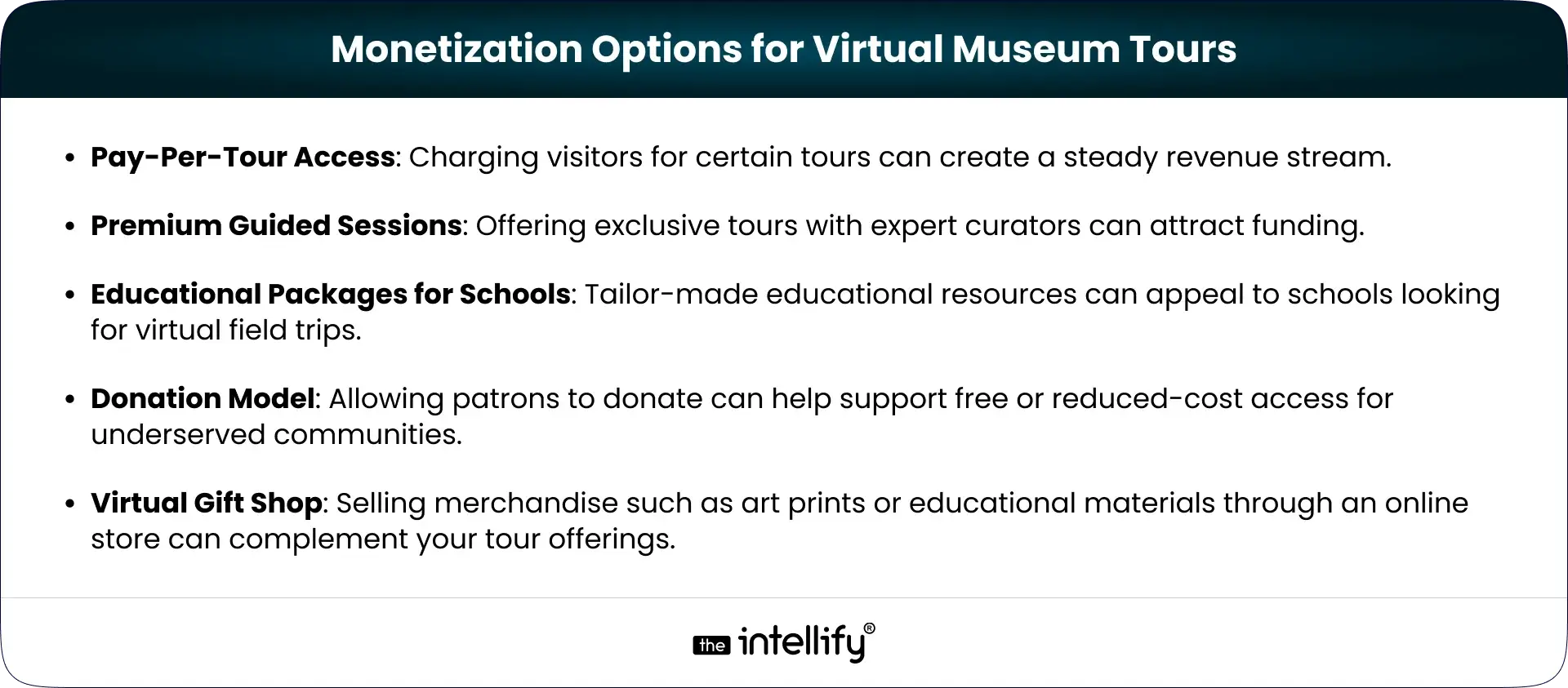
 

Monetization Options for Virtual Museum


Real Examples of Successful Virtual Museum Tours

International Case Studies

1. The British Museum: Provides an extensive virtual tour that allows global exploration of its collections.
2. The Louvre: Features interactive 3D tours and educational resources that reach audiences worldwide.
3. The Smithsonian: Offers high-quality remote experiences, making art and history accessible to all.

What You Can Learn From Them

Successful virtual tours emphasize accessibility, high-quality visuals, and engaging storytelling that resonate with audiences.


Challenges & How to Overcome Them

  • Storage & Loading Time Issues: Utilizing cloud services can help alleviate performance problems, ensuring quick access and seamless experiences.
  • Budget Constraints: Focus on essential features and consider staged implementation to spread costs over time.
  • Accessibility for Low-Speed Internet Users: Optimize the tour for different internet speeds, providing lower-resolution options for those with limited connectivity.
  • Keeping the Tour Updated: Have a strategy for regular updates to keep content fresh and engaging.


How The Intellify Can Help You Build Your Virtual Museum Tour

  • Expertise in 3D, and immersive AR/VR app development: Our expert team at The Intellify focuses on creating compelling virtual experiences tailored to museums.
  • Custom virtual museum solutions: We’ll collaborate with you to develop engaging features that resonate with your audience.
  • End-to-end support: From brainstorming ideas to launching your tour, we offer comprehensive support throughout the development process.
  • A strong portfolio in immersive experiences: Our experience in delivering various virtual experiences enables us to provide top-notch results.
 

Virtual museum tour development


Conclusion

Creating an immersive virtual museum tour isn’t solely about technology, it’s a fantastic way to engage visitors, extend reach, and enhance education. As museums continue to embrace the digital age, those who leverage innovative virtual solutions will stay ahead in a competitive landscape.

Take the plunge today and partner with The Intellify to craft a virtual museum tour that captivates and educates!


Frequently Asked Questions (FAQs)

1. How do virtual museum tours work and what technology powers them?

Virtual tours utilize 360° images, 3D models, and AR/VR technology to provide engaging online experiences. They rely on advanced software and hardware to effectively engage visitors.

2. What are the essential features needed to create a high-quality virtual museum tour in 2026?

Key features include interactive hotspots, high-resolution visuals, multi-language support, gamified learning, and live sessions with curators to enhance user engagement.

3. How much does it cost to build a virtual museum tour for a museum or gallery?

Costs can range from $5,000 to over $50,000, depending on the type of tour and the features you choose. It’s essential to evaluate your specific needs and budget.

4. What is the best technology stack for developing a 360° or 3D virtual museum experience?

Recommended tools include Unity or Unreal Engine for 3D renders, Matterport for 360° captures, and ARKit or ARCore for augmented reality features.

5. How long does it take to create a fully immersive virtual museum tour?

The timeline can vary, but anticipate anywhere from a few weeks to several months, depending on the project’s scope and complexity.

6. Can a virtual museum tour help increase real-world visitor footfall and engagement?

Definitely! By promoting digital experiences to broader audiences, many museums have seen a boost in physical visitations and engagement.

7. What are the biggest challenges museums face when creating virtual tours?

Common challenges include storage issues, budget constraints, and accessibility concerns. Strategic planning can help address these hurdles effectively.

8. How can The Intellify help museums build custom virtual museum tours in 2026?

The Intellify offers comprehensive VR development services, focusing on immersive application solutions tailored to engage visitors while enhancing learning.
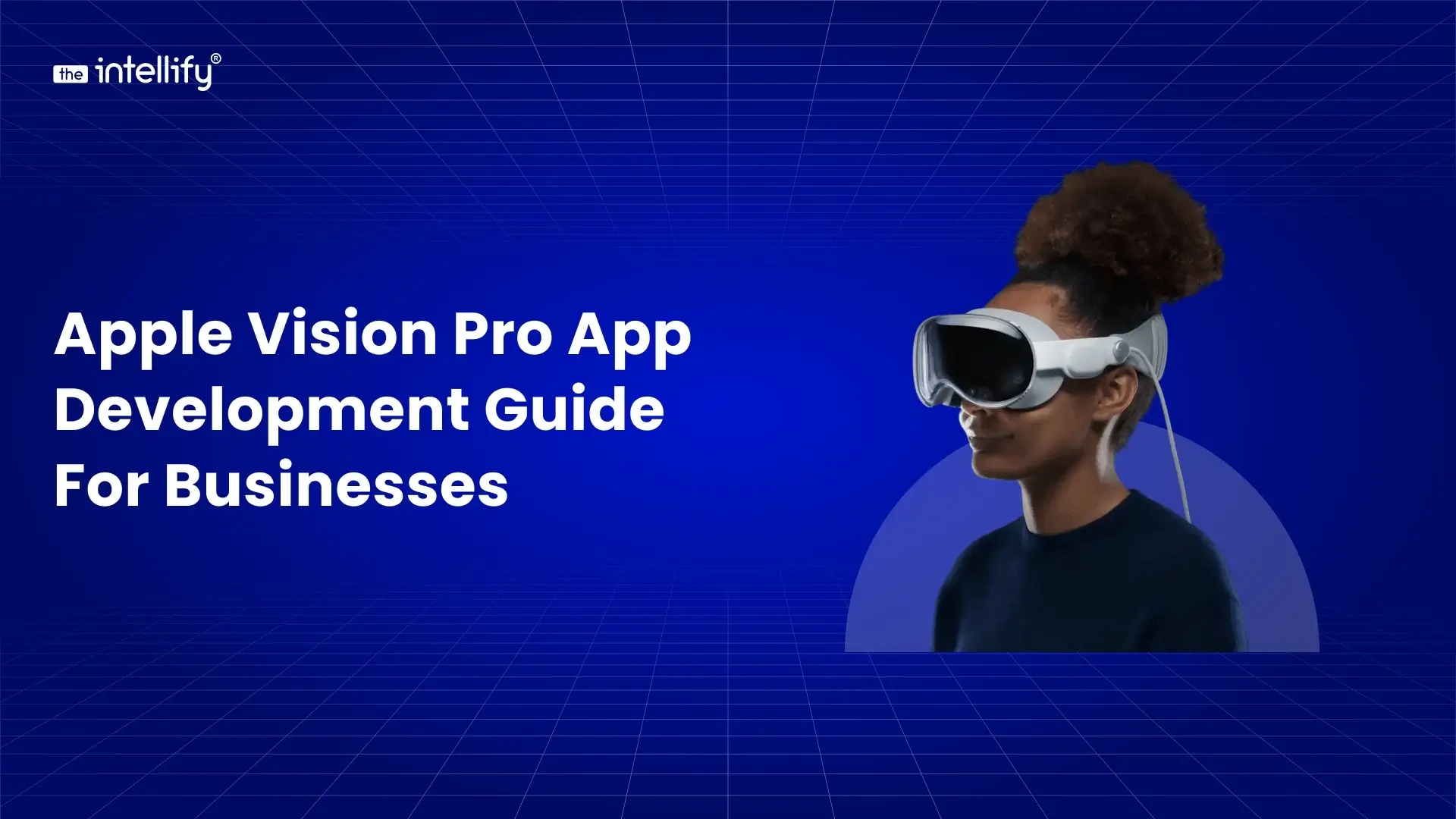
Apple Vision Pro App Development Guide for Businesses

Summary:
This blog breaks down Apple Vision Pro app development in a simple, practical way for businesses exploring AR and VR app solutions. It explains what the device can do, where it fits across industries like healthcare, retail, education, and real estate, and how the full development process works from concept to launch. You’ll also find cost ranges, future trends, and tips for choosing the right development partner so teams can build meaningful, immersive experiences with confidence.


The world of AR and VR has been speeding up so fast that sometimes it feels like you blink and boom, something new drops. Apple Vision Pro is one of those “okay, wow” moments. Apple basically decided to blend the real world with digital magic, and here we are, trying to keep up (in a good way).
This guide walks you through what Apple Vision Pro is, why businesses are suddenly really into it, and what you need to know if you’re thinking about Apple Vision Pro app development. Don’t worry, nothing too fancy, just clear, real talk, the way you’d explain it to a friend over coffee.


What is Apple Vision Pro?

What is Apple Vision Pro

Apple Vision Pro is Apple’s mixed-reality headset kind of like slipping on glasses that know more about you than your phone does. It blends AR and VR together so smoothly that the lines disappear. The displays are so sharp that even tiny details pop, and the spatial audio almost feels like someone whispered behind you (which can be creepy but cool).
This whole thing runs on visionOS, which Apple built just for immersive experiences. And honestly, it shows. Everything feels smooth, responsive, and kind of… natural? Like you’re not fighting with the interface.
For businesses, this opens a ton of doors, new ways to teach, sell, entertain, and just create moments users actually feel, not just click through.


Why Build Apps for Vision Pro? Market Opportunity

If you’re wondering whether Vision Pro is “worth it,” well… yes. The interest around immersive tech has been rising like crazy, and Apple jumping in has basically poured fuel on that fire.

  • Rapid Adoption: Whenever Apple does something new, people pay attention. Same story here.
  • Wide Applications: Pretty much every industry can use AR/VR in some meaningful way, education, real estate, retail, healthcare, entertainment, you name it.
  • Higher Engagement: Immersive experiences just hit different. Users stay longer, connect deeper, and remember more.

So yeah, the market opportunity is big. And it’s getting bigger by the month.


Key Features of Apple Vision Pro

Vision Pro isn’t just shiny hardware. It’s loaded with tech that actually matters when you’re building apps:

  • High-Resolution Displays: The visuals are almost too crisp, it’s like looking through a freshly cleaned window (a rare moment when cleaning actually pays off).
  • Spatial Audio: Sound comes from where it should come from. It’s weirdly satisfying.
  • Advanced Sensors: These track your hands, eyes, and movements so smoothly that you forget sensors even exist.
  • Gesture Control: Tap, pinch, flick, no controllers needed.
  • Apple Ecosystem Integration: If you’re in the Apple universe, everything just fits together. Seamlessly.

These features make building immersive apps easier and a lot more fun.


Why Businesses Are Investing in Vision Pro App Development

Businesses are diving into Vision Pro app development for a bunch of reasons, some practical, some visionary (pun totally intended):

  • Better Brand Experiences: Brands can create moments users remember, not just screens they swipe.
  • Operational Efficiency: AR can shorten training, simplify repairs, and speed up processes.
  • Competitive Edge: Early adopters always stand out. And customers notice.

If your business wants to stay ahead, this is a pretty solid place to start.


Vision Pro App Development Use Cases Across Industries

Vision Pro App Development Use Cases

Different industries are picking up Vision Pro for different reasons. Here’s where it really shines:

1. Healthcare

  • Surgical Training: Surgeons can practice without stepping into the operating room.
  • Patient Education: Visuals help patients finally “get” what’s happening inside their own bodies.

2. Education

  • Interactive Learning: Imagine studying planets while literally standing “between” them.
  • Virtual Classrooms: Remote classes stop feeling like boring video calls.

3. Real Estate

  • Virtual Tours: Buyers can tour homes without sitting in traffic.
  • Augmented Staging: Add furniture, change colors, goodbye imagination struggles.

4. Retail

  • Virtual Try-Ons: Try clothes, makeup, even glasses, instant vibes check.
  • In-Store Navigation: No more wandering aisles like you’re hunting treasure.

5. Entertainment

  • Immersive Games & Media: Step into the world, not just watch it.
  • Live Events: AR layers can make concerts and shows feel next-level.

Across all these, one thing’s clear: Vision Pro + visionOS unlocks a new kind of creativity for businesses.


Apple Vision Pro App Development Process: Step-by-Step

Apple Vision Pro App Development Process

If you’re figuring out how to develop Vision Pro apps, the process looks something like this:

1. Defining the Concept

  • Identify Goals: What’s the point of your app?
  • Audience: Who’s it for?

2. Market Research

  • Study competitors (yep, everyone’s doing it).
  • Gather feedback from real users, not just internal teams.

3. Design & Prototyping

  • Wireframing: Draft out how the app will flow.
  • Mockups: Add visuals that make things feel real.

4. Development

  • Build using ARKit + visionOS tools.
  • Connect Apple APIs for spatial audio and more.

5. Testing

  • Put real users in the headset.
  • Tweak things. Then tweak again. And again.

6. Launch

  • Submit to the App Store.
  • Run marketing to get eyes (and downloads) on it.


How Much Does Apple Vision Pro App Development Cost?

Vision Pro app development costs depend on how wild or simple your idea is. Here’s the gist:

  • Features Complexity
  • Design Requirements
  • Development Team Expertise/Location

Estimated Costs

  • Ideation & Design: $5,000 – $20,000
  • Development: $15,000 – $100,000+
  • Beta Testing: $5,000 – $15,000
  • Marketing & Launch: $5,000 – $30,000

Cost-Saving Tips

  • Start small (an MVP never hurt anyone).
  • Outsource smartly to save money without sacrificing quality.

Managing Vision Pro app development costs is all about knowing what you really need at each step.


Future Outlook & Why Now is the Time

The future for Apple Vision Pro looks bright. Like, “we might look back and laugh at flat screens” bright.

Trends to Watch

  • More use cases are popping up everywhere
  • Hardware upgrades (because Apple always has a “one more thing”)
  • Real-time data blending AR + IoT

If you’ve been waiting for the “right moment,” it’s probably now.


How to Choose the Right Vision Pro App Development Experts

Here’s what matters when choosing an Apple Vision Pro development company:

  • Expertise: A team that understands AR/VR and Apple’s tools.
  • Portfolio: Real work you can actually see.
  • Client Testimonials: Honest feedback from people who’ve been in your shoes.
  • Collaboration Style: Good communication saves projects. Always.
  • Post-Launch Support: Apps need updates, no getting around it.


Apple Vision Pro App Development company


Conclusion

The Apple Vision Pro isn’t just another gadget, it’s a shift in how we experience digital content. Businesses that invest in VR app development now will have the early advantage, better user engagement, and honestly… a cooler product lineup.
From training to shopping to entertainment, AR and VR are opening doors we haven’t fully explored yet. If you’re planning to innovate, now’s a great time to step in and build something users will remember.


Frequently Asked Questions (FAQ’s)

1. What is Apple Vision Pro app development?

Apple Vision Pro app development focuses on creating applications tailored for Apple’s mixed-reality device, the Vision Pro, leveraging its distinct AR/VR capabilities.

2. Why should businesses invest in Vision Pro development?

Investing in Vision Pro development allows businesses to engage customers in fresh ways, boost operational efficiency, and maintain competitiveness in a fast-evolving market.

3. What industries can benefit from Vision Pro app development?

Healthcare, education, retail, real estate, and entertainment are all poised to gain from the innovative applications built for the Vision Pro.

4. How much does it cost to develop an app for Apple Vision Pro?

Costs can vary widely based on feature complexity and design needs, typically starting around $5,000 for ideation and reaching upward of $100,000 for comprehensive apps.

5. What features make the Apple Vision Pro stand out?

High-resolution displays, spatial audio integration, advanced sensors, and intuitive gesture control are among the key features that facilitate immersive experiences.

6. How to choose the right Apple Vision Pro development company?

Seek a team with expertise, a robust portfolio, client testimonials, strong collaboration skills, and post-launch support to ensure you find the perfect development partner.

7. How can The Intellify help with Vision Pro app development?

The Intellify specializes in AR/VR app development, delivering tailored services that enable businesses to create innovative applications for the Apple Vision Pro, maximizing user engagement and business impact.

VR in Mental Health Treatment: The Science, Benefits, & Future of Therapy

Summary:
VR in mental health treatment is redefining how people experience therapy, turning healing into something immersive, engaging, and deeply personal. This blog explores how virtual reality helps patients manage anxiety, PTSD, depression, and phobias through realistic, safe environments. It also unpacks the science behind VR therapy, its real-world benefits, and why this emerging technology is shaping the future of mental health care.


Let’s be real, life these days can be a bit much. With deadlines breathing down our necks, constant notifications, and the world just feeling louder every day, mental health struggles like anxiety, depression, and trauma aren’t rare anymore. Traditional therapy still works wonders for many, but sometimes, it just doesn’t click for everyone. And that’s where Virtual Reality (VR) quietly steps in, not with sci-fi drama, but with real science, immersive experiences, and a fresh way to heal the mind.
In this blog, we’re unpacking what VR in mental health treatment actually means, how the science behind it works, the core benefits, real-life use cases, and what the future of therapy might look like once VR becomes the norm.


What is VR in Mental Health Treatment?

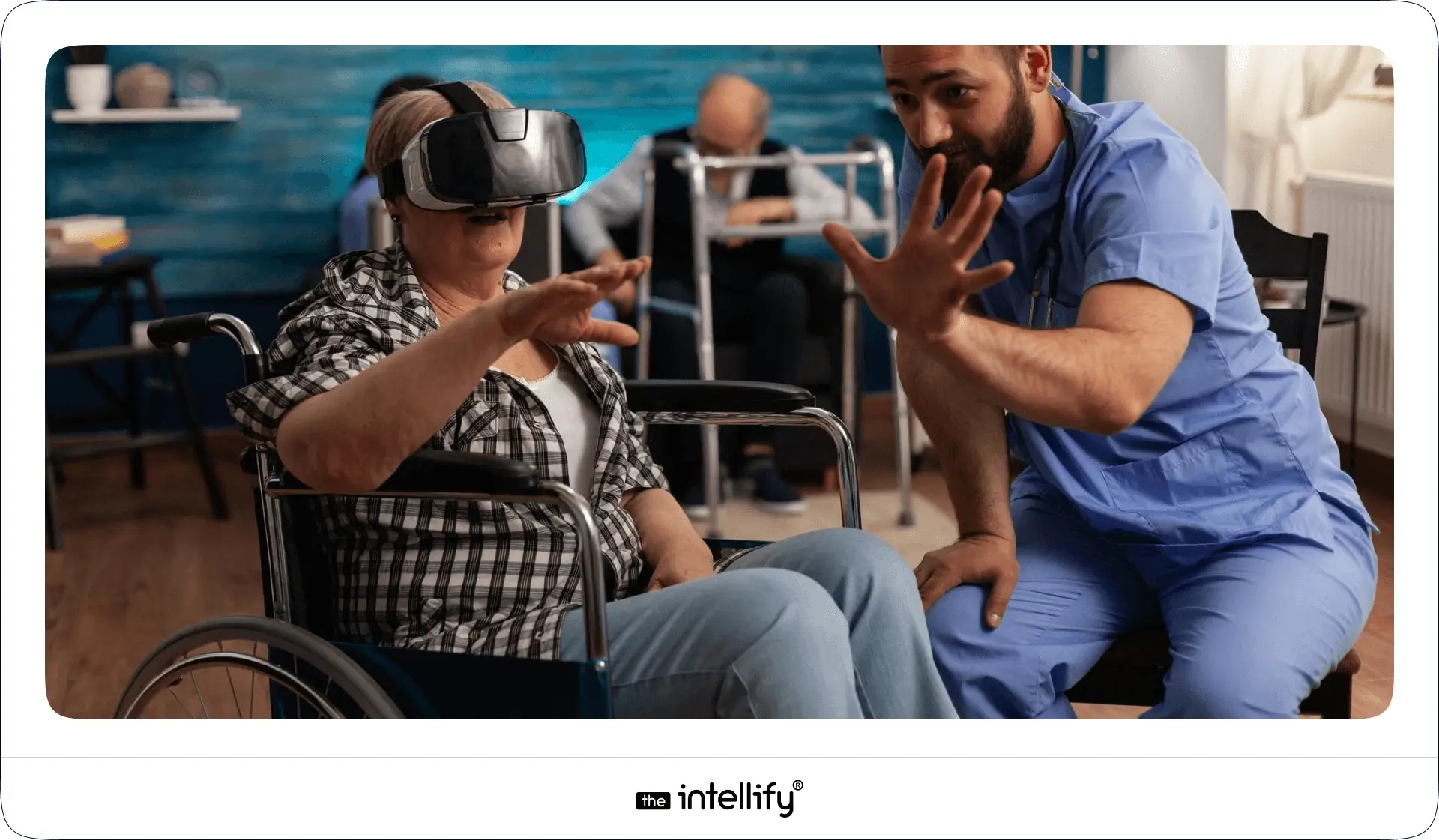
What is VR Mental Health Treatment

At its core, VR in mental health treatment is about using immersive, 3D environments to help people process emotions, face fears, and build coping skills all within a space that’s 100% safe and controlled.
Imagine putting on a headset and suddenly finding yourself in a calm forest or a realistic social setting. You can practice stressful scenarios, confront triggers, or just breathe for a while without the fear of judgment or failure. That’s the magic of VR. It mirrors real-life experiences (or sometimes even invents new ones) that help your brain and body react, reflect, and learn just like they would in real life, only safer.


The Science Behind Virtual Reality Therapy

Now here’s where things get really interesting. The human brain doesn’t exactly know how to tell “real” from “virtual.” When you’re inside a VR simulation, your brain fires off the same emotional and physiological responses as it would in reality. That’s what makes VR therapy so powerful, it taps directly into how our minds feel experiences.

  • Neuroscience Research: Studies show that VR can lower anxiety responses by letting people rehearse coping strategies in controlled settings.
  • Therapeutic Models: Many VR programs are built on Cognitive Behavioral Therapy (CBT), gradually exposing patients to their fears. It’s been particularly effective for PTSD, social anxiety, and phobias.

Essentially, it’s science and psychology teaming up, but this time, the lab is inside your headset.


Key Benefits of VR in Mental Health Treatment

The perks of VR in mental health treatment go beyond cool tech, they actually address real gaps in traditional therapy.

  • Immersive Experience: VR lets patients face anxiety-inducing moments safely, helping them slowly desensitize to triggers.
  • Engagement: Because VR therapy feels active and interactive, people tend to stick with it longer. It’s less “sit and talk,” more “try and learn.”
  • Accessibility: You don’t always need a therapist’s office. With affordable VR setups, some exercises can happen right at home.
  • Real-Time Feedback: Patients can immediately see how they react to certain situations, body, mind, and emotions, which deepens awareness.
  • Anonymity & Comfort: The headset provides a strange kind of emotional safety. People often find it easier to open up when they feel unseen yet supported.

It’s like traditional therapy got a modern update, not replacing it, but amplifying what already works.


Popular Use Cases of VR in Mental Health

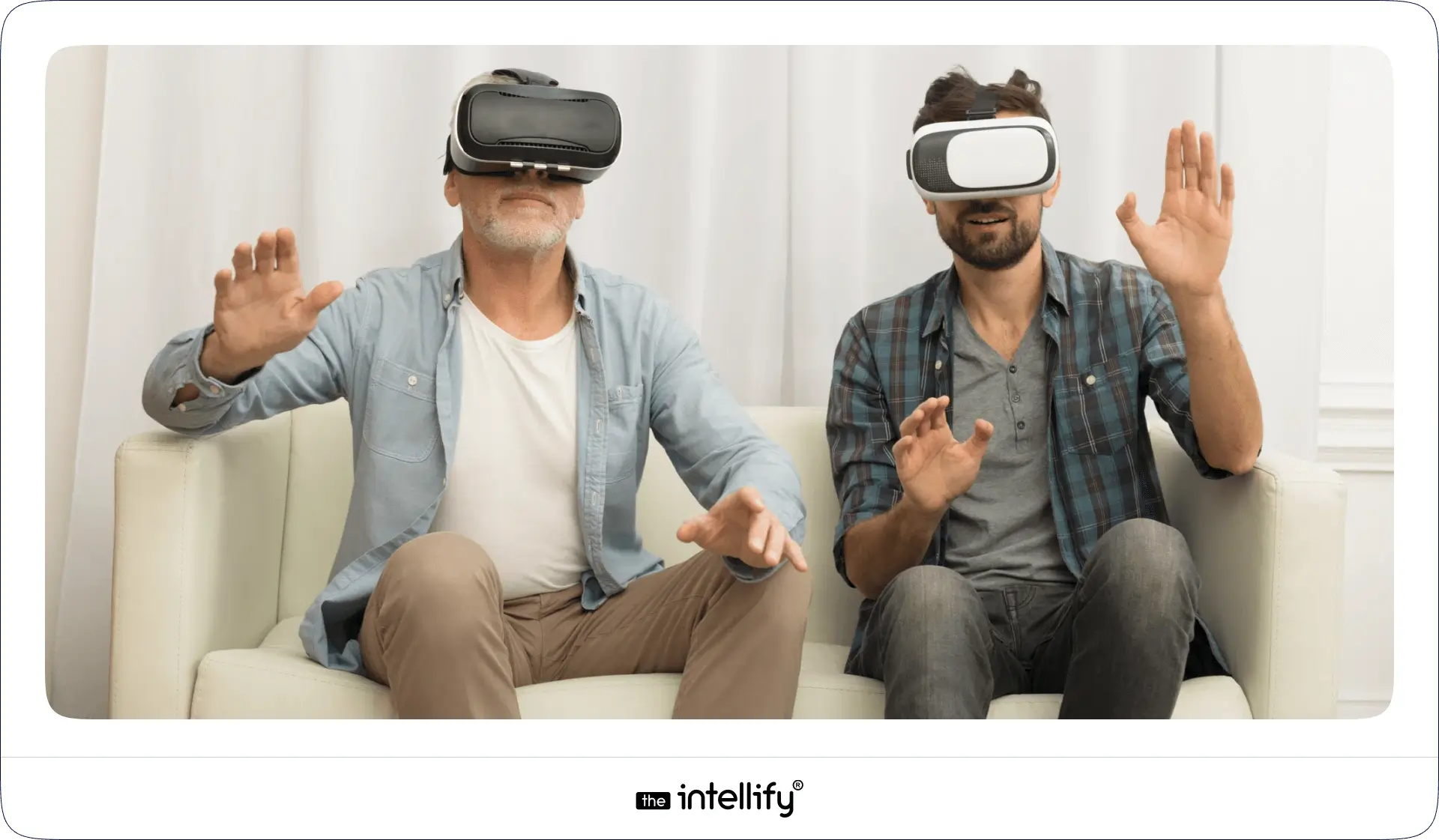
VR in Mental Health Use Cases

VR for Anxiety Disorders

Think of someone terrified of public speaking. Instead of tossing them into a real audience, VR allows them to stand on a virtual stage, breathe through the panic, and slowly get used to the feeling, no risk, no pressure.

VR for PTSD (Post-Traumatic Stress Disorder)

For veterans or trauma survivors, VR exposure therapy helps them revisit and reprocess painful experiences in a guided, therapeutic way. It’s tough, but it works one controlled step at a time.

VR for Depression and Stress Relief

For those feeling disconnected, VR can spark small wins. Whether it’s walking on a beach, completing a relaxing mindfulness session, or playing an interactive game, VR helps reignite motivation and joy.

VR for Phobias (fear of heights, flying, social anxiety, etc.)

Heights, flying, spiders, you name it. VR helps people face fears without real-world risk. Therapists adjust the intensity gradually, ensuring comfort throughout.


VR for mental treatment


Real-World Examples: VR Therapy Success Stories

A few real-life examples show just how far we’ve come:

  • Oculus and PTSD: Veterans using Oculus Rift in clinical therapy have reported reduced PTSD symptoms and improved daily functioning.
  • BehaVR: This platform crafts experiences specifically for anxiety and depression, combining mindfulness with neuroscience to help users gain emotional control.

When you see someone who couldn’t even leave home before starting to attend social gatherings again, that’s the kind of transformation VR is driving.


Challenges and Ethical Considerations

Of course, no innovation comes without its wrinkles.

  • Cost: High-quality VR setups aren’t cheap yet. That can make adoption tricky for smaller clinics.
  • Safety & Overexposure: There’s a fine line between helpful exposure and overwhelming a patient. Too much intensity can backfire if not carefully managed.
  • Data Privacy: Since VR records user behavior and reactions, maintaining privacy and ethical data use is crucial.

Basically, VR therapy has all the potential, but it needs guardrails and good judgment.


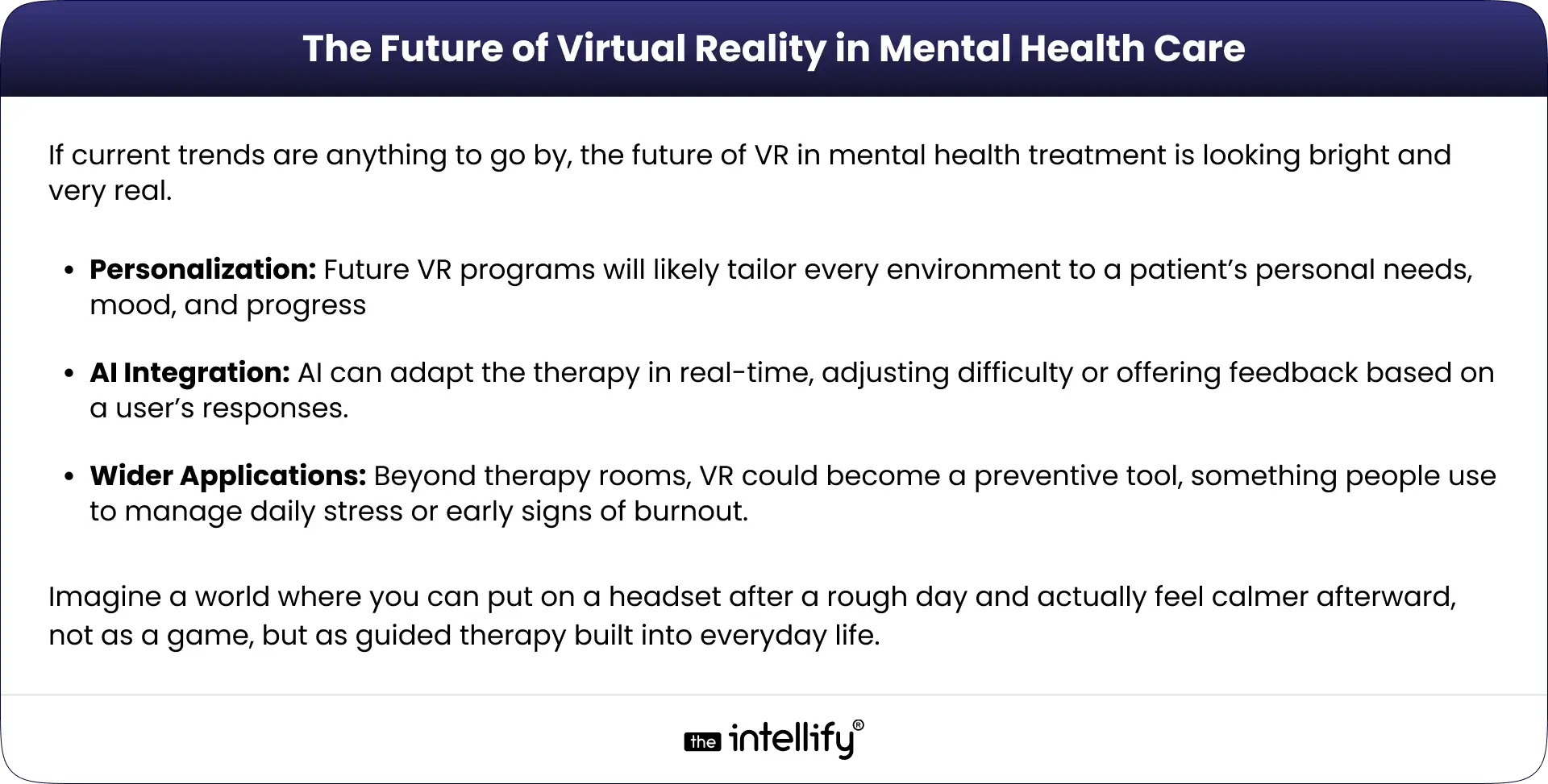
Future of VR in Mental Health Care


How Healthcare Providers & Startups Can Adopt VR Therapy

For healthcare organizations or startups thinking, “Okay, this sounds great, but how do we start?”, here’s a simple roadmap:

  • Research Tools: Explore existing mental health VR solutions to see what fits your therapy model.
  • Train Staff: Proper training ensures therapists use VR safely and effectively.
  • Pilot Programs: Start small, gather data, measure outcomes, and adjust based on patient feedback.
  • Collaborate: Partner with a VR development company that understands both technology and therapy. That’s where the real magic happens.


Why Partner with a Trusted VR Development Company

If you’re ready to take the plunge into VR-powered therapy, finding the right tech partner matters. A trusted VR app development company can help you build:

  • Custom Solutions: VR modules designed specifically for your clinic or patient type.
  • Technical Support: From setup to troubleshooting, ongoing guidance is crucial.
  • Research-Backed Systems: Ethically sound, data-secure systems that meet healthcare standards.

In short, a solid partnership helps you bring the science of healing and the art of empathy together, powered by technology that actually works.


VR Therapy Solutions


Conclusion

Let’s call it what it is: VR in mental health treatment isn’t a futuristic fantasy anymore. It’s happening, right now. It’s giving people who’ve felt stuck, scared, or hopeless a new way to heal. And that’s huge. By embracing this tech thoughtfully, therapists and clinics can make mental health care more engaging, personal, and, most importantly, effective. The future of therapy isn’t just bright, it’s immersive. And we’re just getting started.


Frequently Asked Questions (FAQs)

1. What is VR therapy in mental health?

VR therapy uses immersive environments to help people face, understand, and manage emotional challenges safely.

2. How effective is virtual reality in treating anxiety or PTSD?

Research suggests that VR exposure therapy significantly reduces symptoms of anxiety and PTSD by offering realistic, controlled environments.

3. What are the benefits of using VR in mental health treatment?

The main perks include immersive learning, higher engagement, at-home accessibility, real-time feedback, and emotional safety.

4. Can VR therapy replace traditional therapy?

No, and it shouldn’t. VR therapy complements traditional therapy by enhancing specific treatments, not replacing human connection.

5. How much does it cost to develop a VR mental health app?

Costs vary depending on the features, design, and target platform. Partnering with experienced VR app development firms can help estimate the right investment.

View
Case Study