Virtual Property Tours: How VR Is Transforming Real Estate Experiences

Summary:
Virtual Property Tours are changing how real estate businesses present and sell properties. This blog explains how Virtual Property Tours using VR help buyers explore spaces remotely, understand layouts better, and make confident decisions. It covers real-world use cases, key benefits, and how businesses can build effective VR property tour apps to improve engagement, reduce site visits, and generate higher-quality real estate leads


Buying a property has never been simple. Even today, it usually means rearranging your schedule, driving across town, meeting strangers, and walking through spaces that don’t quite match the photos you saw online. Sometimes the room feels smaller. Sometimes the light isn’t what you expected. And sometimes… it just doesn’t click.

This is where Virtual Property Tours step in, not as a flashy trend, but as a practical solution. Using VR, buyers can explore properties calmly, clearly, and on their own terms. For real estate businesses, this shift is creating better leads, faster decisions, and fewer wasted site visits.

Let’s walk through how it all works, without jargon or hype.


The Shift From Physical Visits to Virtual Property Tours

For years, real estate relied heavily on physical visits. That was the moment of truth. Everything else, photos, brochures, videos, was just a warm-up. But buyer behavior has changed.

People now research deeply before committing time. They shop online, work remotely, and make major decisions digitally. Property buying is following the same path.

Virtual Property Tours don’t replace physical visits. They refine them. By the time a buyer steps on-site, they already understand the layout and flow of the space. The visit becomes confirmation, not exploration. That alone changes the pace of sales conversations.


What Are Virtual Property Tours?

Virtual Property Tours

At a basic level, a virtual property tour allows someone to explore a property digitally. But there are different levels to this experience:

  • Photo-based tours (static and limited)
  • Video walkthroughs (guided but passive)
  • Fully immersive VR tours (interactive and user-controlled)

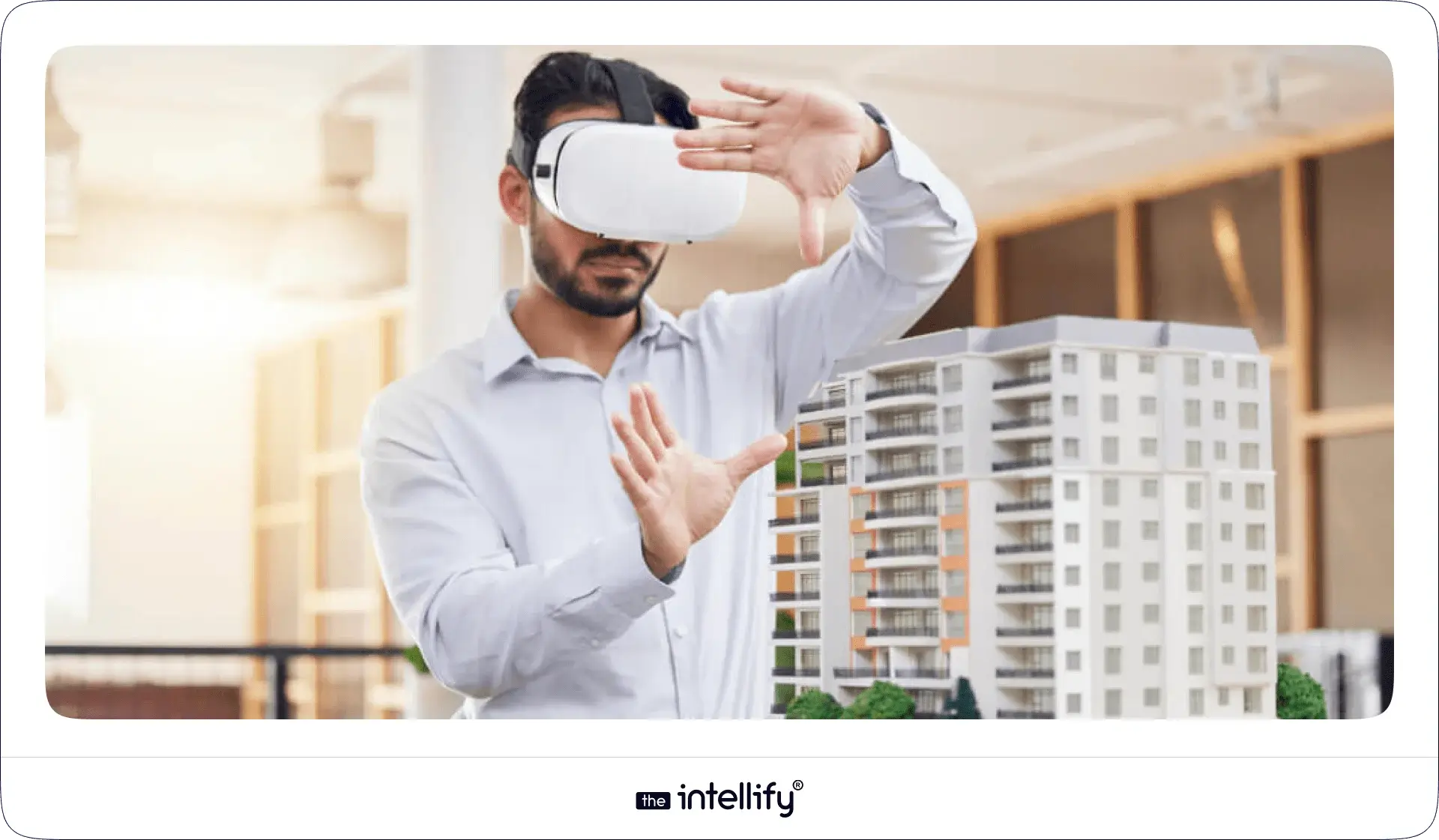
Virtual Property Tours Using VR sit at the top of this list. Instead of watching someone else walk through a property, users move through it themselves. They choose where to look, when to pause, and what to explore.

It feels closer to a real visit without the pressure or time commitment.


How Virtual Property Tours Using VR Actually Work

This sounds technical, but the process is quite straightforward.

Step 1: Property Capture

The property is scanned using 3D cameras or spatial imaging tools. Every room, corner, and connection is recorded.

Step 2: Digital Environment Creation

The captured data is converted into a virtual environment that mirrors the real space. Proportions matter here. Accuracy is key.

Step 3: User Access

Buyers access the tour through:

  • VR headsets
  • Mobile phones
  • Desktop browsers

A good VR Property Tour works smoothly across all three. No learning curve. No confusion.


Why Real Estate Businesses Are Adopting VR Property Tours

Real estate teams didn’t wake up one day and decide to chase VR because it sounded cool. They adopted it because their old way of working started slowing them down.

Buyers today come prepared. They’ve already checked listings, compared prices, and scanned neighborhoods online. When they book a visit, they expect clarity, not surprises. VR Property Tours help close that gap early.

Instead of spending hours on initial walkthroughs, businesses now use VR as a first filter. Buyers explore the property virtually, form opinions, and then move forward only if it feels right.

That alone changes daily operations.

What’s pushing adoption forward

  • Time pressure: Agents and sales teams juggle multiple listings. VR reduces repetitive walkthroughs that lead nowhere.
  • Remote decision-making: Many buyers aren’t local anymore. Job transfers, relocations, and remote work mean people shop from afar.
  • Higher buyer expectations: Static photos feel outdated. Buyers want context, flow, and realism.
  • Cost control: Fewer site visits mean less prep, fewer staff hours, and lower operational overhead.

There’s also a subtle emotional benefit. When buyers feel informed before visiting, conversations feel calmer. Less convincing. More confirming. That’s a healthier sales process for everyone involved.


VR property tour solutions


Real Estate Virtual Tour Using VR vs Traditional Virtual Tours

Traditional virtual tours do their job, but they stop short. Here’s the practical difference:

Traditional Virtual Tours

  • Click-based navigation
  • Limited sense of space
  • Easy to forget after viewing

Real Estate Virtual Tour Using VR

  • Natural movement
  • Clear spatial understanding
  • Stronger emotional connection

With VR, buyers don’t memorize layouts. They understand them. That clarity reduces doubt and speeds up decisions.


Key Use Cases of VR Property Tours Across Real Estate Segments

Use Cases of VR Property Tours

VR 360° Virtual Tours aren’t limited to one type of real estate. They’re being used across all boards.

Residential Properties

  • Buyers explore layouts before booking visits
  • Families compare homes without travel fatigue

Luxury Homes

  • International and out-of-state buyers view properties remotely
  • Fewer unnecessary in-person showings

Commercial Real Estate

  • Businesses visualize offices, retail spaces, and warehouses
  • Better planning before leasing decisions

Under-Construction Projects

  • Buyers walk through properties that don’t physically exist yet
  • Fewer misunderstandings about final layouts

Sales Galleries & Events

  • VR replaces physical models and brochures
  • One setup, multiple properties

Each use case saves time and improves clarity.


Benefits of VR Property Tours for Buyers and Sellers

The benefits show up quickly on both sides.

For Buyers

  • Explore properties anytime, anywhere
  • Understand the layout and flow before visiting
  • Feel more confident making shortlists

For Sellers and Developers

  • Fewer low-intent inquiries
  • Better-qualified leads
  • Shorter sales cycles

Instead of pushing properties, teams spend time answering meaningful questions.


What Makes a High-Quality Real Estate VR Tour App?

Not all VR tours are created equal. Quality makes a noticeable difference.

  • A strong Real Estate VR tour app should include:
  • Simple navigation (no instructions needed)
  • Accurate room proportions
  • Smooth movement without lag
  • Support across devices
  • Subtle, consistent branding

Optional but valuable:

  • User behavior tracking
  • Heatmaps showing popular areas
  • Integration with sales tools

When the experience feels natural, users stay longer.

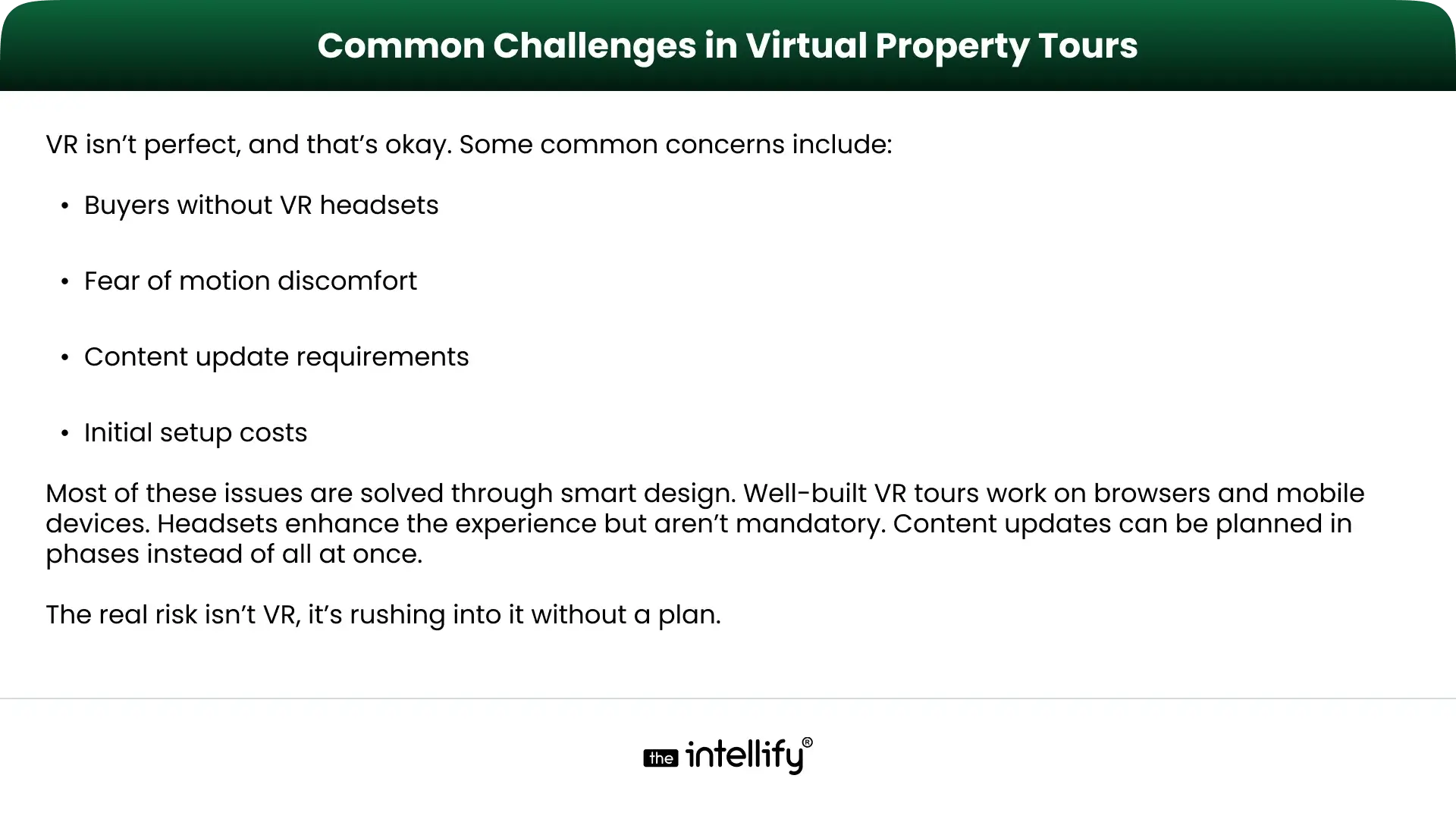
Challenges in Virtual Property Tours

Why Businesses Are Investing in Custom VR Property Tour Apps

Off-the-shelf tools can work for basic needs. They’re quick to deploy and cheaper upfront. But many businesses hit a wall sooner than expected. Custom VR app development give real estate businesses control over experience, branding, and future growth.

Where custom apps make a real difference

  • Brand consistency: Custom apps reflect the company’s identity. Colors, tone, and navigation are all aligned with how the brand wants to feel.
  • Scalability: As listings grow, custom platforms handle expansion smoothly. No redesign every few months.
  • Better performance: Optimized apps load faster and run smoother, especially across devices.
  • Integration with sales systems: CRMs, booking tools, analytics, everything connects instead of living in silos.

For businesses serious about growth, Virtual property tours using VR become part of their long-term sales strategy, not just a marketing experiment.


How to Get Started With Virtual Property Tours Using VR

Getting started doesn’t require a massive rollout. In fact, starting small often works better. The first step isn’t technology, it’s intent.

Ask yourself:

  • Are buyers asking for more details before visits?
  • Are site visits time-consuming and repetitive?
  • Are online listings failing to stand out?

If the answer is yes, VR is worth exploring.

1. Start with one property: Choose a representative listing. Not the biggest or fanciest, just a solid example.

2. Define the experience: Decide what matters most:

  • Layout clarity?
  • Interior finishes?
  • Overall flow?

3. Choose the right format: Ensure the tour works on:

  • Mobile
  • Desktop
  • VR headsets (optional, not mandatory)

4. Test with real users: Watch how people move. Where they pause. Where they exit.

5. Refine and scale: Improve visuals, navigation, and performance before expanding to more listings.

Then expand gradually, improving visuals and features over time.


Immersive Property Tours


Conclusion

Virtual tours aren’t replacing human interaction. They’re improving it. Buyers arrive informed. Sellers save time. Agents focus on serious conversations. As expectations continue to shift, Virtual Property Tours will move from “nice to have” to “expected.” Those who adapt early build trust. Those who wait scramble later.

It’s not about being futuristic. It’s about being practical.


Frequently Asked Questions (FAQs)

1. What are virtual property tours, and how do they work?

Virtual Property Tours allow buyers to explore a property digitally without visiting it physically at the start. Using VR technology, the property is recreated in a 3D environment where users can move through rooms, look around freely, and understand the layout. These tours work on VR headsets, mobiles, or desktops, making them accessible to most buyers and investors.

2. How are Virtual Property Tours using VR better than normal virtual tours?

Normal virtual tours are usually image-based or video-led, which limits interaction. Virtual Property Tours Using VR feel more realistic because users control their movement and viewing angles. This helps buyers understand space, flow, and proportions better. As a result, engagement is higher, and buyers feel more confident before scheduling a site visit.

3. Do buyers need a VR headset to view a VR property tour?

No, a VR headset is not required. Most VR Property Tours are designed to work smoothly on mobile phones and web browsers. A headset simply enhances the experience but is optional. This flexibility ensures that more buyers can access the tour without any technical barriers.

4. Are VR property tours useful for under-construction or off-plan projects?

Yes, VR property tours are especially valuable for under-construction or off-plan projects. A Real Estate Virtual Tour Using VR allows buyers to walk through a digital version of the property before it is built. This helps them understand layouts, room sizes, and overall design clearly, reducing confusion and increasing trust during early-stage sales.

5. How much does it cost to build a Real Estate VR tour app?

The cost of a Real Estate VR tour app depends on factors like the number of properties, the level of detail, and required features. Simple tours are more affordable, while custom apps with branding, analytics, and integrations cost more. Companies like The Intellify help businesses choose the right approach so the investment stays practical and goal-focused.

6. Can virtual property tours help generate more real estate leads?

Yes, virtual property tours often lead to better-quality inquiries. Buyers who explore a property through VR already understand the space and show higher intent. This means fewer casual inquiries and more serious prospects. Many real estate businesses use Virtual Property Tours to improve lead quality and shorten their sales cycle.

7. How long does it take to develop a VR property tour solution?

Development time depends on the complexity of the tour and the features required. A basic VR property tour can be ready within a few weeks, while custom solutions take longer. Experienced teams like The Intellify usually follow a phased approach, starting with a pilot tour and then scaling, so businesses can see results without long delays.

Augmented Reality for Real Estate: Future of Interactive Property Showcases

Summary:
This blog explains how augmented reality for real estate is transforming the way properties are showcased and explored. It covers what AR property experiences are, how they help buyers visualize spaces more clearly, and where they fit into modern real estate marketing. The article also highlights key benefits, real-world use cases, development considerations, costs, challenges, and future trends, helping real estate businesses understand when and how AR property showcases can add real value.


Property buying has always been emotional, exciting, stressful and sometimes confusing.

You walk into a space and try to imagine your life there. Where the couch would go. Whether sunlight hits the kitchen in the morning. If the bedroom feels too tight or just right.

Now compare that to scrolling through photos on a listing site. Flat images. Odd angles. A wide lens doing its best to make a small room look… hopeful.

That gap between seeing and understanding is where augmented reality for real estate quietly steps in. Not with noise. Not with hype. But with clarity.

AR property showcases are changing how people explore, evaluate, and emotionally connect with properties. And they’re doing it in a way that feels natural, not forced. Almost obvious once you see it.


What Is Augmented Reality in Real Estate?

Augmented Reality in Real Estate
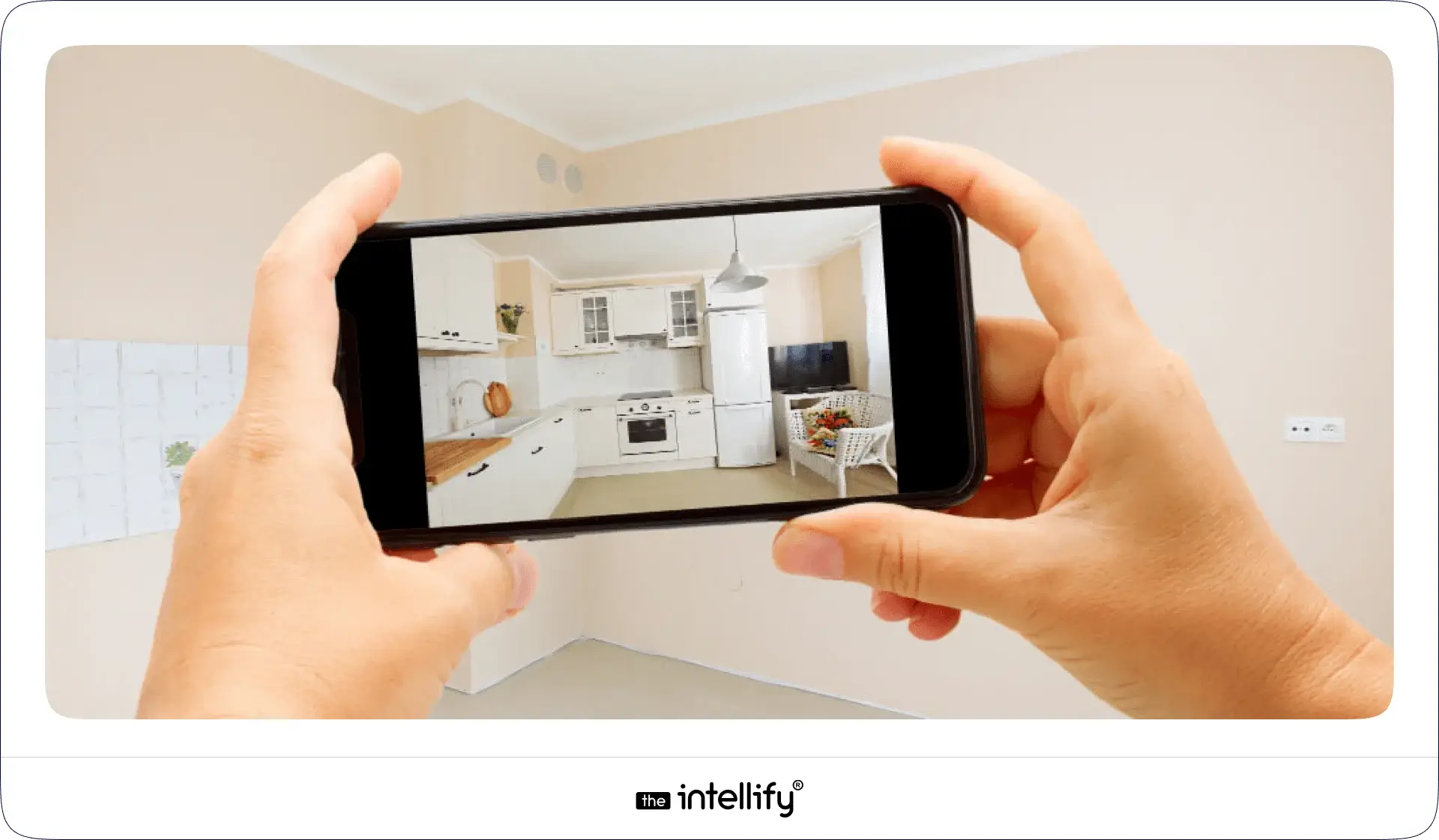
Augmented reality adds digital elements to the real world using a phone or tablet camera. That’s it. No headsets. No complicated setup.

In real estate, augmented reality in real estate means you can point a device at a space or even a printed floor plan and see something more layered on top of it. A furnished room. A finished building. A clearer picture.

It’s different from virtual reality, which pulls users into a fully digital world. AR keeps people grounded in their real surroundings. That’s why it works so well here.

You’re not escaping reality. You’re enhancing it. This small distinction is important. Buyers don’t want a tech demo. They want understanding. AR gives them that without asking too much in return.


The Rise of Interactive Property Experiences

Property discovery used to start with site visits. Now it often starts on a phone, late at night, half-distracted, maybe with coffee gone cold on the table. Buyers want answers fast. They want to know:

  • Will this space actually work for me?
  • Can I see beyond the staging?
  • Is this worth a visit or not?

Static listings struggle here. Videos help, sure. But they still push information one way. Interactive experiences changed that.

With AR in real estate, buyers explore at their own pace. They linger where they care. They skip what they don’t. That control builds trust. Quietly and trust moves deals forward.


What Are AR Property Showcases?

An AR property showcase is an interactive way to explore a property using augmented reality. Instead of flipping through images, users interact with the space.

They might:

  • View a full 3D apartment model on their living room table
  • Walk through an empty unit and see it furnished
  • Scan a brochure and watch a building rise, floor by floor

It’s simple on the surface. Powerful underneath. The experience feels personal. Almost hands-on and that’s the point.


Key Use Cases of Augmented Reality for Real Estate Property Showcases

1) AR Virtual Property Walk throughs

Not every buyer can visit every property. Distance, time, traffic it adds up. AR walkthroughs give buyers a strong first impression without stepping on-site. They explore layouts. Get a sense of flow. Decide if it’s worth the next step. That alone saves everyone time.

2) Visualizing Under-Construction & Pre-Launch Properties

This is where augmented reality for real estate really shines. An empty plot can feel abstract. Risky. Hard to believe in. AR replaces that doubt with visuals. Buyers see the finished building placed right there. Windows. Balconies. Height. Scale. Suddenly, it feels real.

3) Interior Design & Customization Using AR

Some buyers hesitate because they can’t see past the current setup. Or lack of one. AR lets them try things out. Furniture. Layouts. Colors. That moment when someone says, “Oh, this actually works” is powerful.

4) Interactive AR Floor Plans

Flat floor plans confuse people. Dimensions on paper don’t always translate well. AR floor plans show space in real scale. Buyers walk around them. Understand room relationships. Notice things they’d otherwise miss. Fewer surprises later.

5) On-Site AR Experiences for Sales & Events

During site visits or exhibitions, AR adds depth. A tablet. A phone. A quick scan. Information appears right where it’s needed. Clean. Visual. No long explanations. It keeps conversations focused and grounded.


AR for your property showcases


Benefits of Augmented Reality in Real Estate

1) Benefits for Property Buyers

AR reduces guesswork. Instead of mentally stitching together photos, dimensions, and descriptions, they see things clearly. They understand space. They feel orientation. They notice details they would otherwise miss like how close the dining area is to the kitchen or whether a bedroom feels cramped once a bed is placed. That clarity lowers anxiety, which is often the biggest hidden blocker in property decisions.

2) Benefits for Real Estate Agents

AR quietly improves lead quality. Buyers who spend time interacting with an AR property showcase usually come with better questions. They’ve already filtered themselves. Conversations become more focused, less repetitive, and far more productive. Fewer casual browsers. More serious intent.

3) Benefits for Developers & Builders

The benefit is scale. Physical show units, brochures, and repeated walkthroughs all cost time and money. AR property showcases work around the clock. They don’t wear out. They don’t need to be rebuilt every time a layout changes. And they allow teams to present future properties with confidence instead of promises.

In simple terms, augmented reality in real estate helps everyone waste less time and make better decisions faster.


How AR Property Showcases Improve Marketing & Sales Conversion

People spend more time with interactive content. That’s not theory. It’s behavior. AR experiences hold attention. Buyers explore longer. Ask better questions. Remember what they saw. That memory matters when decisions are made days or weeks later. Better understanding leads to fewer drop-offs. Fewer “maybe later” conversations.


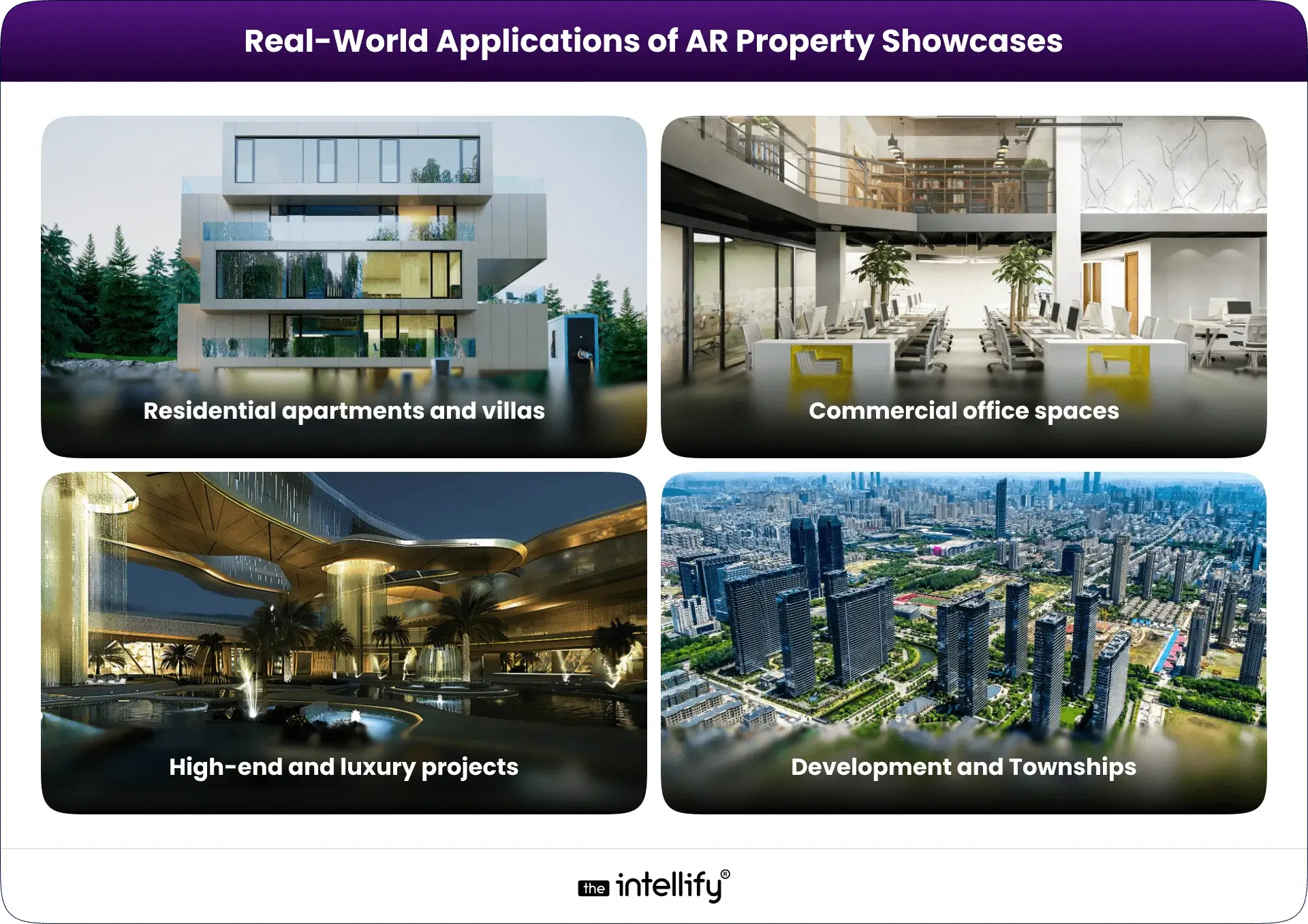
Real-World Applications of AR Property Showcases

Real-World Applications of AR Property
AR property showcases are not limited to high-end or experimental projects. They’re being used wherever buyers need help visualizing value.

1) Residential apartments and villas

In residential real estate, AR helps buyers understand how an empty apartment could feel once lived in. It removes that awkward moment during site visits when someone says, “It looks smaller than I expected,” even though the dimensions were clearly mentioned online.

2) Commercial office spaces

In commercial properties, AR helps businesses visualize layouts, seating plans, or workspace flow. Decision-makers can see how a space supports daily operations rather than guessing from floor plans.

3) High-end and luxury projects

Luxury and premium developments use AR differently. Here, the focus is often on experience how the space feels at different times of day, how materials come together, how design choices affect mood. AR supports storytelling without overexplaining.

4) Development and Townships

Large-scale developments and townships use AR to show the bigger picture. Roads, green spaces, amenities, and connectivity become easier to understand when people can see them layered over reality.
Across all these cases, the goal is the same: reduce confusion and replace it with clarity.


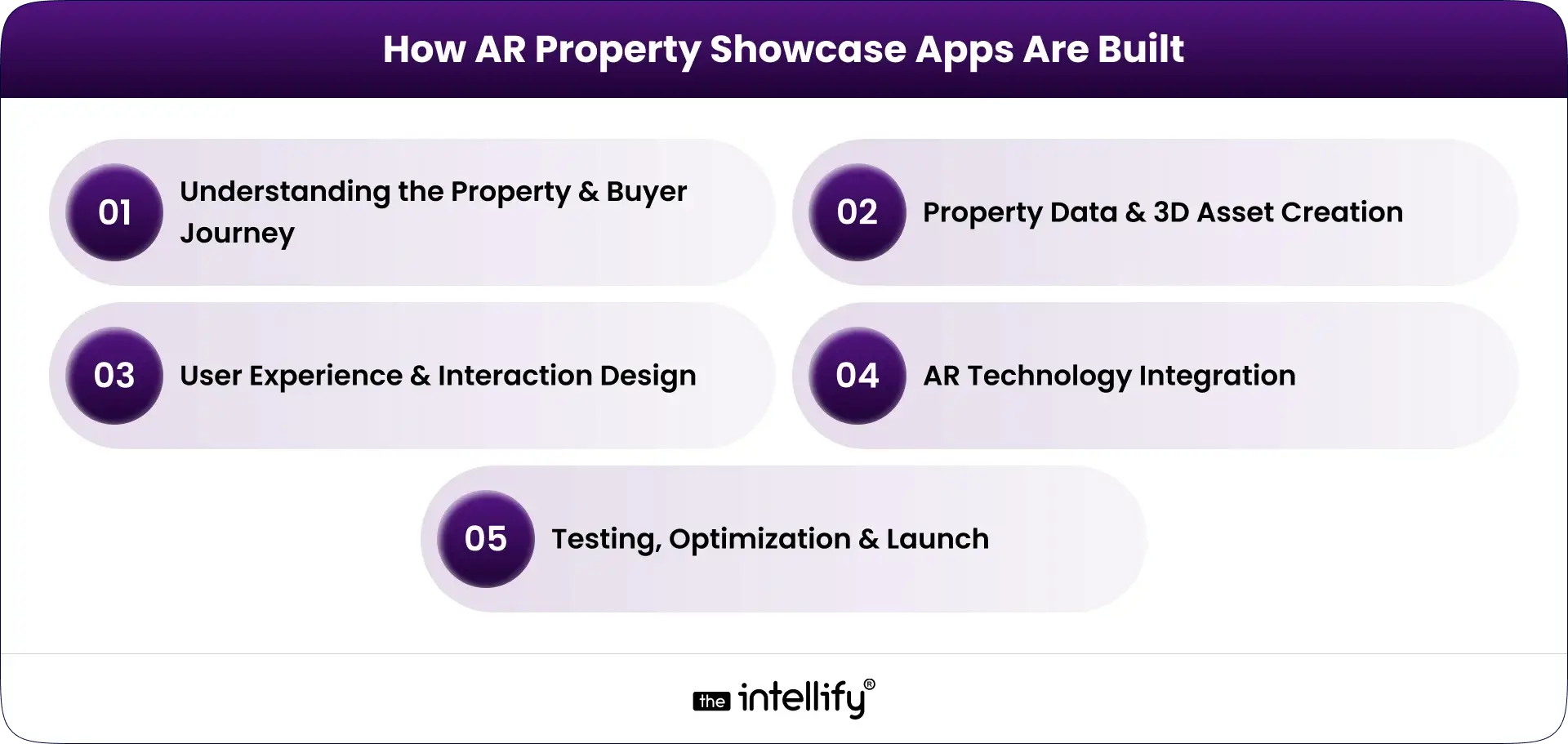
How AR Property Showcase Apps Are Built

How AR Property Showcase Apps Are Built

Building an AR property showcase app is a step-by-step process. Skipping steps usually leads to clunky experiences.

1. Understanding the Property & Buyer Journey

  • Identify the type of property (residential, commercial, mixed-use)
  • Map where AR fits in the buyer journey (discovery, comparison, site visit)
  • Define what buyers struggle to visualize today
  • Decide what the AR experience should clarify or simplify

2. Property Data & 3D Asset Creation

  • Convert floor plans and elevations into accurate 3D models
  • Maintain real-world scale and proportions
  • Optimize models for mobile performance (not just visual quality)
  • Validate designs with real property data to avoid mismatches

3. User Experience & Interaction Design

  • Keep navigation simple and obvious
  • Limit on-screen clutter and controls
  • Design flows for non-technical users
  • Focus on clarity, not “cool” effects

4. AR Technology Integration

  • Integrate AR functionality using platforms like ARKit and ARCore
  • Ensure stable object placement and tracking
  • Optimize performance for different lighting conditions
  • Test AR behavior in real physical environments

5. Testing, Optimization & Launch

  • Test across multiple devices and OS versions
  • Validate load times and interaction smoothness
  • Fix edge cases before public release
  • Prepare the app for future property updates and scalability


Cost & Timeline Factors for AR Real Estate App Development

There’s no fixed cost for AR real estate apps. Several factors influence both the budget and timeline. It depends on:

1) Key Cost Drivers

  • Number of properties to be showcased
  • Level of visual detail and realism
  • Type of interactions (walkthroughs, customization, animations)
  • Platform requirements (iOS, Android, or both)
  • Need for future scalability and updates

2) Timeline Influencers

  • Availability and accuracy of property data
  • Complexity of 3D modeling
  • Approval cycles and design iterations
  • Testing across different devices and conditions

3) Long-Term Cost Considerations

  • Maintenance and updates as properties evolve
  • Adding new projects or phases
  • Optimizing performance as devices change
  • Expanding features based on user feedback

Well-planned AR apps cost more upfront but save money over time by reducing physical marketing efforts and repeated manual work.


Challenges of Implementing Augmented Reality in Real Estate

AR brings value, but it also introduces practical challenges that need planning. Some common challenges are:

  • Device compatibility across older and newer smartphones
  • Performance issues in low-light or cluttered environments
  • Keeping 3D visuals aligned with real property dimensions
  • User hesitation toward new technology

Most AR issues aren’t technical limitations they’re experience design problems that improve with testing and refinement.


How to Choose the Right AR App Development Partner

When planning to build an AR property showcase, choosing the right AR app development company is critical. Look for teams that:

  • Experience with real estate or spatial visualization
  • Have experience in AR and 3D visualization
  • Focus on usability, not just technology
  • Offer long-term support and scalability

Think Beyond the First Version

Properties change over time. Your AR app should too.
Choose a partner who plans for updates, long-term support, and future growth. A good partner builds something practical, something buyers trust, and teams can rely on.


The Future of AR Property Showcases in Real Estate

AR in real estate is moving from novelty to normal. The focus is shifting away from “wow” moments and toward usefulness.

AR Will Become an Expectation

As buyers grow used to interactive experiences, static listings will feel incomplete. AR property showcases will slowly become part of the standard discovery process.

Experiences Will Feel More Personal

Future AR showcases will adapt to buyers instead of showing the same view to everyone. Layouts, styles, and information will adjust based on preferences.

AR Will Blend Into the Process

AR won’t feel like a separate tool. It will quietly support property discovery, site visits, and sales conversations without drawing attention to itself.


Quick Commerce App Development


Conclusion

Buying property is about confidence. When people clearly understand a space, decisions come faster, and they feel safer. Augmented reality helps remove uncertainty by showing properties as they truly are or as they will be. It improves how buyers explore, compare, and decide, without adding complexity.

For real estate businesses, AR property showcases are no longer experimental. They’re a practical way to communicate value, reduce friction, and stand out quietly. Now is a good time to adopt AR, not because it looks impressive, but because it makes property decisions easier for everyone involved.


Frequently Asked Questions (FAQs)

1. What is augmented reality for real estate?

Augmented reality for real estate lets buyers view digital property elements, such as 3D models or interiors, over real spaces using a smartphone. It helps people understand layouts, scale, and design more clearly before making property decisions.

2. How is AR different from virtual tours in real estate?

Virtual tours are fixed videos or images, while AR is interactive. AR allows buyers to move freely, explore spaces in real scale, and view properties from multiple angles in real time.

3. How do AR property showcases help real estate buyers?

AR property showcases help buyers visualize properties accurately, reduce confusion, and build confidence. This makes it easier to shortlist properties and make informed decisions faster.

4. Can augmented reality be used for under-construction properties?

Yes. AR can show completed buildings and interiors over real sites or floor plans, helping buyers understand how under-construction properties will look once finished.

5. Do AR property showcase apps work on normal smartphones?

Yes. Most AR property showcase apps work on standard smartphones and tablets that support modern AR features. No special devices are required.

6. How do I choose the right company to build an AR real estate app?

Choose a company with experience in real estate visualization, strong AR expertise, and a focus on usability, accuracy, and long-term scalability.

7. How can The Intellify help with AR property showcase development?

The Intellify builds custom AR property showcase apps that help buyers visualize spaces clearly and support real estate businesses with practical, scalable AR solutions.

AR/VR for Tourism: The Future of Travel and Cultural Experiences

Summary:
This blog explores how AR/VR for tourism is shaping the future of travel and cultural experiences worldwide. It explains how augmented and virtual reality help travelers preview destinations, explore cultural sites, and engage with history in immersive ways. The blog covers key use cases, benefits for tourism businesses, app development opportunities, and the growing role of AR/VR in making travel more interactive, accessible, and memorable for both Indian and global audiences.

In our fast-paced world, tourism has evolved beyond just physical travel; it’s now about crafting rich, immersive experiences that genuinely connect travelers to cultures and destinations. Technologies like Augmented Reality (AR) and Virtual Reality (VR) are fundamentally changing how we explore, learn, and interact with the tourism landscape. In this blog, we’ll delve into AR/VR for tourism, examining its benefits, key use cases, how it enhances cultural experiences, and tips for businesses looking to embrace this transformative technology.


What Is AR/VR for Tourism?

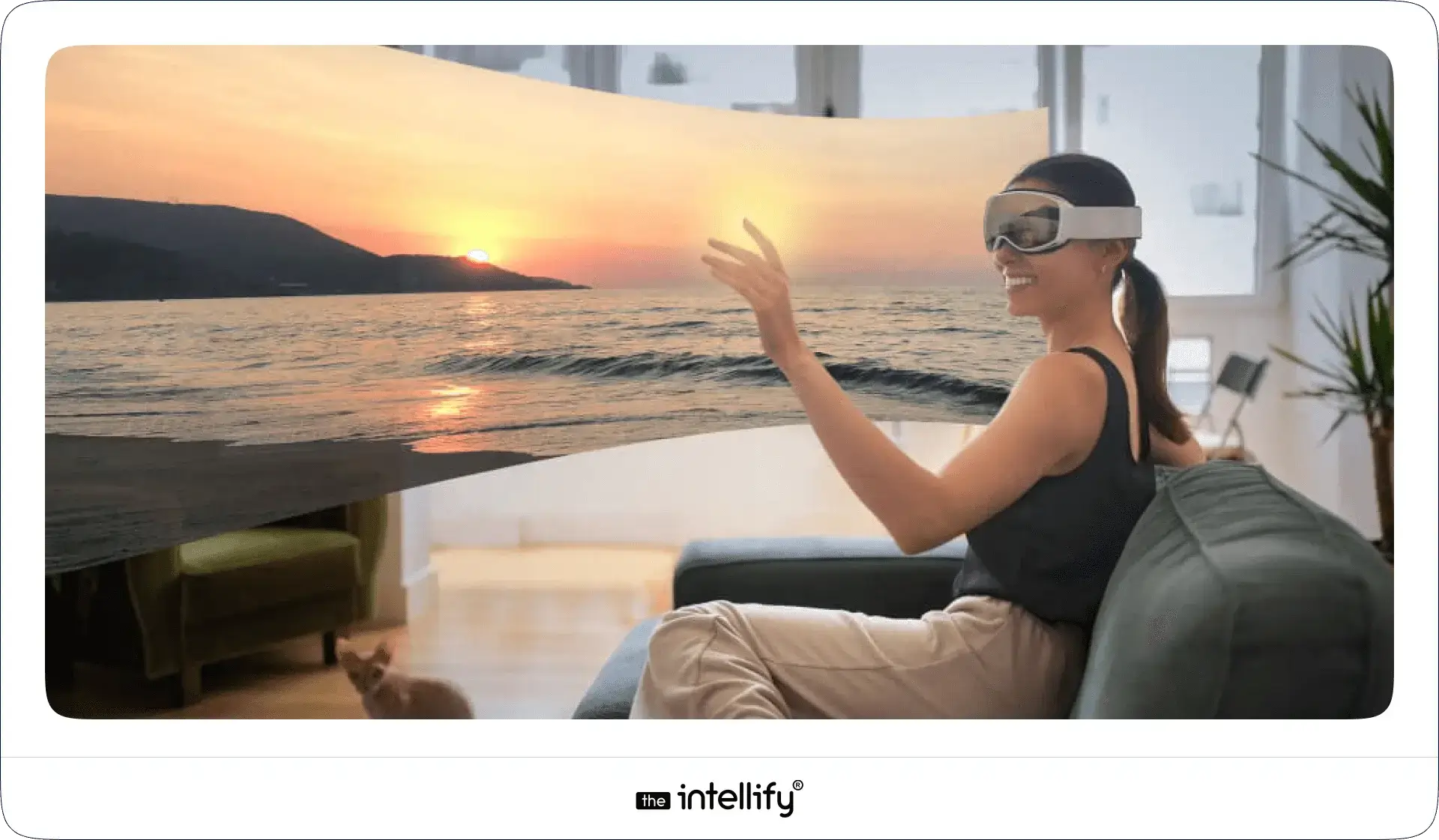
VR for Tourism

To fully appreciate AR and VR’s roles in tourism, we need to understand their differences.

Difference between AR and VR

  • Augmented Reality (AR) enriches the physical world by layering digital information on top of it, using devices like smartphones or AR glasses.
  • Virtual Reality (VR) immerses users in a completely digital setting, typically requiring headsets that block out the physical world.

How AR for tourism works on mobile devices

AR for tourism shines on mobile devices, allowing users to point their smartphones at landmarks or artworks and instantly receive information, visual enhancements, or even interactive content right on their screens.

How VR in tourism creates fully immersive experiences

With VR, you can explore destinations from the comfort of your home. Whether it’s wandering through ancient ruins or taking a virtual stroll through a museum, VR apps offer stunning, immersive experiences that can make you feel as if you’re truly there.

Real-world examples

Around the globe, tourism boards and cultural institutions are tapping into AR and VR. For example, many museums now provide virtual tours that let users explore exhibitions from anywhere. Some historical sites even offer AR apps that enrich the historical context as visitors roam through the location.


Why AR/VR Is Becoming Essential for the Tourism Industry

The digital age has dramatically transformed how people approach travel.

  • Changing travel behavior: Today’s travelers tend to research their destinations extensively online before making plans. AR/VR gives them a chance to experience a locale virtually before they commit.
  • Impact of technology on trip planning: Nowadays, travelers expect more interactive and engaging ways to plan their adventures, and AR/VR caters perfectly to these expectations.

  • Accessibility: For those who can’t travel due to physical limitations, AR/VR technology offers access to rich cultural experiences that they might otherwise miss.
  • Post-Pandemic Growth: The COVID-19 pandemic accelerated the digital tourism trend. With travel restrictions in place, many turned to virtual experiences, paving the way for AR/VR innovations.


Key Use Cases of AR/VR in Tourism & Cultural Exploration

VR in Tourism & Cultural Exploration

Understanding how AR/VR is currently used in tourism helps illuminate its transformative potential.

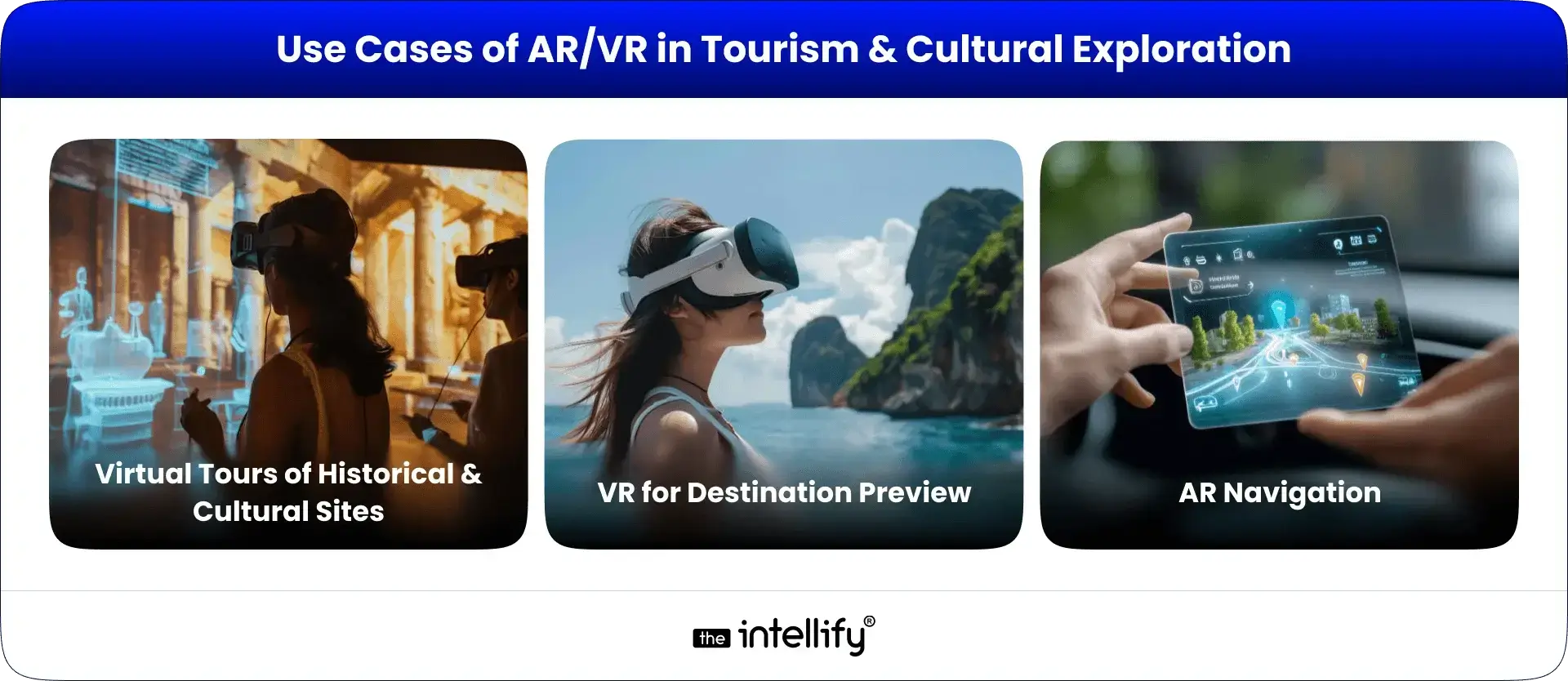
Virtual Tours of Historical & Cultural Sites

  • VR Tours: Many iconic landmarks now feature VR tours that guide users through attractions while providing historical narratives and stunning visuals.
  • Cultural Storytelling: These experiences allow users to engage deeply with rich narratives, immersing them in the significance of the sites.

AR-Powered On-Site Tourist Experiences

  • AR guides at monuments: AR applications can elevate a visitor’s experience by offering interactive guides and visual overlays that share the stories behind ancient structures.
  • Historical Overlays: Imagine aiming your phone at a historical site and witnessing how it looked centuries ago, thanks to digital recreations.
Virtual Museums & Cultural Archives

Cultural Preservation: Many institutions are digitally preserving their cultural artifacts via VR, broadening access while ensuring history remains intact.

VR for Destination Preview & Travel Planning

“Try before you travel”: With VR previews, travelers can visualize their trips, helping them confidently decide on their next destination.

AR Navigation & Smart City Tourism

Interactive Maps: AR navigation apps guide users to attractions, eateries, and hidden gems, making their exploration of a new city seamless.


How AR/VR Improves Cultural Storytelling

AR/VR has the power to revolutionize storytelling by bringing history to life.

  • Turning history into experiences: Through immersive visuals, AR/VR transforms static information into dynamic narratives that truly engage modern audiences.
  • Language-independent exploration: Visual cues can convey stories effectively, regardless of language, making cultural experiences accessible to everyone.
  • Emotional engagement: Instead of merely presenting facts, AR/VR fosters emotional connections, making history more memorable.


Benefits of VR in Tourism


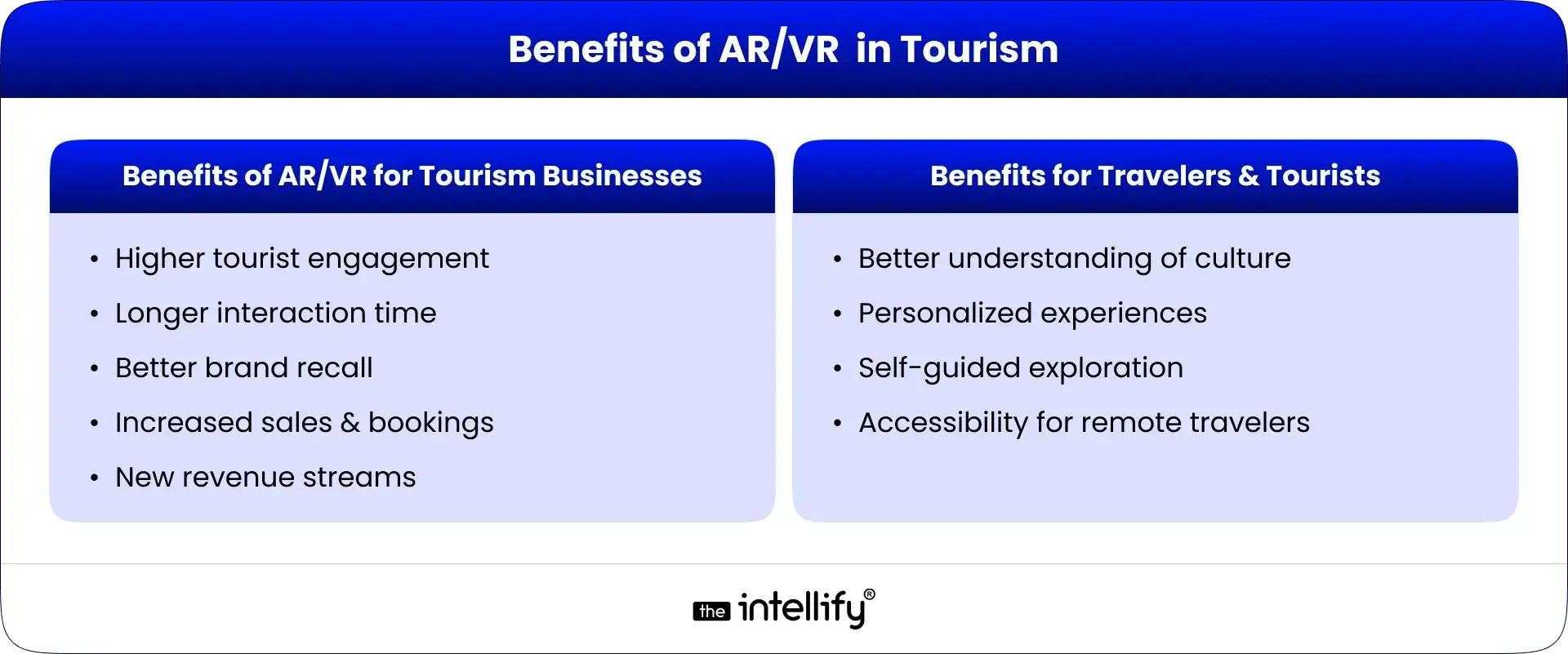
Benefits of AR/VR for Tourism Businesses

Adopting AR/VR brings a host of advantages for tourism companies.

  • Higher tourist engagement: Interactive experiences keep tourists engaged longer, boosting overall satisfaction.
  • Longer interaction time: Immersive experiences often lead to extended interactions, enhancing brand exposure.
  • Better brand recall: Unique experiences are easier to remember, strengthening brand association.
  • Increased sales & bookings: The novelty of AR/VR often entices users to purchase tickets or services they might not have considered otherwise.
  • New revenue streams: Offering virtual tickets for experiences or digital guides can open up new financial avenues.


Benefits for Travelers & Tourists

Travelers also stand to gain significantly from AR/VR.

  • Better understanding of culture: With in-depth insights into local customs and history, travelers enrich their journeys.
  • Personalized experiences: As travelers engage more, they can receive tailored recommendations based on their interests.
  • Self-guided exploration: AR apps empower visitors to explore at their own pace, putting them in control.
  • Accessibility for remote travelers: Those unable to travel due to health or financial constraints can still enjoy virtual experiences.


Real-World Examples of AR/VR in Tourism

Both India and international markets are using technology to enhance tourism.

  • Indian monuments using AR/VR: Iconic sites like the Taj Mahal are exploring AR features to showcase their storied histories.
  • International museums: Institutions like the British Museum and the Louvre are offering VR tours, allowing global audiences to experience their fantastic exhibits.
  • Tourism boards using VR for promotion: Destinations worldwide are crafting promotional VR content that captivatingly showcases their attractions.
 

AR VR App Development


Types of AR/VR Tourism Apps You Can Build

There’s a variety of applications businesses can develop to harness AR/VR’s potential in tourism.

  1. Virtual tour apps: Ideal for historical sites and museums.
  2. AR travel guide apps: Enhance on-site experiences with additional content.
  3. Cultural storytelling apps: Make narratives come alive through immersive journeys.
  4. VR museum platforms: Provide fully immersive virtual museum visits.
  5. Metaverse-based tourism experiences: Engage users with an entirely new level of interaction.


How to Build an AR/VR Tourism App (Step-by-Step Overview)

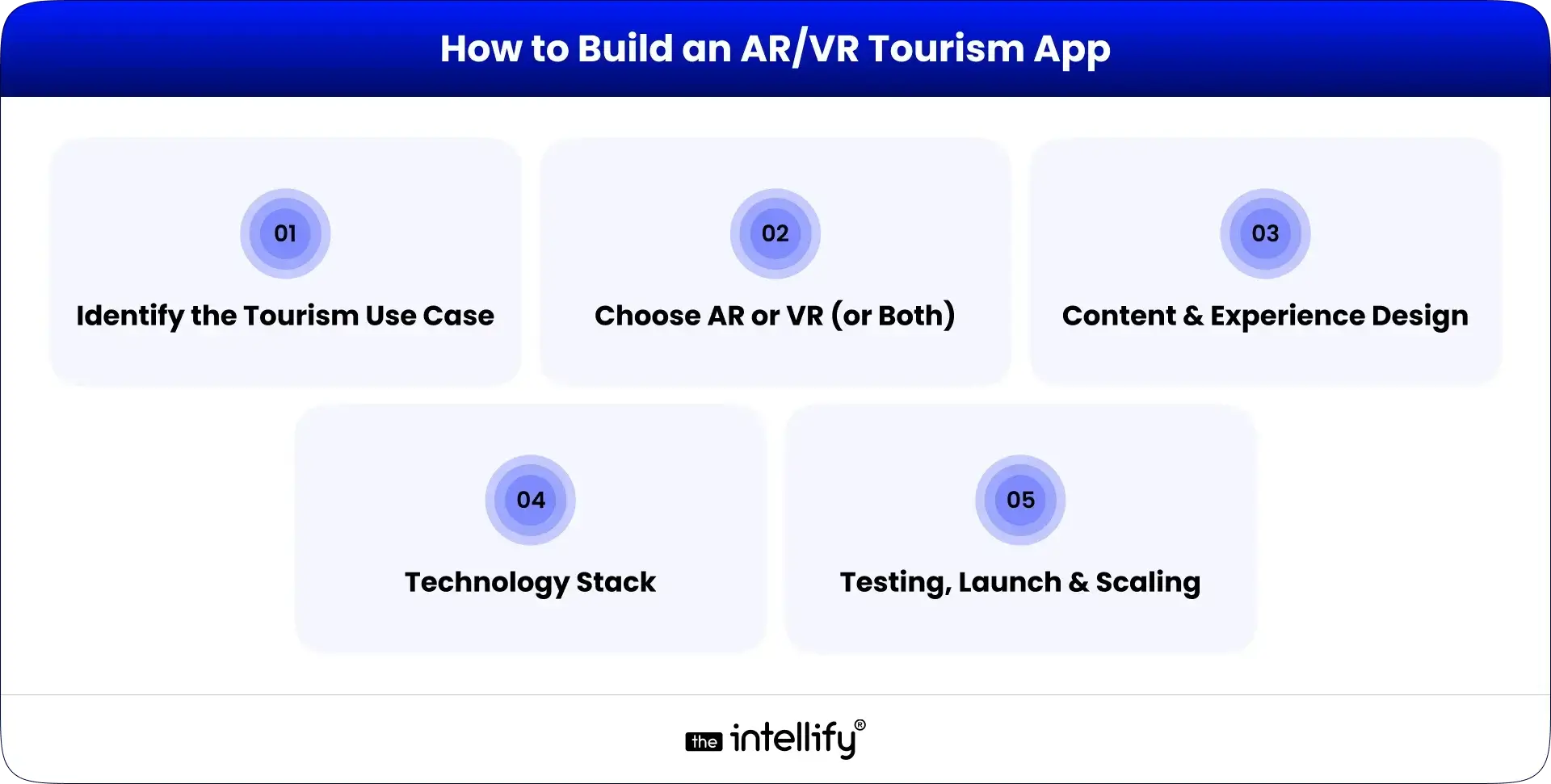
How to build AR/VR Tourism App

Creating an AR/VR tourism app might seem complex, but here’s a straightforward approach.

1. Identify the Tourism Use Case

Pinpoint whether your focus is on cultural, heritage, or city-based experiences.

2. Choose AR or VR (or Both)

Decide whether AR, VR, or a combination serves your users’ needs best.

3. Content & Experience Design

Craft compelling narratives while ensuring visual accuracy to enhance the user journey.

4. Technology Stack

Consider the necessary technology, such as mobile AR capabilities and VR headsets.

5. Testing, Launch & Scaling

Conduct thorough performance testing, gather user feedback, and stay open to continuous improvements.


Cost of Developing an AR/VR Tourism App

Understanding costs is essential for planning.

  • Basic AR tourism app cost:  Developing a simple AR app typically starts at a budget-friendly range of $10,000 – $30,000.
  • VR virtual tour app cost: More complex VR experiences can range from $50,000 – $150,000, depending on the desired features and quality.
  • Factors affecting development cost: The complexity of the content, technology stack, and features significantly impact costs.
  • India vs global development perspective: Development costs in India are generally lower than in Western countries, providing cost-effective solutions.
 

Challenges in AR/VR Tourism Projects (And How to Solve Them)

Despite its promise, AR/VR projects can encounter hurdles.

  • Content accuracy: It’s vital to ensure that historical data and visualizations are accurately represented through thorough research.
  • Hardware limitations: Be mindful of the technology requirements that users may need; inclusivity should be a priority.
  • User adoption: Offering clear onboarding processes can ease interaction with new technology.
  • Maintenance & updates: Regular content updates and tech improvements are essential for long-term success.


Future of AR/VR in Tourism & Cultural Exploration

The future of AR/VR in tourism looks promising:

  • Digital heritage preservation: As tech advances, preserving and sharing cultural heritage digitally will become easier.
  • AI + AR/VR tourism: Merging AI with AR/VR can enhance personalization and adapt experiences to match user preferences.
  • Metaverse tourism experiences: The rise of the metaverse will redefine how we interact with travel and experiences.
  • What tourism brands should prepare for: Brands need to stay current with tech trends and prepare to weave AR/VR into their strategies.


Why Choose a Professional AR/VR App Development Partner

As exciting as AR/VR is, developing an app requires expertise.

  • Importance of experience: Partnering with AR/VR app development company can ensures quality and innovation.
  • Cultural accuracy & UX design: Professionals can help create culturally sensitive and user-friendly applications.

  • Long-term scalability: Quality developers design apps with future growth and adaptability in mind.
  • Global deployment readiness: Skilled partners facilitate worldwide access and compliance with various standards.
 

VR tourism app development


Conclusion: AR/VR Is Not Replacing Travel, It’s Enhancing It

The message is clear: AR/VR is reshaping tourism by creating more engaging, personalized, and informative experiences. The benefits are profound for businesses, travelers, and cultural institutions alike. While technology can’t replicate the magic of physical travel, it does enrich our understanding and connection to the world around us. Now is the time for tourism brands, governments, and museums to seize this digital evolution. Reach out to The Intellify today to find out how we can help you harness AR and VR, unlocking a world of new possibilities in tourism.
 

Frequently Asked Questions (FAQs)

1. How does AR/VR for tourism help travelers explore cultural sites before visiting?

AR/VR allows users to preview destinations and experiences virtually, aiding in informed travel decisions.

2. What is the difference between AR for tourism and VR for tourism experiences?

AR adds digital overlays to the real world through smartphones, while VR immerses users in a completely digital environment.

3. Can AR/VR tourism apps increase tourist engagement at historical and cultural destinations?

Yes, interactive experiences capture interest and encourage exploration, enhancing engagement.

4. Is AR/VR in tourism suitable for museums, heritage sites, and tourism boards?

Absolutely! These technologies greatly enrich visitor experiences, showcase collections, and promote destinations.

5. How much does it cost to build an AR/VR tourism or cultural exploration app?

Costs vary but typically range from $10,000 to $150,000 based on complexity and features.

6. Can AR/VR tourism apps work for both Indian and international travelers?

Yes, AR/VR applications can cater to a global audience by offering universal experiences and localized content.

7. Which company can help build a custom AR/VR tourism app for cultural exploration?

The Intellify specializes in developing tailored AR/VR solutions for tourism, with a focus on cultural accuracy and immersive design. Engage your audience, enhance understanding, and deepen connections with AR/VR in tourism. The journey has just begun!

View
Case Study