Healthcare Software Modernization: A Practical Guide to Upgrading Legacy Systems

By Shravan Rajpurohit
April 28, 2026
Summary:
Legacy healthcare systems often slow operations, limit integration, and increase maintenance costs. Healthcare software modernization helps providers replace or upgrade outdated platforms with secure, flexible, and efficient solutions. This guide explores practical modernization methods, key decisions before starting, expected challenges, and how modern systems improve patient care, usability, and operational performance.
Healthcare runs on software more than most people realize. Appointments, patient records, billing, prescriptions, lab reports, and insurance checks almost every step touches a system somewhere in the background. The problem? Many hospitals, clinics, and healthcare groups are still leaning on software built years ago. Sometimes decades ago.
Those old systems may still “work,” but they often work like an old ceiling fan in summer, slow, noisy, and one bad push away from stopping.
That’s where healthcare software modernization becomes important. It helps healthcare organizations upgrade aging systems without breaking core operations. And in an industry where downtime can create real-world problems, that matters a lot.
This guide explains where legacy systems still exist, why change is needed, and how to modernize in a practical, low-chaos way.
Where Legacy Systems Still Exist in Healthcare
Many healthcare organizations still depend on older systems for daily operations. It’s common, and honestly, understandable. If a system has been handling patient records for 12 years, replacing it feels risky.
Common areas where legacy platforms still exist include:
- Electronic Health Record (EHR) systems
- Billing and claims management software
- Laboratory information systems
- Scheduling tools
- Pharmacy systems
- Internal admin tools built years ago
- Reporting dashboards patched together over time
Often, these systems were built separately. One handles billing. Another stores patient records. Another runs lab workflows. They don’t always talk to each other smoothly.
That creates data silos, duplicate work, and weird delays. A nurse may need to open three screens just to confirm one patient update. Not ideal.
As digital healthcare grows, these gaps become more visible and harder to ignore.
What is Healthcare Software Modernization
Healthcare software modernization means improving outdated healthcare systems so they are faster, more secure, easier to use, and better connected to today’s technology needs.
Modernization doesn’t always mean throwing everything away and starting from scratch. In many cases, it means upgrading step by step. That can include:
- Updating old infrastructure
- Moving systems to the cloud
- Improving user interfaces
- Connecting systems through APIs
- Rebuilding specific modules
- Replacing only what no longer makes sense
There’s also a difference between a basic upgrade and a full transformation.
A basic upgrade might patch performance issues or update servers. A full transformation reshapes how systems work together across the organization. This is where legacy app modernization plays a major role. Instead of replacing every old application, teams modernize valuable apps so they still serve the business in a newer environment.
The Real Need for Change in Healthcare Systems
Some organizations delay modernization because “the current system still works.” But working and working well are two different things.
- Slow performance affects daily operations:- When systems take forever to load, staff lose time all day long. Ten seconds here, thirty there, it adds up fast.
- Difficulty integrating newer tools:- Need telehealth? AI-assisted documentation? Advanced analytics? Many older platforms struggle to connect with newer tools.
- Limited scalability:- Healthcare organizations grow. More patients. More locations. More data. Old systems often weren’t built for modern scale.
- Security and compliance pressure:- Outdated software can create security gaps. It may also make compliance harder with changing healthcare regulations and privacy requirements. Eventually, the cost of doing nothing becomes higher than the cost of change.
Practical Ways to Modernize Legacy Healthcare Systems
There isn’t one perfect modernization method. Different systems need different treatment.
Moving systems to the cloud without major changes (Rehosting)
This means shifting an application to cloud infrastructure while keeping most of the app intact.
Good for:
- Fast infrastructure improvement
- Lower hardware dependency
- Better scalability
Improving existing systems for better performance (Refactoring)
This updates internal code without changing core business functions.
Good for:
- Faster performance
- Easier maintenance
- Better long-term flexibility
Rebuilding key parts while keeping core functionality
Sometimes only parts of the system are outdated. Rebuilding those modules can deliver results without replacing everything.
Replacing outdated systems with modern solutions
If a platform is too rigid, too risky, or impossible to maintain, replacement may be the best path.
Choosing the right approach
Strong legacy system modernization starts with honesty. What still works? What drains time? What creates risk?
Not every old system is bad. Some are just old and badly dressed.
Step-by-Step Process of Healthcare Software Modernization
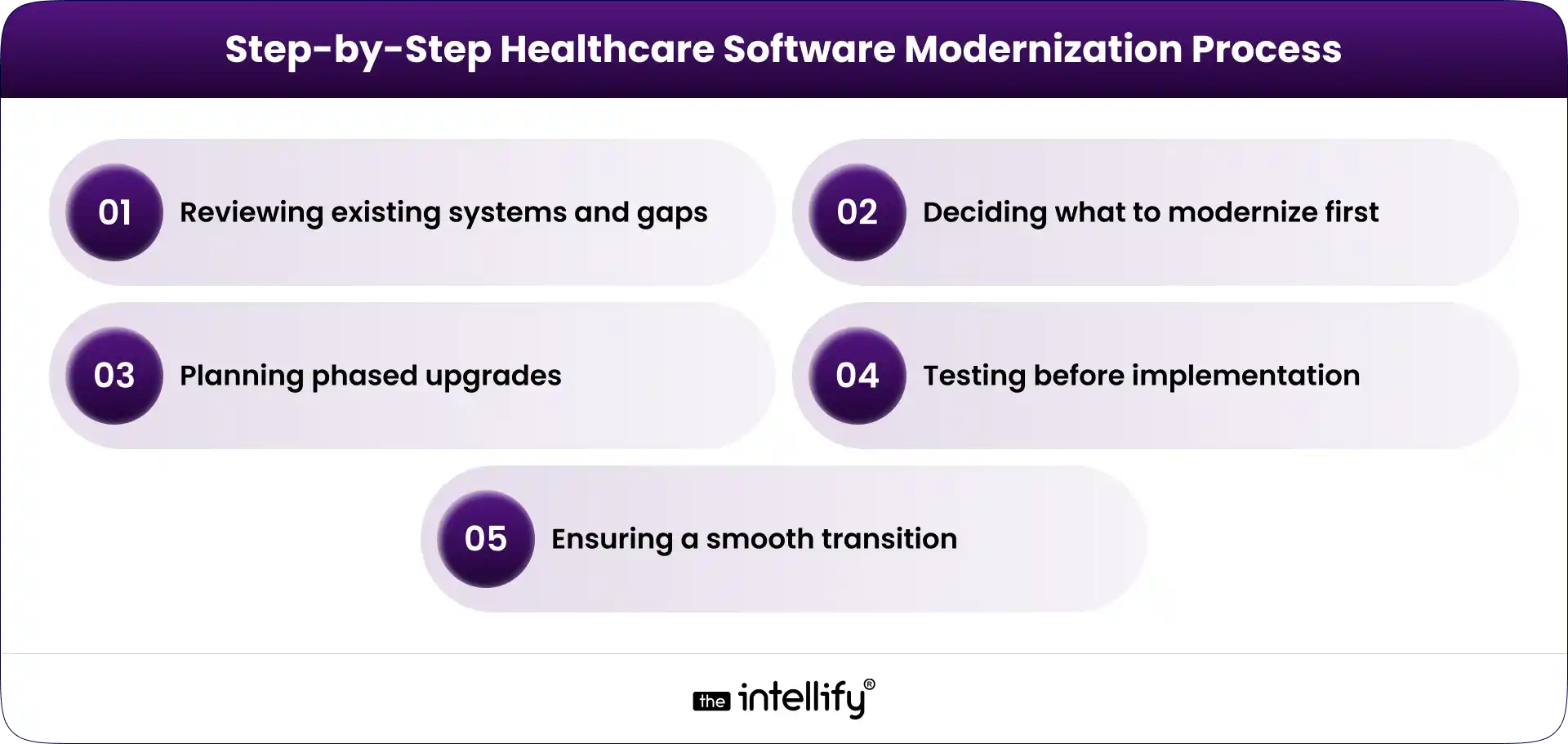
Modernization works best when handled in planned phases instead of sudden full-system replacement. A structured approach reduces risk and keeps healthcare operations stable.
Reviewing existing systems and identifying gaps
Start by assessing current applications, integrations, performance issues, security concerns, and workflow bottlenecks. This helps identify what needs attention first.
Deciding what to modernize first
Prioritize systems based on business impact, usage level, maintenance cost, and operational risk. High-value systems should usually come first.
Planning phased upgrades
Upgrade systems in stages rather than replacing everything at once. This makes the transition easier to manage and lowers disruption.
Testing before implementation
Each change should be tested for performance, data accuracy, security, and user experience before full deployment.
Ensuring a smooth transition
Provide staff training, technical support, and rollout planning to help teams adapt while maintaining daily healthcare services.
Improving Healthcare Applications for Better Usability
Modernization should not focus only on backend systems. It should also improve how healthcare applications feel and function for the people using them every day.
Better experience for doctors and staff
Doctors, nurses, administrators, and support teams need systems that are fast, simple, and easy to navigate. Cleaner dashboards, fewer clicks, and faster access to records can improve productivity.
Stronger patient-facing platforms
Patient portals and mobile apps should make common tasks easier, such as booking appointments, viewing reports, paying bills, and receiving updates.
Reduced manual work
Better workflows can automate repetitive tasks like data entry, reminders, approvals, and status tracking. This saves time and reduces errors.
Faster decision-making
When accurate information is available in one place, healthcare teams can respond more quickly and make better operational or clinical decisions.
Higher user adoption
Easy-to-use systems are more likely to be accepted by staff and patients, helping organizations get better results from modernization efforts.
Technologies Enabling Smarter Healthcare Systems
Modern healthcare systems need technology that improves performance, supports growth, and helps different platforms work together. The right tools make modernization smoother and more practical.
Cloud infrastructure for scalability and flexibility
Cloud environments help healthcare organizations reduce dependency on old hardware and scale resources as demand grows. They also improve system availability and remote access.
APIs for connecting healthcare systems
APIs allow systems such as EHRs, billing tools, lab software, and patient portals to share data more efficiently. This reduces manual work and improves coordination.
Interoperability standards like FHIR
FHIR supports secure and structured data exchange between healthcare platforms. It helps organizations create more connected patient experiences.
Automation and AI where useful
Automation can handle repetitive workflows such as reminders, document routing, or status updates. AI can support forecasting, reporting, and operational efficiency when applied with a clear purpose.
Challenges to Expect During Modernization
Modernization can create major benefits, but it also comes with real challenges. Ignoring them is usually where projects go sideways.
- Data migration risks: Moving records from older systems to new platforms requires careful planning, validation, and testing to avoid data errors or loss.
- Compliance requirements: Healthcare systems must continue meeting privacy, security, and regulatory standards throughout the transition.
- Resistance from internal teams: Employees used to existing systems may be hesitant to adopt new workflows. Proper training and communication are essential.
- Budget and timeline pressure: Unexpected integration work or technical issues can increase costs and extend timelines if planning is weak.
- Avoiding patient care disruption: System upgrades should be managed in phases to ensure daily healthcare services continue without interruption.
Key Decisions Before Starting Modernization
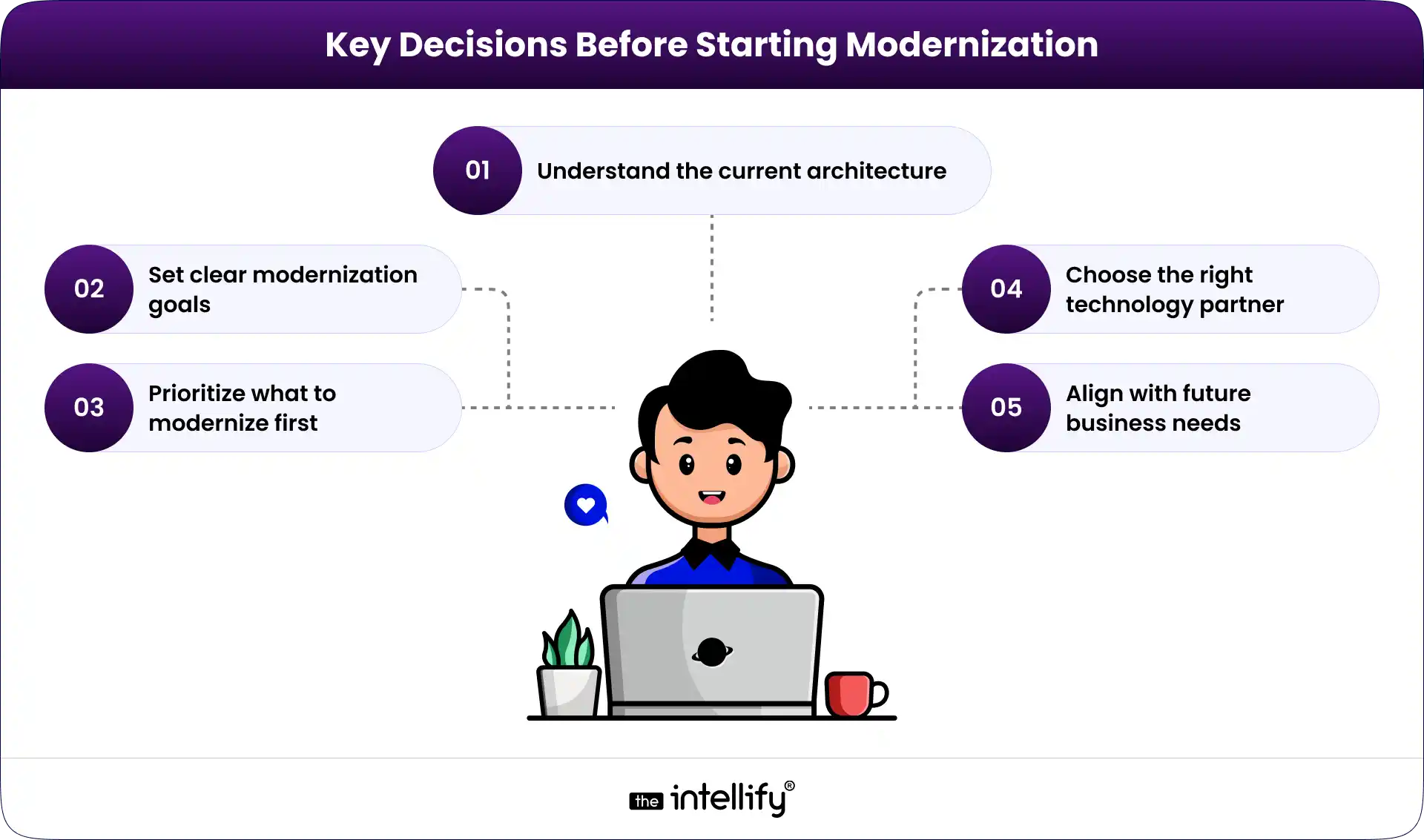
Before starting any modernization effort, leadership teams need clarity. Rushing into tools or vendors too early can create expensive mistakes.
Understand the current architecture
Review existing systems, integrations, performance issues, and dependencies before making changes.
Set clear modernization goals
Define what success looks like, such as faster workflows, better reporting, stronger security, or improved patient experience.
Prioritize what to modernize first
Not every system needs immediate attention. Some upgrades create far more value than others. Focus first on systems that are high-risk, heavily used, expensive to maintain, or blocking growth.
Choose the right technology partner
Technology skill matters, but healthcare experience matters too. A strong partner understands workflows, compliance realities, and the importance of operational continuity.
Align with future business needs
Modernization should support where the organization is heading over the next three to five years. Expansion plans, growth in remote care, acquisitions, and new service lines should all be considered.
How Healthcare Operations Improve After the Upgrade
Once systems are modernized, operational improvements are usually noticeable across teams.
- Faster and smoother workflows: Tasks such as scheduling, billing, reporting, and communication become quicker and more efficient.
- Better access to connected data: Departments can access shared information more easily, improving collaboration and decision-making.
- Improved patient experience: Patients benefit from easier portals, faster responses, and more convenient digital services.
- Lower maintenance burden: Modern systems reduce reliance on outdated infrastructure and constant technical fixes.
- Better scalability: Organizations can support more users, locations, and services without major system strain.
Future Direction of Healthcare Systems
Healthcare technology is moving toward smarter, more connected environments rather than isolated software tools.
Real-time operations and decision-making
More systems will provide live visibility into appointments, patient flow, staffing needs, inventory, and service performance. Real-time data helps leaders respond faster rather than react days later.
Growth of remote care models:
Telehealth, remote monitoring, and digital patient engagement will continue expanding. That means backend systems must support secure communication, integrated records, and seamless virtual workflows.
Stronger interoperability
The future depends on systems exchanging data smoothly across providers, insurers, labs, and patient-facing platforms. Better interoperability reduces friction and improves continuity of care.
Continuous modernization
Healthcare organizations are moving away from giant once-a-decade replacement projects. Instead, they are adopting steady improvement cycles with regular updates and modular upgrades.
Honestly, that’s a healthier model for everyone involved.
Smarter use of automation and AI
Expect more targeted AI adoption in operations, documentation support, forecasting, and workflow efficiency. The winning organizations will use it selectively, where value is measurable.
Final Thoughts
Modernization is not a one-time event. It is an ongoing process focused on improving systems step by step. Healthcare organizations should prioritize real business needs such as usability, speed, security, and better data access rather than chasing unnecessary technology trends.
Start with clear goals, modernize high-impact systems first, and scale improvements over time. That practical approach usually delivers the strongest long-term results.
Frequently Asked Questions (FAQs)
1. How do you know if your healthcare system needs modernization instead of small upgrades?
If your system slows down daily work, struggles to connect with newer tools, or needs frequent fixes, it’s a sign that upgrades aren’t enough. Modernization becomes necessary when the system starts limiting efficiency and growth.
2. Can healthcare software be modernized without replacing the entire system?
Yes, most organizations follow a phased approach where critical parts are upgraded step by step. This helps avoid major disruptions while gradually improving the overall system.
3. How long does it take to modernize healthcare software systems?
The timeline depends on system complexity and size, ranging from a few months to over a year. Most organizations prefer phased modernization to manage risk and maintain continuity.
4. How does software modernization improve patient experience in healthcare?
It makes processes like appointment booking, record access, and communication faster and smoother. This reduces wait times and improves overall patient satisfaction.
5. What should be modernized first in a healthcare system?
Systems that directly impact patient care or daily operations should be prioritized first. This ensures quicker improvements and better overall efficiency early in the process.
6. How is compliance managed during healthcare software modernization?
Compliance is maintained by following data protection standards and ensuring secure handling of patient information. Regular testing and audits also help keep systems aligned with regulations.
7. Is healthcare software modernization a one-time effort or continuous?
It’s an ongoing process, as technology and healthcare needs continue to evolve. Regular updates and improvements are required to keep systems efficient and future-ready.


Written By, Shravan Rajpurohit
Shravan Rajpurohit is the Co-Founder & CEO of The Intellify, a leading Custom Software Development company that empowers startups, product development teams, and Fortune 500 companies. With over 10 years of experience in marketing, sales, and customer success, Shravan has been driving digital innovation since 2018, leading a team of 50+ creative professionals. His mission is to bridge the gap between business ideas and reality through advanced tech solutions, aiming to make The Intellify a global leader. He focuses on delivering excellence, solving real-world problems, and pushing the limits of digital transformation.

How to Integrate AI Into an Existing DPC Platform Without Rebuilding It
Summary: This blog explains how to integrate AI into an existing Direct Primary Care (DPC) platform without rebuilding the entire system. It covers AI use cases, API integrations, implementation steps, HIPAA compliance, security considerations, common challenges, and costs. DPC practices can use these insights to modernize existing software, streamline administrative workflows, and improve operational efficiency. […]
How to Scale a Direct Primary Care Practice With Technology
Summary: This guide explains how technology can help Direct Primary Care practices scale without increasing administrative workload at the same pace. It covers DPC software, membership management, scheduling, billing, patient communication, automation, AI, and healthcare platform modernization, while outlining practical ways practices can build a more connected and scalable technology infrastructure. Running a Direct […]
How to Modernize a Direct Primary Care (DPC) Platform
Summary: This guide explains how to modernize a Direct Primary Care (DPC) platform for better scalability, security, patient experience, and operational efficiency. It covers essential DPC software features, legacy system assessment, platform integrations, AI opportunities, HIPAA considerations, modernization costs, common challenges, and practical steps for deciding between modernization and a complete rebuild. Direct Primary […]
How to Integrate AI Into an Existing DPC Platform Without Rebuilding It
Summary: This blog explains how to integrate AI into an existing Direct Primary Care (DPC) platform without rebuilding the entire system. It covers AI use cases, API integrations, implementation steps, HIPAA compliance, security considerations, common challenges, and costs. DPC practices can use these insights to modernize existing software, streamline administrative workflows, and improve operational efficiency. […]
How to Scale a Direct Primary Care Practice With Technology
Summary: This guide explains how technology can help Direct Primary Care practices scale without increasing administrative workload at the same pace. It covers DPC software, membership management, scheduling, billing, patient communication, automation, AI, and healthcare platform modernization, while outlining practical ways practices can build a more connected and scalable technology infrastructure. Running a Direct […]
How to Modernize a Direct Primary Care (DPC) Platform
Summary: This guide explains how to modernize a Direct Primary Care (DPC) platform for better scalability, security, patient experience, and operational efficiency. It covers essential DPC software features, legacy system assessment, platform integrations, AI opportunities, HIPAA considerations, modernization costs, common challenges, and practical steps for deciding between modernization and a complete rebuild. Direct Primary […]
0
+0
+0
+0
+Committed Delivery Leads To Client Satisfaction
Client Testimonials that keep our expert's spirits highly motivated to deliver extraordinary solutions.

Christopher Seny
My experience working with The Intellify, has been a great experience. The team has a wealth of expertise in the tech space. Working with the intellify was a growing experience for me, I learned a lot. The team keeps great communication & responds fast to new ideas & suggestions. The team also provides great suggestions & solutions as well. I couldn’t imagine working with anybody else on this project & it has been a blessing working with, The Intellify.

Izandi Serdyn
The Intellify delivered a platform from scratch, involving the client at every stage. The team was communicative, responsive, and punctual throughout the engagement. Virtual meetings and emails ensured seamless project management. Customers can expect a team that can work fast.

Kya Johnson
The app serves as an effective introduction for users to the product and its characters. Responsive and faithful to initial requirements, The Intellify’s team exceeded initial expectations. Internal stakeholders were particularly pleased with their communication.

Stefan Wyk
Working with The Intellify to develop our website was an outstanding experience. Their team displayed exceptional professionalism, creativity, and technical expertise throughout the entire process. The final product exceeded our expectations, delivering a sleek, user-friendly, and highly functional website. We highly recommend The Intellify to anyone in need of top-tier web development services.

Steve Thorpe
The Intellify’s work has been met with high praise from internal and external stakeholders. The team is efficient, diligent, and reliable in their service. They go above and beyond in terms of communication and project management. The Intellify is a responsive vendor that gets the job done.

Tal Dotan
I’ve been working with The Intellify for the last 3 years. During this period of time we’ve planned and executed projects in both small and large scale. Working with The Intellify was and still is the best decision I’ve made when rising up Divo, I strongly recommend to work with them in any type of project.


 +1-302-803-4983