Enterprise Digital Transformation Roadmap: From Strategy to Execution

Summary:
This blog explains how enterprises can plan and execute a successful digital transformation using a structured roadmap. It covers what digital transformation truly means, why initiatives fail without clear direction, and how to align strategy, technology, people, and governance. The blog walks through assessing current capabilities, defining goals, implementing transformation in phases, measuring ROI, and scaling innovation to build a resilient, future-ready enterprise.

Digital transformation gets talked about a lot. Sometimes too much. But for most enterprises today, it’s no longer optional. It’s how you stay relevant, avoid getting outpaced, and actually make your systems work for people instead of against them.

This blog walks through what an enterprise digital transformation roadmap really looks like from early strategy to real execution. Not theory. Not buzzwords. Just a clear, step-by-step way to move forward without burning budget or patience.


Why a Structured Roadmap Matters

A well-crafted roadmap serves as a clear guide for organizations, outlining specific steps and goals. Without it, businesses often feel adrift in a complex and overwhelming digital landscape. A structured roadmap:

• Keeps digital initiatives aligned with business goals.
• Helps manage the risks tied to adopting new technologies.
• Promotes measurable outcomes and encourages ongoing improvement.


What Digital Transformation Means for Modern Enterprises

Business Model Evolution

Digital transformation isn’t just about tech; it’s a fundamental shift in how businesses operate. Companies have to rethink their business models to effectively leverage new technologies. Take traditional retail, for example; today, many retailers incorporate e-commerce platforms to reach a broader audience and create seamless shopping experiences.

Operational Modernization

Modernizing operations means embracing automation and digital tools to boost efficiency. Businesses are leaving outdated manual processes behind, allowing them to streamline functions and cut costs.

Data as a Strategic Asset

In the digital age, data is hugely valuable. By adopting effective analytics tools, organizations can extract insights from their data and make informed, data-driven decisions, enhancing service delivery and fueling innovation.

Leadership and Cultural Alignment

For digital transformation to succeed, it’s vital to have leadership buy-in and a culture ready to embrace change. Leaders need to share the vision and engage every level of the workforce to create an environment conducive to digital adoption.


Why Enterprise Digital Transformation Fails Without a Clear Roadmap

Aligning Technology with Business Goals

When there’s no clear roadmap, businesses often implement technologies that miss the mark concerning their overarching goals, leading to wasted resources and disappointing results.

Managing Risk and Investment

Digital transformations come with both investments and risks. A structured approach can help mitigate the risks associated with adopting new technologies, making for a smoother transition.

Driving Measurable Outcomes

Clear metrics and well-defined objectives allow teams to gauge progress and results, fostering accountability and aiding performance tracking. Without these, it’s easy to lose sight of the transformation goals.


Defining Your Enterprise Transformation Vision

Setting Strategic Objectives

Begin by identifying the long-term goals your organization wants to achieve through digital transformation. What specific pain points do you aim to resolve? How will these goals fit into your overall business strategy?

Securing Executive Sponsorship

Leadership support is key to success. Make sure that executives not only understand but also champion the vision for transformation. Their backing can open doors for resource allocation and drive employee engagement.

Establishing Governance Early

Create a governance framework that defines roles, responsibilities, and decision-making processes. This clarity will keep your organization focused as you navigate the transformation journey.


Assessing Your Current Digital Landscape

Technology Infrastructure

Take stock of your current technology infrastructure. Can your systems support your digital initiatives? Pinpointing gaps in technology is crucial for planning ahead.

Data & Analytics Capabilities

Examine your existing data management processes. Are you able to derive meaningful insights? Understanding your data landscape will shape your transformation strategy moving forward.

Workforce Readiness

Gauge the skills and capabilities of your employees. Are they prepared to handle new technologies? Assessing workforce readiness can help you identify areas for strategic training and development.

Process Gaps

Spot any inefficiencies within your current processes. This analysis will shed light on opportunities for improvement and provide a foundation for designing future workflows.


Key Foundations of a Digital Transformation

Strategy & Governance

A successful enterprise digital transformation hinges on a strong strategy that aligns with your business objectives. Governance should ensure accountability and guide transformation efforts along the way.

Technology & Cloud

Invest in the right technologies and consider cloud solutions that offer scalability and flexibility. A solid tech foundation is essential for supporting growth down the line.

Data & Security

Safeguard data integrity and security with robust measures. Keeping sensitive information secure is vital for maintaining trust with customers and stakeholders.

Customer Experience

Enhance the customer experience through your digital initiatives. Use technology to personalize interactions and eliminate friction along the customer journey.

People & Change Management

Effective change management is crucial. Prepare your workforce for transformation by fostering a growth mindset and providing ongoing support throughout the transition.


Steps to Successfully Implement Digital Transformation
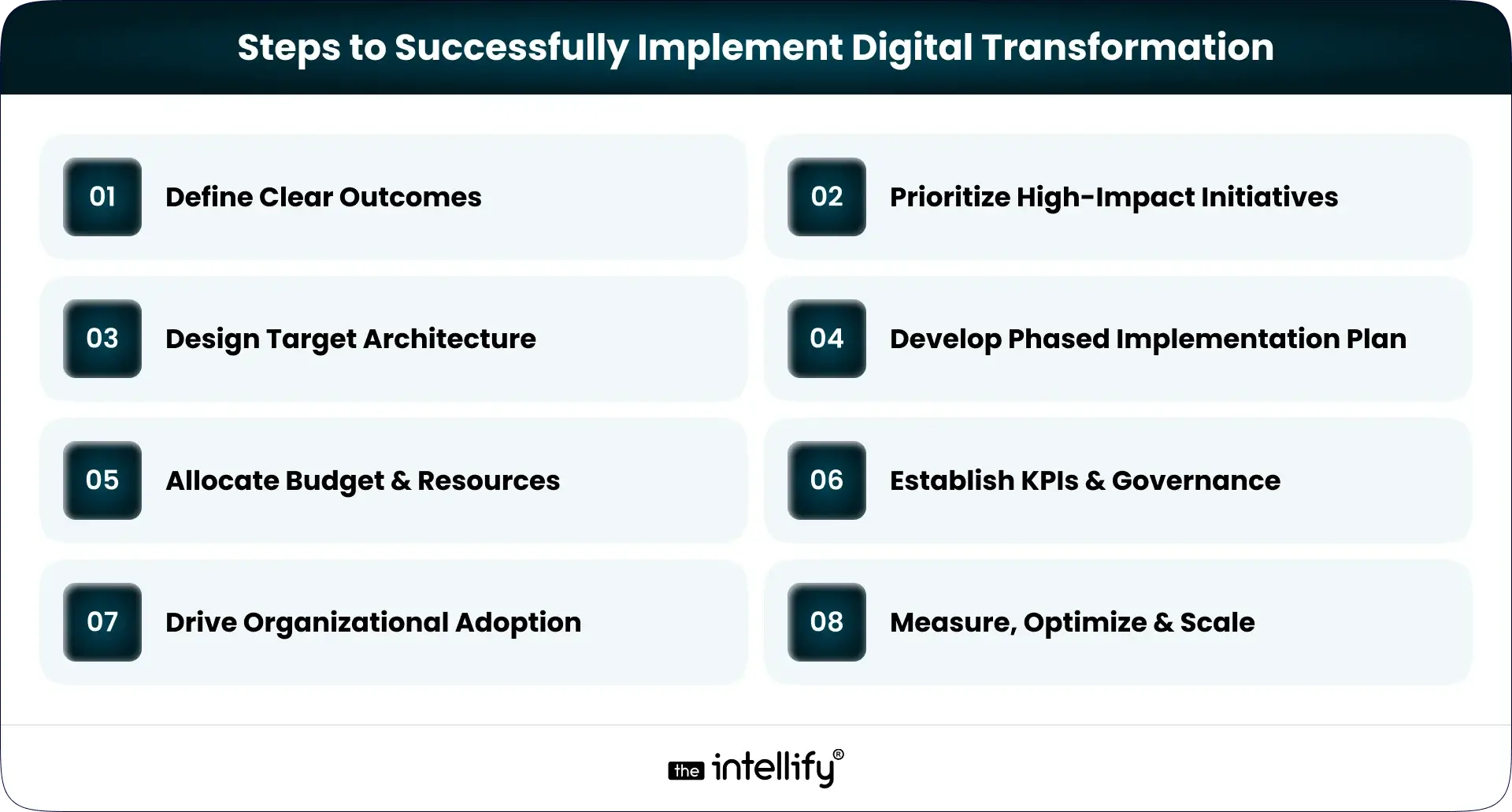
Steps to Implement Digital Transformation

Define Clear Outcomes

Kick things off with specific, measurable goals. What do you want to achieve within set timeframes?

Prioritize High-Impact Initiatives

Focus on initiatives that promise the greatest potential impact on your business. These should align well with your strategic objectives.

Design Target Architecture

Develop a detailed architecture plan that outlines how different systems and technologies will connect. This clarity will ease implementation.

Develop Phased Implementation Plan

Roll out the transformation in phases rather than attempting it all at once. This approach allows for adjustments and promotes continuous improvement.

Allocate Budget & Resources

Identify the financial and human resources necessary for a successful transformation. Make sure budget allocations align with your priorities.

Establish KPIs & Governance

Set up key performance indicators (KPIs) that will help you track progress and success. Regularly review these metrics to ensure you’re on course.

Drive Organizational Adoption

Engage employees throughout the transformation process. Cultivating a culture that embraces change and encourages innovation is vital.

Measure, Optimize & Scale

Keep an eye on performance, and refine processes based on what you learn. Scale successful initiatives to extend their impact throughout the organization.
 

Digital transformation Strategy


Enterprise Trends Shaping Digital Transformation

AI and Intelligent Automation

Artificial intelligence (AI) and automation are at the forefront of transforming operations. From chatbots in customer service to advanced analytics, these technologies streamline processes and enhance how businesses interact with customers.

Hybrid & Multi-Cloud Strategies

More businesses are opting for hybrid and multi-cloud strategies to maximize flexibility and optimize costs. This way, organizations can take advantage of the best features from multiple platforms.

Zero-Trust Security

Security is crucial. The zero-trust model acknowledges that threats can come from both outside and within the network. Adopting this strategy significantly strengthens defenses.

Data-Driven Decision Making

Relying on data-driven insights is now integral to how businesses make decisions. Leveraging analytics is an essential step to remain competitive in the digital landscape.


Challenges in Enterprise Digital Transformation
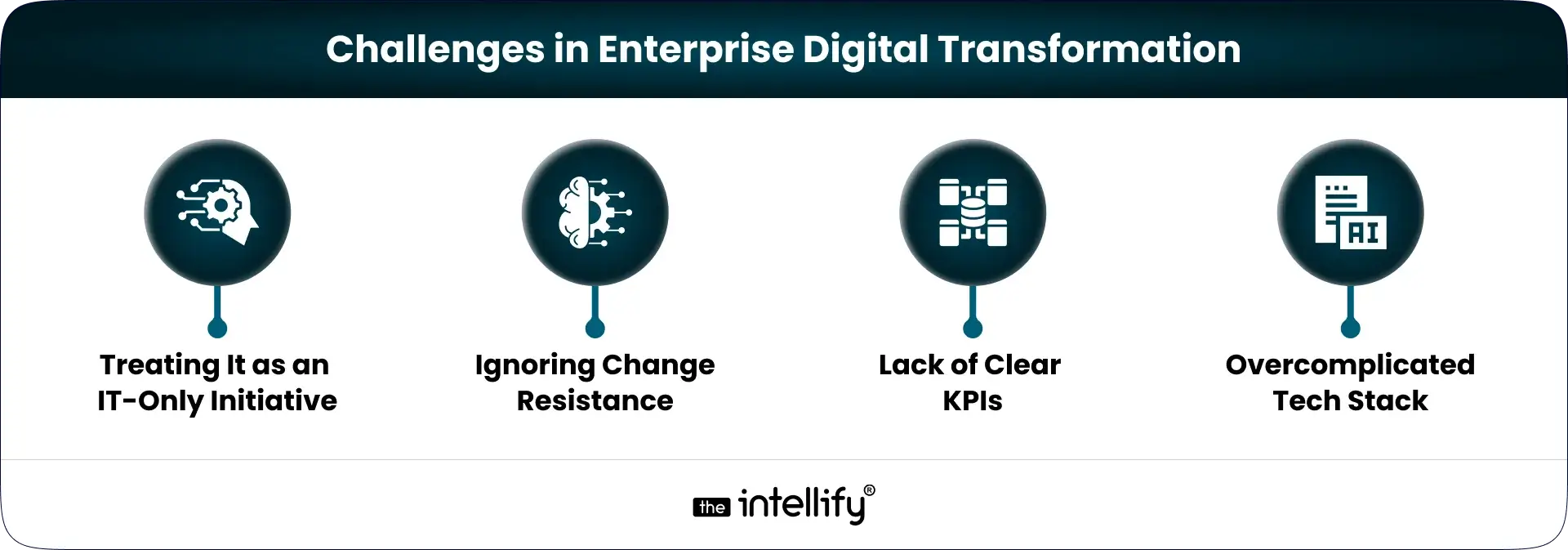
Challenges in Enterprise Digital Transformation

Treating It as an IT-Only Initiative

Digital transformation shouldn’t be limited to just IT. It requires the involvement of the entire organization; having all departments onboard is vital for success.

Ignoring Change Resistance

It’s important to anticipate some pushback against change. Engage employees early on and clearly communicate the benefits of digital transformation to counter skepticism.

Lack of Clear KPIs

Without measurable KPIs, it becomes challenging to assess progress. Establish these metrics early on to foster accountability and focus.

Overcomplicated Tech Stack

A complicated tech stack can slow you down. Simplifying your technology mix will make integration smoother and easier to use.


Measuring ROI and Long-Term Impact

Operational Efficiency

Monitor improvements in operational efficiency as a key measure of ROI. Are processes flowing faster and more smoothly?

Customer Experience Gains

Look at customer satisfaction metrics to grasp how transformation affects their overall experience.

Revenue & Growth Metrics

Track increases in revenue and market share as indicators of successful transformation.

Risk & Compliance Indicators

Evaluate how digital initiatives influence regulatory compliance. Strong compliance reflects a solid risk management strategy.


From Strategy to Execution: Making Transformation Sustainable

Cross-Functional Ownership

Faster ownership across different departments. Collaborative efforts often yield the best results and improve buy-in.

Continuous Optimization

Remember, digital transformation is an ongoing journey. Regularly review your strategies and fine-tune them based on emerging trends and organizational needs.

Scaling Innovation

Encourage a culture of innovation. Embrace creative solutions and be prepared to scale successful initiatives quickly.


Conclusion

Enterprise digital transformation goes beyond just technology; it’s about fundamentally reshaping your organization to excel in a digital-first world. By following this roadmap and focusing on collaboration, measurement, and ongoing optimization, your enterprise can become more resilient and better equipped to adapt to the ever-evolving landscape.

Enterprise digital transformation succeeds when strategy, technology, and people move in alignment toward clear business outcomes. A structured roadmap reduces risk, sharpens focus, and turns ambition into measurable progress. The real challenge isn’t planning change, it’s executing it with discipline and clarity. That’s where experienced execution partners like The Intellify help enterprises translate vision into a structured, scalable transformation that lasts.

 

Start Digital transformation journey


Frequently Asked Questions (FAQs)

1. What is enterprise digital transformation?

Enterprise digital transformation is about using technology to improve how a business operates, serves customers, and makes decisions. It goes beyond tools; it reshapes processes, workflows, and culture. At The Intellify, we help enterprises turn this shift into practical, measurable outcomes rather than isolated tech upgrades.

2. Why is a roadmap important for digital transformation?

A roadmap keeps transformation focused. It aligns technology with business goals, controls risk, and sets clear milestones. Without it, initiatives often stall or drift. We help enterprises build and execute structured roadmaps that move smoothly from strategy to real-world implementation.

3. What are some common challenges in digital transformation?

The biggest challenges include resistance to change, unclear KPIs, and treating transformation as an IT-only project. These issues slow adoption and reduce impact. A clear execution partner like The Intellify helps address both technical and organizational challenges early.

4. How can organizations measure the success of digital transformation?

Success is measured through operational efficiency, better customer experiences, revenue impact, and improved compliance. Tracking the right KPIs from day one is critical. The Intellify focuses on measurable outcomes, not just completed projects.

5. What role do leadership and culture play in digital transformation?

Leadership sets direction, and culture determines whether change sticks. When teams understand the “why,” adoption improves. We work closely with leadership teams to align vision, execution, and organizational buy-in.

6. How can companies ensure sustainable digital transformation?

Sustainability comes from continuous optimization, shared ownership across teams, and scaling what works. Digital transformation isn’t a one-time effort. We support long-term execution, so the transformation keeps delivering value over time.

7. What future trends should businesses watch in digital transformation?

Key trends include AI-driven automation, hybrid and multi-cloud strategies, zero-trust security, and data-led decision-making. Enterprises that prepare early rather than react later stay ahead. We help organizations adopt these trends at a practical, enterprise-ready pace

Digital Transformation in Berlin: Fueling Innovation for Startups and Enterprises

Summary
Berlin stands at the forefront of digital transformation in Europe. In the city where creativity meets technology, innovative startups and well‑established enterprises join forces to redefine industries, streamline operations, and create new business models. Often leveraging the power of Generative AI Development to drive breakthrough innovations.
This blog explores how Berlin’s dynamic ecosystem drives digital transformation across sectors, the key strategies companies implement to stay competitive, and the challenges they overcome on their journey toward a digitally enabled future.

Introduction: Berlin – A Hub for Digital Transformation

Berlin has long been celebrated for its creative culture, vibrant arts scene, and rich history. Over the past decade, however, the city has also emerged as a powerhouse for digital innovation. Digital transformation in Berlin is not just a trend but a fundamental shift that touches every aspect of the economy.

Today, startups and large enterprises use technology to improve operations, create innovative products, and redefine customer experiences.

Berlin attracts entrepreneurs with its lower cost of living, diverse talent pool, and thriving startup ecosystem. At the same time, established regional enterprises increasingly invest in digital technologies to remain competitive. This blog explores how Berlin’s unique landscape fosters digital transformation and what this means for various industries.

Statistics on Digital Transformation in Industries and Technology Adoption

Berlin’s digital transformation is reshaping entire industries and driving widespread technology adoption. Digital companies employ over 88,000 people in the capital and generate annual sales exceeding EUR 10 billion, making the city a leader in Germany’s digital economy.

Since 2008, the sector has experienced an average annual employment growth of nearly 9%, with one in every seven new jobs created in Berlin belonging to the digital economy.

In the core areas, software development and data services, employment in Berlin is growing at an average annual rate of 10.8%, more than twice the national rate.

Additionally, industry reports forecast that Germany’s digital transformation market will reach USD 46 billion by 2025 and is projected to grow at a compound annual growth rate (CAGR) of 15.21% to hit USD 94 billion by 2030.

However, challenges remain. A Vodafone study indicates that by 2030, only about 45% of German companies will fully digitalize, below the expected 55% global benchmark. These statistics underscore both the immense potential of digital transformation and the significant work still required for businesses in Berlin to harness its full benefits.

The Berlin Digital Ecosystem: Startups Meet Enterprises

Berlin’s digital ecosystem is a vibrant mix of young, agile startups and seasoned enterprises. The city is an innovation hub where creativity and technology intersect, fostering dynamic collaborations that drive progress.

A Collaborative Environment

Berlin hosts numerous co‑working spaces, incubators, accelerators, and tech hubs, such as Factory Berlin and the hub. Berlin to CODE_n and Tech Open Air, these spaces provide startups with an environment to network, learn, and collaborate with peers.

Meanwhile, established enterprises partner with startups, invest in digital projects, and even create in‑house innovation labs to leverage fresh ideas.

Startups: The Digital Pioneers

Berlin startups break new ground by experimenting with disruptive technologies and innovative business models. With agile methodologies, rapid prototyping, and lean development practices, these companies quickly pivot in response to market demands.

Many develop breakthrough solutions in fintech, e‑commerce, healthcare, logistics, and AI.

Enterprises: The Digital Adopters

Large companies in Berlin are also actively engaging in digital transformation. They invest in cloud computing, big data analytics, and IoT to optimize processes and enhance decision‑making.

By partnering with startups, these enterprises integrate cutting‑edge digital tools into their operations, ensuring competitiveness in an ever‑changing market.

Networking and Ecosystem Events

Berlin’s vibrant networking events, meetups, conferences, and hackathons encourage the exchange of ideas between startups and enterprises. Events like Tech Open Air enable entrepreneurs to pitch innovative ideas, connect with investors, and learn from industry experts, fostering synergy across the ecosystem.

Key Drivers of Digital Transformation in Berlin

Several key factors drive the rapid pace of digital transformation in Berlin:

1. Entrepreneurial Spirit and Innovation Culture

Berlin’s entrepreneurial mindset encourages risk‑taking and experimentation. The city’s cultural diversity and openness to new ideas create a fertile ground for innovation, enabling entrepreneurs to develop unconventional solutions.

2. Access to Talent and Skills

Berlin attracts top talent from Europe and beyond, forming a highly skilled workforce proficient in digital technologies. Local universities, coding boot camps, and training programs build a robust talent pool that fuels digital transformation.

3. Lower Operational Costs

Compared to global tech hubs like Silicon Valley, Berlin offers a lower cost of living and affordable office space, allowing startups to launch with minimal overhead and enterprises to allocate more resources to R&D.

4. Government Support and Public Initiatives

The Berlin and German governments actively promote digital transformation through funding programs, grants, and advisory services. These initiatives streamline digital adoption and encourage innovation.

5. International Connectivity and Market Access

Berlin’s central location in Europe provides companies with access to a vast market. This connectivity allows startups and enterprises to expand rapidly without the heavy initial investment required for international expansion.

Digital Transformation Trends and Technologies

The digital landscape in Berlin is evolving rapidly, with several trends and technologies serving as catalysts for change:

Digital Transformation and Trends 2025

  1. Cloud Computing and Big Data

    Many companies in Berlin leverage cloud computing for scalable data storage and application hosting, integrating big data analytics to drive more intelligent decision‑making.

  2. Internet of Things (IoT)

    IoT technologies enable real‑time data exchange and automation, transforming industries from manufacturing to urban living by connecting devices and optimizing processes.

  3. Artificial Intelligence and Machine Learning

    AI and ML drive innovation across sectors in Berlin, powering customer service improvements, personalized marketing, and process automation to give companies a competitive edge.

  4. Cybersecurity Solutions

    As digital transformation deepens, robust cybersecurity solutions & measures become critical. Berlin’s tech ecosystem invests heavily in solutions to safeguard data and ensure regulatory compliance.

  5. Digital Platforms and Ecosystem Integration

    Successful digital transformation hinges on integrating diverse systems. Berlin companies create digital ecosystems where various platforms work together seamlessly, enhancing operational efficiency and customer experience.

  6. Automation and Robotics

    Automation technologies and robotics streamline repetitive manufacturing, logistics, and service tasks, improving efficiency and reducing operational costs.

  7. Sustainable Digital Solutions

    Sustainability is key. Berlin companies prioritize green technologies and digital solutions that reduce waste and promote energy efficiency, aligning with broader environmental goals.

Success Stories: How Berlin Startups and Enterprises Innovate

Berlin’s success in digital transformation is best illustrated through its innovative startups and enterprises:

Case Study 1: A Startup Revolutionizing Fintech

A Berlin fintech startup developed an AI‑powered platform that streamlines payment processes for SMEs. By leveraging advanced analytics, the platform optimizes cash flow and reduces errors. Collaborations with established banks helped the startup rapidly scale its operations across Europe.

Case Study 2: An Enterprise Embracing Industry 4.0

A leading manufacturing enterprise in Berlin transformed its operations with an Industry 4.0 digital transformation. By integrating IoT sensors, cloud computing, and AI‑driven analytics, the company improved efficiency, reduced downtime, and cut energy consumption, while enabling predictive maintenance.

Case Study 3: Digital Healthcare Innovations

A Berlin‑based healthcare startup created a telemedicine platform that connects patients with doctors via video consultations, digital diagnostics, and remote monitoring. AI‑driven tools provide personalized treatment recommendations, significantly enhancing patient care.

Case Study 4: Urban Mobility Transformation

An innovative mobility startup in Berlin introduced a smart ride‑sharing app that uses real‑time data and AI to optimize routes, reduce wait times, and lower carbon emissions, revolutionizing urban transportation.

Case Study 5: Evolving Retail with Digital Platforms

A traditional retail enterprise reinvented itself by launching an omnichannel digital platform that integrated online and offline sales channels. AI‑driven personalization and big data analytics boosted revenue and customer loyalty, showcasing how digital transformation can revitalize even long‑established sectors.

Challenges in Digital Transformation

Despite Berlin’s thriving ecosystem, companies face several challenges in digital transformation:

  • Cultural Resistance to Change

    Traditional organizational cultures can resist new technologies and processes. Overcoming this requires strong leadership, continuous training, and a clear vision for change.

  • Skills Gap and Talent Shortage

    Despite a robust talent pool, many companies struggle to find professionals skilled in emerging technologies like AI, IoT, and cybersecurity. Partnerships with educational institutions and specialized training programs are essential.

  • Cybersecurity Risks

    As companies digitize operations, they become more vulnerable to cyberattacks. Robust cybersecurity measures, regular audits, and proactive threat mitigation are vital.

  • Integration of Legacy Systems

    Many enterprises still rely on outdated legacy systems. Gradual integration and migration to modern platforms ensure continuity while unlocking digital potential.

  • Regulatory and Compliance Issues

    Navigating complex regulatory landscapes, such as GDPR, adds complexity to digital transformation efforts. Companies must invest in compliance and legal expertise.

  • Funding and Investment Challenges

    Access to venture capital and government grants is crucial, yet risk‑averse attitudes and high costs can limit funding opportunities for startups and SMEs.

Strategies for Startups: Scaling with Digital Tools

Berlin startups embrace digital transformation by adopting agile and innovative strategies:

Strategies for Startups: Scaling with Digital Tools

Strategies for Enterprises: Embracing Digital Change

For established enterprises, digital transformation is a holistic process that involves culture, processes, and business models:

  • Develop a Clear Digital Strategy

    Define a digital roadmap that aligns with business goals and appoint dedicated digital transformation teams or Chief Digital Officers (CDOs).

  • Invest in Employee Training

    Upskill your workforce through continuous training programs and partnerships with educational institutions to bridge the digital skills gap.

  • Modernize Legacy Systems Gradually

    Adopt a phased approach to integrate new technologies with existing systems, ensuring minimal disruption during the transition.

  • Foster a Culture of Innovation

    Encourage cross‑departmental collaboration, incentivize creative ideas, and create internal innovation labs to drive transformation.

  • Collaborate with Startups

    Partner with agile startups to access fresh ideas, cutting‑edge technologies, and flexible solutions that can accelerate digital transformation.

  • Leverage Data as a Strategic Asset

    Invest in data analytics platforms and employ data scientists to harness the full potential of your data for improved decision‑making.

  • Automate and Streamline Operations

    Invest in automation technologies, including robotic process automation (RPA), to reduce costs and improve operational efficiency.

Government Initiatives and Support Networks

Government support plays a crucial role in fostering digital transformation in Berlin:

  • Funding Programs and Grants

    The German government and Berlin Senate provide numerous funding programs and grants to support innovation and digital transformation projects.

  • Digital Innovation Hubs and Incubators

    Innovation hubs such as Factory Berlin, hub.berlin, and CODE_n offer essential resources, mentorship, and networking opportunities to bridge the gap between startups and established enterprises.

  • Regulatory Reforms and Advisory Services

    Streamlined bureaucratic processes, simplified data protection laws, and improved digital infrastructure help companies adopt new technologies more efficiently.

  • Collaboration with Academic Institutions

    Berlin’s universities and research institutes collaborate with industry players, resulting in joint research projects, technology transfer programs, and specialized training that equips the workforce with cutting‑edge digital skills.

  • Public‑Private Partnerships

    PPPs unite government, private enterprises, startups, and investors to create scalable solutions that drive innovation and support economic growth.

Spotlight: The Intellify – Your AI‑Enabled Software Development Partner

The Intellify is an innovative AI‑enabled software development company dedicated to driving digital transformation for businesses. It is a trusted software development partner in Berlin.

The Intellify leverages cutting‑edge technologies to help companies streamline processes, enhance customer experiences, and accelerate growth.

Why Choose The Intellify?

  • AI‑Enabled Solutions: Our expert team uses advanced artificial intelligence and machine learning to create robust software solutions that power digital transformation.
  • Cloud Consulting: We offer tailored and top-notch cloud consulting services to help your business migrate, integrate, and optimize cloud infrastructures.
  • Industry 4.0 Expertise: We enable digital transformation in production processes from smart manufacturing to predictive maintenance.
  • AR/VR Solutions: Our immersive augmented and virtual reality solutions enhance training, marketing, and customer engagement.
  • Legacy Application Modernization: We modernize your legacy systems to integrate with modern digital solutions, ensuring continuity and improved performance.

Step into the future with The Intellify at GITEX Berlin. Transform challenges into scalable, intelligent solutions.

Future Outlook: Berlin’s Role in Shaping the Digital Economy

Future Outlook: Berlin’s Role in Shaping the Digital Economy

  • Increasing Global Competitiveness

    Berlin’s startups and enterprises are becoming increasingly competitive globally. As more companies embrace digital transformation, Berlin’s tech scene will attract further international investment and talent, setting new benchmarks for innovation.

  • Emerging Technologies and Disruptive Innovation

    Emerging technologies like 5G, blockchain, augmented reality (AR), and virtual reality (VR) will further shape Berlin’s digital landscape. Berlin companies are well‑positioned to integrate these advancements into their business models, unlocking new opportunities and operational efficiencies.

  • Sustainable and Inclusive Digital Transformation

    Sustainability and social inclusion are critical drivers. Berlin’s companies integrate green technologies and digital solutions to reduce waste and promote energy efficiency, ensuring that innovation benefits society.

  • Enhancing Cross‑Sector Collaboration

    Greater collaboration between startups, enterprises, academia, and government will define the future of digital transformation in Berlin. This synergy will foster comprehensive solutions that drive innovation across healthcare, manufacturing, urban mobility, and energy sectors.

  • Preparing for a Rapidly Changing World

    Berlin’s ecosystem is built on resilience, creativity, and a willingness to experiment. As technological change accelerates, companies must invest more in research, development, and innovation to stay ahead.

    This proactive mindset will be crucial for navigating future disruptions and maintaining Berlin’s digital leadership.

Conclusion: Embracing the Digital Future

Berlin is a beacon of digital transformation, where startups and enterprises work together to forge innovative solutions and reshape industries. The city’s supportive ecosystem, bolstered by government initiatives, international connectivity, and a vibrant culture of innovation, creates an ideal environment for digital success.

Whether you’re a startup looking to scale quickly or an established enterprise aiming to reinvent your business model, Berlin offers the resources, talent, and network necessary to thrive.

By embracing digital transformation, Berlin’s businesses can enhance operational efficiency, improve customer experiences, and drive sustainable growth.

The Intellify is proud to be at the forefront of this revolution. As your trusted partner, we empower startups and enterprises with AI‑enabled solutions, cloud consulting, Industry 4.0 expertise, top AR/VR solutions, digital transformation strategies, and legacy application modernization.

Our mission is to help you unlock the full potential of digital technologies and secure a competitive edge in today’s rapidly evolving market.

Take Action Today:

Elevate your enterprise by embracing digital innovation in Berlin.Now is the time to embrace change, invest in digital transformation, partner with innovators like The Intellify, and build a future that is not only profitable but also innovative, sustainable, and inclusive.

Thank you for reading! For more insights into digital transformation, startups, and innovative enterprise strategies in Germany, please visit our latest blog, Top Mobile App Development Companies in Germany.

View
Case Study