Enterprise AI Strategy & Adoption: Step-by-Step Implementation Guide

Summary:
In today’s fast-paced business environment, enterprise AI is no longer just a buzzword; it’s become essential. Its potential to reshape operations, enhance decision-making, and drive efficiency is making AI a crucial part of organizational strategies around the globe. In this guide, we’ll explore how businesses can methodically adopt AI, from crafting a solid strategy to understanding potential obstacles and recognizing the benefits.


How Artificial Intelligence is Reshaping Large Enterprises

Shift from experimental AI projects to structured enterprise AI adoption

For many organizations, the journey into AI began with small, experimental projects. But as companies see the real benefits of AI, the focus is shifting toward more scalable and structured adoption. Businesses are now keen on integrating AI into their core functions rather than treating it like just another tech upgrade.

Rising pressure for operational efficiency and smarter decision-making

In the current economic landscape, there’s mounting pressure to streamline operations while still making insightful decisions. AI tools allow organizations to sift through vast amounts of data and extract meaningful insights, enabling quicker, smarter choices that drive real value.

Why leadership alignment is critical from the beginning

Nothing ensures successful AI adoption like alignment among leadership. Leaders must champion AI initiatives, making sure all departments are synced on goals, expectations, and resource allocation.


What an Effective Enterprise AI Strategy Looks Like

Aligning AI with business goals

Before diving into AI implementation, organizations need to define clear business objectives that align with their overall strategy. This approach ensures that AI initiatives are focused on creating genuine value.

Connecting strategy with measurable outcomes

Establishing KPIs to assess AI performance from the very beginning is essential. By linking AI strategy to measurable outcomes, organizations can make iterative adjustments and maximize impact.

Leadership and cross-functional ownership

Leadership needs to do more than just give a thumbs-up; they should actively engage in this journey. Empowering cross-functional teams with AI knowledge fosters a sense of ownership that leads to more effective implementations.


How Enterprise AI Adoption Delivers Business Impact
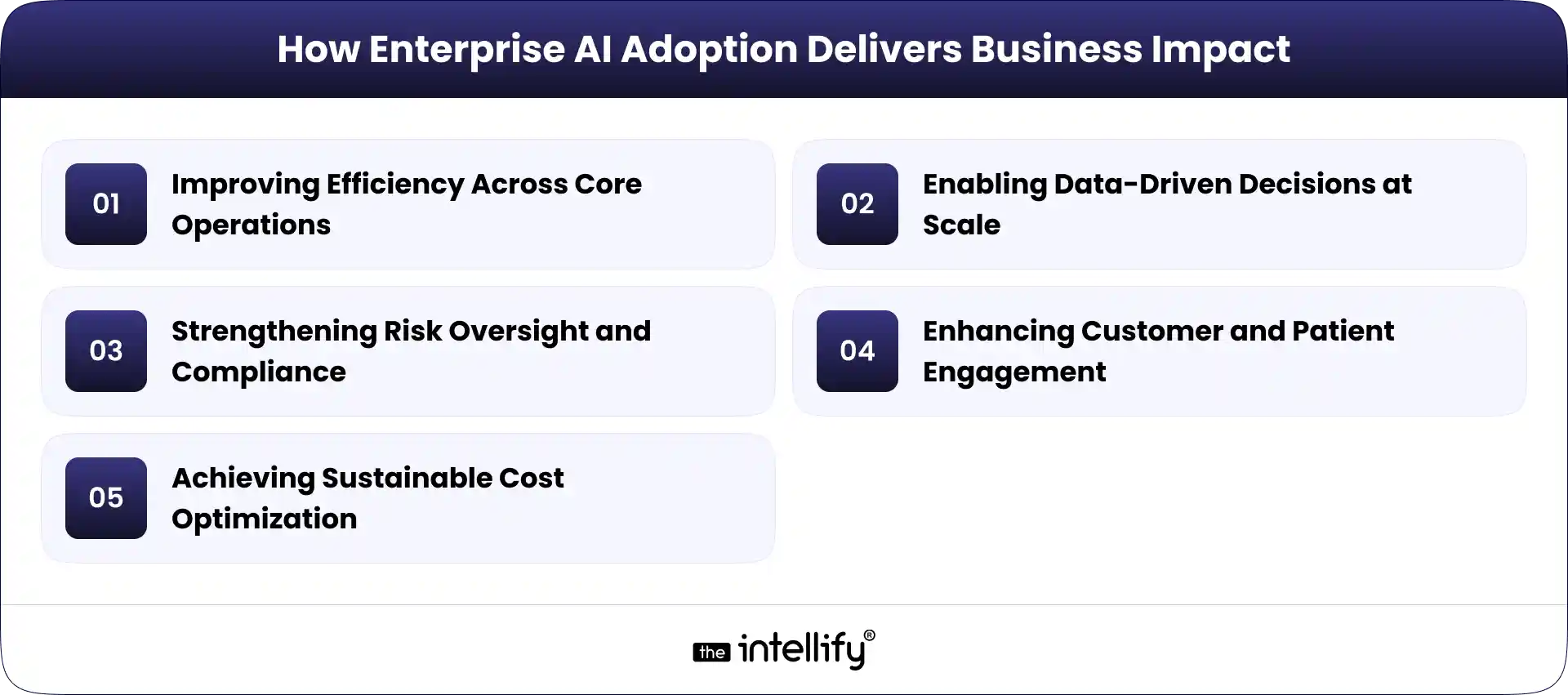
Enterprise AI Adoption Business Impact

Improving Efficiency Across Core Operations

AI has the power to significantly boost efficiency by automating routine tasks, optimizing workflows, and speeding up processing times, all of which lead to cost savings and higher productivity.

Enabling Data-Driven Decisions at Scale

With strong data analysis capabilities, AI helps organizations make informed decisions based on real-time insights. This agility supports responsive strategies that can quickly adapt to market changes.

Strengthening Risk Oversight and Compliance

AI enhances risk management by spotting potential issues before they become serious problems. Through data pattern analysis, organizations can meet compliance requirements while bolstering their security posture.

Enhancing Customer and Patient Engagement

AI tools like chatbots and personalized recommendation systems allow brands to engage effectively with customers, boosting satisfaction and fostering loyalty.

Achieving Sustainable Cost Optimization

AI paves the way for smarter resource allocation and optimization, ensuring sustainable cost management. Organizations can pinpoint wasteful practices that can either be improved or removed.


Common Barriers to Enterprise AI Adoption

Legacy Infrastructure and Disconnected Data

Many enterprises grapple with outdated technology and siloed data, which complicates the implementation of effective AI solutions.

Regulatory Complexity and Data Privacy Risks

Navigating regulatory hurdles can feel overwhelming. Companies need to prioritize data privacy and compliance to steer clear of potential pitfalls.

Lack of Clear Governance and Ownership

Without a governance framework, AI initiatives may become misaligned and misused, hampering overall success.

Internal Skill and Capability Gaps

Organizations lacking the right talent and training may struggle to unlock AI’s full potential, resulting in stagnant or underperforming projects.

Organizational Readiness and Change Resistance

Resistance to change can hinder AI projects. It’s vital to cultivate a culture of acceptance and understanding regarding AI for smooth integration.

 

AI implementation guide


Enterprise AI Implementation Roadmap

Step 1 – Define Clear Objectives

Start by identifying specific business goals and how AI can help achieve them. This clarity will serve as the bedrock for all subsequent efforts.

Step 2 – Assess Data and Infrastructure

Evaluate existing data systems and infrastructure to confirm they can effectively support new AI solutions.

Step 3 – Identify High-Impact Use Cases

Focus on high-impact use cases that promise significant returns. Allocate resources to areas likely to generate the most value.

Step 4 – Establish Governance and Risk Controls

Implement a strong governance framework to oversee AI initiatives, ensuring that all ethical and compliance standards are met.

Step 5 – Run Pilot Projects

Before scaling, run pilot projects to test assumptions and methodologies. Gather insights from these tests to fine-tune your approaches.

Step 6 – Scale Across the Organization

Once pilot projects validate your strategies, it’s time to scale AI solutions throughout the organization, making sure every department benefits.

Step 7 – Monitor, Measure, and Improve

Regularly assess the performance of AI initiatives, adapt your strategies based on results, and keep seeking improvement.


Key Areas of Enterprise AI Use Cases

1. Operational Optimization in Healthcare

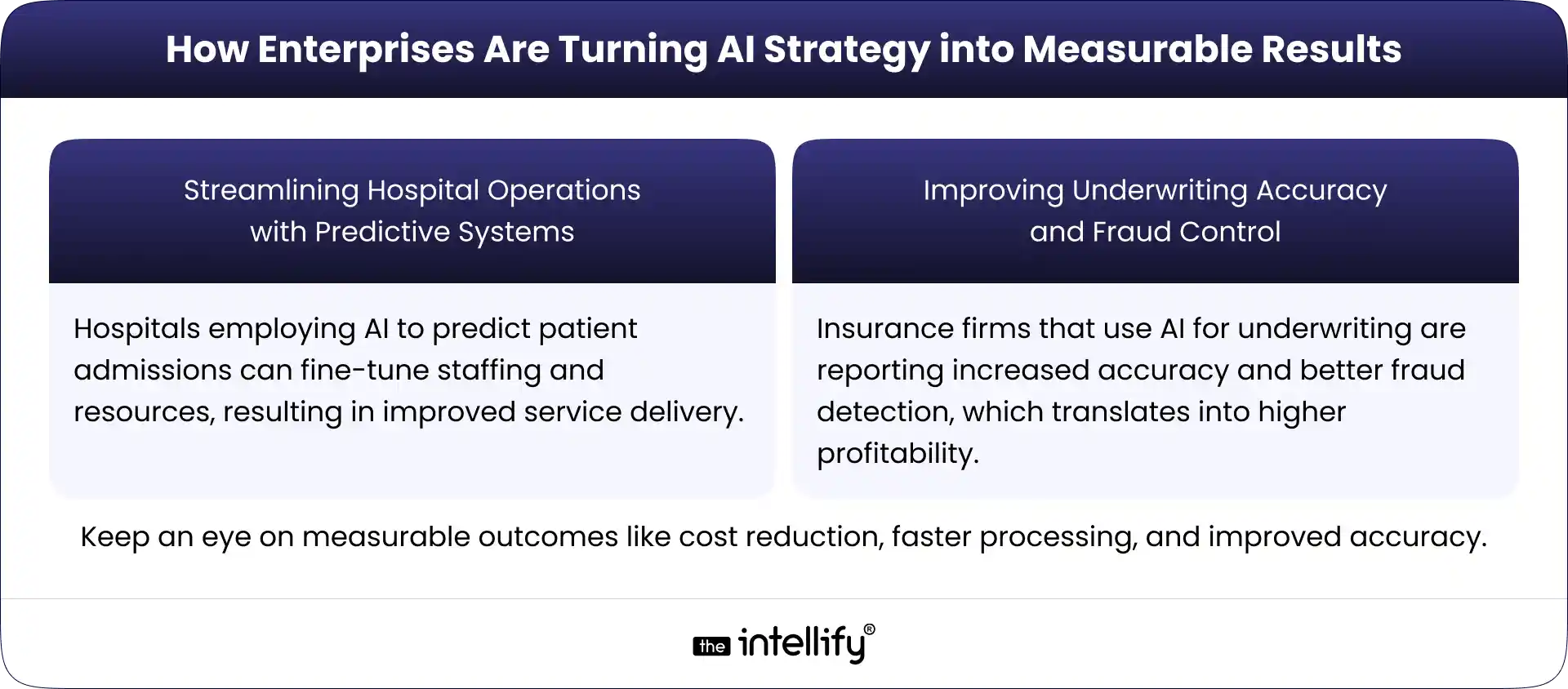
AI can analyze patient data to boost operational efficiencies, reduce wait times, and enhance overall patient care.

2. Risk Modeling and Claims Efficiency in Insurance

Insurance companies use AI for predictive risk modeling, faster claims processing, and reduced fraud. Many are adopting advanced Enterprise AI solutions for Insurance to improve underwriting accuracy, automate claims workflows, and strengthen compliance.

3. Fraud Prevention and Compliance Monitoring

AI algorithms can keep a watchful eye on transactions in real-time, helping organizations swiftly identify and tackle fraudulent activities.

4. Intelligent Workflow Automation Across Functions

By automating repetitive tasks across departments, AI liberates human capital for more strategic work, thereby boosting productivity.
 

AI Strategy into Measurable Results


Governance and Responsible AI Practices

Data Governance Standards

Strong data governance standards should be implemented to assure data integrity and accountability.

Ethical and Transparent AI Use

Place a priority on ethical considerations in AI deployment to build trust among stakeholders and customers.

Regulatory Alignment

Stay up to date with evolving regulations to avoid legal consequences and improve your reputation.

Ongoing Risk Management

Keep an eye on potential risks and incorporate feedback mechanisms to navigate challenges effectively.


Measuring ROI and Business Impact

1. Financial performance metrics:- Look at cost reductions and revenue boosts post AI implementation.

2. Operational improvements:- Assess productivity gains and process efficiencies that can be attributed to AI.

3. Adoption and usage indicators:- Monitor engagement with the new technologies and systems.

4. Long-term strategic value:- Evaluate how AI fits into long-term business strategies.


Future Trends in Enterprise AI Strategy

1. Generative AI integration:- Look for AI algorithms to start producing creative outputs, spurring innovation across sectors.

2. Intelligent decision support:- AI will enable even more advanced predictive insights for better decision-making.

3. Enterprise-wide automation:- Expect broader adoption of AI automation across various business functions.

4. Human-AI collaboration:- The future will enhance cooperation between human capabilities and AI solutions, driving overall efficiency.

 

Enterprise AI Solutions


Conclusion:-

Charting the path to effective enterprise AI adoption can definitely feel daunting, but the rewards are significant. By taking a structured approach, companies can harness AI to optimize processes, improve engagement, and achieve sustainable growth. The future isn’t going to wait, so adopting enterprise AI isn’t just advantageous, it’s essential.

In practice, turning strategy into execution requires both technical clarity and strong business alignment. Many enterprises collaborate with experienced teams that understand this balance. Organizations like The Intellify, for example, work alongside enterprises to translate AI strategy into practical roadmaps that support scalable and responsible adoption.


Frequently asked questions

1. What is enterprise AI, and why is it important for businesses?

Enterprise AI helps organizations automate processes, improve decision-making, and use data more effectively. It supports long-term growth and competitiveness.

2. How do you start an enterprise AI strategy?

Start by defining business goals, assessing data readiness, and selecting high-impact use cases. A clear roadmap helps reduce risks and improve success.

3. What are the common challenges in adopting AI at the enterprise level?

Common challenges include outdated systems, data silos, compliance risks, skill gaps, and resistance to change.

4. How can enterprises measure the success of their AI initiatives?

Success is measured through cost savings, productivity gains, accuracy, system adoption, and overall business impact.

5. Which industries benefit most from enterprise AI adoption?

Healthcare, finance, retail, manufacturing, and insurance benefit the most from automation, analytics, and predictive insights.

6. How do leadership and governance impact AI adoption?

Strong leadership and clear governance ensure AI aligns with business goals, remains compliant, and scales effectively.

7. What practical steps should be in an AI adoption roadmap?

An effective roadmap includes goal setting, data assessment, pilot testing, scaling, governance, and continuous improvement.
Enterprise Digital Transformation Roadmap: From Strategy to Execution

Summary:
This blog explains how enterprises can plan and execute a successful digital transformation using a structured roadmap. It covers what digital transformation truly means, why initiatives fail without clear direction, and how to align strategy, technology, people, and governance. The blog walks through assessing current capabilities, defining goals, implementing transformation in phases, measuring ROI, and scaling innovation to build a resilient, future-ready enterprise.

Digital transformation gets talked about a lot. Sometimes too much. But for most enterprises today, it’s no longer optional. It’s how you stay relevant, avoid getting outpaced, and actually make your systems work for people instead of against them.

This blog walks through what an enterprise digital transformation roadmap really looks like from early strategy to real execution. Not theory. Not buzzwords. Just a clear, step-by-step way to move forward without burning budget or patience.


Why a Structured Roadmap Matters

A well-crafted roadmap serves as a clear guide for organizations, outlining specific steps and goals. Without it, businesses often feel adrift in a complex and overwhelming digital landscape. A structured roadmap:

• Keeps digital initiatives aligned with business goals.
• Helps manage the risks tied to adopting new technologies.
• Promotes measurable outcomes and encourages ongoing improvement.


What Digital Transformation Means for Modern Enterprises

Business Model Evolution

Digital transformation isn’t just about tech; it’s a fundamental shift in how businesses operate. Companies have to rethink their business models to effectively leverage new technologies. Take traditional retail, for example; today, many retailers incorporate e-commerce platforms to reach a broader audience and create seamless shopping experiences.

Operational Modernization

Modernizing operations means embracing automation and digital tools to boost efficiency. Businesses are leaving outdated manual processes behind, allowing them to streamline functions and cut costs.

Data as a Strategic Asset

In the digital age, data is hugely valuable. By adopting effective analytics tools, organizations can extract insights from their data and make informed, data-driven decisions, enhancing service delivery and fueling innovation.

Leadership and Cultural Alignment

For digital transformation to succeed, it’s vital to have leadership buy-in and a culture ready to embrace change. Leaders need to share the vision and engage every level of the workforce to create an environment conducive to digital adoption.


Why Enterprise Digital Transformation Fails Without a Clear Roadmap

Aligning Technology with Business Goals

When there’s no clear roadmap, businesses often implement technologies that miss the mark concerning their overarching goals, leading to wasted resources and disappointing results.

Managing Risk and Investment

Digital transformations come with both investments and risks. A structured approach can help mitigate the risks associated with adopting new technologies, making for a smoother transition.

Driving Measurable Outcomes

Clear metrics and well-defined objectives allow teams to gauge progress and results, fostering accountability and aiding performance tracking. Without these, it’s easy to lose sight of the transformation goals.


Defining Your Enterprise Transformation Vision

Setting Strategic Objectives

Begin by identifying the long-term goals your organization wants to achieve through digital transformation. What specific pain points do you aim to resolve? How will these goals fit into your overall business strategy?

Securing Executive Sponsorship

Leadership support is key to success. Make sure that executives not only understand but also champion the vision for transformation. Their backing can open doors for resource allocation and drive employee engagement.

Establishing Governance Early

Create a governance framework that defines roles, responsibilities, and decision-making processes. This clarity will keep your organization focused as you navigate the transformation journey.


Assessing Your Current Digital Landscape

Technology Infrastructure

Take stock of your current technology infrastructure. Can your systems support your digital initiatives? Pinpointing gaps in technology is crucial for planning ahead.

Data & Analytics Capabilities

Examine your existing data management processes. Are you able to derive meaningful insights? Understanding your data landscape will shape your transformation strategy moving forward.

Workforce Readiness

Gauge the skills and capabilities of your employees. Are they prepared to handle new technologies? Assessing workforce readiness can help you identify areas for strategic training and development.

Process Gaps

Spot any inefficiencies within your current processes. This analysis will shed light on opportunities for improvement and provide a foundation for designing future workflows.


Key Foundations of a Digital Transformation

Strategy & Governance

A successful enterprise digital transformation hinges on a strong strategy that aligns with your business objectives. Governance should ensure accountability and guide transformation efforts along the way.

Technology & Cloud

Invest in the right technologies and consider cloud solutions that offer scalability and flexibility. A solid tech foundation is essential for supporting growth down the line.

Data & Security

Safeguard data integrity and security with robust measures. Keeping sensitive information secure is vital for maintaining trust with customers and stakeholders.

Customer Experience

Enhance the customer experience through your digital initiatives. Use technology to personalize interactions and eliminate friction along the customer journey.

People & Change Management

Effective change management is crucial. Prepare your workforce for transformation by fostering a growth mindset and providing ongoing support throughout the transition.


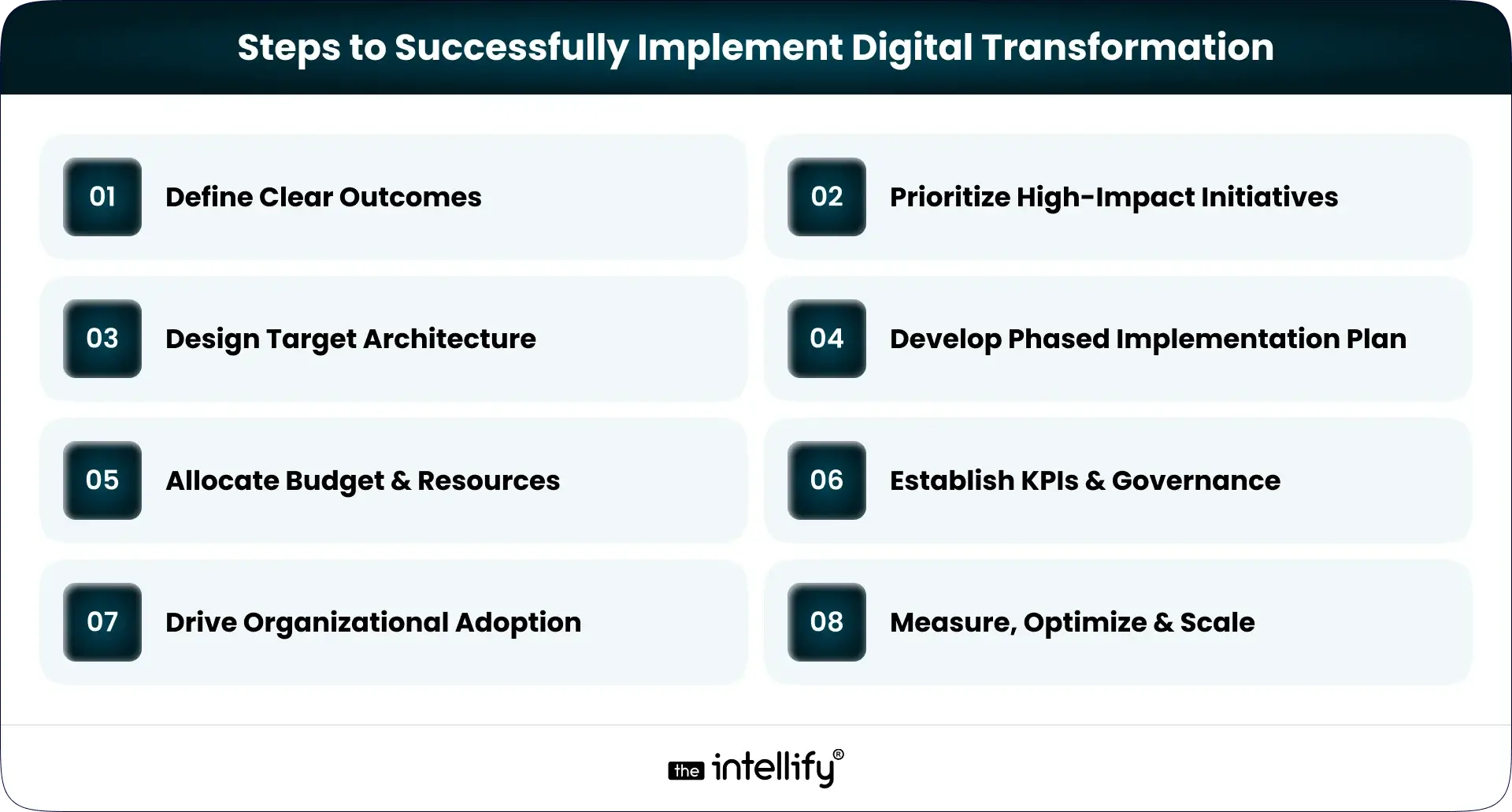
Steps to Successfully Implement Digital Transformation

Steps to Implement Digital Transformation

Define Clear Outcomes

Kick things off with specific, measurable goals. What do you want to achieve within set timeframes?

Prioritize High-Impact Initiatives

Focus on initiatives that promise the greatest potential impact on your business. These should align well with your strategic objectives.

Design Target Architecture

Develop a detailed architecture plan that outlines how different systems and technologies will connect. This clarity will ease implementation.

Develop Phased Implementation Plan

Roll out the transformation in phases rather than attempting it all at once. This approach allows for adjustments and promotes continuous improvement.

Allocate Budget & Resources

Identify the financial and human resources necessary for a successful transformation. Make sure budget allocations align with your priorities.

Establish KPIs & Governance

Set up key performance indicators (KPIs) that will help you track progress and success. Regularly review these metrics to ensure you’re on course.

Drive Organizational Adoption

Engage employees throughout the transformation process. Cultivating a culture that embraces change and encourages innovation is vital.

Measure, Optimize & Scale

Keep an eye on performance, and refine processes based on what you learn. Scale successful initiatives to extend their impact throughout the organization.


Digital transformation Strategy


Enterprise Trends Shaping Digital Transformation

AI and Intelligent Automation

Artificial intelligence (AI) and automation are at the forefront of transforming operations. From chatbots in customer service to advanced analytics, these technologies streamline processes and enhance how businesses interact with customers.

Hybrid & Multi-Cloud Strategies

More businesses are opting for hybrid and multi-cloud strategies to maximize flexibility and optimize costs. This way, organizations can take advantage of the best features from multiple platforms.

Zero-Trust Security

Security is crucial. The zero-trust model acknowledges that threats can come from both outside and within the network. Adopting this strategy significantly strengthens defenses.

Data-Driven Decision Making

Relying on data-driven insights is now integral to how businesses make decisions. Leveraging analytics is an essential step to remain competitive in the digital landscape.


Challenges in Enterprise Digital Transformation

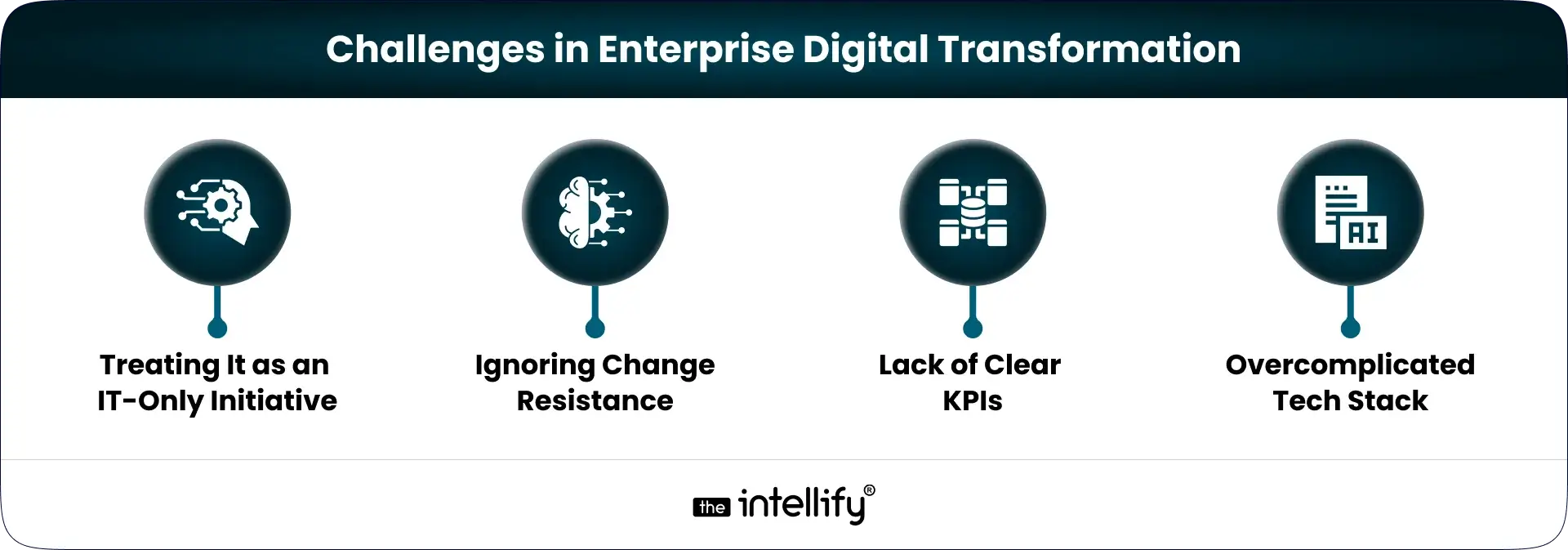
Challenges in Enterprise Digital Transformation

Treating It as an IT-Only Initiative

Digital transformation shouldn’t be limited to just IT. It requires the involvement of the entire organization; having all departments onboard is vital for success.

Ignoring Change Resistance

It’s important to anticipate some pushback against change. Engage employees early on and clearly communicate the benefits of digital transformation to counter skepticism.

Lack of Clear KPIs

Without measurable KPIs, it becomes challenging to assess progress. Establish these metrics early on to foster accountability and focus.

Overcomplicated Tech Stack

A complicated tech stack can slow you down. Simplifying your technology mix will make integration smoother and easier to use.


Measuring ROI and Long-Term Impact

Operational Efficiency

Monitor improvements in operational efficiency as a key measure of ROI. Are processes flowing faster and more smoothly?

Customer Experience Gains

Look at customer satisfaction metrics to grasp how transformation affects their overall experience.

Revenue & Growth Metrics

Track increases in revenue and market share as indicators of successful transformation.

Risk & Compliance Indicators

Evaluate how digital initiatives influence regulatory compliance. Strong compliance reflects a solid risk management strategy.


From Strategy to Execution: Making Transformation Sustainable

Cross-Functional Ownership

Faster ownership across different departments. Collaborative efforts often yield the best results and improve buy-in.

Continuous Optimization

Remember, digital transformation is an ongoing journey. Regularly review your strategies and fine-tune them based on emerging trends and organizational needs.

Scaling Innovation

Encourage a culture of innovation. Embrace creative solutions and be prepared to scale successful initiatives quickly.


Conclusion

Enterprise digital transformation goes beyond just technology; it’s about fundamentally reshaping your organization to excel in a digital-first world. By following this roadmap and focusing on collaboration, measurement, and ongoing optimization, your enterprise can become more resilient and better equipped to adapt to the ever-evolving landscape.

Enterprise digital transformation succeeds when strategy, technology, and people move in alignment toward clear business outcomes. A structured roadmap reduces risk, sharpens focus, and turns ambition into measurable progress. The real challenge isn’t planning change, it’s executing it with discipline and clarity. That’s where experienced execution partners like The Intellify help enterprises translate vision into a structured, scalable transformation that lasts.


Start Digital transformation journey


Frequently Asked Questions (FAQs)

1. What is enterprise digital transformation?

Enterprise digital transformation is about using technology to improve how a business operates, serves customers, and makes decisions. It goes beyond tools; it reshapes processes, workflows, and culture. At The Intellify, we help enterprises turn this shift into practical, measurable outcomes rather than isolated tech upgrades.

2. Why is a roadmap important for digital transformation?

A roadmap keeps transformation focused. It aligns technology with business goals, controls risk, and sets clear milestones. Without it, initiatives often stall or drift. We help enterprises build and execute structured roadmaps that move smoothly from strategy to real-world implementation.

3. What are some common challenges in digital transformation?

The biggest challenges include resistance to change, unclear KPIs, and treating transformation as an IT-only project. These issues slow adoption and reduce impact. A clear execution partner like The Intellify helps address both technical and organizational challenges early.

4. How can organizations measure the success of digital transformation?

Success is measured through operational efficiency, better customer experiences, revenue impact, and improved compliance. Tracking the right KPIs from day one is critical. The Intellify focuses on measurable outcomes, not just completed projects.

5. What role do leadership and culture play in digital transformation?

Leadership sets direction, and culture determines whether change sticks. When teams understand the “why,” adoption improves. We work closely with leadership teams to align vision, execution, and organizational buy-in.

6. How can companies ensure sustainable digital transformation?

Sustainability comes from continuous optimization, shared ownership across teams, and scaling what works. Digital transformation isn’t a one-time effort. We support long-term execution, so the transformation keeps delivering value over time.

7. What future trends should businesses watch in digital transformation?

Key trends include AI-driven automation, hybrid and multi-cloud strategies, zero-trust security, and data-led decision-making. Enterprises that prepare early rather than react later stay ahead. We help organizations adopt these trends at a practical, enterprise-ready pace

View
Case Study