Digital Transformation in Insurance Industry: Key Benefits, Use Cases & Future Trends

Summary:
Digital transformation is helping insurance companies move away from slow, manual processes and adopt faster, more efficient ways of working. By using technologies like automation, data, and digital platforms, insurers can improve how they manage operations and interact with customers. It makes services quicker, more accurate, and more personalized, while also helping businesses reduce costs and make better decisions. As the industry continues to evolve, adopting digital approaches is becoming key to staying competitive and meeting modern customer expectations.


Why Insurance Businesses Are Going Digital

In today’s fast-moving world, insurance companies feel the pressure to keep up and evolve. Digital transformation in insurance isn’t just a trending topic; it’s become essential for staying relevant and ahead of the competition. As customer preferences shift toward quicker, digital-first experiences, traditional methods often slow, manual, and fragmented are simply not cutting it anymore. The emergence of digital-first insurers and insurtech players is ramping up competition, urging established companies to innovate. Plus, the urgency for efficiency which is vital for managing costs and improving turnaround times, can’t be ignored.

Technology is at the heart of this evolution, particularly with data, automation, and interconnected systems driving change. In this blog, we’ll dive into the benefits of digital transformation, key use cases, and the trends that are shaping the future of the insurance landscape.


What Is Digital Transformation in the Insurance Industry?

At its essence, digital transformation in the insurance industry involves reimagining operations through innovative technologies. It encompasses much more than merely digitizing processes; it represents a comprehensive business overhaul. Here’s what you need to know:

Definition

Digital transformation means investing in technology to redefine how insurance companies interact with customers and manage their internal operations.

Digitization vs transformation

While digitization focuses on converting manual tasks into digital formats, transformation involves a holistic change in business strategies and operational practices.

Key Areas for Transformation

Important areas for transformation include:

  • Operations: Streamlining workflows to boost efficiency.
  • Customer Experience: Providing seamless, personalized services.
  • Data Management: Utilizing data for instant insights.
  • Distribution Channels: Enhancing points of contact with customers.

Process changes

Incorporating automation, integration, and real-time workflows can greatly improve service delivery and responsiveness.

Customer impact

The aim is to create smooth journeys where insurance offerings are aligned with individual customer needs.

Business impact

Implementing these changes fosters efficiency, agility, and growth, allowing firms to quickly adapt to market changes.


What Is Driving Digital Transformation in Insurance Services

Several factors are prompting insurance firms to embrace digital transformation:

  • Demand for Faster Experiences: Customers want quick, self-service options when dealing with their insurers.
  • Competition from Digital Players: The rise of digital-first insurers is pushing traditional companies to upgrade their systems.
  • Cost Efficiency Pressures: With increasing costs, efficient operations are critical for maintaining profitability.
  • Data and Analytics: More data leads to deeper insights, enabling personalized offerings and better decision-making.
  • Regulatory Compliance: Digital solutions can help ease the challenges of meeting compliance requirements.


How Digital Transformation Works in the Insurance Industry

Successfully implementing digital transformation relies on several operational components:

1. Unified Data Access: Having a centralized source of truth across various systems is vital for consistency.
2. Workflow Automation: Streamlining processes like claims management and underwriting accelerates response times.
3. Digital Platforms: Apps, portals, and dashboards improve customer engagement and support.
4. Real-Time Data Usage: Ongoing access to insights leads to quicker, data-informed decisions.
5. Continuous Improvement: Leveraging analytics creates a culture of ongoing growth and adaptation.
6. Third- Party Integrations: APIs and partnerships expand capabilities and foster innovation.


Technologies Behind Modern Insurance Transformation
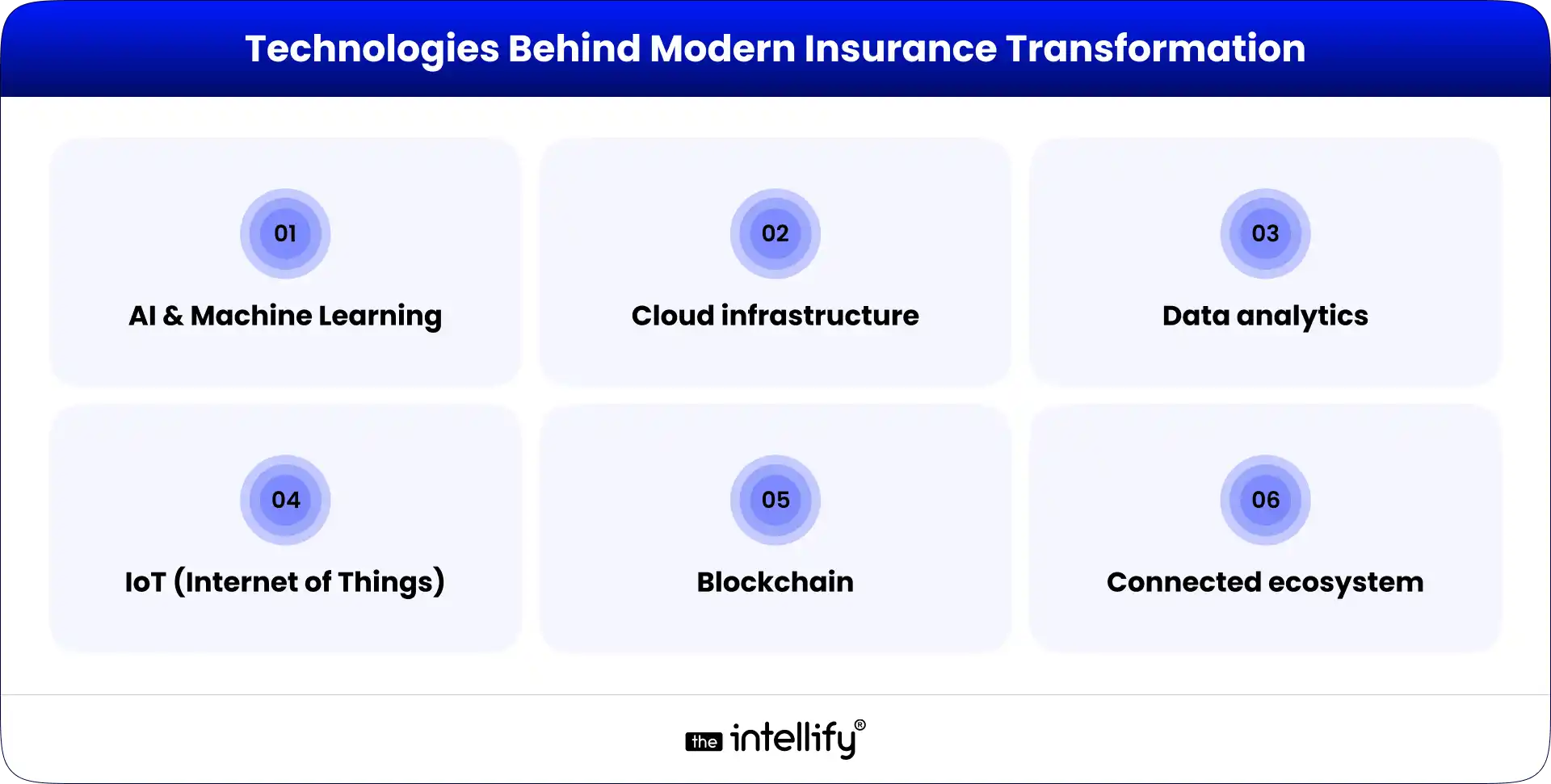
Technologies Behind Insurance Transformation

A few key technologies are paving the way for digital change in insurance:

  • AI & Machine Learning: Enhancing operations, improving risk assessments, and spotting fraud.
  • Cloud infrastructure: Providing scalability and flexibility for a variety of applications.
  • Data analytics: Offering actionable insights for improved personalization and customer experiences.
  • IoT(Internet of Things): Supporting real-time and usage-based insurance models.
  • Blockchain: Ensuring secure and transparent transactions.


Key Benefits of Digital Transformation in Insurance Sector

Digital transformation offers numerous advantages, such as:

  • Faster processes: Reducing manual tasks speeds up operational efficiency.
  • Improved customer experience: Personalized interactions and quicker service boost satisfaction.
  • Better Risk Assessment: Reliable data allows for more informed underwriting decisions.
  • Cost efficiency: Streamlined processes yield significant operational savings.
  • Enhanced Fraud Detection: Advanced algorithms improve monitoring and compliance.
  • Accelerated Product Development: Integrated systems facilitate rapid innovation.

 

Modernize Your Insurance Operations


Where Digital Transformation Delivers Value

Digital transformation has a direct impact on various stages of the insurance value chain:

  • Customer Onboarding: Simplifying policy purchases creates a seamless entry for customers.
  • Claims processing: Automation expedites claims handling and resolution.
  • Customer support: Digital channels enhance engagement and quicken responsiveness.
  • Underwriting and pricing: Efficient data analysis provides the ability for real-time decision-making.
  • Agent and Broker Enablement: Empowered agents can offer better service with enhanced tools.


Real-World Use Cases Across the Insurance Value Chain

Let’s explore some compelling examples that highlight the effectiveness of digital transformation:

Claims & Operations

Automated claims processing: Reduces processing times while improving accuracy.
Fraud detection systems: Utilizing machine learning to identify irregularities.
Document verification: Streamlining the submission process for users.

Customer Experience

Chatbots and virtual assistants: Offering 24/7 support for customer questions.
Self-service portals: Allowing customers to manage their policies and claims independently.
Faster onboarding journeys: Minimizing wait times and simplifying the policy initiation process.

Product Innovation

Telematics-based insurance: Implementing usage-based pricing models based on driving behavior.
Personalized policy recommendations: Crafting options tailored to individual profiles.
Usage-based insurance models: Setting premiums based on actual usage rather than generalized estimates.


Business Impact of Digital Transformation for Insurance Companies

The outcomes of digital transformation are notable:

  • Reduced operational costs: Greater efficiency leads to lower expenses.
  • Faster turnaround times: Quick service enhances customer satisfaction.
  • Higher customer retention: Happy customers are more likely to remain loyal.
  • New revenue opportunities: Innovations can pave the way for fresh business models and offerings.
  • Data-driven decision-making: Leveraging data facilitates informed planning and strategies.


Challenges Insurance Companies Face During Digital Adoption
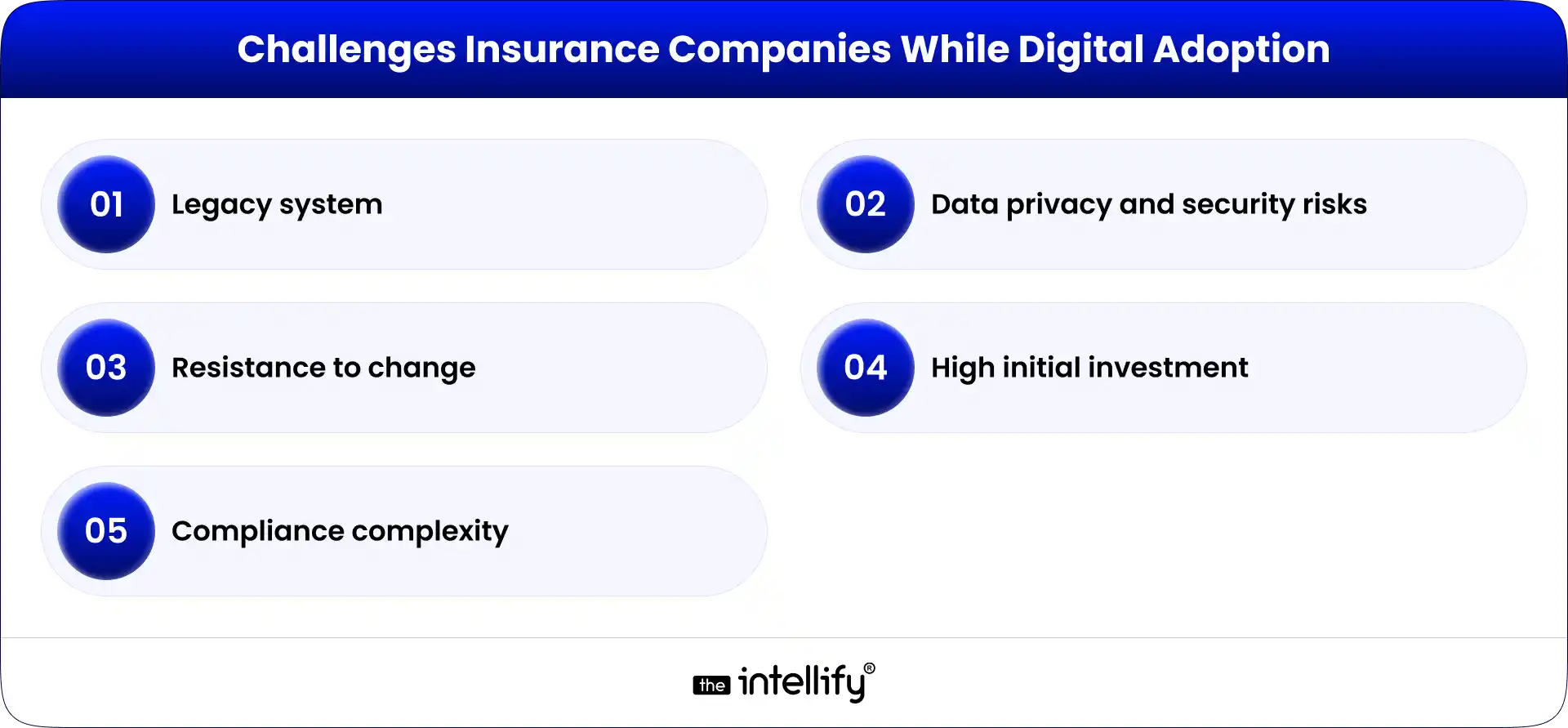
Challenges Insurance Companies While Digital Adoption

Even with the many benefits, insurance companies face a range of challenges during their digital journey:

  • Legacy system: Older technology can resist integration, complicating progress.
  • Data privacy and security risks: Safeguarding customer data is paramount.
  • Resistance to change: Some employees might be hesitant to adapt, slowing transformation efforts.
  • High initial investment: The upfront costs of new technologies can feel overwhelming.
  • Compliance complexity: Navigating regulatory requirements can be daunting.


How to Implement Digital Transformation in Insurance

Implementing a successful digital transformation strategy involves more than just adopting new tools. Insurance companies need the right partner with expertise in digital transformation and insurance development services to ensure smooth implementation and long-term success. Key factors to consider include:

  • Clear roadmap and priorities: Setting a structured approach to your transformation journey.
  • Customer-first approach: Keeping customer needs and expectations at the forefront throughout the process.
  • Scalable technology: Opting for solutions that can grow alongside your business.
  • Team upskilling: Equipping staff with the necessary skills for thriving in a digital world.
  • Strategic partnerships: Collaborating with tech providers for expertise and innovative solutions.


Emerging Trends Shaping the Future of Insurance

The insurance industry is moving toward thrilling opportunities:

1. AI-driven Predictive Insurance: Using data to anticipate and prepare for future claims.
2. Hyper-personalized policies: Custom offerings grounded in thorough customer insights.
3. Embedded insurance models: Seamlessly integrating insurance into established customer journeys.
4. Fully digital insurance platforms: Facilitating all interactions online for maximum convenience.
5. Real-time data usage: Utilizing data from IoT devices to dynamically adjust policies.


Conclusion:

To sum it up, digital transformation in the insurance industry isn’t just about technology, it’s about rethinking how businesses connect with customers while optimizing operations. Early adaptation is vital to capitalizing on digital opportunities, as it dramatically affects long-term success and competitiveness.

By embracing digital transformation, insurance companies can elevate customer satisfaction, streamline workflows, and position themselves for future growth. The path to innovation starts now let’s seize the opportunities that lie ahead!

 

Insurance Digital Transformation Services


Frequently asked questions

1. Why are insurance companies focusing more on digital transformation now?

Customers today expect quick responses, online access, and smooth experiences. Traditional systems struggle to keep up with this, so insurers are moving towards digital solutions to stay competitive and meet these expectations.

2. How does digital transformation make insurance processes faster?

It reduces manual work by automating tasks like claims handling, underwriting, and approvals. This not only speeds up operations but also reduces delays and improves overall efficiency.

3. Can digital transformation improve the claims process?

Yes, it makes claims faster and more transparent. Customers can submit and track claims online, while automation helps insurers process them quickly with fewer errors.

4. What role do mobile apps play in digital transformation in insurance?

Mobile apps give customers easy access to services like buying policies, renewing plans, or filing claims. They make the entire experience more convenient and accessible anytime, anywhere.

5. Can traditional insurance companies adapt to digital transformation?

Yes, many companies start small by digitizing specific processes like claims or customer support. Over time, they gradually expand and build a more complete digital system.

6. Does digital transformation help in reducing fraud in insurance?

Yes, advanced technologies can detect unusual patterns and flag suspicious activities early. This helps insurers prevent fraud and improve security.

7. How does digital transformation improve customer experience in insurance?

It makes services faster, simpler, and more personalized. Customers can interact easily, get quick responses, and access everything online without unnecessary delays.
Insurance Claims Automation with AI: A Smart Vendor Evaluation Guide

Summary:
Insurance claims automation uses AI to streamline the claims lifecycle from FNOL to settlement by reducing manual work, improving accuracy, and speeding up claim decisions. This guide explains how AI enhances claims processing, where human oversight remains important, and what insurers should evaluate when selecting an automation vendor. It also highlights key factors like scalability, compliance, and integration to ensure insurers adopt solutions that deliver long-term operational value.

In today’s fast-paced digital world, insurance claims automation isn’t just a trend; it’s a must-have. Insurers are increasingly adopting AI to not only streamline their claims processes but also to reduce costs and enhance customer experiences. Yet, many companies find themselves facing hurdles when trying to implement AI effectively and achieve real results. This guide aims to simplify the journey into the world of insurance claims automation and offers tips on how to evaluate potential vendor partners.


Why Insurance Claims Automation Often Fails to Deliver

Despite pouring resources into technology, many insurers discover that their automation efforts miss the mark. Here are some common stumbling blocks:

  • Lack of clarity: Often, insurers dive into AI implementation with little understanding of their current processes, leading to outcomes that don’t quite connect.
  • Short-term perspectives: Vendor choices are often made without a focus on long-term goals, creating gaps between expectations and capabilities.
  •  Integration challenges: Legacy systems can be a real roadblock, complicating effective AI integration and slowing down the benefits of automation.
  •  Choosing the right partner: The success of AI initiatives heavily depends on selecting the right technology partner, making this choice pivotal.

By avoiding these pitfalls, you can unlock the potential of AI to truly transform your claims processing.


Understanding the Role of AI in Modern Claims Handling

Insurance claims automation uses artificial intelligence to streamline and support different stages of the claims process. Instead of relying heavily on manual reviews, AI helps insurers capture, analyze, and process claim information more efficiently from First Notice of Loss (FNOL) to final settlement.

AI in Insurance enhances the claims journey by automatically extracting data from documents, identifying missing information, flagging potential fraud risks, and helping prioritize claims based on complexity. This allows insurers to handle routine claims faster while improving overall accuracy.

Unlike rule-based automation, which follows fixed instructions, AI-driven systems learn from data patterns and adapt over time. This enables smarter decision-making and more flexible claim handling.

However, human expertise remains essential. Claims adjusters still review complex cases, make judgment-based decisions, and ensure fair outcomes.

As claim volumes increase and customer expectations rise, many insurers are shifting toward AI automation to improve efficiency, reduce processing time, and deliver better policyholder experiences.


Where AI Creates Real Operational Impact in Claims

AI in insurance claims

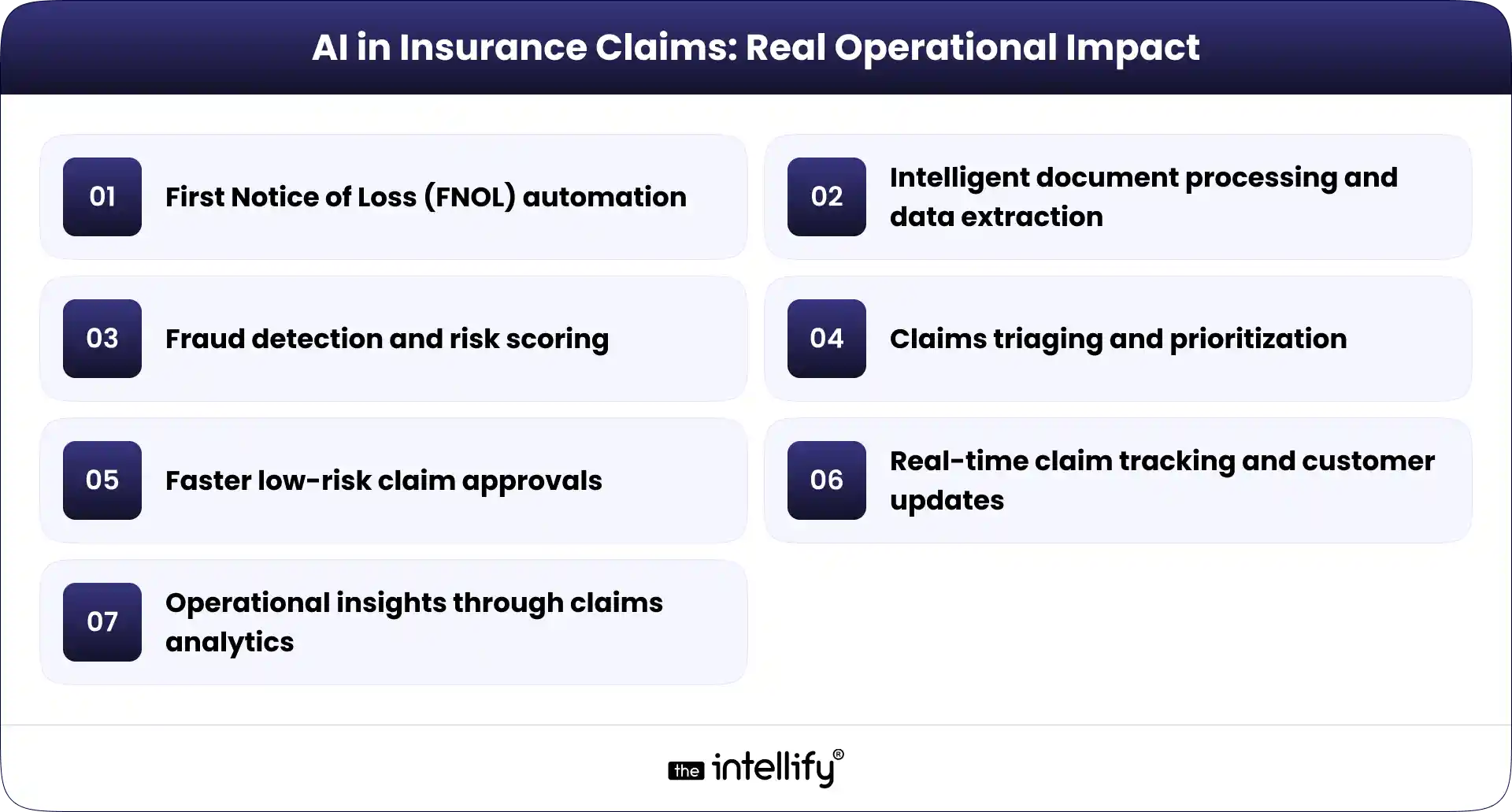
Artificial Intelligence goes beyond just automation; it enhances overall operational effectiveness. Here’s how AI can truly make a difference in various stages of claims handling:

  • First Notice of Loss (FNOL) automation: Accurately and quickly capture claims data right from the start.
  • Intelligent document processing and data extraction: Streamline data extraction from various document types, cutting down on manual tasks.
  • Fraud detection and risk scoring: Use algorithms to efficiently spot potentially fraudulent claims.
  • Claims triaging and prioritization: Speed up processing by categorizing claims based on complexity and risk factors.
  • Faster low-risk claim approvals: Expedite straightforward claims, enhancing customer satisfaction.
  • Real-time claim tracking and customer updates: Keep customers informed throughout the claims journey with instant updates.
  • Operational insights through claims analytics: Leverage analytics to derive meaningful insights that can improve processes.

Focusing on these areas gives insurers a solid edge in the market.


Understanding Your Current Claims Workflow Before AI Automation

Before jumping headfirst into automation, it’s essential to take a good look at your current claims workflow:

1. Gap Identification:- Pinpoint areas where the current process might be falling short, whether in speed, cost efficiency, or customer experience (CX).

2. Business objectives:- Clearly define what you want to achieve with automation—quicker claims, reduced fraud, improved customer interactions, etc.

3. IT Systems Assessment:- Review your existing technology stack and its readiness for integration.

4. Volume and Scalability:- Consider anticipated claims volume to ensure your automated processes can scale effectively.

5. Team alignment:- It’s vital for operations, compliance, and IT departments to work in harmony.

6. Setting realistic Expectations:- Be upfront about timelines and outcomes before diving in.

Having a strong grasp of your existing workflow will set you up for a smooth AI transition.


Insurance Claim Automation Solutions


Structuring an Effective AI-Driven Claims Automation Model

To truly harness the power of AI in claims automation, focus on these core elements:

Industry Experience in Insurance Claims

A proven track record with insurers ensures a solid understanding of the complexities involved.

AI Capability and Practical Performance

Look for high accuracy in both document processing and fraud detection.

Integration and Technical Flexibility

Ensure compatibility with existing systems and check for robust API availability.

Data Security and Regulatory Compliance

Confirm that any vendor follows stringent data protection standards and regulatory guidelines.

Customization and Scalability

The solution should be adaptable to various claim types and scalable for volume increases.

Implementation and Ongoing Support

Look for a clear onboarding process along with continuous support for optimization.

Choosing a vendor that ticks these boxes can make a noticeable difference in your automation journey.


Evaluation Gaps in Insurance Claims Automation

As you assess potential vendors, keep an eye on these common pitfalls that could derail your selection process:

  • Testing with real data: Evaluating AI without actual claims data can lead to misguided expectations.
  • Long-term scalability: Many forget to consider scalability for future implementations.
  • Integration Complexity: Not weighing integration challenges can set timelines back significantly.
  • Explainability in AI: Overlooking the need for AI decisions’ transparency can lead to compliance headaches.
  • Insurance-specific expertise: Assess vendors on their specialized knowledge within the insurance sector.
  • Long-term vs. upfront cost: Prioritize overall value rather than just initial costs.


Measuring Business Impact After AI Automation

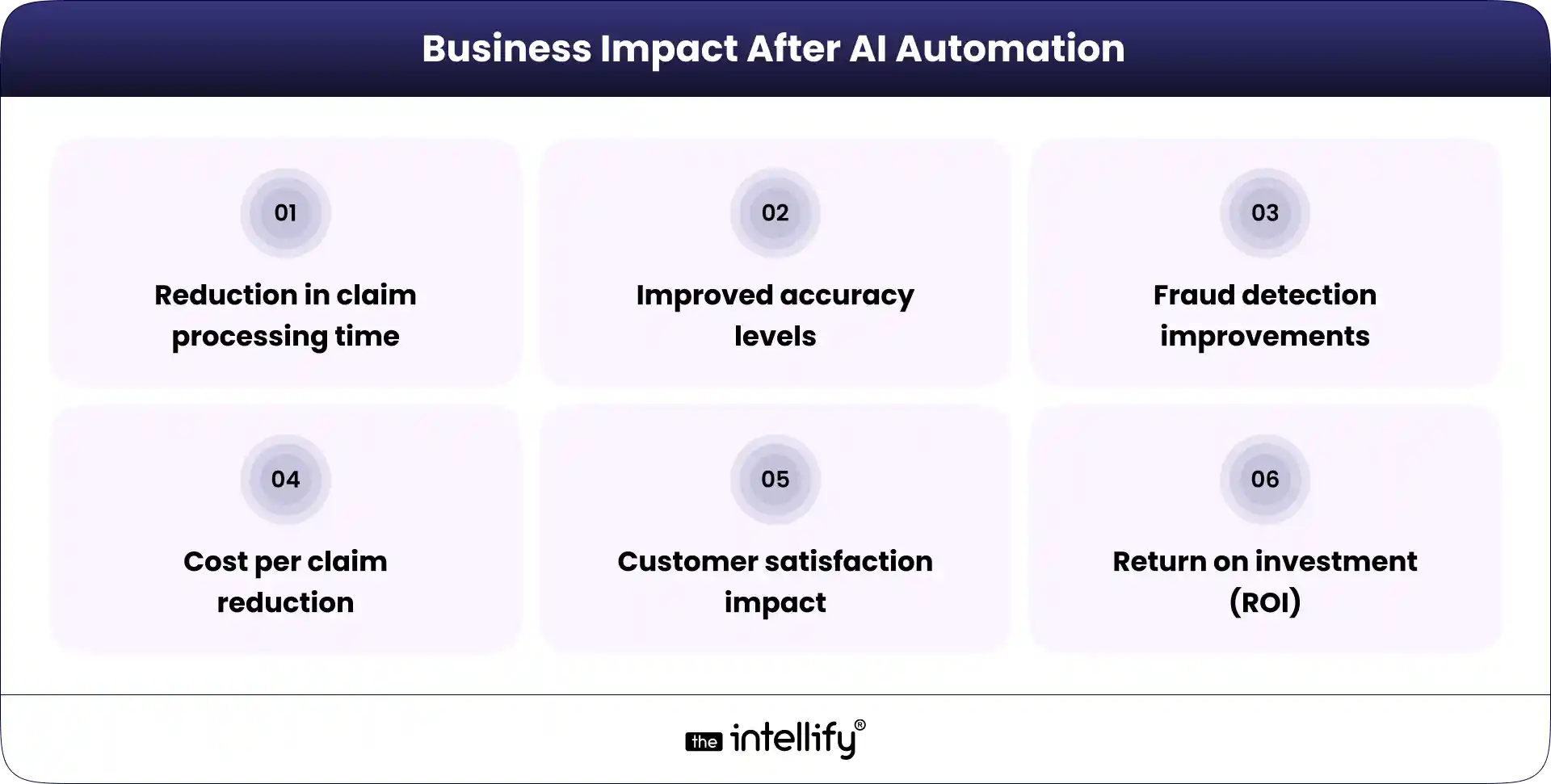
Business Impact After AI Automation

After implementing AI in claims processing, insurers need clear metrics to evaluate whether automation is delivering real operational value. Tracking measurable outcomes helps organizations understand how AI is improving efficiency, accuracy, and customer experience.

Some key performance indicators insurers typically monitor include:

1. Reduction in claim processing time: Faster turnaround times indicate improved operational efficiency and quicker settlements for policyholders.

2. Improved accuracy levels: Automation helps reduce manual errors in document review, data entry, and claim evaluation.

3. Fraud detection improvements: AI systems can identify suspicious patterns and flag high-risk claims earlier in the process.

4. Cost per claim reduction: Automating repetitive tasks can significantly lower operational costs over time.

5. Customer satisfaction impact: Faster resolutions and better communication can improve the overall claims experience.

6. Return on investment (ROI): Measuring financial returns against automation investments helps insurers assess long-term value.


Finding the Right Partner to Scale AI Claims Automation

Implementing AI in Insurance claims processing is not a one-time deployment. Long-term success depends on working with a partner who can support insurers as workflows evolve and automation expands across the claims lifecycle.

Why Vendor Partnership Matters

AI-driven claims automation requires continuous monitoring, optimization, and updates to maintain accuracy and efficiency as claim volumes and processes change.

Continuous Improvement

Automation systems improve over time through model refinement, performance monitoring, and workflow adjustments, helping insurers maintain operational efficiency.

Adapting to Regulatory Changes

Insurance regulations and compliance standards evolve regularly. Automation solutions must remain flexible to adapt to new regulatory and data protection requirements.

Working with Experienced Specialists

Collaborating with experienced AI specialists like The Intellify, who understand insurance workflows and claims automation, helps insurers implement scalable solutions aligned with real operational needs.


The Future of Insurance Claims Automation

The insurance industry is rapidly evolving, and AI will continue to play a major role in transforming how claims are processed. As automation technologies mature, insurers can expect faster decisions, better risk detection, and improved customer experiences.

Several trends are shaping the future of insurance claims automation:

  • Predictive and proactive claims handling: AI will help insurers identify potential risks and claim patterns earlier, allowing faster and more informed decisions.
  • Self-service claim experiences: Policyholders will increasingly be able to submit, track, and manage claims through AI-powered digital platforms.
  • AI-assisted human decision-making: AI will support claims adjusters with insights and recommendations while humans handle complex judgment-based cases.

Continuous learning systems: AI models will keep improving as they process more data, enabling smarter and more efficient claims management over time.

AI Insurance Claim Automation services


Conclusion: Building a Smarter Claims Operation

Insurance claims automation is not just a technology upgrade, it’s a strategic step toward faster, more efficient claims operations. The success of automation largely depends on how carefully insurers evaluate their technology partners.

Focusing on capability, scalability, compliance, and long-term partnership helps ensure the solution can support evolving business needs. By taking a structured and well-informed approach, insurers can implement AI automation that delivers lasting operational value and better customer experiences.


Frequently asked questions (FAQs)

1. How does AI actually improve the insurance claims process?

AI helps reduce manual review work by automatically reading claim documents, detecting missing information, flagging potential fraud, and speeding up approvals. Instead of handling every step manually, teams can focus on complex cases while routine claims move faster.

2. What is insurance claims automation, and how is it different from basic workflow automation?

Insurance claims automation uses AI to make decisions and learn from data, not just follow fixed rules. Basic automation moves files from one step to another. AI-powered automation can analyze documents, assess risks, and support smarter claim handling.

3. Which parts of the claims lifecycle can be automated using AI?

AI can support First Notice of Loss (FNOL), document verification, fraud detection, claim triaging, approval recommendations, and even customer communication updates. It works best when applied to repetitive and data-heavy steps.

4. Is AI-based claims automation suitable for small and mid-sized insurers?

Yes. It doesn’t require a full system overhaul. Many insurers start by automating one area, such as document processing or fraud checks, and expand gradually. Scalability depends more on planning than on company size.

5. What should insurers evaluate before adopting AI for claims automation?

Insurers should assess their current workflow gaps, data quality, integration readiness, compliance requirements, and scalability goals. Clear objectives help ensure automation delivers measurable results.

6. How does AI help reduce fraud in insurance claims?

AI models analyze patterns across past claims to detect unusual behavior, duplicate submissions, or suspicious trends. This allows insurers to flag high-risk claims early without slowing down legitimate ones.

7. What kind of ROI can insurers expect from AI-driven claims automation?

Most insurers see improvements in claim turnaround time, operational efficiency, error reduction, and fraud savings. ROI depends on claim volume and automation scope, but often becomes visible within the first year.

View
Case Study