AI in Healthcare Administration: Streamlining Hospital Operations

Summary
The growing complexity of healthcare administration is driving the need for smarter, more efficient solutions. Automation technologies are helping streamline key processes such as scheduling, billing, and data management, reducing manual workload and improving accuracy. This enables faster operations, better coordination, and enhanced patient experiences. As adoption increases, healthcare organizations are moving toward more efficient, scalable, and patient-focused administrative systems.

In today’s fast-paced healthcare landscape, administrative tasks often take priority over direct patient care. With more patients seeking services and regulations tightening, tasks like scheduling, billing, and record management have become increasingly complex and time-consuming. That’s where AI in healthcare administration steps in. This blog will explore how AI is reshaping hospital operations, giving staff and patients a much-needed breather.


The Growing Administrative Burden in Healthcare

It’s striking how much time healthcare staff spend buried under paperwork instead of attending to patients. From registering patients to managing billing and navigating compliance requirements, these tasks are essential but can feel overwhelming.

  • Patient registration often means gathering and verifying a mountain of information.
  • Insurance processing can get tricky, frequently leading to frustrating delays.
  • Communication between departments is vital but can feel Herculean, especially as patient numbers swell.

As regulations tighten and patient volumes rise, hospitals find themselves grappling with an expanding list of administrative responsibilities. Manual processes can lead to delays, costly errors, and increased workloads for staff. This impacts both productivity and the bottom line.

To tackle these challenges, more healthcare organizations are embracing AI in healthcare administration to streamline operations and ease the burden on their teams.


Why Traditional Administrative Processes Are No Longer Sustainable

The issues facing healthcare administration often come from sticking to outdated models that can’t keep up with modern demands. Some notable challenges include:

  • Mounting patient demand combined with a shortage of administrative staff.
  • Frequent errors that crop up from repetitive manual tasks.
  • Delays in approvals and documentation that frustrate both staff and patients.
  • Staff burnout stemming from an unsustainable workload filled with non-clinical tasks.

In this context, it’s pretty clear that old-school administrative methods just aren’t cutting it anymore. A smarter, more efficient approach is essential.


What AI in Healthcare Administration Means Today

AI is emerging as a game-changer for healthcare administration. It’s not about replacing staff but enhancing their skills. Key features of AI in this area include:

  • Rapid processing of large volumes of data while minimizing errors.
  • Learning from patterns to help inform decision-making.
  • Seamless integration with the existing hospital system to improve workflow.
  • Enhancing efficiency, accuracy, and speed at every turn.

Thanks to these capabilities, AI can significantly declutter administrative tasks, letting healthcare professionals shift their focus back to what matters most: patient care.


How Hospitals Are Using AI to Streamline Daily Operations
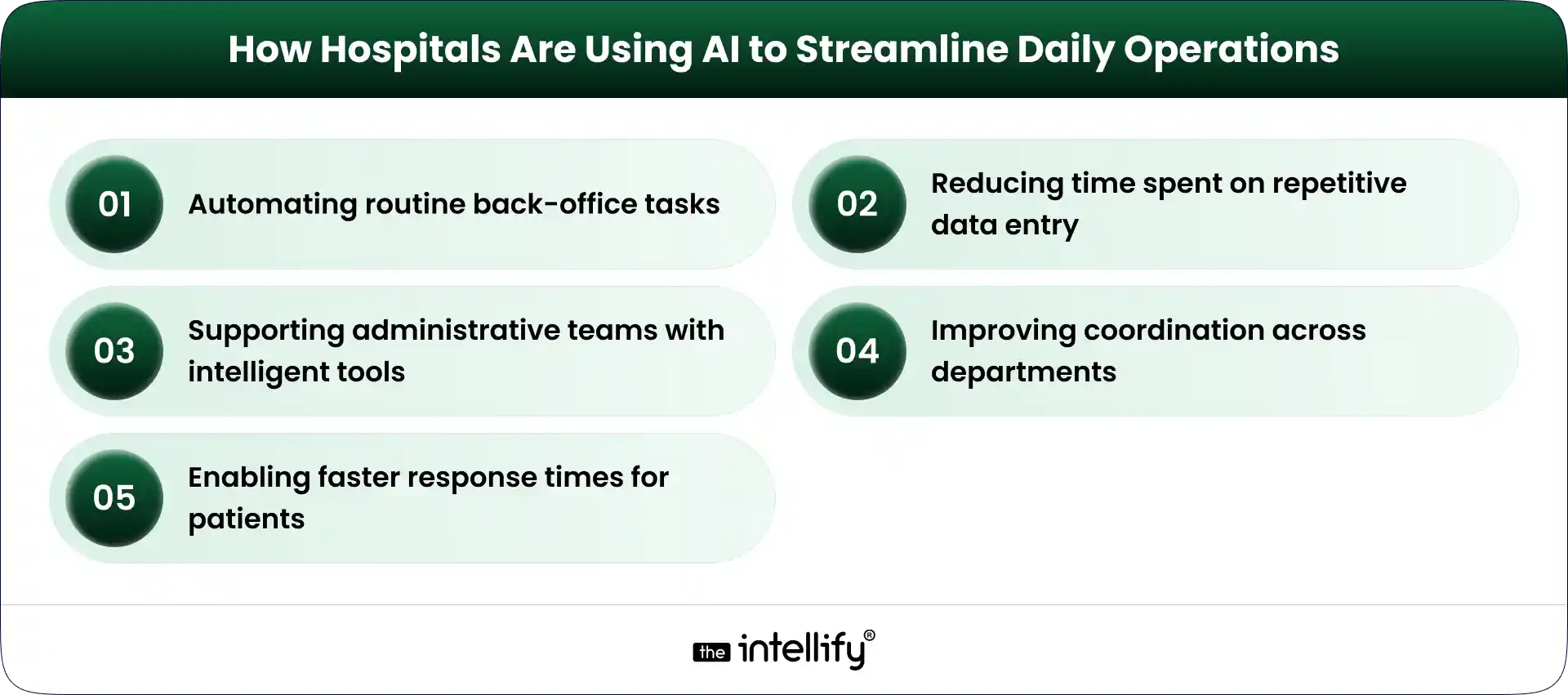
AI for Hospitals Daily Operations

  • Automating routine back-office tasks to reduce manual workload and free up staff time for higher-value activities
  • Reducing time spent on repetitive data entry by minimizing paperwork and improving data accuracy across systems
  • Supporting administrative teams with intelligent tools that simplify workflow management, task prioritization, and decision-making
  • Improving coordination across departments by enabling seamless communication and better alignment between teams

Enabling faster response times for patients and staff, from appointment scheduling to handling queries and internal processes
These improvements help hospitals operate more efficiently while creating a smoother, faster, and more patient-focused administrative experience.


Key Use Cases of AI in Healthcare Administration

Several specific applications demonstrate how AI in healthcare can be effectively deployed in healthcare administration:

Patient Scheduling and Appointment Management

  • Automated booking and rescheduling:- minimize missed appointments and optimize staff availability.
  • AI quickly allocates time slots based on various factors, leading to happier patients.

Billing, Claims, and Insurance Processing

  • Faster verification and claims handling speed up the revenue cycle.
  • Reduced paperwork errors contribute to better financial performance.

Medical Records Management

  •  AI assists in organizing and retrieving patient information swiftly.
  •  It cuts down on duplicate or incomplete records while ensuring secure data handling.

Communication and Support Services

  • Chatbots and virtual assistants offer quick answers to common patient inquiries.
  • Timely reminders for appointments and follow-ups enhance patient care.

Compliance and Reporting

  • AI supports monitoring documentation needs and auditing tasks.
  • It helps reduce the risk of non-compliance, ensuring adherence to regulations.
 

Automation in healthcare operations


Benefits for Hospitals, Staff, and Patients

Embracing AI in healthcare administration yields a slew of benefits:

  • Reduced administrative workload: for healthcare professionals, allowing them to focus less on paperwork and more on meaningful tasks
  • Faster processes and shorter waiting times,: leading to quicker service delivery and improved patient satisfaction
  • Improved operational efficiency: through streamlined workflows and fewer manual errors across administrative functions
  • More time for staff to focus on patient care: especially in areas that require human judgment, empathy, and attention
  • Better overall experience for patients: with smoother interactions, timely updates, and more responsive healthcare services.

These benefits collectively help create a more efficient, patient-centric healthcare system while easing the burden on medical and administrative staff.


Challenges and Considerations When Implementing AI
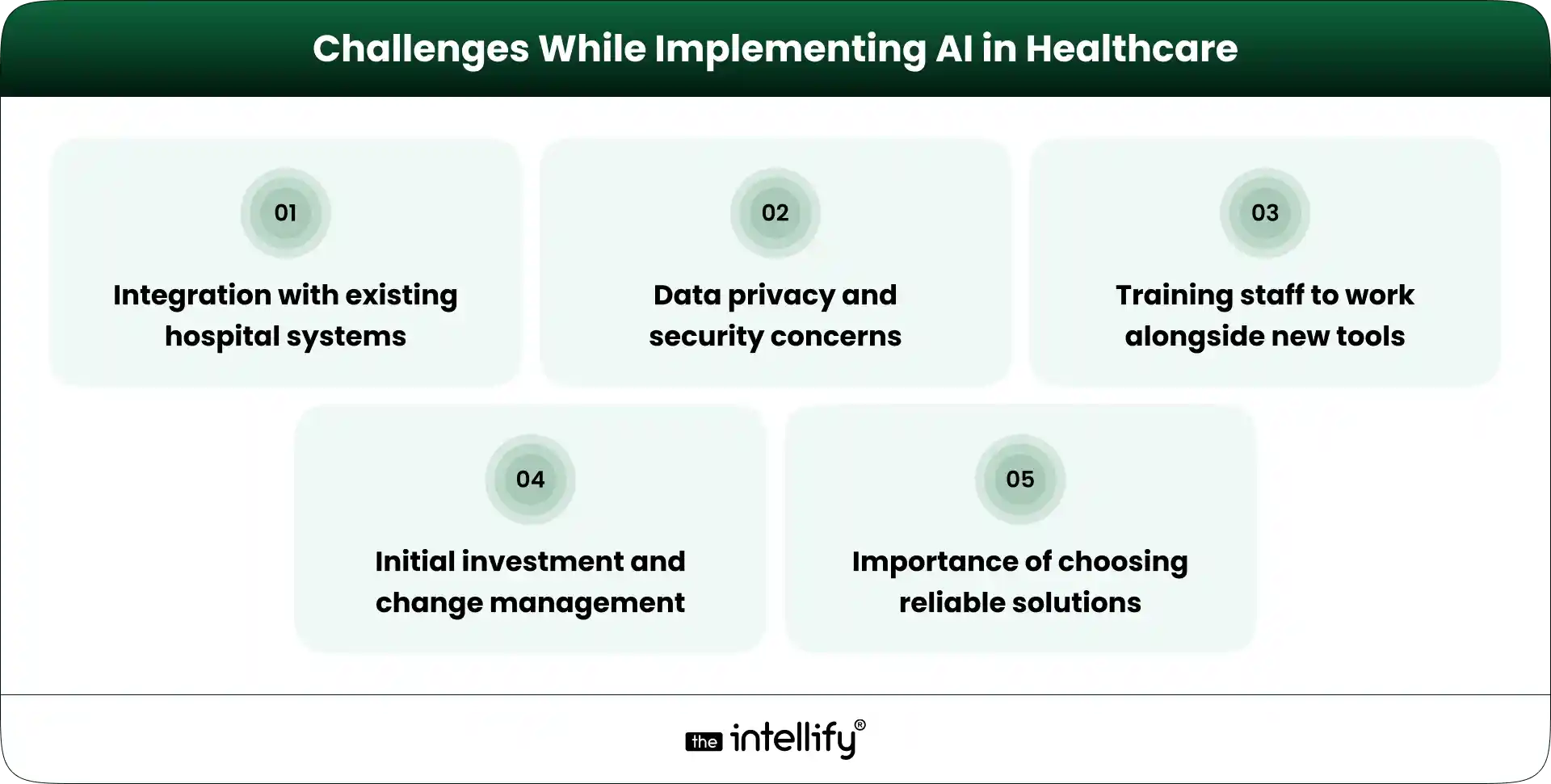
Challenges While Implementing AI in Healthcare

While the perks of AI are numerous, deploying it isn’t without its hurdles:

  • Integration with existing hospital systems can be complex, especially when dealing with legacy infrastructure and multiple data sources
  • Data privacy and security concerns must be addressed carefully to ensure compliance with healthcare regulations and protect sensitive patient information
  • Training staff to work alongside new tools is essential to ensure smooth adoption and maximize the value of AI solutions
  • Initial investment and change management require thoughtful planning to minimize disruption and ensure a seamless transition
  • Importance of choosing practical, reliable solutions that align with real operational needs rather than overly complex or unnecessary implementations

Addressing these challenges early helps healthcare organizations adopt AI more effectively and achieve long-term success.


How AI Helps Healthcare Staff, Not Replaces Them

The role of AI is to enhance, not replace healthcare staff. Here’s how:

  • Administrative work still requires judgment and empathy, which only healthcare professionals can provide
  • AI handles routine tasks, while humans manage complex situations, ensuring better decision-making and patient care
  • Collaboration between technology and staff enables more efficient workflows and improved outcomes
  • Building trust in automated systems is essential for smooth adoption and long-term success
  • Importance of oversight and accountability to ensure AI systems are used responsibly and accurately

AI works best as a support system empowering healthcare staff rather than replacing the human touch that patient care depends on.


What the Future of Healthcare Administration Looks Like

As we look ahead, it’s clear that AI will only become more entrenched in healthcare administration. We can expect to see:

  • Increasing adoption of intelligent automation to handle repetitive tasks and streamline administrative workflows at scale
  • More connected hospital systems enabling seamless data flow, better coordination, and improved operational efficiency
  • Predictive insights for planning and resource management, helping hospitals make smarter, data-driven decisions
  • Shift toward proactive rather than reactive administration, allowing issues to be identified and addressed before they escalate
  • Continued focus on efficiency and patient-centered operations, ensuring smoother experiences for both staff and patients.

The future of healthcare administration will be driven by smarter systems that enhance efficiency while keeping patient care at the center of every decision.


How Organizations Can Start Adopting AI in Administration

For organizations keen to integrate AI, consider these steps:

  • Identifying high-impact areas for automation where AI can quickly reduce manual workload, eliminate bottlenecks, and deliver measurable efficiency gains
  • Starting with small, practical use cases to test effectiveness, minimize risk, and demonstrate early success before scaling further
  • Evaluating technology partners carefully by considering their healthcare expertise, integration capabilities, and long-term scalability
  • Ensuring staff involvement and training to encourage adoption, improve usability, and help teams confidently work alongside new tools
  • Measuring outcomes and scaling gradually by tracking performance metrics, refining processes, and expanding AI implementation based on real results.

A phased, well-planned approach makes it easier for organizations to adopt AI successfully while ensuring long-term operational and clinical value.

 

Hospital operations with AI


Conclusion:

AI is clearly transforming the realm of healthcare administration. By boosting operational efficiency and enriching the patient experience, we can make significant strides toward sustainable healthcare systems. Thoughtful adoption of AI is crucial; rushing the implementation could stymie progress.

As we move forward, the importance of human oversight in managing AI systems can’t be overstated. Striking the right balance will enable healthcare organizations to flourish in the face of modern challenges. If you’re ready to unlock the potential of AI in healthcare administration, let us at The Intellify show you how to implement effective solutions for your organization.


Frequently Asked Questions (FAQs)

1. How is AI actually used in healthcare administration today?

AI is mainly used to handle routine tasks like appointment scheduling, billing checks, document processing, and patient communication. It helps staff complete work faster and reduces manual effort without changing clinical care.

2. Can AI reduce the paperwork burden in hospitals?

Yes. AI tools can automatically organize records, fill forms, and process documents, which significantly cuts down time spent on paperwork and reduces errors caused by manual entry.

3. Does AI in administration improve patient experience too?

Indirectly, yes. Faster scheduling, shorter waiting times, accurate billing, and quicker responses to queries all make the patient journey smoother, even though AI works behind the scenes.

4. Is AI replacing administrative staff in hospitals?

No. In most cases, AI supports staff by handling repetitive tasks, allowing them to focus on coordination, problem-solving, and patient interaction that require human judgment.

5. What administrative tasks benefit the most from AI automation?

Tasks that follow clear patterns benefit the most, such as appointment management, insurance verification, claims processing, reminders, reporting, and data entry.

6. Is AI in healthcare administration only for large hospitals?

Not anymore. Many modern solutions are scalable, meaning clinics and mid-sized hospitals can also adopt AI tools without major infrastructure changes.

7. How does AI help reduce operational costs in hospitals?

By automating routine work, hospitals need fewer manual hours for repetitive tasks, reduce errors that lead to financial losses, and improve overall efficiency, all of which lower operational expenses over time.

AI for Healthcare Operations: Transforming Hospital Process in 2026

Summary:
Healthcare is facing growing operational pressure due to rising patient demand, staffing limitations, and complex compliance requirements. This blog explores how AI for healthcare operations helps address these challenges by improving scheduling, billing, diagnostics, and documentation workflows. It highlights key business benefits, practical implementation steps, and strategic priorities for long-term success, offering hospital leaders clear insights into building efficient, secure, and future-ready healthcare systems

The healthcare landscape is changing rapidly, and AI for healthcare is leading the way. As we look towards 2026, hospitals are confronted with a host of operational challenges from growing patient demands to strict compliance mandates. In this blog, we’ll explore how AI is reshaping healthcare operations, its key advantages, the hurdles hospitals must navigate, and why this is the ideal moment to adopt these cutting-edge technologies.


The Growing Complexity of Hospital Operations in 2026

As we head into 2026, the operational hurdles that hospitals face are becoming increasingly complex:

  • Rising patient demand and limited staff:- An influx of patients is putting a strain on resources, making efficient care delivery more critical than ever.
  • Administrative overload slowing down care: The burden of paperwork and numerous administrative tasks often eats into the time that could be spent on patient care.
  •  Financial pressure and reimbursement delays-: Shifts in reimbursement models can lead to financial constraints, which in turn affect service quality.
  •  Increasing compliance requirements: Regulatory demands can add to the workload, creating inevitable bottlenecks in hospital operations.

Given these challenges, traditional systems simply can’t keep up anymore. For hospitals to succeed, they’ll need to go beyond basic automation and integrate AI for healthcare operations it’s a practical pivot that transcends mere trends.


What AI for Healthcare Means in Operational Terms

AI isn’t just a tool for automating repetitive tasks; it’s about enhancing both clinical and administrative workflows. Here’s how it works:

Moving Beyond Basic Automation

AI in healthcare operations goes beyond simple task automation. It doesn’t just complete repetitive work it analyzes data, identifies patterns, and helps hospitals make smarter decisions in real time.

 Supporting Clinical and Administrative Workflows

AI helps clinical teams and administrative staff work in better coordination. It connects systems like scheduling, billing, and patient records so departments don’t operate in isolation.

Connecting Fragmented Hospital Systems

Many hospitals use multiple disconnected systems. AI helps bring these together, allowing information to flow smoothly across departments and reducing delays or duplicate work.

Shifting from Manual Coordination to Intelligent Support

Instead of relying only on manual tracking and follow-ups, AI provides smart insights and alerts. This helps staff focus more on patient care while the system supports operational decisions.

How AI for Healthcare Operations Strengthens Internal Systems

AI strengthens internal systems by improving accuracy, reducing bottlenecks, and making processes more predictable. It builds a more responsive foundation that supports both efficiency and quality care.

In short, AI for healthcare reinforces internal systems, creating a healthier environment for staff and patients alike.


How Intelligent Systems Improve Daily Hospital Functions

AI technology has tremendous potential to enhance daily hospital functions, which are vital for operational success:

  • Collecting and organizing operational data: AI systems aggregate information from various sources, making critical data easily accessible.
  • Identifying inefficiencies in scheduling and billing: By analyzing patterns, AI can spotlight areas needing improvement, enabling more effective resource allocation.
  • Detecting compliance gaps early: AI continuously monitors operations, helping unearth regulatory risks before they become problematic.
  • Supporting faster clinical decision-making: With real-time insights, AI empowers healthcare professionals to make informed decisions on the spot.
  • Automating repetitive administrative tasks: Routine tasks such as appointment bookings and data entry can be automated, allowing staff to engage more meaningfully with patients.
  • Providing real-time performance visibility: AI equips hospitals with dashboards and reports that shed light on operational efficiency, enabling prompt adjustments.


AI for hospitals operations


Core Areas Transformed by AI in Healthcare Operations

Patient Scheduling and Resource Planning

  • Reducing wait times: Smart scheduling algorithms optimize appointment slots, helping to cut down on patient wait times.
  • Better staff allocation: AI analyzes demand trends, ensuring that staff levels are aligned with patient volume, thus boosting service quality.
  • Managing appointment flow: Automated systems streamline appointment flow, enhancing overall patient satisfaction.

Revenue Cycle and Claims Processing

  • Reducing coding errors: AI algorithms accurately code services, minimizing potential errors.
  • Predicting claim denials: By digging into historical data, AI can spot patterns that lead to claim denials, enabling proactive measures.
  •  Speeding up reimbursements: AI quickens the claims process, ensuring that providers receive payments more promptly.
    Diagnostic Support and Case Prioritization
  • Assisting imaging review: AI tools can analyze medical images, helping radiologists identify urgent cases more efficiently.
  •  Flagging urgent cases: AI prioritizes cases needing immediate attention, ensuring timely interventions.
  • Supporting physician decisions: With data-driven insights, physicians can make more informed choices regarding patient care.

Compliance and Documentation Oversight

  • Monitoring regulatory changes: AI stays current on regulations, helping compliance teams respond effectively.
  • Identifying documentation gaps: Automated checks highlight areas where documentation may be lacking, reducing the risk of audits.
  • Reducing audit risks: Continuous monitoring helps ensure that compliance requirements are consistently met.


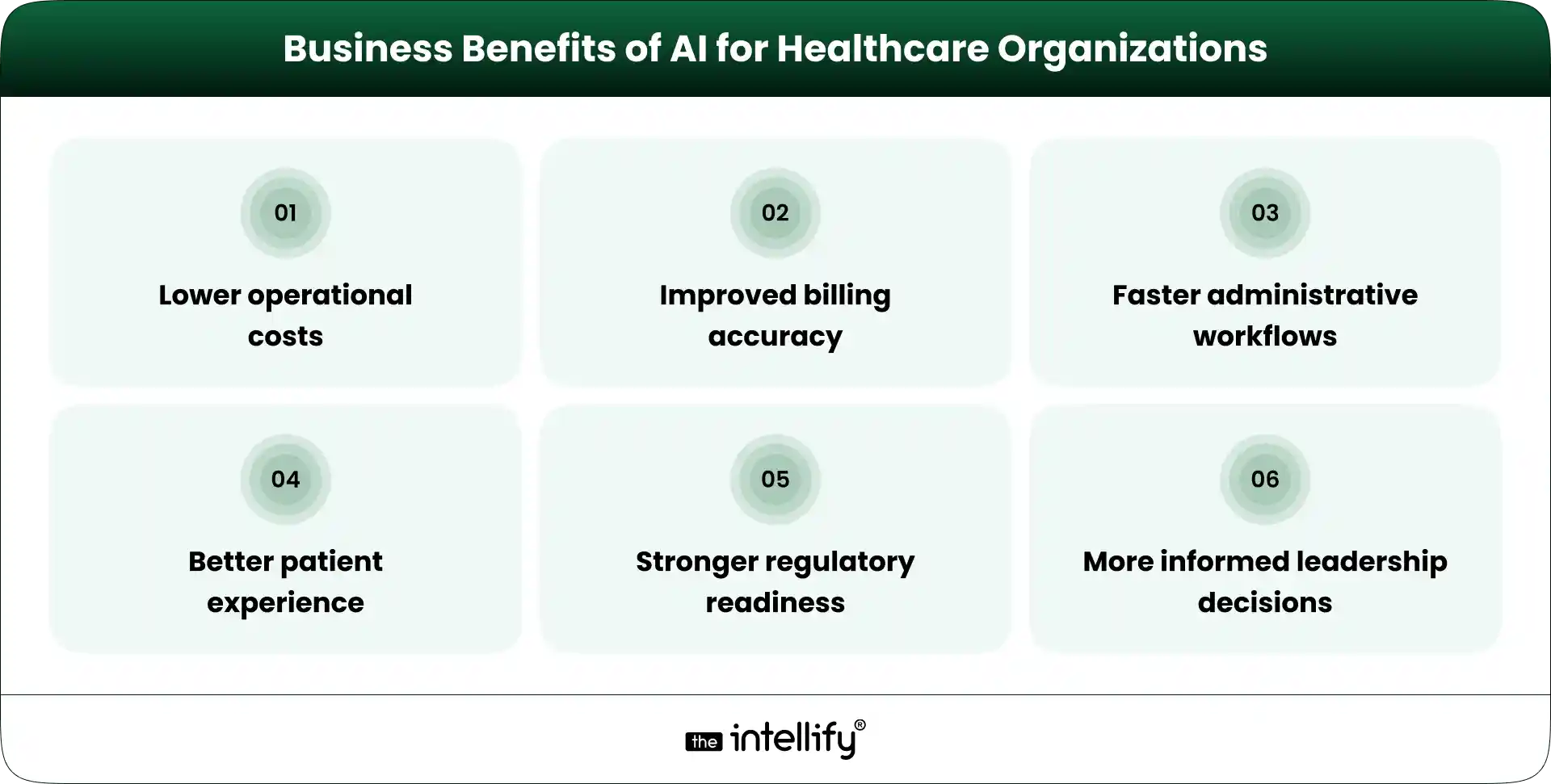
Business Benefits of AI for Healthcare Organizations

Benefits of AI for Healthcare Organizations_

Incorporating AI for healthcare operations comes with a host of benefits:

1. Lower operational costs:- Automation decreases reliance on manual processes, leading to cost savings.

2. Improved billing accuracy:- AI enhances accuracy in billing, reducing discrepancies.

3. Faster administrative workflows:- Streamlined procedures mean that administrative tasks are handled swiftly, boosting productivity.

4. Better patient experience:- Efficient operations enhance overall patient satisfaction, helping to build loyalty.

5. Stronger regulatory readiness:- Proactive compliance systems ensure hospitals are always audit-ready.

6. More informed leadership decisions:- With comprehensive insights, hospital leaders can make strategic decisions that drive growth and efficiency.


Step-by-Step Process to Implement AI in Healthcare Management

Assess Operational Gaps

  • Identify workflow bottlenecks: Pinpoint areas where delays typically occur.
  •  Analyze denial rates: Review past claims data to uncover ongoing issues.
  • Evaluate scheduling inefficiencies: Scrutinize current scheduling practices to enhance efficiency.

Define Clear Goals

  •  Improve turnaround time: Set benchmarks for how quickly patients are processed.
  • Reduce compliance risks: Establish compliance targets to ensure adherence.
  • Increase financial accuracy: Aim for error-free billing and claims processing.

Start with Focused Deployment

  • Pilot in one department: Begin AI implementation in a single department to minimize disruption.
  • Measure impact: Assess pilot results to gauge benefits before a broader rollout.
  • Expand gradually: Scale up implementation based on successful outcomes.

Align Teams and Governance

  • Train staff: Make sure staff are adequately trained to work with new AI systems.
  • Maintain human oversight: While AI provides support, human oversight remains crucial for quality care.
  • Establish performance benchmarks: Regularly review performance metrics to evaluate success.


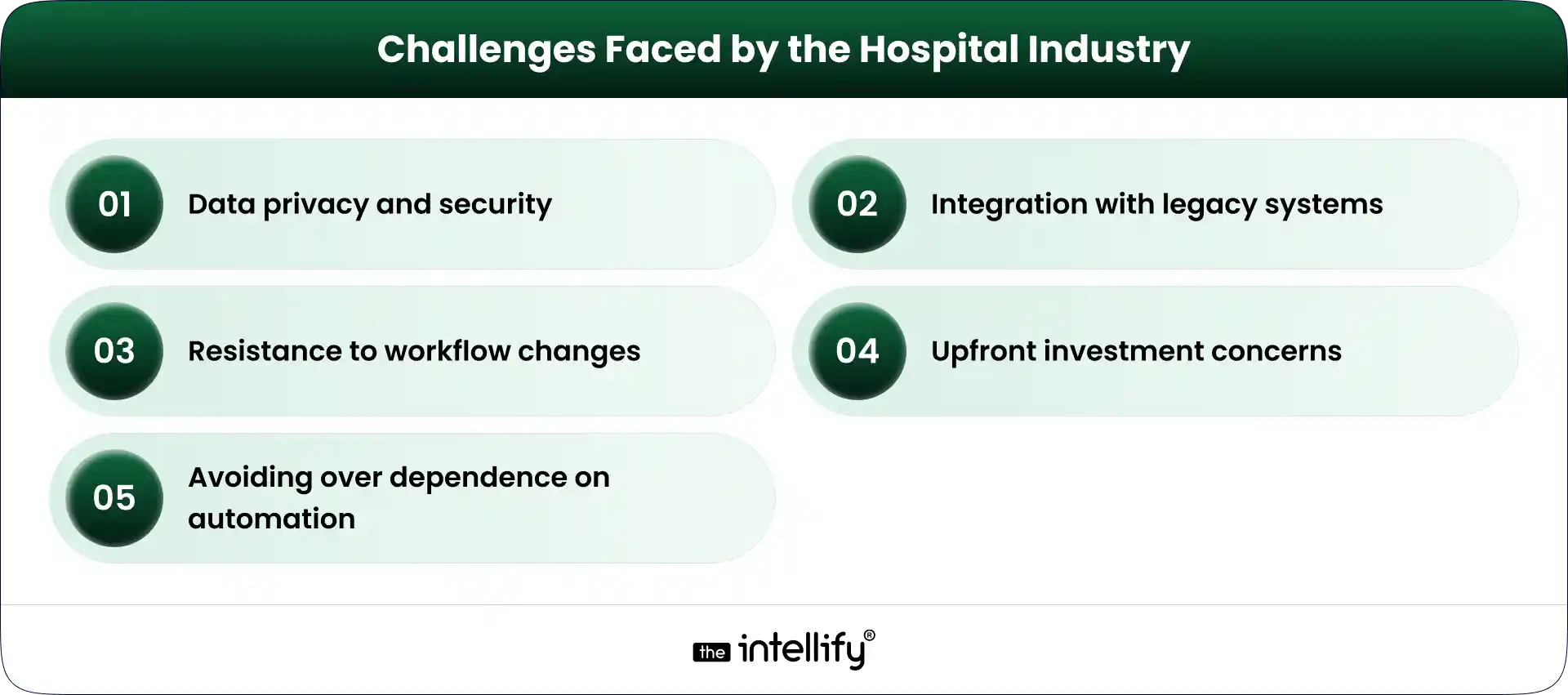
Challenges being faced by Hospital Industry

Challenges Faced by the Hospital Industry

While AI presents incredible opportunities, hospitals also face a variety of challenges:

  • Data privacy and security: Protecting patient data must remain a top priority.
  •  Integration with legacy systems: Merging AI tools with existing infrastructure can prove complex.
  •  Resistance to workflow changes: Staff may be hesitant to embrace new technologies.
  • Upfront investment concerns: Initial costs can make hospitals wary of adopting AI solutions.

Avoiding overdependence on automation: It’s essential to strike a balance between human input and machine support.


Why 2026 Is a Defining Year for AI Healthcare Operations

The year 2026 is shaping up to be a game-changer for AI in healthcare, as hospitals increasingly recognize AI’s potential:

  • Maturity of AI tools: These technologies are becoming more advanced, offering robust solutions ready for deployment.
  • Clearer regulatory frameworks: Evolving regulations will ease the path for AI integration.
  •  Proven operational ROI: Hospitals are seeing measurable benefits from AI investments.
  •  Increasing competitive pressure: As more facilities adopt AI, hospitals need to keep pace or risk falling behind.
  • Industry-wide shift from pilots to enterprise-scale deployment: Organizations are transitioning from pilot projects to full-scale implementations.


What Hospital Systems Should Address Next

To stay competitive, hospital leaders should center their attention on several key areas:

  • Building long-term digital infrastructure: Invest in systems that can accommodate future technological advancements.
  • Integrating AI into core systems: Make sure AI tools are a foundational part of operations.
  • Tracking measurable performance improvements: Regularly evaluate the impact of AI implementations.
  • Ensuring transparency and accountability: Cultivate a culture that values clear decision-making.
  • Preparing for continuous system optimization: Adopt a mindset geared towards ongoing improvements and adjustments.


AI Solutions for Healthcare


Conclusion

Embracing AI for healthcare operations transforms hospitals into more efficient, patient-centered organizations. The benefits ranging from enhanced patient experiences to improved operational efficiency are compelling. As we approach 2026, adopting AI isn’t merely about technology; it’s about paving the way to a healthier future.

Beyond automation, this shift is about building smarter hospital systems that can adapt, respond, and grow with changing demands. With the right strategy and trusted partners like The Intellify supporting innovation, hospitals can move from fragmented processes to connected, future-ready operations that truly support both staff and patients.


Frequently Asked Questions

1. How is AI improving scheduling and patient flow in hospitals?

AI analyzes appointment patterns, staff availability, and patient demand to reduce wait times and avoid overbooking. It helps hospitals manage patient flow more smoothly without adding extra administrative pressure.

2. Can AI speed up billing and claims processing?

Yes, AI can automatically check coding errors, verify claims, and flag missing information before submission. This reduces claim denials and helps hospitals receive payments faster and more accurately.

3. What are the main benefits of AI in hospital operations?

It improves efficiency, reduces paperwork errors, lowers operational costs, and supports better decision-making. Hospitals also benefit from smoother workflows and improved compliance tracking.

4. How does AI support better diagnostic accuracy?

AI tools can analyze imaging scans and patient data to highlight patterns that might need attention. It doesn’t replace doctors but provides decision support that helps prioritize critical cases more quickly.

5. How safe is AI in healthcare when handling patient data?

AI systems are designed to follow strict data security and privacy regulations. When implemented correctly, they include encryption, access controls, and monitoring tools to protect sensitive patient information.

6.  How will AI change hospital operations by 2026?

By 2026, AI is expected to move from pilot projects to broader system-wide adoption. Hospitals will rely more on predictive insights, automation, and real-time monitoring to improve performance and patient care.

7.  Will AI replace staff in hospital operations or work alongside them?

AI will not replace hospital staff but work alongside them. It handles repetitive and data-heavy tasks, allowing healthcare professionals to focus more on patient care and critical decisions.

View
Case Study