Summary:
AR virtual try-on is reshaping online shopping by letting customers preview products on themselves or in their real environment before purchasing. This guide breaks down how virtual try-on works, the technology behind it, and where it’s used across e-commerce. It also explores business and customer benefits, development steps, key challenges, and how virtual try-on is becoming a standard feature in modern digital retail experiences.
Does this shade suit my skin tone? Will these glasses slide down my nose? Is that sofa too big for the corner near the window?
Most shoppers guess. Many guess wrong. That’s why returns keep growing.
Virtual try-on changes that dynamic. As augmented reality becomes more common in e-commerce and retail, brands are realizing that customers don’t want more images or videos. They want context. They want to see the product on them or in their space.
AR virtual try-on bridges the gap between physical and digital shopping. It removes imagination from the process and replaces it with clarity, and that shift is redefining how people buy online.
What Is an AR Virtual Try-On Solution?
An AR virtual try-on solution lets customers preview products using their device camera before making a purchase.
Using augmented reality, digital versions of products like makeup, eyewear, apparel, or furniture are overlaid onto real people or real environments in real time. The product responds naturally as the user moves, turns, or changes angles.
This experience is very different from static product images or photo uploads. Static previews show what a product looks like. Real-time AR shows how it fits, sits, or feels.
Virtual try-on experiences can be web-based (WebAR) or app-based. WebAR offers quick access with no downloads, while native apps allow deeper customization and performance control. Both approaches work when aligned with the right use case.
How AR Works in Virtual Try-On Experiences
1. Core Technology Behind Virtual Try-On
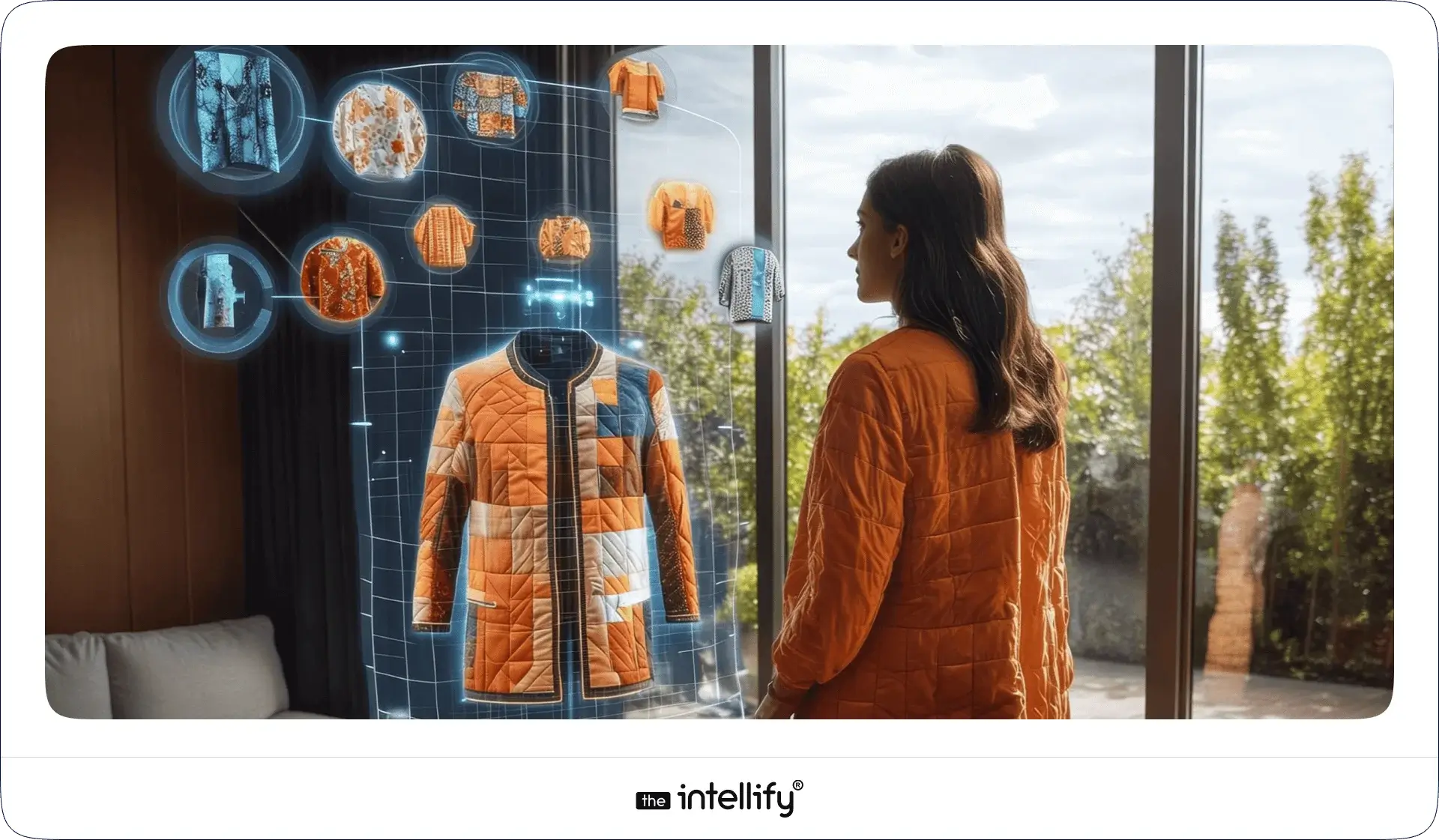
Several technologies work together behind the scenes.
Computer vision enables the system to recognize faces, bodies, hands, or physical spaces. Object tracking keeps products aligned as users move. Detection models map facial landmarks, body proportions, or room dimensions. Real-time rendering ensures smooth visuals without lag.
When tracking slips or rendering slows, users notice immediately. A reliable virtual try-on experience depends on precision as much as speed.
2. User Journey Flow
From the user’s perspective, the flow feels simple.
- They activate the camera.
- They select a product.
- They see a live preview instantly.
Most users instinctively adjust their position, tilting their head, stepping back, or rotating the phone. A good AR try-on responds without delay. From there, users can save a look, share it, or move straight to purchase. The best experiences stay out of the way and let curiosity do the work.
Key Components of an AR Virtual Try-On for E-Commerce
3D product models
High-quality 3D product models are the foundation of any virtual try-on experience. They need to look close to the real product, showing details clearly without feeling heavy or artificial. When models are realistic, customers trust what they’re seeing and stay engaged longer.
Accurate sizing and alignment
Correct sizing and alignment matter more than visual effects. Products should sit naturally on the user’s face, body, or space. Even small misalignment can break trust, while proper scaling helps customers feel confident about how the product will look in real life.
Device and browser compatibility
Virtual try-on should work smoothly across phones, tablets, and browsers. Users won’t troubleshoot technical issues just to try a product. Broad compatibility ensures more people can access the experience without friction.
Performance and load optimization
Speed plays a quiet but important role. Slow loading or laggy visuals quickly frustrate users. A fast, responsive experience keeps attention focused on the product instead of the technology behind it.
Analytics and behavior tracking
Analytics help businesses understand how customers use virtual try-on features. Tracking interactions, drop-offs, and popular products makes it easier to improve the experience and guide better decisions over time.
Integration with product pages and carts
Virtual try-on should connect directly to product pages and shopping carts. When users can move from trying a product to buying it without extra steps, the experience feels natural and conversions improve.
Real-World Examples of Successful Virtual Try-On
Beauty & cosmetics brands
Beauty brands such as L’Oréal and Sephora use virtual try-on to let customers test makeup shades in real time. Shoppers can switch colors, compare looks, and experiment freely without wiping off lipstick or guessing how a product might look under different lighting.
Eyewear and accessories
Eyewear brands like Warby Parker rely on AR virtual try-on to show how frames fit different face shapes. Customers can see how glasses sit on their nose, how wide the frames feel visually, and whether the style matches their features before placing an order.
Fashion and footwear
Fashion and footwear retailers, including Zara and Nike, use virtual try-on to improve product discovery. These experiences help shoppers preview styles, understand proportions, and feel more confident about fit and appearance when shopping online.
Furniture and Home décor
Brands like IKEA use AR to help customers place furniture in their actual living spaces. This allows shoppers to check size, layout, and visual balance before buying, which is especially useful when shopping for larger home items online.
What these brands achieved
Across industries, virtual try-on has led to stronger engagement, higher conversion rates, and fewer product returns. More importantly, shoppers feel confident about their choices, reducing hesitation and second thoughts during checkout.
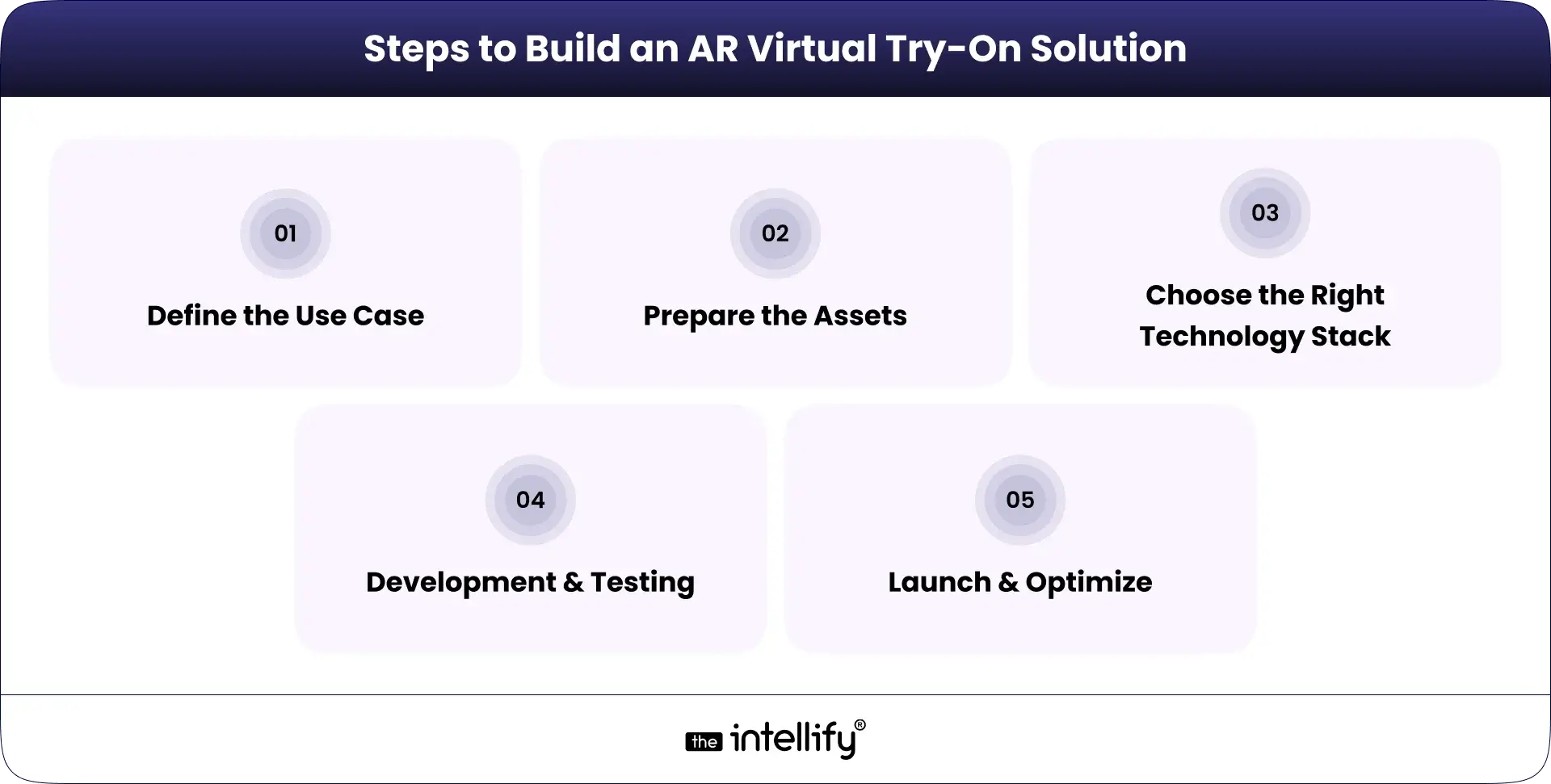
Steps to Build an AR Virtual Try-On Solution
1. Define the Use Case
- Product category: Pinpoint which products would benefit most from AR.
- Platform (web, app, in-store): Decide if the solution will be web-based, app-based, or both.
- Customer journey stage: Identify where in the customer journey AR fits best.
2. Prepare the Assets
- Product scanning or 3D modeling: Get high-quality 3D images to ensure realism.
- Texture and material accuracy: Make sure the materials look authentic and true to life.
3. Choose the Right Technology Stack
- WebAR vs native AR: Choose the right approach based on your resources and desired user experience.
- SDKs, frameworks, and engines: Select the tools that best align with your platform choice.
4. Development & Testing
- Tracking accuracy: Test how well the AR aligns with user movements.
- Performance across devices: Ensure a uniform performance on various devices.
- UX refinement: Collect feedback for ongoing improvements.
5. Launch & Optimize
- A/B testing: Try out different features to see which ones resonate best with users.
- Analytics-driven improvements: Use data insights to continually refine the experience.
Benefits of Virtual Try-On for Businesses
Higher conversion rates: When customers can see how a product looks or fits before buying, they feel more confident. That confidence often turns into completed purchases.
Reduced product returns: Virtual try-on sets clearer expectations. When products match what customers saw during try-on, returns naturally drop.
Lower customer hesitation: Letting shoppers try before they buy removes doubt. Decisions feel easier, and checkout happens faster.
Increased time on site: Interactive try-on experiences encourage users to explore more products, spend more time browsing, and stay engaged longer.
Stronger brand differentiation: Offering virtual try-on helps brands stand out in crowded markets by providing a more useful and memorable shopping experience.
Benefits of Virtual Try-On for Customers
Try before buying from anywhere: Customers can preview products from home, at work, or on the move. Seeing items on themselves or in their space helps them feel more comfortable before buying.
Better confidence in purchase decisions: Real-time previews reduce guesswork. When shoppers know what to expect, trust increases and second thoughts decrease.
Fun, interactive shopping experience: Virtual try-on adds an interactive layer to shopping. Instead of scrolling endlessly, customers can explore products in a more engaging way.
Fewer sizing and style mistakes: AR helps shoppers choose items that fit their size, style, and space more accurately, reducing the chance of ordering the wrong product.
Faster decision-making: Quick, clear previews make decisions easier. Customers spend less time doubting and more time moving forward with their purchase.
Use Cases of AR Virtual Try-On in Shopping
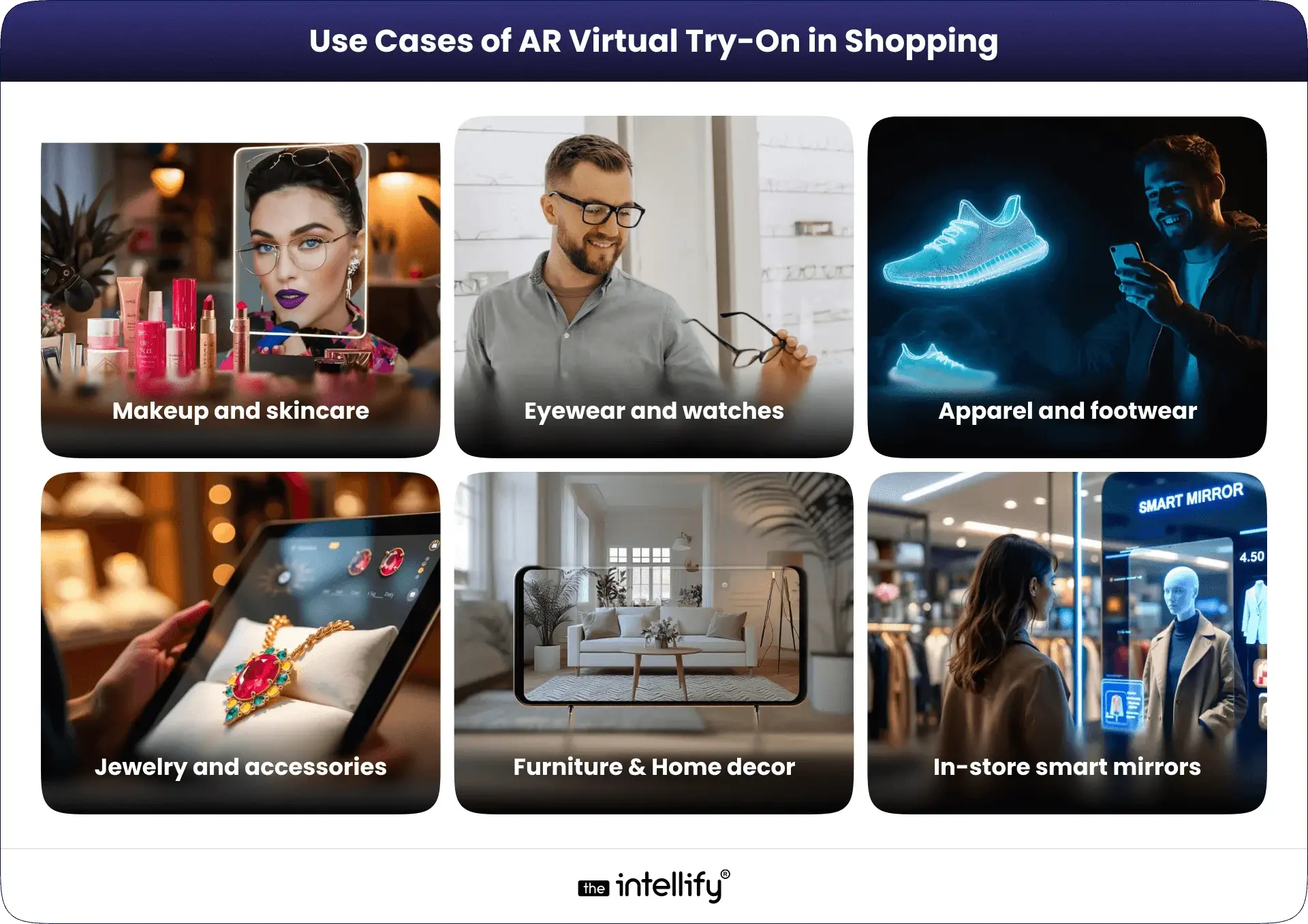
1. Makeup and skincare: Virtual try-on lets shoppers test shades, finishes, and tones in real time, helping them find what suits their skin without physical samples.
2. Eyewear and watches: AR helps customers see how frames or watches look on their face or wrist, making it easier to judge style and fit before buying.
3. Apparel and footwear: Shoppers can preview how clothes or shoes sit on their body, giving a better sense of proportions and overall look.
4. Jewelry and accessories: Virtual try-on allows users to see how rings, necklaces, or earrings complement their outfit and personal style.
5. Furniture placement at home: AR helps customers place furniture or décor items in their actual living space, making size and layout easier to judge.
6. In-store smart mirrors: Interactive smart mirrors allow shoppers to try products digitally inside physical stores, blending online convenience with in-store browsing.
You can also read our detailed blog on virtual try-on use cases
Impact on Customer Experience & Business Operations
1. Customer Experience
Virtual try-on reduces guesswork and builds trust. Customers feel informed rather than pressured. That sense of control leads to stronger engagement and satisfaction.
2. Business Operations
On the operational side, fewer returns reduce logistics costs. Try-on data supports better merchandising and inventory decisions. Customer support teams face fewer pre-purchase questions, streamlining workflows.
Challenges & Limitations to Consider
Accuracy expectations: Customers often expect virtual try-on results to perfectly match real-life products. When visuals feel even slightly off, trust can drop quickly.
Device performance differences: Not all smartphones or browsers handle AR at the same level. Older devices may struggle with tracking, speed, or visual quality.
3D content creation cost: Creating accurate, high-quality 3D product models takes time and resources, especially for large or frequently changing catalogs.
Privacy and camera permissions: Some users hesitate to enable camera access. Clear communication about data use is important to reduce concerns and build confidence.
User onboarding friction: If instructions feel confusing or setup takes too long, users may drop off early. A simple, guided entry into the experience makes a noticeable difference.
The Future of Virtual Try-On in Retail
The future of AR virtual try-on is moving toward more accurate and personalized experiences. Better AI integration will improve sizing, tracking, and product recommendations, making try-ons feel more natural and responsive. As these technologies mature, virtual try-on will shift from being a helpful feature to an expected part of online shopping, especially for brands focused on reducing friction and building customer confidence.
From Idea to Experience: How Brands Begin with Virtual Try-On
Building a virtual try-on experience starts long before development. Brands need clarity on what problem they are solving, which products benefit most from try-on, and where the experience fits in the customer journey.
Key early steps usually include:
- Defining clear business and user goals
- Understanding target audiences and device usage
- Deciding whether the experience should live on the web, in an app, or in-store
Once the direction is clear, working with experienced AR teams helps reduce trial-and-error. This is where teams like The Intellify support brands by validating use cases, selecting the right technology approach, and testing early prototypes with real users. The focus stays on building something useful, stable, and easy to adopt, not just visually impressive.

Conclusion: Virtual Try-On Is Becoming a Shopping Standard
AR virtual try-on is no longer an experiment or a short-term trend. It’s becoming a practical part of how people shop online. By reducing guesswork, improving engagement, and helping customers feel confident before buying, virtual try-on solves real problems for both shoppers and retailers.
For brands exploring how to adopt this approach, starting with the right strategy and technology matters. Teams like The Intellify often help businesses assess where virtual try-on fits best, test ideas, and build experiences that are useful, not overcomplicated.
Frequently asked questions
1. What is AR virtual try-on and how does it work?
AR virtual try-on uses your camera and augmented reality to show how a product might look on you or in your space. Instead of just photos, you see a live preview that moves with you, helping you decide before you buy.
2. How does virtual try-on make online shopping better?
It helps reduce guesswork. When you can see how something actually looks or fits, you feel more confident buying it. That often leads to happier customers, fewer returns, and faster decision-making.
3. Do I need to download a special app to use virtual try-on?
Not always. Many brands now let you use AR try-on right in your phone or laptop browser without an app. All you usually need is camera access and a product page that supports it.
4. Is virtual try-on accurate for all types of products?
Accuracy depends on the product and technology. It’s very good for things like eyewear, jewelry, makeup, watches, and furniture placement. For clothing, it helps with style and look, but size and fit might still need traditional size guides.
5. Can virtual try-on help reduce product returns?
Yes. When shoppers can preview items realistically, they are less likely to be surprised when the product arrives. That means fewer returns and less disappointment for customers and retailers alike.
6. Is my privacy safe when using virtual try-on tools?
In most cases, yes. Good virtual try-on tools only use your camera temporarily to generate a live preview and don’t store your personal image unless you choose to save or share it. Always check the privacy notes if you’re unsure.
7. What kinds of products benefit the most from virtual try-on?
Products where appearance matters most benefit the most like glasses, hats, jewelry, makeup, shoes, and even home items such as furniture. These are things where seeing it “on you” or “in your room” really helps your choice.