Summary:
Managing patient calls, appointments, and follow-ups can overwhelm healthcare teams. This blog breaks down how AI voice agents simplify these everyday tasks by automating communication and improving patient engagement. From scheduling to reminders and beyond, it covers practical use cases, benefits, and what to consider before implementation, giving healthcare providers a clear view of how voice AI can support both staff efficiency and patient satisfaction.
Healthcare providers are under constant pressure to manage patient calls, schedule appointments, and reduce no-shows all at the same time. It’s a lot to handle, and honestly, front-desk teams often end up carrying most of that load. When call volumes spike or patients can’t get timely responses, things start slipping.
This is where AI voice agents for healthcare come in. They take over routine conversations, help patients book or manage appointments, and keep communication flowing without delays. Having that kind of support running 24/7 can really ease the burden.
In this blog, we’ll break down how these voice agents work, where they fit in, the benefits they offer, and what to consider before getting started. Let’s get into it.
What are AI Voice Agents in Healthcare?
AI Voice agents are advanced systems that utilize speech recognition, natural language understanding, and conversational AI to interact with patients. Unlike traditional Interactive Voice Response (IVR) systems that can often leave users frustrated, AI voice agents can engage in real conversations, understand context, and provide useful responses.
Common Challenges in Healthcare Communication
Healthcare communication faces several challenges:
- Long hold times and unanswered calls: Patients often spend too long waiting to talk to someone.
- Manual appointment booking: Staff waste valuable time scheduling and rescheduling appointments.
- High rates of no-shows: Missed appointments waste resources and create inefficiencies.
- Limited staff availability: Many healthcare providers can’t take calls after hours or during peak times.
- Administrative burden: Front-desk teams often find themselves overwhelmed with routine tasks.
- Inconsistent patient experiences: Different communication channels can lead to varying experiences for patients.
Automating these areas can greatly boost efficiency and patient satisfaction.
How AI Voice Agents in Healthcare Handle Patient Calls and Requests
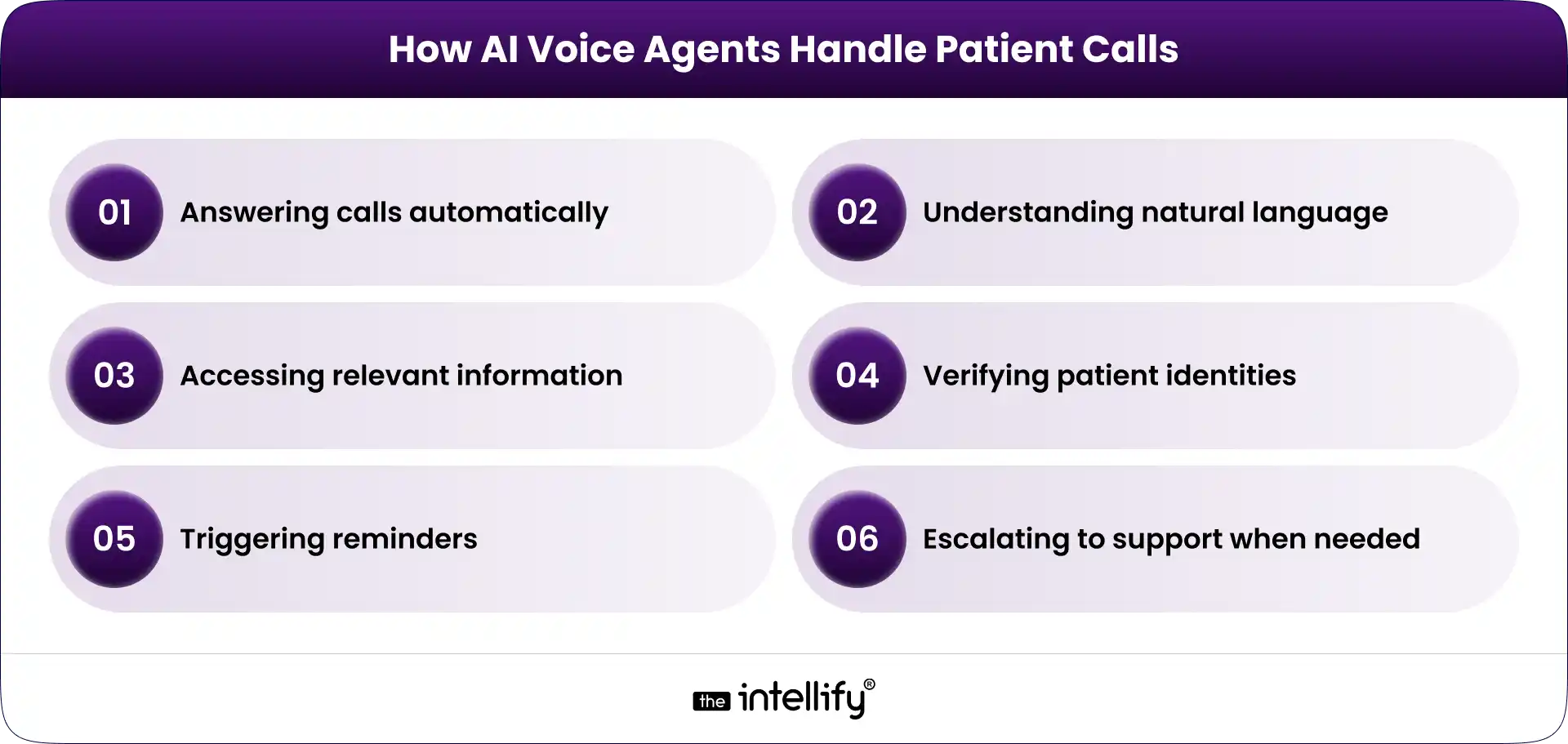
AI voice agents manage patient interactions in a way that feels smooth and less mechanical. Instead of long wait times or confusing menus, patients can just speak and get things done quickly. Here’s how they typically handle different types of requests:
Answering calls automatically: They can pick up calls instantly and manage both incoming and outgoing conversations without delays, even during peak hours.
Understanding natural language: Patients don’t have to follow strict prompts. They can explain their concerns in their own words, and the system understands the intent.
Accessing relevant information: These agents can connect with calendars, Electronic Health Records (EHRs), and scheduling tools to pull the right information in real time.
Verifying patient identities: They check basic patient details before sharing sensitive information, which helps maintain accuracy and security.
Triggering reminders: Appointment confirmations, follow-ups, or even medication reminders can be sent automatically, without staff needing to step in.
Escalating to human support when needed: If something feels too complex or sensitive, the call can be smoothly passed to a human team member no awkward breaks or repetition needed.
Automating Appointment Scheduling with AI Voice Agents
AI voice agents take a lot of the back-and-forth out of scheduling. Instead of waiting on hold or calling multiple times, patients can quickly book or manage appointments without much effort. Here’s how it usually works:
Booking new appointments: They can check provider availability in real time and schedule appointments within seconds, without needing staff involvement.
Rescheduling or canceling: Patients can change or cancel their appointments easily, without going through long call processes.
Handling various preferences: Whether it’s a specific doctor, location, or insurance requirement, the system can factor in these details while booking.
Instant confirmations: Once an appointment is booked or updated, confirmations are sent right away no waiting or follow-ups needed.
Reducing wait times: Since calls are handled automatically, patients don’t have to stay on hold, which makes the whole experience quicker.
Supporting multiple languages: This makes it easier for healthcare providers to serve patients from different backgrounds without communication gaps.
How Voice AI for Healthcare Improves Patient Engagement
Voice AI doesn’t just help with scheduling it keeps patients connected even outside clinic visits. That ongoing communication makes a real difference in how patients follow care plans and stay informed. Here’s how it improves engagement:
Sending medication reminders: Patients get timely reminders, which helps them stay consistent with their treatment without relying on memory alone.
Conducting follow-up calls: After appointments, the system can check in with patients, which feels reassuring and keeps care on track.
Sharing wellness reminders: Simple nudges about check-ups, screenings, or preventive care help patients stay proactive about their health.
Answering common questions 24/7: Patients don’t have to wait for clinic hours. They can get answers anytime, which reduces frustration.
Collecting feedback: Short surveys or quick questions help providers understand patient experiences and improve services over time.
Connecting patients: Regular touchpoints keep patients engaged between visits, instead of only interacting when something goes wrong.
Additional Use Cases Beyond Appointment Scheduling
AI voice agents aren’t limited to just booking appointments. They can handle a wide range of everyday tasks that usually take up a lot of staff time. Once you start using them, you realize how many small things they can take care of.
Prescription refill requests: Patients can request refills without calling multiple times, making the process quicker and less frustrating.
Insurance and billing inquiries: Basic questions about coverage, payments, or bills can be answered instantly, saving time for both patients and staff.
Patient intake: Pre-visit questions and initial details can be collected automatically, which helps speed up the check-in process.
Chronic care check-ins: Regular follow-ups help keep track of patients with ongoing conditions, without needing manual outreach every time.
Lab result notifications: Patients can be notified as soon as results are available, so they’re not left waiting or guessing.
Referral coordination: The system can guide patients through the next steps, making transitions between providers feel more organized and less confusing.
Benefits of Healthcare Voice Agents for Providers and Patients
AI voice agents bring clear benefits on both sides. They reduce the pressure on healthcare teams while making things easier for patients at the same time.
For Healthcare Organizations
Lower administrative workload: Routine tasks like handling calls or scheduling don’t need constant staff involvement, which frees up time for more important work.
Reduced operational costs: With fewer manual processes, there’s less need for additional resources, which can help control overall costs.
Improved staff productivity: Teams can spend more time focusing on patient care instead of getting stuck in repetitive tasks.
Fewer missed appointments: Automated reminders and easy rescheduling options help patients stay on track, which keeps schedules more consistent.
Better resource utilization: Staff time and effort can be used more effectively instead of being spread thin across basic tasks.
For Patients
Faster responses: Patients don’t have to wait on hold or try multiple times to get through they get help almost instantly.
24/7 support: Assistance is available anytime, even outside regular clinic hours, which makes things more convenient.
Easier scheduling: Booking or changing appointments feels simple and quick, without long processes.
Personalized communication: Interactions feel more relevant, whether it’s reminders, follow-ups, or general updates.
Improved overall experience: When everything is quicker and smoother, patients naturally feel more satisfied with the care process.
AI Medical Assistant vs Traditional Call Centers
The difference between AI medical assistants and traditional call centers becomes pretty clear once you look at how they handle everyday tasks. It’s not just about automation it’s about how smoothly things run.
- Availability: AI agents don’t stick to office hours. They’re available round the clock, which means patients can reach out anytime without waiting for the clinic to open.
- Response consistency: Unlike human agents who may vary in responses, AI systems provide the same accurate information every time, which helps avoid confusion.
- Scalability: During peak hours, call volumes can spike. AI agents can handle multiple conversations at once without delays or drop-offs.
- Faster processing: Routine requests like scheduling or basic queries are handled quickly, so patients don’t spend unnecessary time on calls.
- Seamless human handoff: When something needs human attention, the transition is smooth. Patients don’t have to repeat everything again, which honestly makes the experience less frustrating.
Key Features to Look for in an AI Voice Agent Healthcare Solution
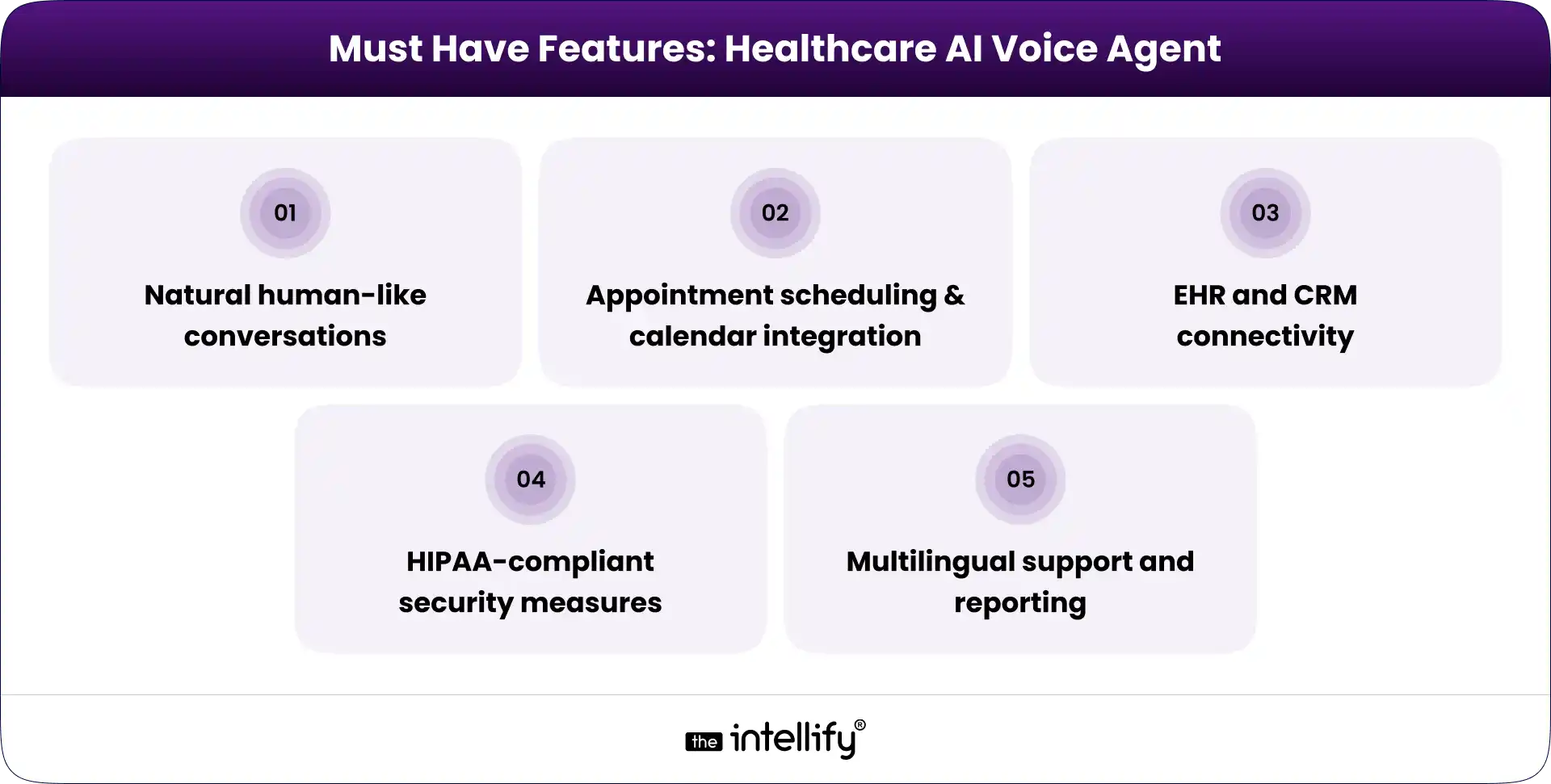
When you’re evaluating AI voice agents, it’s easy to get caught up in features. But a few things really matter if you want something that actually works well in a healthcare setup. As the use of AI in Healthcare continues to grow, healthcare providers are looking for tools that are practical, secure, and easy to integrate into everyday operations.
- Natural, human-like conversations: The interaction shouldn’t feel robotic. Patients should be able to speak normally and still get clear, helpful responses.
- Appointment scheduling and calendar integration: It should connect directly with your scheduling system so bookings, changes, and cancellations happen without manual effort.
- EHR and CRM connectivity: Access to patient data is important. Integration with existing systems helps the agent provide accurate and relevant information.
- HIPAA-compliant security measures: Patient data needs to stay protected. Strong security and compliance aren’t optional here.
- Multilingual support: If you’re serving a diverse patient base, language flexibility makes a big difference in communication.
- Analytics and reporting: You should be able to track performance, understand call patterns, and spot areas that need improvement.
- Custom workflows: Every healthcare setup is different. The system should adapt to your processes instead of forcing you to change everything.
Challenges and Considerations Before Implementation
While promising, there are challenges to consider before jumping in:
- Data privacy: Compliance with healthcare regulations is non-negotiable.
- Integration: Solutions must work seamlessly with existing systems.
- Training for medical terminology: Voice agents need to grasp healthcare language accurately.
- Human handoff: Creating a smooth transition when needed is essential for a good experience.
- Adoption: Gaining patient trust often takes time.
- Ongoing optimization: Regular upgrades ensure effectiveness and adaptability.
Real-World Impact of Voice AI Solutions in Healthcare
When voice AI is actually put into use, the results start showing fairly quickly. It’s not just about saving time it changes how smoothly day-to-day operations run and how patients experience care.
- Reduction in missed appointments: Automated reminders and easy rescheduling options help patients stay on track, which improves overall adherence.
- Faster response times: Patients don’t have to wait long to get answers, which makes interactions feel more responsive and reliable.
- Increased satisfaction: When communication is clear and timely, patients naturally feel more supported throughout their care journey.
- Lower call center workload: A large portion of routine calls gets handled automatically, so staff can focus more on patients instead of repetitive tasks.
- Better follow-up: Regular check-ins and reminders keep patients engaged, even after their visit is done.
- Operational efficiency: With fewer delays and less manual work, processes become more streamlined and things just run better overall.
Conclusion
AI voice agents in healthcare are more than just a passing trend; they’re turning into essential tools for modernizing patient communication and care operations. By simplifying appointment scheduling and enhancing patient engagement, these solutions empower healthcare organizations to work more efficiently while providing better care.
If you’re contemplating implementing AI voice agents in your healthcare practice, reach out to The Intellify today for tailored solutions that can unlock the full potential of your patient communication.
Frequently asked questions
1. Can AI voice agents call patients with reminders and follow-ups?
Yes. They can make outbound calls to confirm appointments, send medication reminders, share pre-visit instructions, and follow up after consultations to keep patients informed and engaged.
2. What types of patient requests can healthcare voice agents handle?
Healthcare voice agents can assist with appointment booking, prescription refill requests, billing questions, insurance inquiries, lab result notifications, and general FAQs.
3. How are AI voice agents different from traditional IVR systems?
Traditional IVR systems rely on fixed menu options, while AI voice agents understand natural conversation. Patients can speak normally instead of navigating through multiple keypad prompts.
4. Can AI voice agents work after clinic hours?
Yes. One of the biggest advantages of voice AI for healthcare is 24/7 availability, allowing patients to schedule appointments and get answers even when staff are unavailable.
5. How do AI voice agents help reduce missed appointments?
They automatically send confirmations, reminders, and rescheduling options. This helps patients remember upcoming visits and makes it easier to adjust appointments when needed.
6. Can voice AI integrate with EHR and scheduling systems?
Most modern AI voice agent healthcare solutions can connect with electronic health records, practice management systems, and calendars to access real-time patient and appointment information.
7. How do AI voice agents improve patient engagement?
They maintain consistent communication through reminders, follow-up calls, wellness outreach, and quick responses to common questions, helping patients stay connected throughout their care journey.