Healthcare Software Modernization: A Practical Guide to Upgrading Legacy Systems

Summary:
Legacy healthcare systems often slow operations, limit integration, and increase maintenance costs. Healthcare software modernization helps providers replace or upgrade outdated platforms with secure, flexible, and efficient solutions. This guide explores practical modernization methods, key decisions before starting, expected challenges, and how modern systems improve patient care, usability, and operational performance.

Healthcare runs on software more than most people realize. Appointments, patient records, billing, prescriptions, lab reports, and insurance checks almost every step touches a system somewhere in the background. The problem? Many hospitals, clinics, and healthcare groups are still leaning on software built years ago. Sometimes decades ago.

Those old systems may still “work,” but they often work like an old ceiling fan in summer, slow, noisy, and one bad push away from stopping.
That’s where healthcare software modernization becomes important. It helps healthcare organizations upgrade aging systems without breaking core operations. And in an industry where downtime can create real-world problems, that matters a lot.

This guide explains where legacy systems still exist, why change is needed, and how to modernize in a practical, low-chaos way.


Where Legacy Systems Still Exist in Healthcare

Many healthcare organizations still depend on older systems for daily operations. It’s common, and honestly, understandable. If a system has been handling patient records for 12 years, replacing it feels risky.

Common areas where legacy platforms still exist include:

  • Electronic Health Record (EHR) systems
  • Billing and claims management software
  • Laboratory information systems
  • Scheduling tools
  • Pharmacy systems
  • Internal admin tools built years ago
  • Reporting dashboards patched together over time

Often, these systems were built separately. One handles billing. Another stores patient records. Another runs lab workflows. They don’t always talk to each other smoothly.

That creates data silos, duplicate work, and weird delays. A nurse may need to open three screens just to confirm one patient update. Not ideal.

As digital healthcare grows, these gaps become more visible and harder to ignore.


What is Healthcare Software Modernization

Healthcare software modernization means improving outdated healthcare systems so they are faster, more secure, easier to use, and better connected to today’s technology needs.

Modernization doesn’t always mean throwing everything away and starting from scratch. In many cases, it means upgrading step by step. That can include:

  • Updating old infrastructure
  • Moving systems to the cloud
  • Improving user interfaces
  • Connecting systems through APIs
  • Rebuilding specific modules
  • Replacing only what no longer makes sense

There’s also a difference between a basic upgrade and a full transformation.

A basic upgrade might patch performance issues or update servers. A full transformation reshapes how systems work together across the organization. This is where legacy app modernization plays a major role. Instead of replacing every old application, teams modernize valuable apps so they still serve the business in a newer environment.


The Real Need for Change in Healthcare Systems

Some organizations delay modernization because “the current system still works.” But working and working well are two different things.

  • Slow performance affects daily operations:- When systems take forever to load, staff lose time all day long. Ten seconds here, thirty there, it adds up fast.
  • Difficulty integrating newer tools:- Need telehealth? AI-assisted documentation? Advanced analytics? Many older platforms struggle to connect with newer tools.
  • Limited scalability:- Healthcare organizations grow. More patients. More locations. More data. Old systems often weren’t built for modern scale.
  • Security and compliance pressure:- Outdated software can create security gaps. It may also make compliance harder with changing healthcare regulations and privacy requirements. Eventually, the cost of doing nothing becomes higher than the cost of change.


Practical Ways to Modernize Legacy Healthcare Systems

There isn’t one perfect modernization method. Different systems need different treatment.

Moving systems to the cloud without major changes (Rehosting)

This means shifting an application to cloud infrastructure while keeping most of the app intact.

Good for:

  • Fast infrastructure improvement
  • Lower hardware dependency
  • Better scalability

Improving existing systems for better performance (Refactoring)

This updates internal code without changing core business functions.

Good for:

  • Faster performance
  • Easier maintenance
  • Better long-term flexibility

Rebuilding key parts while keeping core functionality

Sometimes only parts of the system are outdated. Rebuilding those modules can deliver results without replacing everything.

Replacing outdated systems with modern solutions

If a platform is too rigid, too risky, or impossible to maintain, replacement may be the best path.

Choosing the right approach

Strong legacy system modernization starts with honesty. What still works? What drains time? What creates risk?

Not every old system is bad. Some are just old and badly dressed.


Step-by-Step Process of Healthcare Software Modernization
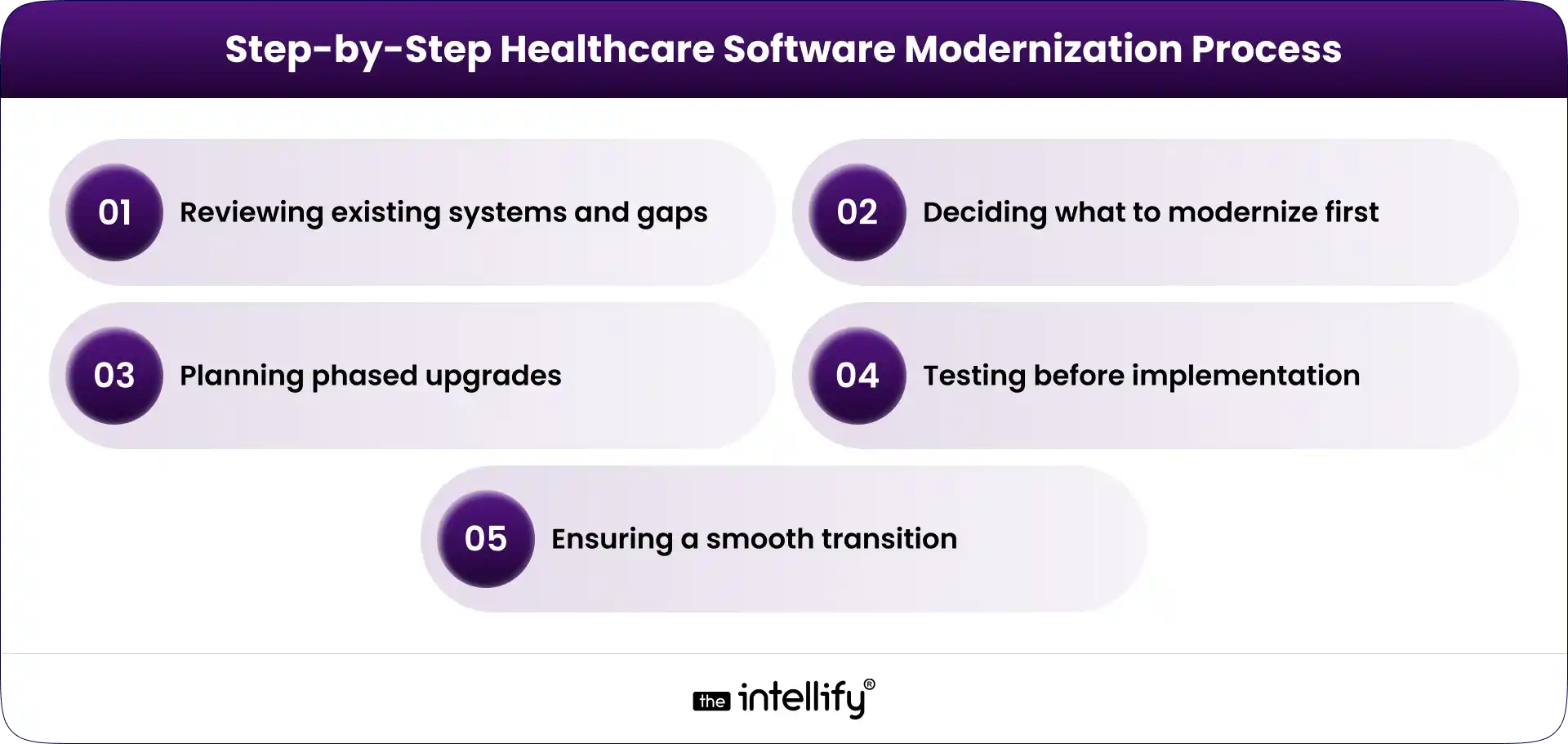
Healthcare Software Modernization Process

Modernization works best when handled in planned phases instead of sudden full-system replacement. A structured approach reduces risk and keeps healthcare operations stable.

Reviewing existing systems and identifying gaps

Start by assessing current applications, integrations, performance issues, security concerns, and workflow bottlenecks. This helps identify what needs attention first.

Deciding what to modernize first

Prioritize systems based on business impact, usage level, maintenance cost, and operational risk. High-value systems should usually come first.

Planning phased upgrades

Upgrade systems in stages rather than replacing everything at once. This makes the transition easier to manage and lowers disruption.

Testing before implementation

Each change should be tested for performance, data accuracy, security, and user experience before full deployment.

Ensuring a smooth transition

Provide staff training, technical support, and rollout planning to help teams adapt while maintaining daily healthcare services.


Improving Healthcare Applications for Better Usability

Modernization should not focus only on backend systems. It should also improve how healthcare applications feel and function for the people using them every day.

Better experience for doctors and staff

Doctors, nurses, administrators, and support teams need systems that are fast, simple, and easy to navigate. Cleaner dashboards, fewer clicks, and faster access to records can improve productivity.

Stronger patient-facing platforms

Patient portals and mobile apps should make common tasks easier, such as booking appointments, viewing reports, paying bills, and receiving updates.

Reduced manual work

Better workflows can automate repetitive tasks like data entry, reminders, approvals, and status tracking. This saves time and reduces errors.

Faster decision-making

When accurate information is available in one place, healthcare teams can respond more quickly and make better operational or clinical decisions.

Higher user adoption

Easy-to-use systems are more likely to be accepted by staff and patients, helping organizations get better results from modernization efforts.
 

Healthcare software modernization solutions


Technologies Enabling Smarter Healthcare Systems

Modern healthcare systems need technology that improves performance, supports growth, and helps different platforms work together. The right tools make modernization smoother and more practical.

Cloud infrastructure for scalability and flexibility

Cloud environments help healthcare organizations reduce dependency on old hardware and scale resources as demand grows. They also improve system availability and remote access.

APIs for connecting healthcare systems

APIs allow systems such as EHRs, billing tools, lab software, and patient portals to share data more efficiently. This reduces manual work and improves coordination.

Interoperability standards like FHIR

FHIR supports secure and structured data exchange between healthcare platforms. It helps organizations create more connected patient experiences.

Automation and AI where useful

Automation can handle repetitive workflows such as reminders, document routing, or status updates. AI can support forecasting, reporting, and operational efficiency when applied with a clear purpose.


Challenges to Expect During Modernization

Modernization can create major benefits, but it also comes with real challenges. Ignoring them is usually where projects go sideways.

  • Data migration risks: Moving records from older systems to new platforms requires careful planning, validation, and testing to avoid data errors or loss.
  • Compliance requirements: Healthcare systems must continue meeting privacy, security, and regulatory standards throughout the transition.
  • Resistance from internal teams: Employees used to existing systems may be hesitant to adopt new workflows. Proper training and communication are essential.
  • Budget and timeline pressure: Unexpected integration work or technical issues can increase costs and extend timelines if planning is weak.
  • Avoiding patient care disruption: System upgrades should be managed in phases to ensure daily healthcare services continue without interruption.


Key Decisions Before Starting Modernization
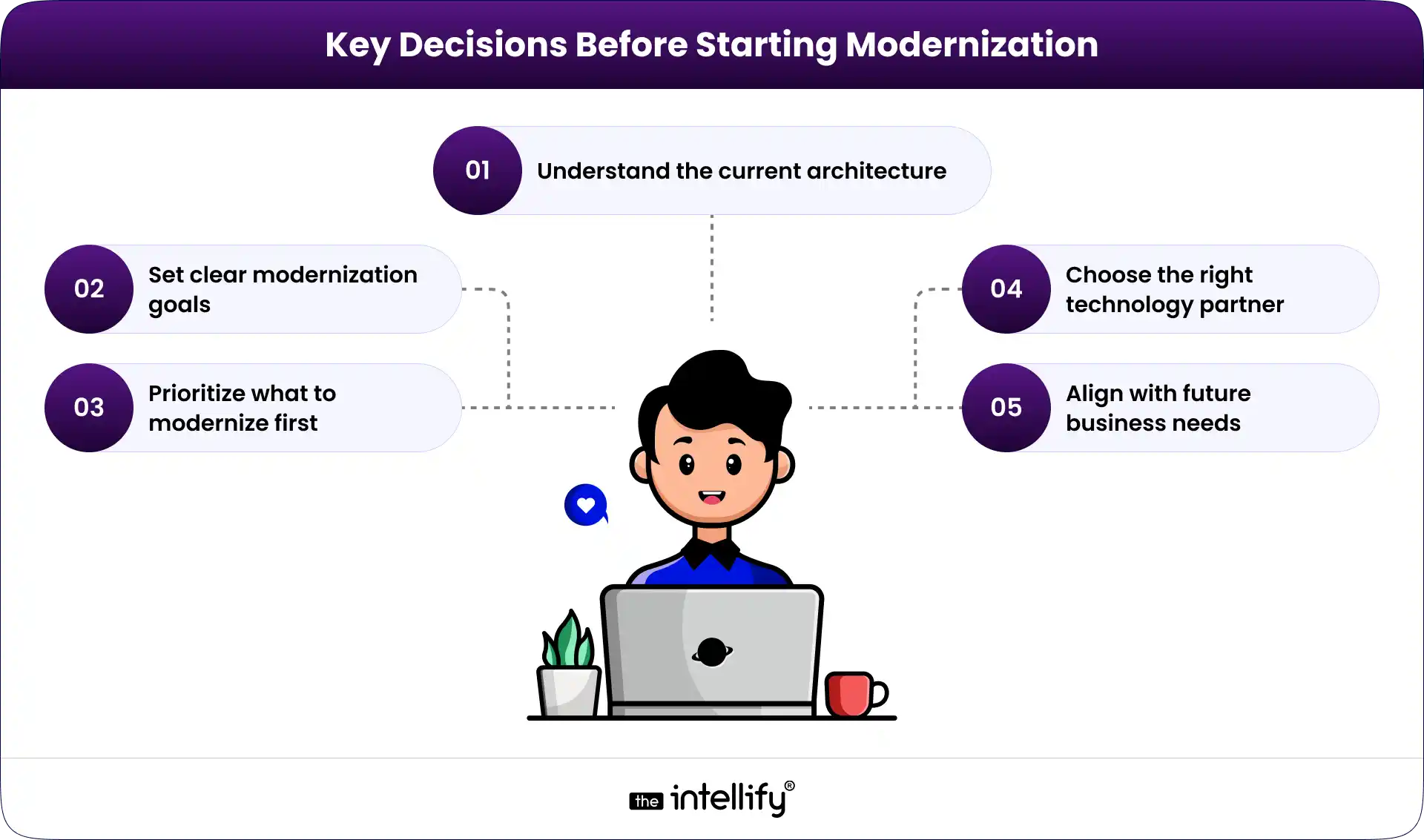
Decisions Before Starting Modernization

Before starting any modernization effort, leadership teams need clarity. Rushing into tools or vendors too early can create expensive mistakes.

Understand the current architecture

Review existing systems, integrations, performance issues, and dependencies before making changes.

Set clear modernization goals

Define what success looks like, such as faster workflows, better reporting, stronger security, or improved patient experience.

Prioritize what to modernize first

Not every system needs immediate attention. Some upgrades create far more value than others. Focus first on systems that are high-risk, heavily used, expensive to maintain, or blocking growth.

Choose the right technology partner

Technology skill matters, but healthcare experience matters too. A strong partner understands workflows, compliance realities, and the importance of operational continuity.

Align with future business needs

Modernization should support where the organization is heading over the next three to five years. Expansion plans, growth in remote care, acquisitions, and new service lines should all be considered.


How Healthcare Operations Improve After the Upgrade

Once systems are modernized, operational improvements are usually noticeable across teams.

  • Faster and smoother workflows: Tasks such as scheduling, billing, reporting, and communication become quicker and more efficient.
  • Better access to connected data: Departments can access shared information more easily, improving collaboration and decision-making.
  • Improved patient experience: Patients benefit from easier portals, faster responses, and more convenient digital services.
  • Lower maintenance burden: Modern systems reduce reliance on outdated infrastructure and constant technical fixes.
  • Better scalability: Organizations can support more users, locations, and services without major system strain.


Future Direction of Healthcare Systems

Healthcare technology is moving toward smarter, more connected environments rather than isolated software tools.

Real-time operations and decision-making

More systems will provide live visibility into appointments, patient flow, staffing needs, inventory, and service performance. Real-time data helps leaders respond faster rather than react days later.

Growth of remote care models:

Telehealth, remote monitoring, and digital patient engagement will continue expanding. That means backend systems must support secure communication, integrated records, and seamless virtual workflows.

Stronger interoperability

The future depends on systems exchanging data smoothly across providers, insurers, labs, and patient-facing platforms. Better interoperability reduces friction and improves continuity of care.

Continuous modernization

Healthcare organizations are moving away from giant once-a-decade replacement projects. Instead, they are adopting steady improvement cycles with regular updates and modular upgrades.

Honestly, that’s a healthier model for everyone involved.

Smarter use of automation and AI

Expect more targeted AI adoption in operations, documentation support, forecasting, and workflow efficiency. The winning organizations will use it selectively, where value is measurable.
 

Modernize legacy healthcare system


Final Thoughts

Modernization is not a one-time event. It is an ongoing process focused on improving systems step by step. Healthcare organizations should prioritize real business needs such as usability, speed, security, and better data access rather than chasing unnecessary technology trends.

Start with clear goals, modernize high-impact systems first, and scale improvements over time. That practical approach usually delivers the strongest long-term results.


Frequently Asked Questions (FAQs)

1. How do you know if your healthcare system needs modernization instead of small upgrades?

If your system slows down daily work, struggles to connect with newer tools, or needs frequent fixes, it’s a sign that upgrades aren’t enough. Modernization becomes necessary when the system starts limiting efficiency and growth.

2. Can healthcare software be modernized without replacing the entire system?

Yes, most organizations follow a phased approach where critical parts are upgraded step by step. This helps avoid major disruptions while gradually improving the overall system.

3. How long does it take to modernize healthcare software systems?

The timeline depends on system complexity and size, ranging from a few months to over a year. Most organizations prefer phased modernization to manage risk and maintain continuity.

4. How does software modernization improve patient experience in healthcare?

It makes processes like appointment booking, record access, and communication faster and smoother. This reduces wait times and improves overall patient satisfaction.

5. What should be modernized first in a healthcare system?

Systems that directly impact patient care or daily operations should be prioritized first. This ensures quicker improvements and better overall efficiency early in the process.

6. How is compliance managed during healthcare software modernization?

Compliance is maintained by following data protection standards and ensuring secure handling of patient information. Regular testing and audits also help keep systems aligned with regulations.

7. Is healthcare software modernization a one-time effort or continuous?

It’s an ongoing process, as technology and healthcare needs continue to evolve. Regular updates and improvements are required to keep systems efficient and future-ready.
Healthcare Membership Platform Development: Guide for Startups & DPC Providers

Summary:
Healthcare membership platform development is transforming how providers deliver continuous, subscription-based care. This guide explains how membership models help organizations improve patient engagement, generate predictable revenue, and streamline operations. It covers essential features, development strategies, integration needs, and the role of automation and AI in modern healthcare systems. Whether you’re a startup or a DPC provider, this blog offers practical insights to build scalable, compliant, and patient-centric healthcare membership platforms.

In today’s healthcare landscape, organizations are increasingly looking into healthcare membership platform development. This change highlights the rising demand for ongoing and accessible care, as well as the need for steady revenue and enhanced patient engagement. As expectations soar for digital-first healthcare services, many providers are moving beyond traditional systems to offer innovative solutions. This guide will delve into the essentials of creating effective healthcare membership platforms and how they can improve long-term service delivery for both startups and Direct Primary Care (DPC) providers.


Why Organizations Are Developing Membership-Based Healthcare Apps

Growing demand for continuous and accessible care

Patients today aren’t just looking for one-off visits; they want ongoing access to their healthcare providers. Membership-based platforms make it easier to connect, ensuring that patients receive continuous care tailored to their needs.

Need for predictable revenue and stronger patient engagement

Membership models create a steady stream of income, helping organizations forecast finances more effectively. By nurturing ongoing relationships, these models foster patient loyalty and engagement, leading to better health outcomes.

Rising expectations for digital-first healthcare services

With the surge of digital solutions in other industries, patients expect the same convenience from healthcare. Membership platforms can meet these expectations with features like telemedicine and online appointment scheduling.

Why many providers are moving beyond traditional systems

Many healthcare providers find their existing systems inadequate, prompting a shift toward modern solutions that enhance both operational efficiency and patient satisfaction.

How a membership platform supports long-term service delivery

By offering flexible membership options, healthcare providers can establish sustainable business models that prioritize long-term patient health while streamlining operations.


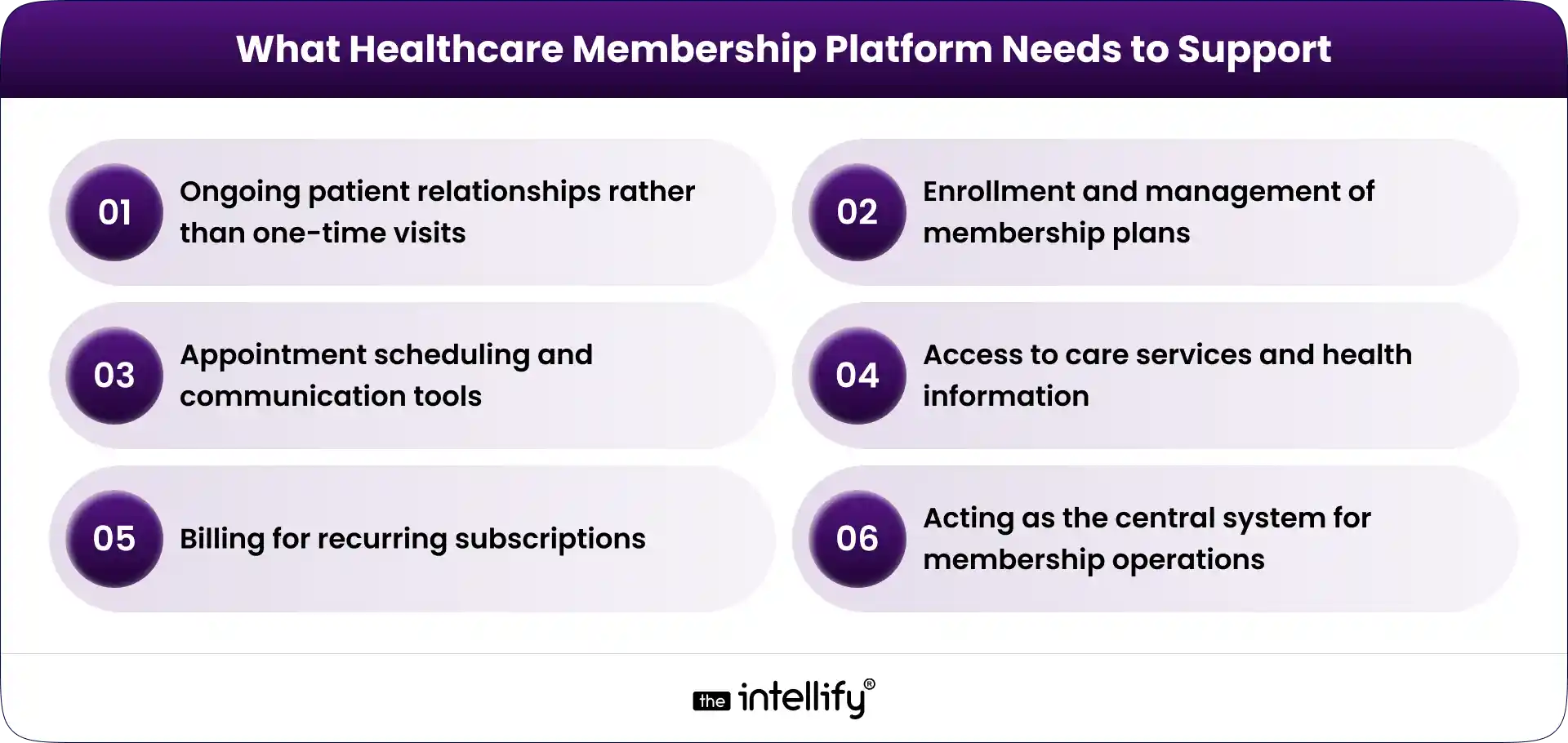
What Your Membership Platform Needs to Support

Feature of Healthcare Membership Platform

When planning your healthcare membership app development, keep these key functionalities in mind:

Ongoing patient relationships rather than one-time visits

Your platform should enable continuous engagement, allowing patients to easily reach out for advice or updates about their health.

Enrollment and management of membership plans

A smooth onboarding experience is key. Patients should find it easy to enroll in various membership plans, while providers should effortlessly manage these memberships.

Appointment scheduling and communication tools

Incorporate tools that let patients book appointments and communicate with their healthcare providers in real-time.

Access to care services and health information

Patients should have hassle-free access to their medical records and prescriptions, empowering them to take control of their health.

Billing for recurring subscriptions

Put in place a billing system that allows for automatic payments, reducing administrative tasks and enhancing the overall patient experience.

Acting as the central system for membership operations

Your platform should act as the hub for all membership-related activities, ensuring efficient management from enrollment to billing.


When and Why Companies Decide to Build One

The choice to invest in DPC platform development often varies between organizations and is frequently prompted by specific needs:

Launching new membership-based programs

If you’re looking to roll out new services, a dedicated membership platform can simplify that process.

Expanding telehealth or outpatient services

As telehealth gains traction, many providers recognize the need to broaden their digital offerings through membership applications.

Improving patient retention and accessibility

Membership models can help retain patients through enhanced engagement, making healthcare more accessible.

Creating scalable digital offerings

A well-crafted membership platform can easily adapt to growing needs, ensuring that your healthcare offerings expand alongside your business.

Responding to competitive pressure from modern providers

To maintain relevance, many organizations are updating their service models, and developing a membership platform is often a crucial step in that transformation.

A U.S.-based Direct Primary Care platform improved patient access and care coordination by implementing a secure digital solution across its services. The system streamlined operations for providers while keeping sensitive health data protected under strict privacy standards. This shows how modern AI-enabled technology can enhance healthcare delivery without compromising compliance. View the complete case study for more details: https://theintellify.com/work/healthcare2u/


Modernizing Legacy Systems for a Membership Model

Limitations of outdated healthcare software

Legacy modernization systems can become burdensome, hampering efficiency and negatively impacting the patient experience.

Fragmented tools and manual workflows

Fragmentation leads to inefficiencies and a higher likelihood of errors. Modernizing software can provide a unified solution.

Need for unified digital infrastructure

A centralized platform helps integrate various functionalities, streamlining operations across the board.

Options for modernization:

  • Replacing legacy systems: Sometimes, a full overhaul is necessary for highly outdated systems.
  • Integrating existing systems: Occasionally, it makes more sense to enhance and integrate what you already have.
  • Phased transition strategies: Gradually shifting to a modern system can help ensure ongoing service continuity.

Ensuring continuity of ongoing services

Transitioning to a new system requires careful planning to avoid interruptions in patient care.


Core Features Required for a Healthcare Membership App

To truly benefit your patients and staff, your healthcare membership app should include some essential features:

Patient Experience

  • Account creation and enrollment: A simple, frictionless sign-up process.
  • Appointment booking and management: Easy scheduling.
  • Secure messaging and communication: Direct lines to providers.
  • Access to records and service details: Empowerment through information.
  • Mobile-friendly interface: Accessibility on any device.

Provider & Staff Tools

  • Patient management dashboard: Streamlined oversight of patient interactions.
  • Care coordination features: Improved collaboration among healthcare providers.
  • Workflow tracking: Real-time progress monitoring.
  • Reporting and analytics: Insight into important operational metrics.

Membership & Billing Management

  • Subscription plans and tiers: Flexible options for patients.
  • Recurring payment processing: Automated billing features.
  • Plan upgrades, renewals, and cancellations: Easy management for both patients and providers.
  • Financial monitoring: Insight into membership performance.


Healthcare membership app development


Technology Architecture & Compliance Requirements

Cloud-based healthcare SaaS architecture:-  A cloud-based solution boosts accessibility while ensuring data security.

Data security and privacy considerations:- Health information is sensitive, so your platform must guard against unauthorized access.

HIPAA-compliant system design:-  Compliance with regulations is a must for navigating the healthcare landscape.

Role-based access and audit controls:- Set up access controls to protect data while still allowing your team the access they need.

Scalability and performance planning:-  Your platform should be designed to grow alongside your organization’s needs.


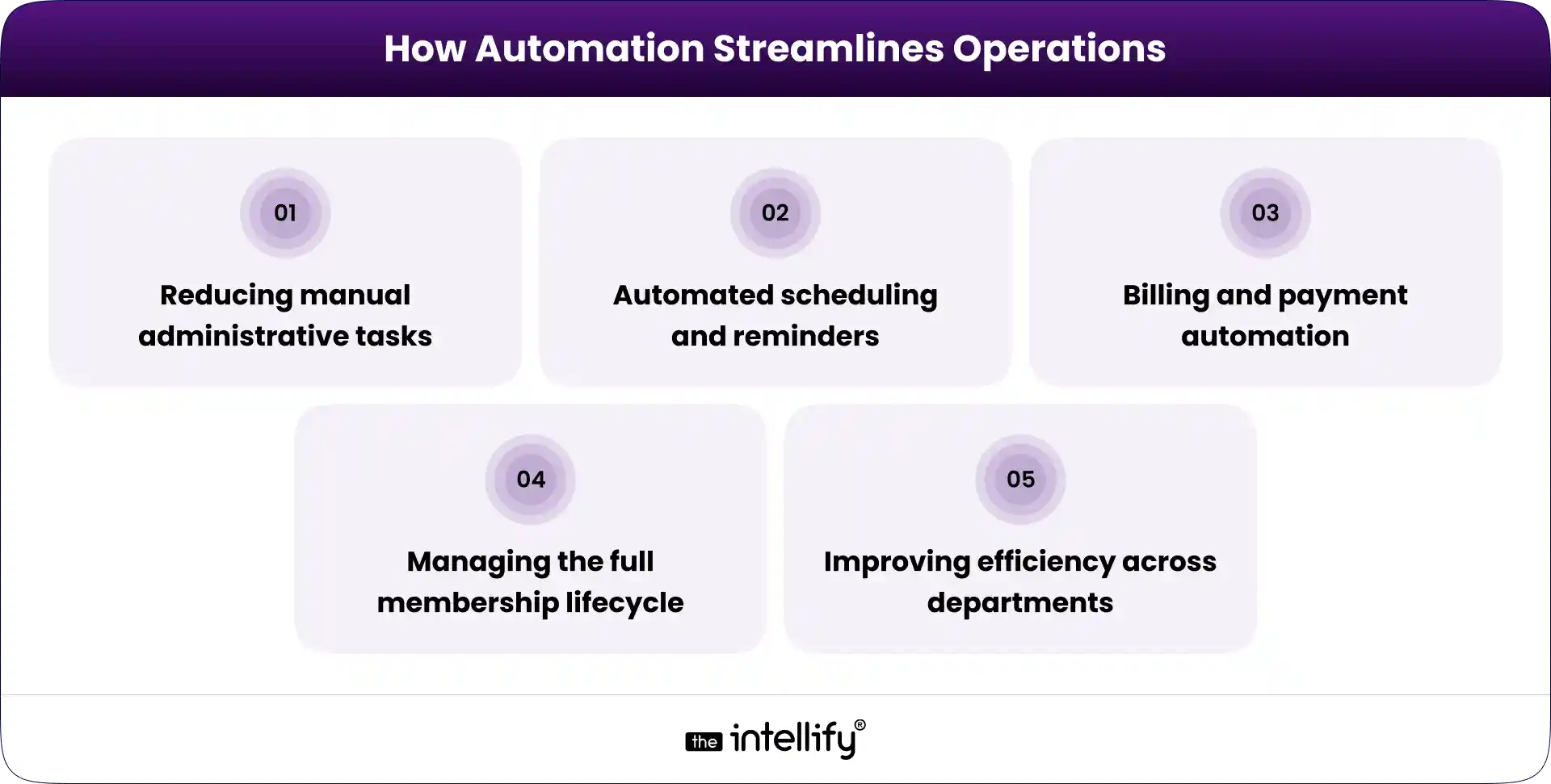
How Automation Streamlines Operations

How Automation Streamlines Operations

1. Reducing manual administrative tasks

Automating routine tasks can free up time for healthcare providers and support staff, ultimately leading to better patient care.

2. Automated scheduling and reminders

This can help reduce no-shows and keep patients informed about their upcoming appointments.

3. Billing and payment automation

An automated system simplifies financial processes, increasing both revenue and patient satisfaction.

4. Managing the full membership lifecycle

Efficient management of all membership stages from sign-up to renewal enriches the user experience.

5. Improving efficiency across departments

Streamlined workflows can enhance overall efficiency, benefiting both patients and providers.


The Role of AI in Advanced Membership Platforms

Intelligent scheduling and demand prediction:

AI can analyze patient data to optimize scheduling and predict demand for services.

Personalized patient engagement:

Harnessing AI allows for tailored content, significantly improving the patient experience.

Automated support and triage tools:

Chatbots can handle routine inquiries, letting clinical staff focus on complex cases.

Insights for operational planning:

AI can sift through operational metrics, guiding organizations in making informed decisions.

Enhancing decision-making while supporting clinicians:

AI tools can provide actionable insights to help healthcare providers improve care delivery.


Integration With Existing Healthcare Systems

  • Connecting with electronic health records:- Seamless integration ensures that all patient data is synchronized across platforms.
  • Integration with labs, pharmacies, and diagnostics:- Connecting with third-party services can streamline operations and elevate patient care.
  • Payment gateways and communication tools:- Make sure your platform can effectively manage transactions and facilitate communication.
  • Ensuring data consistency across platforms:- Data consistency helps prevent errors and enhances the user experience.
  • Importance of interoperability for smooth operations:- An interconnected healthcare landscape is crucial for continuity of care.


Development Approach: How Organizations Build the Platform

1. Defining scope and requirements:- Before diving into development, clarify what your platform needs to accomplish.

2. Choosing custom development or adapting existing solutions:- Evaluate whether a tailored solution or adapting a pre-existing platform fits your needs better.

3. Selecting internal teams or external partners:-  Decide whether to use in-house talent or hire external experts for development.

4. Designing for scalability and future expansion:- Ensure your system is robust enough to grow with your organization.

5. Testing and validation before launch:- Pilot testing is essential to ensure everything runs smoothly upon launch.


Implementation & Adoption Strategy

Preparing staff through training:- Thorough training is key to facilitating smooth transitions to new systems.

Updating workflows to align with the new system:- Make sure that all workflows are updated to maximize efficiency.

Educating patients about the membership model:- Open communication with patients regarding the new model is crucial for buy-in.

Phased rollout versus full launch:- Consider whether to roll out your platform gradually or all at once based on user feedback.

Monitoring early performance and feedback:- Collecting feedback post-launch can lead to necessary improvements.

Continuous improvements after deployment:- Keep assessing the platform to enhance its effectiveness over time.


Cost Considerations and Investment Factors

  • Key drivers of development costs:- Initial costs will cover development and compliance, but don’t forget to budget for ongoing maintenance.
  • Infrastructure and compliance expenses:- Investing now can lead to considerable long-term savings.
  • Integration complexity:- Complex integrations may require additional resources, impacting your initial investment.
  • Ongoing maintenance and support:- Ensure you set aside a budget for long-term support and maintenance needs.
  • Factors affecting long-term ROI:- Evaluate how your platform will generate revenue over time for a clearer picture of ROI.


Key Challenges to Plan for Early

1. Resistance to organizational change:- Get staff on board with new systems to facilitate a smoother transition.

2. Migrating data from legacy systems:-  This can be tricky, but it is essential for centralized information management.

3. Security and privacy considerations:- Continuous review of data protection measures is crucial.

4. Balancing customization with usability:- Find the right balance so the platform meets unique needs without overwhelming users.

5. Maintaining service continuity during transition:- Be proactive about ensuring service stays steady during the shift.


Conclusion

In summary, healthcare membership platform development is reshaping how organizations deliver care. By adopting this model, providers can boost patient engagement, streamline operations, and establish sustainable practices. Thoughtful planning and cross-team coordination are vital for long-term success. If you’re considering making the leap into membership-based healthcare services, now’s the perfect time to evaluate your readiness for this transformative journey!


Modernize healthcare platform


Frequently Asked Questions (FAQs)

1) What is a healthcare membership platform, and how does it work?

A healthcare membership platform is a digital system that allows providers to offer ongoing care through subscription plans instead of one-time visits. Patients enroll, pay recurring fees, and access services like appointments, communication, and care coordination through a single app or portal.

2) Who should consider building a healthcare membership app?

Organizations that want predictable revenue, stronger patient relationships, and scalable digital services benefit most. This includes clinics, telehealth providers, startups, and healthcare groups expanding preventive or continuous care programs.

3) How is a membership platform different from a traditional patient portal?

A traditional portal mainly supports appointment booking and records access. A membership platform manages the entire lifecycle, including enrollment, subscriptions, communication, billing, and ongoing care delivery, making it the operational core of membership-based services.

4) What core features are essential for a successful membership healthcare app?

Key capabilities include membership enrollment, recurring billing, appointment management, secure communication, patient records access, and administrative tools for providers. Without these, managing ongoing care relationships becomes difficult.

5) How does automation improve day-to-day operations?

Automation reduces manual tasks such as scheduling, reminders, billing, and membership renewals. This allows staff to focus more on patient care while improving accuracy and operational efficiency across departments.

6) How long does it typically take to develop and launch a membership platform?

Timelines vary depending on complexity, integrations, and compliance requirements. Many organizations start with a focused version, test it with a pilot group, and expand gradually to reduce risk and ensure smooth adoption.

7) What are the biggest challenges organizations face during implementation?

Common challenges include staff resistance to change, migrating data from older systems, ensuring security and compliance, and redesigning workflows. Careful planning and phased rollout strategies help overcome these issues.

View
Case Study