Digital Transformation in Healthcare: Strategy for Membership Platforms

Summary:
Digital transformation is helping healthcare organizations build modern membership platforms that improve patient experience and operational efficiency. This blog explains how technologies like telehealth, AI, secure patient portals, and subscription billing systems support the growth of membership-based healthcare models. It also explores key platform components, implementation strategies, industry challenges, and future trends. With the right digital approach, healthcare providers can create scalable platforms that deliver continuous care and strengthen long-term patient relationships.

Why Membership-Based Healthcare Is Rapidly Evolving

The healthcare landscape is experiencing significant changes. We’re seeing a leap from traditional care models to subscription and membership platforms, fundamentally reshaping how services are delivered and consumed. With patients increasingly demanding convenience, transparency, and digital access, healthcare providers are under pressure to boost operational efficiency and retain their clientele. As we gear up for 2026, this year stands as a pivotal moment for modernizing healthcare platforms, making it essential for decision-makers to craft effective strategies.

In this guide, we’ll delve into what digital transformation means for healthcare membership platforms and how you can navigate this shifting landscape to enhance patient outcomes and drive business performance.


What Digital Transformation in Healthcare Means for Membership Platforms

Digital transformation in healthcare goes beyond simple digitization; it’s about creating connected experiences that weave together clinical, administrative, and customer functions. This integration paves the way for smoother patient journeys, allowing for preventive, continuous, and personalized care models.

Aligning technology with your business goals and focusing on member value is crucial. When organizations do this, they’re better equipped to meet the needs of their subscribers and foster a more engaged and loyal patient base.


Key Drivers Accelerating Digital Transformation in Healthcare

Several key factors are pushing this transformation in healthcare:

  •  Demand for Virtual Care: More patients prefer remote access to healthcare services, prompting platforms to expand their telehealth options.
  • Value-Based Care models: As these models gain popularity, healthcare organizations must adopt data-driven approaches to improve care quality and patient outcomes.
  • Competitive pressure: Providers face growing competition from digital first health solutions that cater to modern patient needs more effectively.
  • Regulatory Requirements: Compliance mandates are driving the need for robust systems focusing on data management and security.
  • Workforce Shortages: The rising demand for healthcare services often surpasses available resources, making automation critical.


Core Components of a Modern Healthcare Membership Platform
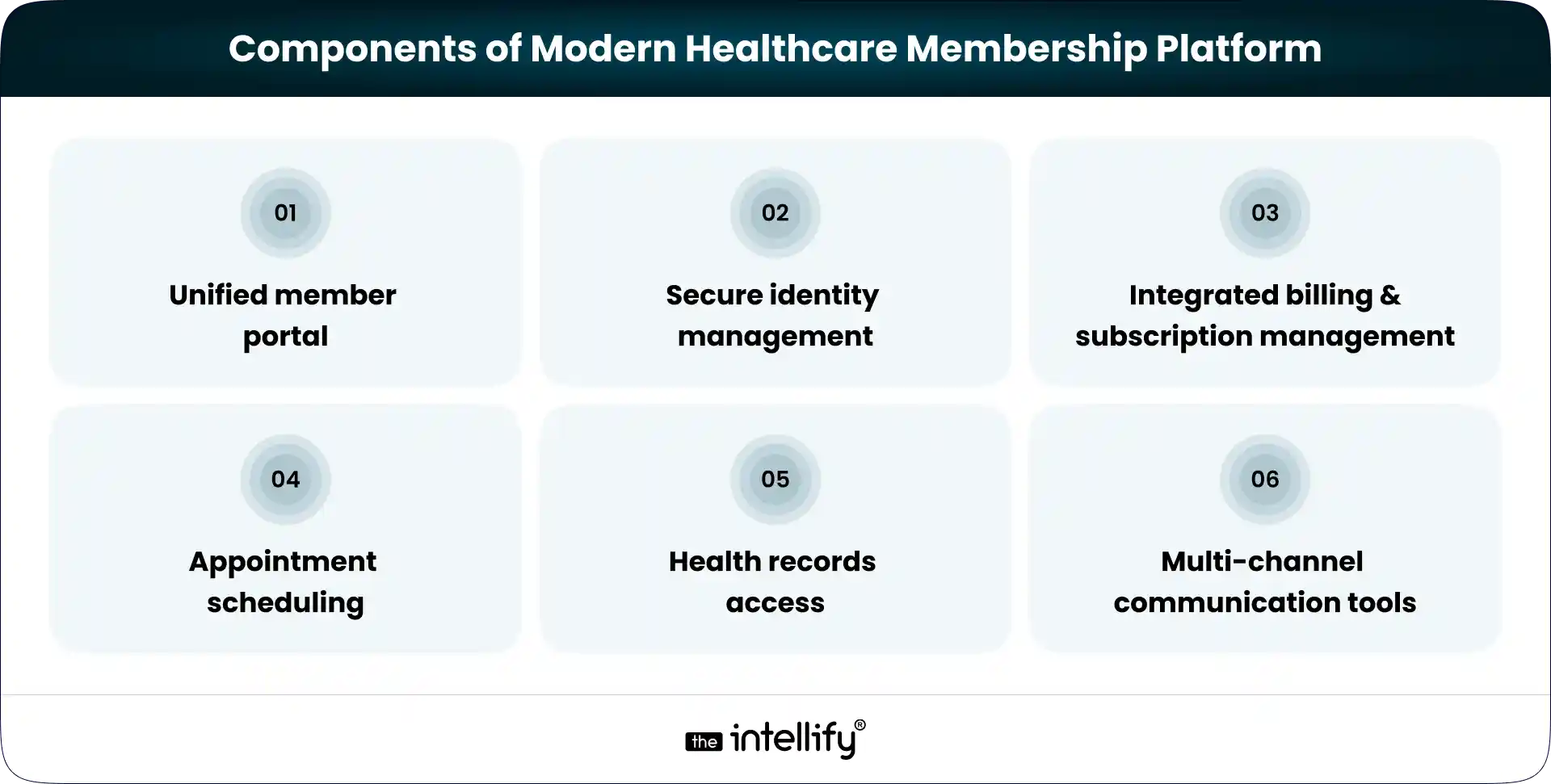
A contemporary healthcare membership platform should feature several essential components:

1. Unified member portal:- A central hub for services, plans, and communication can significantly enhance the user experience.

2. Secure identity management:- Safeguarding member information through secure access protocols is absolutely essential.

3. Integrated billing and subscription management:- Streamlined payment processes boost operational efficiency.

4. Appointment scheduling:- It should be easy for users to select telehealth services or in-person visits.

5. Health records access:- Allowing members to view and manage their health records fosters a sense of ownership.

6. Multi-channel communication tools:- Incorporating chat, messaging, and notifications keeps members engaged and informed.
 

Build Healthcare Membership Platform


Building a Practical Digital Transformation Strategy for Healthcare Organizations

To thrive in this transition, organizations should follow these key steps:

  • Assess current platform maturity: Identify any technology or workflow gaps that might be holding the organization back.
  • Define clear objectives: Understand what success looks like for you, improved patient satisfaction, or heightened engagement levels.
  • Prioritize improvements: Focus on high-impact changes that can deliver quick wins.
  • Secure leadership buy-in: Getting alignment across departments promotes unified efforts during this transition.
  • Plan budget and timelines: Having realistic financial and operational plans helps pave the way for smoother implementation.


Digital Healthcare Solutions That Deliver Real Member Value

The best digital healthcare solutions genuinely add value for members, including:

  • Mobile-first access: Make sure services are available on mobile devices, allowing patients to engage with healthcare wherever they are.
  • AI-supported tools: Such tools can assist in triaging symptoms and streamlining care.
  • Wellness tracking integration: Real-time health monitoring empowers patients to take charge of their wellness.
  • Simplified payment processes: Minimize the friction often encountered during claims processes.


Step-by-Step Implementation Plan

To implement a digital transformation strategy effectively, consider these phases:

Phase 1: Discovery: Engage stakeholders to gather requirements and align on clear objectives.

Phase 2: Technology selection: Select technologies that will work in harmony to support your goals.

Phase 3: Pilot programs: Begin with controlled rollouts to test systems and processes.

Phase 4: Staff training: Equip your team with the skills they’ll need for a successful transition.

Phase 5: Full deployment: Launch the platform in full and concentrate on ongoing optimization.

Navigating change management throughout this journey is vital.


Use Cases of Digital Transformation for Healthcare Membership Models

1. Concierge care:- Subscription based models that provide comprehensive care.

2. Corporate wellness programs:- Employee health initiatives that offer preventive care while lowering healthcare costs.

3. Chronic disease management:-  Memberships dedicated to managing long-term health conditions.

4. Integrated care networks:- Bundled services that enhance complementary care options.

5. Community based initiatives:- Programs focusing on public health and wellness.
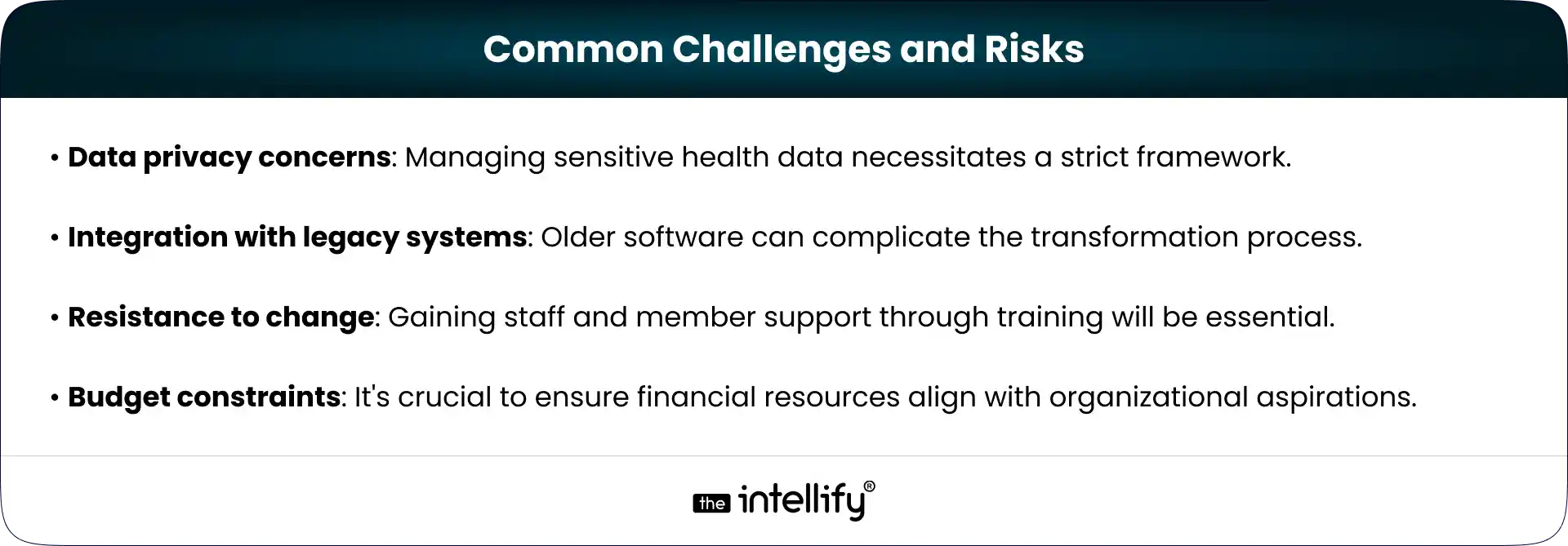
 

Common Challenges and Risks


Measuring Success: KPIs That Actually Matter

To understand whether digital transformation is truly working, healthcare organizations need to track a few meaningful performance indicators rather than just surface level metrics. Some of the most useful KPIs include:

Member acquisition and retention: how effectively the platform attracts new members and keeps existing ones engaged over time.

Engagement and platform usage: how frequently members use features like appointments, messaging, or health records.

Operational efficiency: improvements in workflows, response times, and overall service delivery.

Reduction in administrative workload: the extent to which automation reduces manual tasks for staff.

Patient satisfaction and experience: feedback, ratings, and overall member experience with the platform.

Subscription revenue growth: whether membership programs are generating stable and increasing recurring revenue.


Future Trends Shaping Healthcare Membership Platforms in 2026 & Beyond

Healthcare membership platforms will keep evolving as patient expectations, technology, and care delivery models change. A few trends are already shaping what the next phase may look like.

Expansion of hybrid care models

Many providers are blending virtual consultations with in person visits. This hybrid approach gives patients flexibility while still allowing clinics to handle physical care when it’s needed.

Greater use of predictive analytics and AI

Healthcare platforms are starting to rely more on AI and predictive analytics to identify potential health risks early and support better clinical decisions.

Interoperability across healthcare ecosystems

Platforms will increasingly need to connect with labs, pharmacies, insurers, and other systems so patient information can move smoothly across the care journey.

Personalized preventive care programs

Membership models are gradually shifting toward prevention. Using patient data, providers can design wellness programs tailored to individual health needs.

Integration with wearables and home devices

Wearables and remote monitoring tools are becoming part of everyday healthcare. These devices help providers track health signals continuously and respond earlier.

Shift toward outcome-focused services

Rather than focusing only on the number of visits, healthcare organizations are paying more attention to long-term health outcomes and patient experience.

 

Healthcare digital transformation Solutions


Conclusion:

Digital transformation in healthcare is essential for organizations aiming to stand out in a competitive landscape. By implementing effective membership platforms, healthcare providers can enhance patient care and improve operational efficiency. As expectations continue to evolve, many organizations are also working with experienced digital teams like The Intellify to modernize systems in a way that supports both clinical and operational needs without disrupting existing services.

The strategic steps you take now will build a robust foundation for a patient centered future in healthcare. Over time, this approach helps build trust, improve outcomes, and ensure healthcare delivery remains sustainable in an increasingly digital world.


Frequently Asked Questions (FAQs)

1) Why are subscription and membership models becoming popular in healthcare?

Many patients want predictable costs, faster access to care, and ongoing support instead of one-time visits. Membership models offer scheduled checkups, preventive care, virtual consultations, and wellness services under a single plan, which feels more convenient and reassuring.

2) What are the first steps to start digital transformation for a healthcare membership platform?

Most organizations begin by evaluating their current systems, identifying gaps in patient experience, and defining clear goals. Instead of replacing everything at once, successful teams prioritize high-impact improvements like online scheduling, secure communication, and digital payments.

3) How can digital tools improve member retention in healthcare programs?

Digital tools make services easier to use and more responsive. Features like reminders, personalized health tips, quick support chat, and smooth renewals help members stay engaged. When people feel supported between visits, they are far more likely to continue their subscription.

4) Is digital transformation necessary for existing healthcare membership programs, or only for new ones?

Digital transformation benefits both. Established programs can modernize outdated systems, improve member experience, and reduce operational costs, while new programs can launch with scalable digital foundations from the start.

5) How can providers ensure patient data stays secure during transformation?

Security must be built into every stage, from system design to daily operations. This includes encryption, strict access controls, compliance with regulations, regular audits, and staff training. Trust is critical in healthcare, so privacy protection cannot be an afterthought.

6) What common mistakes should organizations avoid when modernizing their platforms?

A frequent mistake is focusing only on technology while ignoring user experience. Another is trying to implement too many changes at once. Successful transformations balance innovation with simplicity and involve both staff and patients in the process.
Insurance Claims Automation with AI: A Smart Vendor Evaluation Guide

Summary:
Insurance claims automation uses AI to streamline the claims lifecycle from FNOL to settlement by reducing manual work, improving accuracy, and speeding up claim decisions. This guide explains how AI enhances claims processing, where human oversight remains important, and what insurers should evaluate when selecting an automation vendor. It also highlights key factors like scalability, compliance, and integration to ensure insurers adopt solutions that deliver long-term operational value.

In today’s fast-paced digital world, insurance claims automation isn’t just a trend; it’s a must-have. Insurers are increasingly adopting AI to not only streamline their claims processes but also to reduce costs and enhance customer experiences. Yet, many companies find themselves facing hurdles when trying to implement AI effectively and achieve real results. This guide aims to simplify the journey into the world of insurance claims automation and offers tips on how to evaluate potential vendor partners.


Why Insurance Claims Automation Often Fails to Deliver

Despite pouring resources into technology, many insurers discover that their automation efforts miss the mark. Here are some common stumbling blocks:

  • Lack of clarity: Often, insurers dive into AI implementation with little understanding of their current processes, leading to outcomes that don’t quite connect.
  • Short-term perspectives: Vendor choices are often made without a focus on long-term goals, creating gaps between expectations and capabilities.
  •  Integration challenges: Legacy systems can be a real roadblock, complicating effective AI integration and slowing down the benefits of automation.
  •  Choosing the right partner: The success of AI initiatives heavily depends on selecting the right technology partner, making this choice pivotal.

By avoiding these pitfalls, you can unlock the potential of AI to truly transform your claims processing.


Understanding the Role of AI in Modern Claims Handling

Insurance claims automation uses artificial intelligence to streamline and support different stages of the claims process. Instead of relying heavily on manual reviews, AI helps insurers capture, analyze, and process claim information more efficiently from First Notice of Loss (FNOL) to final settlement.

AI in Insurance enhances the claims journey by automatically extracting data from documents, identifying missing information, flagging potential fraud risks, and helping prioritize claims based on complexity. This allows insurers to handle routine claims faster while improving overall accuracy.

Unlike rule-based automation, which follows fixed instructions, AI-driven systems learn from data patterns and adapt over time. This enables smarter decision-making and more flexible claim handling.

However, human expertise remains essential. Claims adjusters still review complex cases, make judgment-based decisions, and ensure fair outcomes.

As claim volumes increase and customer expectations rise, many insurers are shifting toward AI automation to improve efficiency, reduce processing time, and deliver better policyholder experiences.


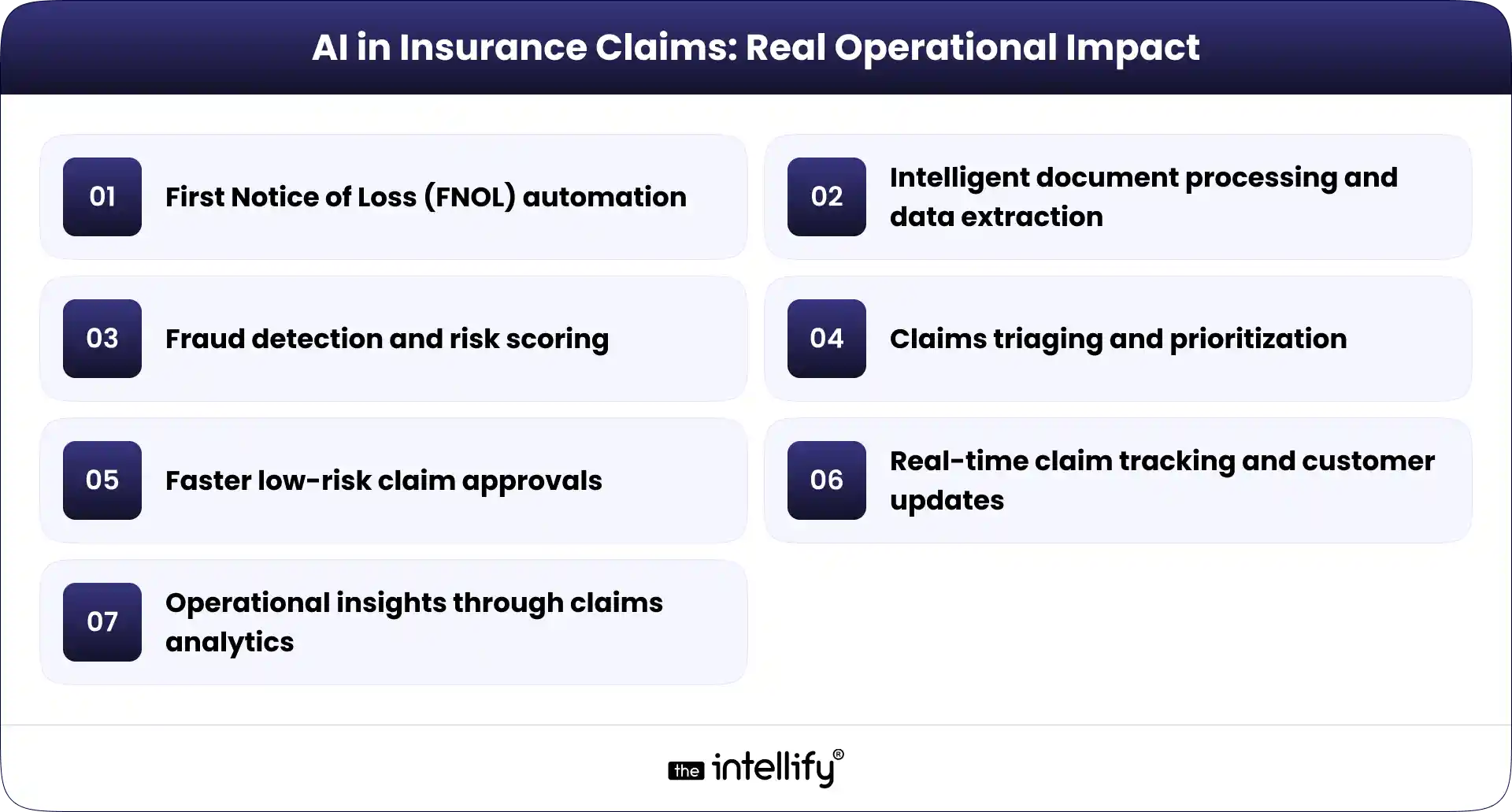
Where AI Creates Real Operational Impact in Claims

AI in insurance claims

Artificial Intelligence goes beyond just automation; it enhances overall operational effectiveness. Here’s how AI can truly make a difference in various stages of claims handling:

  • First Notice of Loss (FNOL) automation: Accurately and quickly capture claims data right from the start.
  • Intelligent document processing and data extraction: Streamline data extraction from various document types, cutting down on manual tasks.
  • Fraud detection and risk scoring: Use algorithms to efficiently spot potentially fraudulent claims.
  • Claims triaging and prioritization: Speed up processing by categorizing claims based on complexity and risk factors.
  • Faster low-risk claim approvals: Expedite straightforward claims, enhancing customer satisfaction.
  • Real-time claim tracking and customer updates: Keep customers informed throughout the claims journey with instant updates.
  • Operational insights through claims analytics: Leverage analytics to derive meaningful insights that can improve processes.

Focusing on these areas gives insurers a solid edge in the market.


Understanding Your Current Claims Workflow Before AI Automation

Before jumping headfirst into automation, it’s essential to take a good look at your current claims workflow:

1. Gap Identification:- Pinpoint areas where the current process might be falling short, whether in speed, cost efficiency, or customer experience (CX).

2. Business objectives:- Clearly define what you want to achieve with automation—quicker claims, reduced fraud, improved customer interactions, etc.

3. IT Systems Assessment:- Review your existing technology stack and its readiness for integration.

4. Volume and Scalability:- Consider anticipated claims volume to ensure your automated processes can scale effectively.

5. Team alignment:- It’s vital for operations, compliance, and IT departments to work in harmony.

6. Setting realistic Expectations:- Be upfront about timelines and outcomes before diving in.

Having a strong grasp of your existing workflow will set you up for a smooth AI transition.


Insurance Claim Automation Solutions


Structuring an Effective AI-Driven Claims Automation Model

To truly harness the power of AI in claims automation, focus on these core elements:

Industry Experience in Insurance Claims

A proven track record with insurers ensures a solid understanding of the complexities involved.

AI Capability and Practical Performance

Look for high accuracy in both document processing and fraud detection.

Integration and Technical Flexibility

Ensure compatibility with existing systems and check for robust API availability.

Data Security and Regulatory Compliance

Confirm that any vendor follows stringent data protection standards and regulatory guidelines.

Customization and Scalability

The solution should be adaptable to various claim types and scalable for volume increases.

Implementation and Ongoing Support

Look for a clear onboarding process along with continuous support for optimization.

Choosing a vendor that ticks these boxes can make a noticeable difference in your automation journey.


Evaluation Gaps in Insurance Claims Automation

As you assess potential vendors, keep an eye on these common pitfalls that could derail your selection process:

  • Testing with real data: Evaluating AI without actual claims data can lead to misguided expectations.
  • Long-term scalability: Many forget to consider scalability for future implementations.
  • Integration Complexity: Not weighing integration challenges can set timelines back significantly.
  • Explainability in AI: Overlooking the need for AI decisions’ transparency can lead to compliance headaches.
  • Insurance-specific expertise: Assess vendors on their specialized knowledge within the insurance sector.
  • Long-term vs. upfront cost: Prioritize overall value rather than just initial costs.


Measuring Business Impact After AI Automation

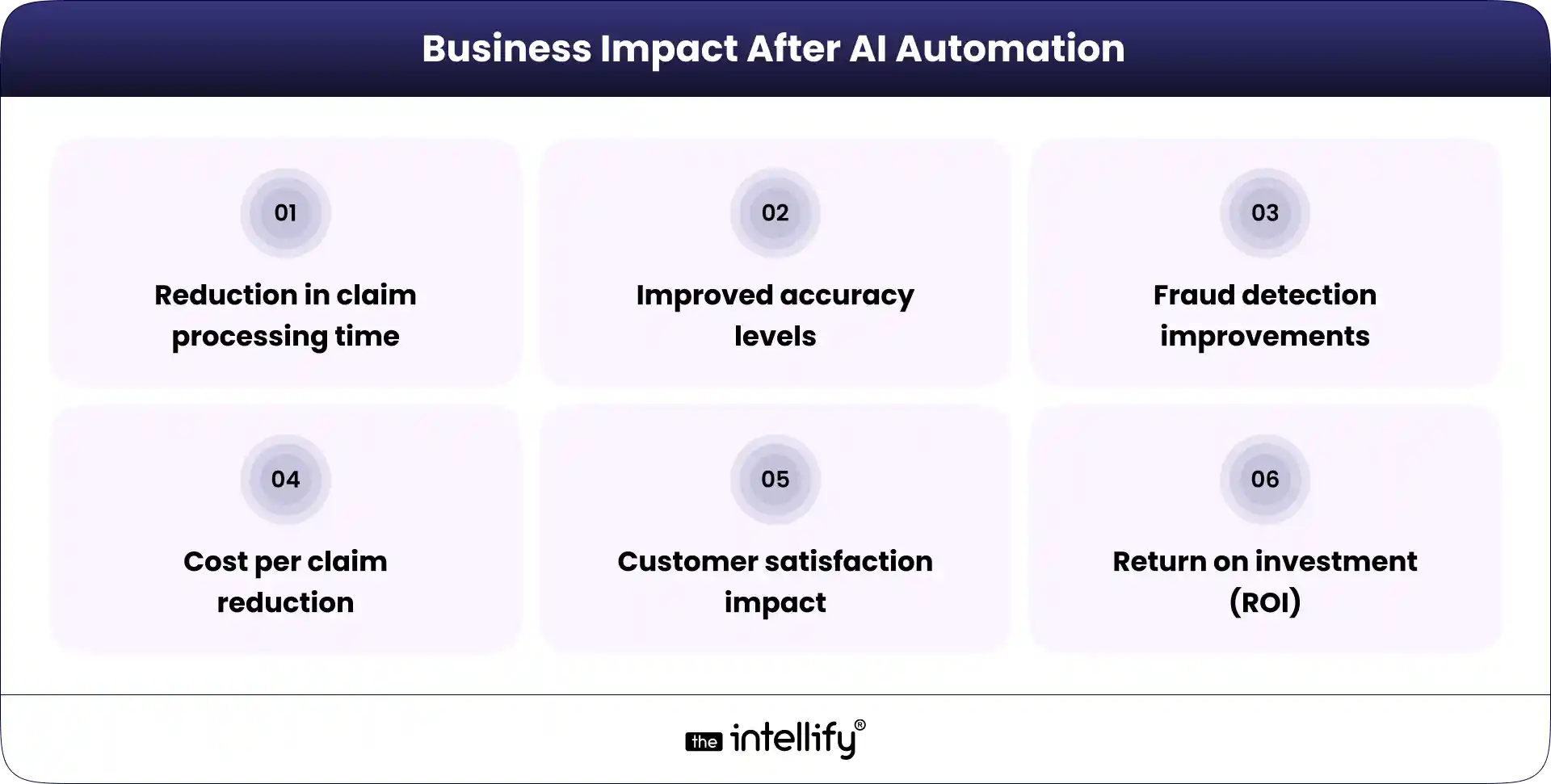
Business Impact After AI Automation

After implementing AI in claims processing, insurers need clear metrics to evaluate whether automation is delivering real operational value. Tracking measurable outcomes helps organizations understand how AI is improving efficiency, accuracy, and customer experience.

Some key performance indicators insurers typically monitor include:

1. Reduction in claim processing time: Faster turnaround times indicate improved operational efficiency and quicker settlements for policyholders.

2. Improved accuracy levels: Automation helps reduce manual errors in document review, data entry, and claim evaluation.

3. Fraud detection improvements: AI systems can identify suspicious patterns and flag high-risk claims earlier in the process.

4. Cost per claim reduction: Automating repetitive tasks can significantly lower operational costs over time.

5. Customer satisfaction impact: Faster resolutions and better communication can improve the overall claims experience.

6. Return on investment (ROI): Measuring financial returns against automation investments helps insurers assess long-term value.


Finding the Right Partner to Scale AI Claims Automation

Implementing AI in Insurance claims processing is not a one-time deployment. Long-term success depends on working with a partner who can support insurers as workflows evolve and automation expands across the claims lifecycle.

Why Vendor Partnership Matters

AI-driven claims automation requires continuous monitoring, optimization, and updates to maintain accuracy and efficiency as claim volumes and processes change.

Continuous Improvement

Automation systems improve over time through model refinement, performance monitoring, and workflow adjustments, helping insurers maintain operational efficiency.

Adapting to Regulatory Changes

Insurance regulations and compliance standards evolve regularly. Automation solutions must remain flexible to adapt to new regulatory and data protection requirements.

Working with Experienced Specialists

Collaborating with experienced AI specialists like The Intellify, who understand insurance workflows and claims automation, helps insurers implement scalable solutions aligned with real operational needs.


The Future of Insurance Claims Automation

The insurance industry is rapidly evolving, and AI will continue to play a major role in transforming how claims are processed. As automation technologies mature, insurers can expect faster decisions, better risk detection, and improved customer experiences.

Several trends are shaping the future of insurance claims automation:

  • Predictive and proactive claims handling: AI will help insurers identify potential risks and claim patterns earlier, allowing faster and more informed decisions.
  • Self-service claim experiences: Policyholders will increasingly be able to submit, track, and manage claims through AI-powered digital platforms.
  • AI-assisted human decision-making: AI will support claims adjusters with insights and recommendations while humans handle complex judgment-based cases.

Continuous learning systems: AI models will keep improving as they process more data, enabling smarter and more efficient claims management over time.

AI Insurance Claim Automation services


Conclusion: Building a Smarter Claims Operation

Insurance claims automation is not just a technology upgrade, it’s a strategic step toward faster, more efficient claims operations. The success of automation largely depends on how carefully insurers evaluate their technology partners.

Focusing on capability, scalability, compliance, and long-term partnership helps ensure the solution can support evolving business needs. By taking a structured and well-informed approach, insurers can implement AI automation that delivers lasting operational value and better customer experiences.


Frequently asked questions (FAQs)

1. How does AI actually improve the insurance claims process?

AI helps reduce manual review work by automatically reading claim documents, detecting missing information, flagging potential fraud, and speeding up approvals. Instead of handling every step manually, teams can focus on complex cases while routine claims move faster.

2. What is insurance claims automation, and how is it different from basic workflow automation?

Insurance claims automation uses AI to make decisions and learn from data, not just follow fixed rules. Basic automation moves files from one step to another. AI-powered automation can analyze documents, assess risks, and support smarter claim handling.

3. Which parts of the claims lifecycle can be automated using AI?

AI can support First Notice of Loss (FNOL), document verification, fraud detection, claim triaging, approval recommendations, and even customer communication updates. It works best when applied to repetitive and data-heavy steps.

4. Is AI-based claims automation suitable for small and mid-sized insurers?

Yes. It doesn’t require a full system overhaul. Many insurers start by automating one area, such as document processing or fraud checks, and expand gradually. Scalability depends more on planning than on company size.

5. What should insurers evaluate before adopting AI for claims automation?

Insurers should assess their current workflow gaps, data quality, integration readiness, compliance requirements, and scalability goals. Clear objectives help ensure automation delivers measurable results.

6. How does AI help reduce fraud in insurance claims?

AI models analyze patterns across past claims to detect unusual behavior, duplicate submissions, or suspicious trends. This allows insurers to flag high-risk claims early without slowing down legitimate ones.

7. What kind of ROI can insurers expect from AI-driven claims automation?

Most insurers see improvements in claim turnaround time, operational efficiency, error reduction, and fraud savings. ROI depends on claim volume and automation scope, but often becomes visible within the first year.

How to Choose the Right Digital Transformation Partner for Healthcare Platforms

Summary:
Healthcare platforms can no longer rely on outdated systems. This blog explains why digital transformation in healthcare industry has become essential and how the right digital transformation partner can shape long-term success. It covers modernization challenges, AI automation in healthcare, operational improvements, and key factors to consider before choosing a partner. The goal is simple: help healthcare organizations make a strategic, informed decision that strengthens patient care and operational stability.


Why Healthcare Platforms Can No Longer Ignore Digital Change

Healthcare doesn’t work the way it used to. And honestly, it can’t. Patient expectations have changed. People now expect healthcare platforms to feel as smooth as booking a cab or ordering groceries. They want:

  • Online appointment booking
  • Easy access to digital medical records
  • Quick responses and reminders
  • Clear billing transparency

The shift toward online consultations and digital records has accelerated. Telehealth calls from living rooms. Reports shared through secure portals. Prescriptions delivered digitally. This isn’t futuristic anymore it’s normal.

At the same time, hospitals, clinics, and health startups are under operational pressure. Staff shortages. Rising compliance requirements. Increasing patient volumes. Limited budgets. This is why digital transformation in healthcare industry is no longer optional. It’s becoming a survival need.

Platforms that stay dependent on outdated systems face real risks:

  • Slow reporting cycles
  • Data stuck in disconnected tools
  • Higher chances of billing and documentation errors
  • Poor patient experience

In healthcare, delays and mistakes aren’t minor inconveniences. They affect real lives. That’s the reality.


What Digital Transformation Really Means for Healthcare Platforms

Many leaders think digital transformation solutions mean upgrading software. That’s only a small part of it.

True transformation connects systems instead of running isolated tools. Your scheduling system should sync with billing. Billing should integrate with patient records. Labs, pharmacies, and admin teams should work on shared data not separate spreadsheets.

It also means bringing AI and automation into daily workflows in practical ways. For example:

  • Automated appointment reminders
  • Real-time claim verification
  • Intelligent flagging of abnormal test results
  • Smart patient communication system

Another key element is data accessibility. Doctors shouldn’t waste time searching through multiple dashboards. Administrators shouldn’t manually compile reports just to understand performance.

Digital transformation is about smoother internal operations. Less confusion. Less duplication. More clarity. It’s not about flashy technology. It’s about systems working together quietly in the background.


How Healthcare Platforms Operated Before Modernization

Before modernization, most healthcare platforms relied heavily on manual processes. Paper files, Duplicate data entry, Sticky notes on desks, and Long Excel sheets emailed back and forth.

Common challenges included:

  • Manual patient registration
  • Scheduling conflicts and double bookings
  • Billing handled across disconnected systems
  • Delayed insurance claim processing
  • No real-time visibility into operations

Patient wait times often increased due to inefficient scheduling. Billing teams struggled with reconciliation because systems didn’t talk to each other. Leaders had to make decisions based on outdated monthly reports.

Care delivery was reactive. Issues were addressed after they surfaced. Predictive planning was rare. For many organizations, this still feels familiar. And exhausting.


Where Healthcare Platforms Are Adopting Digital Transformation Today

Healthcare platforms are now modernizing in focused areas.

Online appointment systems and patient portals allow patients to book visits, access reports, and manage records without calling reception desks.

Telehealth and remote consultations reduce travel time and improve accessibility. This is especially useful for follow-ups and chronic condition monitoring.

Automated billing and revenue cycle management tools reduce manual errors and accelerate payments. Claim validation becomes faster and more accurate.

AI-supported diagnostics and reporting are helping identify patterns in patient data. AI and digital transformation in healthcare are now working together to support clinicians, not replace them.

Operational dashboards provide real-time visibility into bed occupancy, patient flow, and staffing levels. This strengthens digital transformation in healthcare operations by enabling proactive planning.

The goal isn’t complexity. It’s clarity.


Digital transformation solution for healthcare


Why Choosing the Right Digital Transformation Partner Is a Strategic Decision

Technology alone cannot solve operational gaps.

A healthcare platform might invest in advanced systems, but without proper alignment and execution, results fall short. A wrong digital transformation partner can delay growth and introduce new inefficiencies.

Healthcare requires industry-specific understanding. Patient data is sensitive. Regulations are strict. Workflows are layered and interconnected.

Key considerations include:

  • Compliance with healthcare regulations
  • Secure data management practices
  • Deep understanding of healthcare workflows
  • Long-term scalability

Some vendors prioritize fast implementation. Quick launches sound attractive. But healthcare systems need stability and thoughtful integration. Selecting a digital transformation partner is not just an IT choice. It’s a strategic business decision.


What to Look for in a Healthcare Digital Transformation Partner

When evaluating a digital transformation partner, focus on practical factors.

1. Proven healthcare experience

Have they worked with hospitals, clinics, or health platforms before? Real industry exposure matters.

2. Integration capabilities

Healthcare systems rarely start from scratch. The partner must integrate with existing infrastructure rather than forcing complete replacement.

3. Regulatory understanding

Compliance standards cannot be an afterthought. The partner should demonstrate clear knowledge of healthcare data regulations.

4. Clear roadmap and milestones

A structured plan with measurable phases ensures transparency and accountability.

5. Post-launch support

Implementation is only the beginning. Continuous monitoring, updates, and optimization are necessary.

6. AI-powered expertise

Experience with AI automation in healthcare enables smarter scheduling, billing, and reporting systems.

A strong digital transformation partner combines healthcare knowledge with technical execution and long-term commitment.


The Role of AI in Modern Healthcare Operations

AI automation in healthcare is becoming increasingly practical.

Administrative tasks such as:

  • Appointment confirmations
  • Data validation
  • Claims pre-checks
  • Basic patient queries

can be handled through AI-powered solutions.

In clinical settings, AI supports diagnosis by analyzing large datasets and identifying unusual patterns. It assists doctors in making informed decisions. AI also helps predict patient demand by analyzing historical data.

This allows better staffing and resource allocation. Billing accuracy improves when AI systems flag inconsistencies before submission. Revenue leakage decreases. When AI and digital transformation strategies work together, healthcare platforms become more proactive instead of reactive.


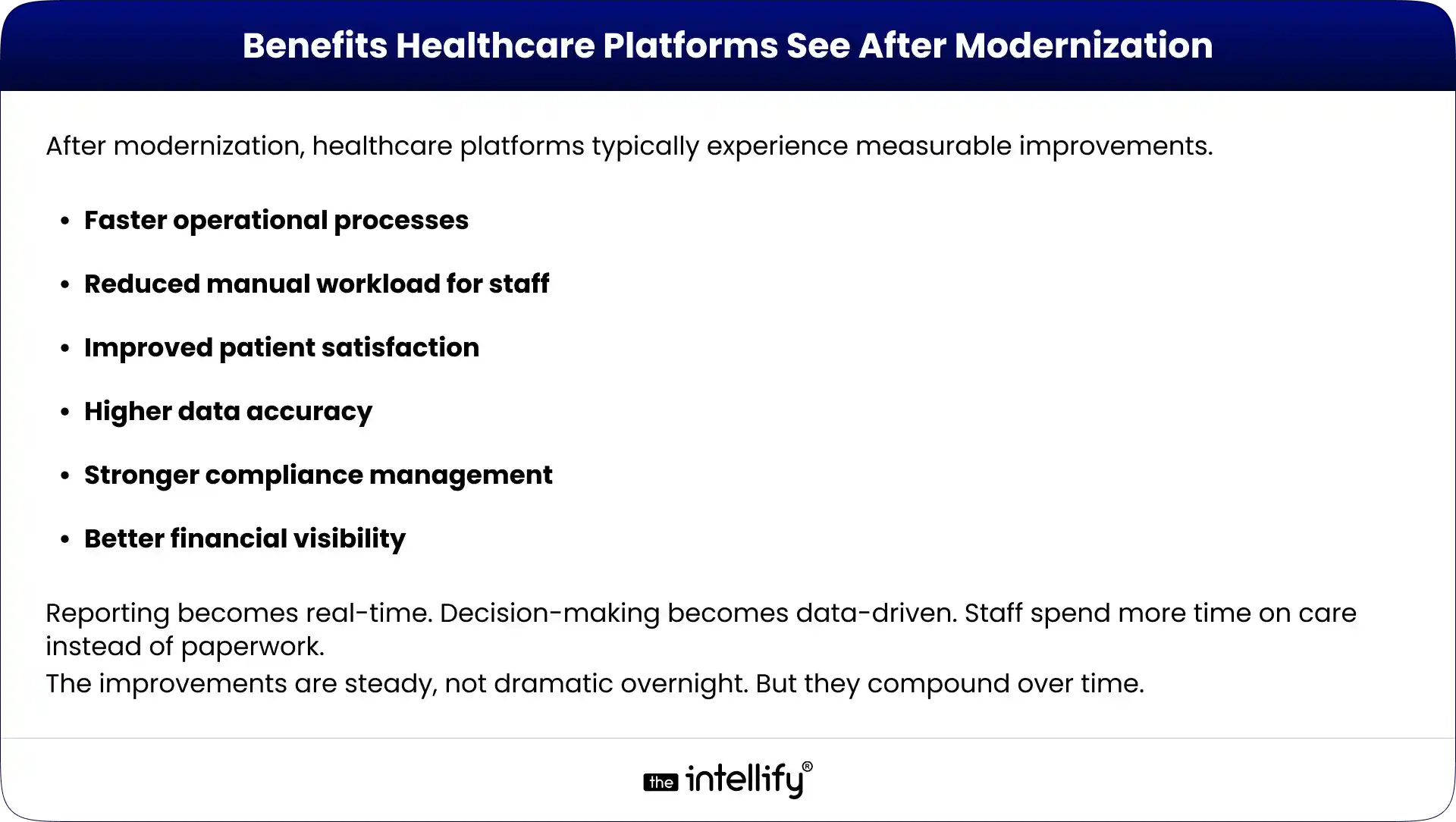
Benefits Healthcare Platforms See After Modernization


Common Mistakes While Choosing a Healthcare Partner

Some common errors include:

  • Choosing solely based on cost
  • Ignoring long-term scalability
  • Underestimating integration complexity
  • Overlooking post-launch support
  • Selecting general IT providers without healthcare expertise

Low-cost solutions often lead to expensive corrections later. Systems that don’t scale create bottlenecks. Lack of support leaves teams struggling after deployment.

Healthcare platforms require specialized understanding. Generalized solutions rarely work smoothly.


Working With a Partner That Understands Healthcare Complexity

Healthcare operations are layered and interconnected. Clinical workflows, administrative processes, billing cycles, and compliance frameworks must function together.

A reliable digital transformation service partner understands this complexity. They assess existing workflows before recommending changes. They focus on measurable results rather than generic implementations.

Organizations like The Intellify combine healthcare domain knowledge with AI and digital transformation expertise to design customized digital transformation solutions. The focus remains on operational clarity, compliance, and long-term scalability.

A long-term partnership approach ensures that modernization evolves with the organization’s growth.


Healthcare Digital Transformation Solutions


Final Thoughts

Digital transformation in healthcare industry affects patient care, operational efficiency, and financial sustainability. Choosing the right digital transformation partner influences how smoothly this transition happens.

When AI-powered systems and structured digital transformation strategies align, healthcare platforms become more resilient and intelligent.
This decision should be strategic, carefully evaluated, and future-focused. In healthcare, every operational improvement eventually impacts patient outcomes, and that makes the choice significant.


Frequently Asked Questions (FAQ)

1. What does a digital transformation partner do for healthcare platforms?

A digital transformation partner reviews your current systems, identifies gaps, and implements connected digital transformation solutions. In healthcare, this includes integrating patient records, automating workflows, improving billing systems, and strengthening data security. The goal is smoother operations and better patient experience.

2. Why is choosing the right partner important for digital transformation in healthcare?

Healthcare platforms handle sensitive patient data and strict compliance requirements. The wrong partner can create delays, integration issues, or security risks. The right digital transformation partner like The Intellify understands healthcare workflows and builds scalable, secure systems that support long-term growth.

3. How do I start evaluating a potential digital transformation partner?

Begin by checking their healthcare experience, integration capability, and regulatory knowledge. Ask for a clear roadmap, measurable milestones, and post-launch support plans. A structured evaluation helps avoid costly mistakes later.

4. Can digital transformation work with existing hospital systems?

Yes. Digital transformation in healthcare industry usually focuses on integrating existing systems rather than replacing everything. Proper integration improves data flow, reduces manual work, and enhances overall efficiency without major operational disruption.

5. How long does digital transformation take in healthcare?

The timeline depends on the scope of modernization. Smaller improvements may take a few months, while full-scale transformation can take longer. A phased approach with defined milestones allows healthcare platforms to improve steadily without overwhelming staff.

6. What role does AI play in digital transformation for healthcare?

AI automation in healthcare helps reduce manual tasks, improve data analysis, flag billing errors, and support clinical decisions. When combined with connected systems, AI makes healthcare operations faster, more accurate, and more proactive.

7. How do I measure success after adopting digital transformation solutions?

Success can be measured through reduced patient wait times, fewer claim denials, improved operational efficiency, stronger compliance tracking, and better financial visibility. Clear KPIs should be defined before implementation to track real progress.

AI for Healthcare Operations: Transforming Hospital Process in 2026

Summary:
Healthcare is facing growing operational pressure due to rising patient demand, staffing limitations, and complex compliance requirements. This blog explores how AI for healthcare operations helps address these challenges by improving scheduling, billing, diagnostics, and documentation workflows. It highlights key business benefits, practical implementation steps, and strategic priorities for long-term success, offering hospital leaders clear insights into building efficient, secure, and future-ready healthcare systems

The healthcare landscape is changing rapidly, and AI for healthcare is leading the way. As we look towards 2026, hospitals are confronted with a host of operational challenges from growing patient demands to strict compliance mandates. In this blog, we’ll explore how AI is reshaping healthcare operations, its key advantages, the hurdles hospitals must navigate, and why this is the ideal moment to adopt these cutting-edge technologies.


The Growing Complexity of Hospital Operations in 2026

As we head into 2026, the operational hurdles that hospitals face are becoming increasingly complex:

  • Rising patient demand and limited staff:- An influx of patients is putting a strain on resources, making efficient care delivery more critical than ever.
  • Administrative overload slowing down care: The burden of paperwork and numerous administrative tasks often eats into the time that could be spent on patient care.
  •  Financial pressure and reimbursement delays-: Shifts in reimbursement models can lead to financial constraints, which in turn affect service quality.
  •  Increasing compliance requirements: Regulatory demands can add to the workload, creating inevitable bottlenecks in hospital operations.

Given these challenges, traditional systems simply can’t keep up anymore. For hospitals to succeed, they’ll need to go beyond basic automation and integrate AI for healthcare operations it’s a practical pivot that transcends mere trends.


What AI for Healthcare Means in Operational Terms

AI isn’t just a tool for automating repetitive tasks; it’s about enhancing both clinical and administrative workflows. Here’s how it works:

Moving Beyond Basic Automation

AI in healthcare operations goes beyond simple task automation. It doesn’t just complete repetitive work it analyzes data, identifies patterns, and helps hospitals make smarter decisions in real time.

 Supporting Clinical and Administrative Workflows

AI helps clinical teams and administrative staff work in better coordination. It connects systems like scheduling, billing, and patient records so departments don’t operate in isolation.

Connecting Fragmented Hospital Systems

Many hospitals use multiple disconnected systems. AI helps bring these together, allowing information to flow smoothly across departments and reducing delays or duplicate work.

Shifting from Manual Coordination to Intelligent Support

Instead of relying only on manual tracking and follow-ups, AI provides smart insights and alerts. This helps staff focus more on patient care while the system supports operational decisions.

How AI for Healthcare Operations Strengthens Internal Systems

AI strengthens internal systems by improving accuracy, reducing bottlenecks, and making processes more predictable. It builds a more responsive foundation that supports both efficiency and quality care.

In short, AI for healthcare reinforces internal systems, creating a healthier environment for staff and patients alike.


How Intelligent Systems Improve Daily Hospital Functions

AI technology has tremendous potential to enhance daily hospital functions, which are vital for operational success:

  • Collecting and organizing operational data: AI systems aggregate information from various sources, making critical data easily accessible.
  • Identifying inefficiencies in scheduling and billing: By analyzing patterns, AI can spotlight areas needing improvement, enabling more effective resource allocation.
  • Detecting compliance gaps early: AI continuously monitors operations, helping unearth regulatory risks before they become problematic.
  • Supporting faster clinical decision-making: With real-time insights, AI empowers healthcare professionals to make informed decisions on the spot.
  • Automating repetitive administrative tasks: Routine tasks such as appointment bookings and data entry can be automated, allowing staff to engage more meaningfully with patients.
  • Providing real-time performance visibility: AI equips hospitals with dashboards and reports that shed light on operational efficiency, enabling prompt adjustments.


AI for hospitals operations


Core Areas Transformed by AI in Healthcare Operations

Patient Scheduling and Resource Planning

  • Reducing wait times: Smart scheduling algorithms optimize appointment slots, helping to cut down on patient wait times.
  • Better staff allocation: AI analyzes demand trends, ensuring that staff levels are aligned with patient volume, thus boosting service quality.
  • Managing appointment flow: Automated systems streamline appointment flow, enhancing overall patient satisfaction.

Revenue Cycle and Claims Processing

  • Reducing coding errors: AI algorithms accurately code services, minimizing potential errors.
  • Predicting claim denials: By digging into historical data, AI can spot patterns that lead to claim denials, enabling proactive measures.
  •  Speeding up reimbursements: AI quickens the claims process, ensuring that providers receive payments more promptly.
    Diagnostic Support and Case Prioritization
  • Assisting imaging review: AI tools can analyze medical images, helping radiologists identify urgent cases more efficiently.
  •  Flagging urgent cases: AI prioritizes cases needing immediate attention, ensuring timely interventions.
  • Supporting physician decisions: With data-driven insights, physicians can make more informed choices regarding patient care.

Compliance and Documentation Oversight

  • Monitoring regulatory changes: AI stays current on regulations, helping compliance teams respond effectively.
  • Identifying documentation gaps: Automated checks highlight areas where documentation may be lacking, reducing the risk of audits.
  • Reducing audit risks: Continuous monitoring helps ensure that compliance requirements are consistently met.


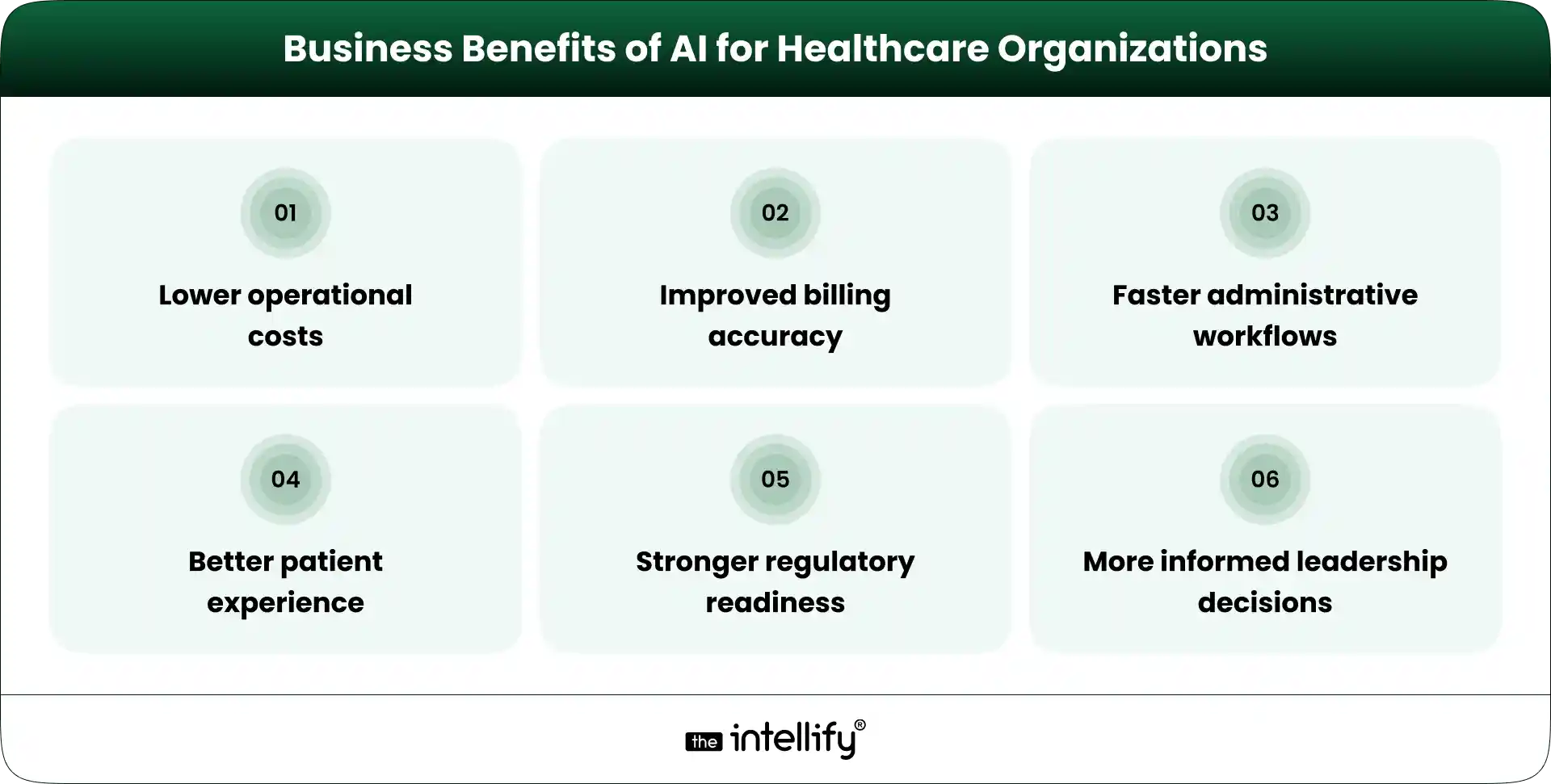
Business Benefits of AI for Healthcare Organizations

Benefits of AI for Healthcare Organizations_

Incorporating AI for healthcare operations comes with a host of benefits:

1. Lower operational costs:- Automation decreases reliance on manual processes, leading to cost savings.

2. Improved billing accuracy:- AI enhances accuracy in billing, reducing discrepancies.

3. Faster administrative workflows:- Streamlined procedures mean that administrative tasks are handled swiftly, boosting productivity.

4. Better patient experience:- Efficient operations enhance overall patient satisfaction, helping to build loyalty.

5. Stronger regulatory readiness:- Proactive compliance systems ensure hospitals are always audit-ready.

6. More informed leadership decisions:- With comprehensive insights, hospital leaders can make strategic decisions that drive growth and efficiency.


Step-by-Step Process to Implement AI in Healthcare Management

Assess Operational Gaps

  • Identify workflow bottlenecks: Pinpoint areas where delays typically occur.
  •  Analyze denial rates: Review past claims data to uncover ongoing issues.
  • Evaluate scheduling inefficiencies: Scrutinize current scheduling practices to enhance efficiency.

Define Clear Goals

  •  Improve turnaround time: Set benchmarks for how quickly patients are processed.
  • Reduce compliance risks: Establish compliance targets to ensure adherence.
  • Increase financial accuracy: Aim for error-free billing and claims processing.

Start with Focused Deployment

  • Pilot in one department: Begin AI implementation in a single department to minimize disruption.
  • Measure impact: Assess pilot results to gauge benefits before a broader rollout.
  • Expand gradually: Scale up implementation based on successful outcomes.

Align Teams and Governance

  • Train staff: Make sure staff are adequately trained to work with new AI systems.
  • Maintain human oversight: While AI provides support, human oversight remains crucial for quality care.
  • Establish performance benchmarks: Regularly review performance metrics to evaluate success.


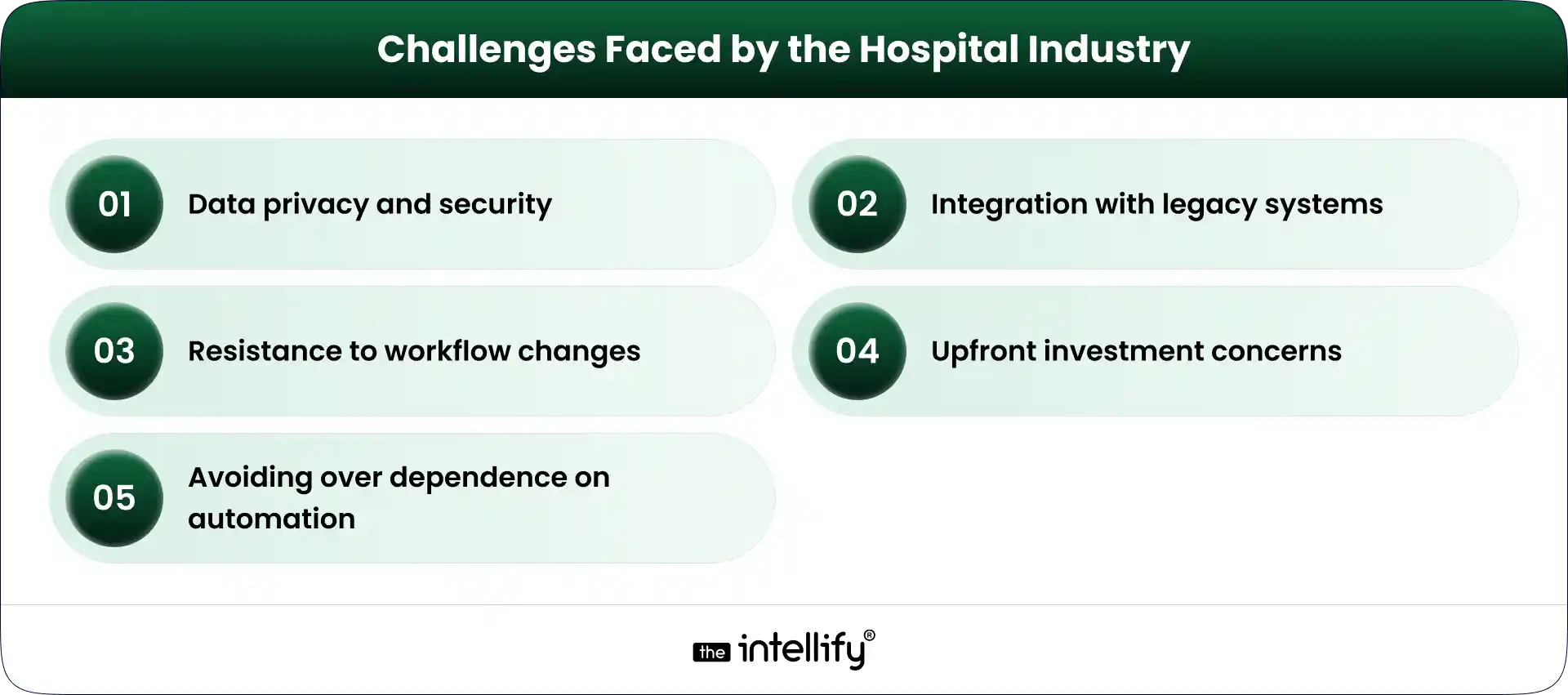
Challenges being faced by Hospital Industry

Challenges Faced by the Hospital Industry

While AI presents incredible opportunities, hospitals also face a variety of challenges:

  • Data privacy and security: Protecting patient data must remain a top priority.
  •  Integration with legacy systems: Merging AI tools with existing infrastructure can prove complex.
  •  Resistance to workflow changes: Staff may be hesitant to embrace new technologies.
  • Upfront investment concerns: Initial costs can make hospitals wary of adopting AI solutions.

Avoiding overdependence on automation: It’s essential to strike a balance between human input and machine support.


Why 2026 Is a Defining Year for AI Healthcare Operations

The year 2026 is shaping up to be a game-changer for AI in healthcare, as hospitals increasingly recognize AI’s potential:

  • Maturity of AI tools: These technologies are becoming more advanced, offering robust solutions ready for deployment.
  • Clearer regulatory frameworks: Evolving regulations will ease the path for AI integration.
  •  Proven operational ROI: Hospitals are seeing measurable benefits from AI investments.
  •  Increasing competitive pressure: As more facilities adopt AI, hospitals need to keep pace or risk falling behind.
  • Industry-wide shift from pilots to enterprise-scale deployment: Organizations are transitioning from pilot projects to full-scale implementations.


What Hospital Systems Should Address Next

To stay competitive, hospital leaders should center their attention on several key areas:

  • Building long-term digital infrastructure: Invest in systems that can accommodate future technological advancements.
  • Integrating AI into core systems: Make sure AI tools are a foundational part of operations.
  • Tracking measurable performance improvements: Regularly evaluate the impact of AI implementations.
  • Ensuring transparency and accountability: Cultivate a culture that values clear decision-making.
  • Preparing for continuous system optimization: Adopt a mindset geared towards ongoing improvements and adjustments.


AI Solutions for Healthcare


Conclusion

Embracing AI for healthcare operations transforms hospitals into more efficient, patient-centered organizations. The benefits ranging from enhanced patient experiences to improved operational efficiency are compelling. As we approach 2026, adopting AI isn’t merely about technology; it’s about paving the way to a healthier future.

Beyond automation, this shift is about building smarter hospital systems that can adapt, respond, and grow with changing demands. With the right strategy and trusted partners like The Intellify supporting innovation, hospitals can move from fragmented processes to connected, future-ready operations that truly support both staff and patients.


Frequently Asked Questions

1. How is AI improving scheduling and patient flow in hospitals?

AI analyzes appointment patterns, staff availability, and patient demand to reduce wait times and avoid overbooking. It helps hospitals manage patient flow more smoothly without adding extra administrative pressure.

2. Can AI speed up billing and claims processing?

Yes, AI can automatically check coding errors, verify claims, and flag missing information before submission. This reduces claim denials and helps hospitals receive payments faster and more accurately.

3. What are the main benefits of AI in hospital operations?

It improves efficiency, reduces paperwork errors, lowers operational costs, and supports better decision-making. Hospitals also benefit from smoother workflows and improved compliance tracking.

4. How does AI support better diagnostic accuracy?

AI tools can analyze imaging scans and patient data to highlight patterns that might need attention. It doesn’t replace doctors but provides decision support that helps prioritize critical cases more quickly.

5. How safe is AI in healthcare when handling patient data?

AI systems are designed to follow strict data security and privacy regulations. When implemented correctly, they include encryption, access controls, and monitoring tools to protect sensitive patient information.

6.  How will AI change hospital operations by 2026?

By 2026, AI is expected to move from pilot projects to broader system-wide adoption. Hospitals will rely more on predictive insights, automation, and real-time monitoring to improve performance and patient care.

7.  Will AI replace staff in hospital operations or work alongside them?

AI will not replace hospital staff but work alongside them. It handles repetitive and data-heavy tasks, allowing healthcare professionals to focus more on patient care and critical decisions.

View
Case Study